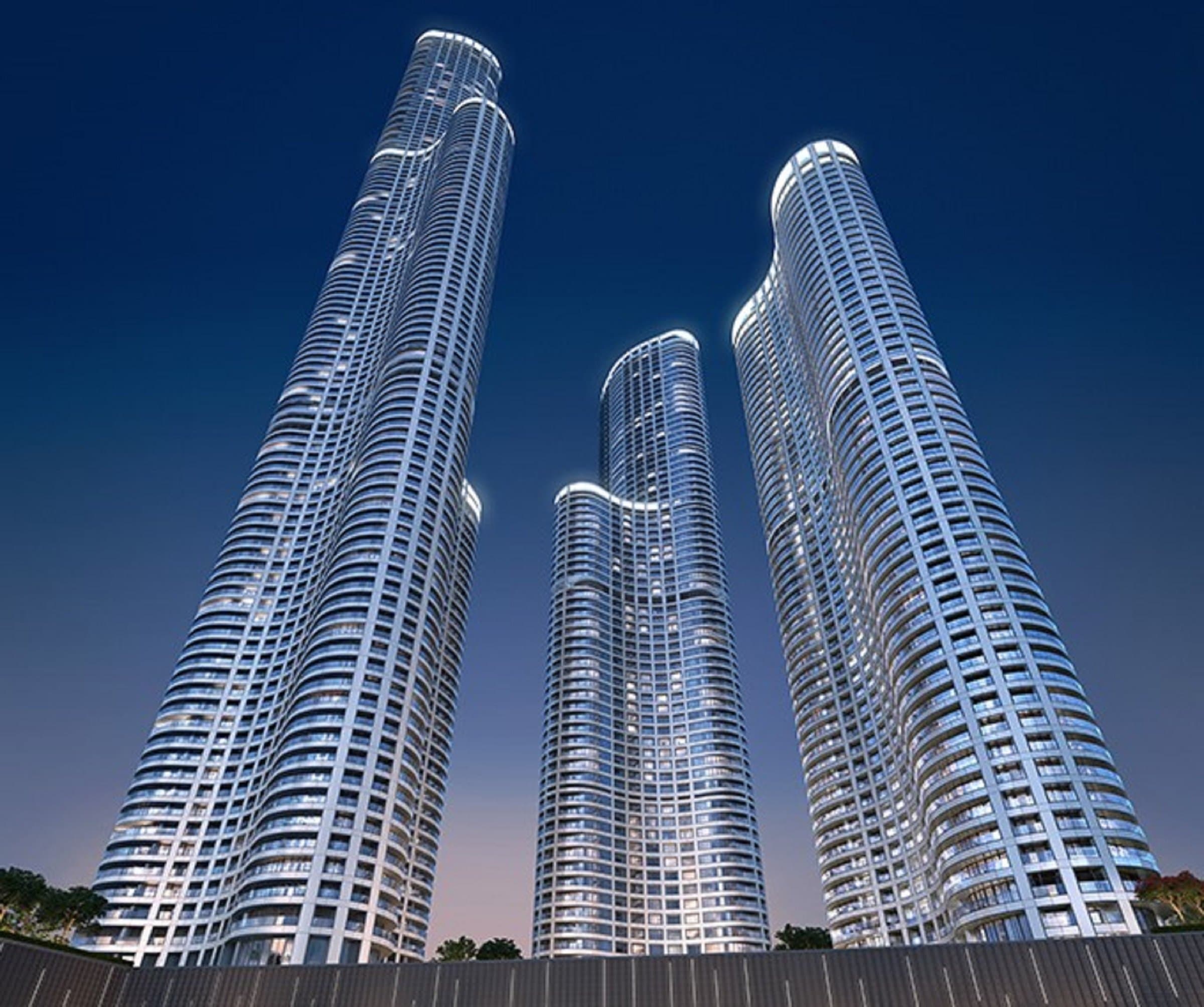
Three years after possession, the Lower Parel or Prabhadevi luxury tower buyer discovers that the most consequential decisions about their building are made not by the developer, the architect, or the property manager — but by 9 people on the society's managing committee, elected (or sometimes self-anointed) at an annual general meeting most owners never attend. The TMC sets the maintenance budget. The TMC approves or rejects redevelopment overtures. The TMC negotiates the facility-management vendor. The TMC fights or accepts BMC notices. The TMC litigates against the developer for snagging defects. The TMC is the single most under-priced governance variable in the corridor's premium stock, and yet fewer than 1 in 8 buyers asks for the AGM minutes, the bye-laws, or the committee composition before signing a sale agreement.
This decoder is the framework Property Butler applies to every resale transaction in the corridor — and to every RTM purchase where the society is already formed. For under-construction units the question is forward-looking: how the society is likely to form and what bye-laws the developer's draft circulates. For Property Butler's tracked 30 active Lower Parel sale listings and 65 active Prabhadevi sale listings as of May 2026, society-governance quality is a quiet but decisive resale variable that varies meaningfully across the corridor's vintage stock.
Society governance — the legal frame
Most Lower Parel and Prabhadevi premium societies are registered as co-operative housing societies under the Maharashtra Co-operative Societies Act 1960 (MCSA) and the Maharashtra Co-operative Societies Rules 1961, with subsequent amendments. The mandatory model bye-laws (last comprehensively revised in 2014 and updated periodically) prescribe the structure: a 9-15 member managing committee elected by all qualified members at an annual general meeting, a 5-year tenure with mandatory re-elections, an office-bearer slate (chairman, secretary, treasurer), and statutory record-keeping. A small but growing slice of post-2020 luxury stock is structured instead as apartment-ownership condominiums under the Maharashtra Apartment Ownership Act 1970 (MAOA) — the governance is similar but the regulatory frame is different.
The 5 dimensions of society-governance quality
| Dimension | What good looks like | What bad looks like |
|---|---|---|
| 1. Committee composition | 9-12 members, mix of investor and end-user owners, professional skill mix (finance, law, engineering) | Dominated by 1 family or developer-aligned members; investor-only committee |
| 2. AGM cadence and attendance | Annual AGM held on calendar, 55-75% member attendance (in person + proxy), live-streamed for NRIs | AGM skipped 1-2 years, sub-30% attendance, no proxy mechanism |
| 3. Bye-law modernity | 2014 model bye-laws adopted with 2021-2024 amendments (digital voting, EV charging policy, short-stay rental rules) | Stuck on pre-2014 bye-laws; informal practices not written |
| 4. Financial transparency | Audited accounts circulated 30 days pre-AGM, quarterly board minutes shared, sinking fund tracked separately | Accounts unfiled for 2+ years; minutes not circulated; sinking fund mixed with operating account |
| 5. Dispute resolution discipline | Written grievance redressal mechanism; mediation-first culture; co-op court filings rare | Multiple pending co-op court cases; resident-vs-committee litigation; faction-driven AGM disputes |
The 8 bye-laws that matter most to buyers
Most Lower Parel and Prabhadevi societies adopt the Maharashtra model bye-laws as the spine. The variations that matter to buyers — and that materially change the resale and ownership experience — are clustered in 8 specific clauses:
The 8 bye-laws to read before buying
- Transfer fee structure: Maximum legally chargeable is ₹25,000 plus 0.25% of agreed consideration. Some societies charge as bye-law-mandated ₹25,000 only; others charge premiums that are technically negotiable but applied de facto. Property Butler's society resale NOC transfer fee playbook covers the contestable framework.
- Renting / short-stay policy: Some bye-laws cap rental tenures (no leases shorter than 11 months), prohibit AirBnB / serviced apartments outright, or require committee approval per tenant. This directly impacts the rental yield case.
- Pet policy: Increasingly contested. The 2014 model bye-laws allow pets; some societies overlay restrictions. See pet policy tower decoder.
- Redevelopment / cluster-redevelopment trigger: Most bye-laws require a 75-80% supermajority of members to approve a redevelopment overture. The trigger is the single most consequential vote in a society's lifetime.
- Maintenance computation: Carpet-based, equal, or unit-share-based? Most premium societies use a hybrid (a fixed component plus a variable based on carpet). The choice can change CAM by ₹3,000-12,000 / month per unit.
- EV charging and society capex policy: Newer bye-laws clearly allocate EV-charging infrastructure capex (society funds vs user pays); older bye-laws are silent and leave this for AGM-by-AGM negotiation.
- Quorum and proxy rules: Standard is 25% physical / proxy quorum for AGM. Some bye-laws raise this; some lower it. Quorum failures stall important votes for months.
- Dispute resolution and arbitration: Some bye-laws prescribe internal arbitration before co-op court; some are silent. The presence of an internal mechanism reduces litigation friction.
The AGM election cycle — what to look at
The five-year MCSA-mandated re-election is the single most predictable governance event. Property Butler tracks the AGM and committee-election calendar for every Lower Parel and Prabhadevi society it transacts in. Three patterns matter:
Election contest density. A society where the managing committee elections see 12-18 candidates for 9 seats is structurally more accountable than one where 9 candidates self-nominate for 9 seats and are returned uncontested. Property Butler's tracked corridor shows that contested elections correlate with cleaner accounts, better-run AGMs, and faster dispute resolution.
Incumbency rotation. Healthy societies rotate. The Maharashtra model bye-laws cap consecutive terms (under the 2019 amendment, no member can serve more than 5 consecutive years as chairman). Societies that find ways around the cap — by rotating titles among the same 3-4 dominant families — tend to be governance-poor.
Member-side litigation. A society with 0-1 active co-operative court matters is the corridor norm. Anything above 3 active matters signals a governance problem the new buyer is buying into. Property Butler's society litigation diligence guide covers how to pull and read the active-matter list before signing.
How to access society documents before signing
Under MCSA Section 32 and the model bye-laws, any prospective buyer (with the seller's authorisation) is entitled to inspect:
- The society's registration certificate and the registered bye-laws
- The audited annual accounts of the last 3 years
- The minutes of the last 3 AGMs and the last 12 committee meetings
- The list of current managing committee members and office-bearers
- The list of outstanding co-operative court matters and arbitration cases
- The conveyance status of the society's land (conveyance deed registered, or pending)
- The sinking-fund and major-repair-fund corpus balances
- The society's GST registration and TDS compliance status
Property Butler builds this 8-document inspection pack into every pre-token diligence file. The seller's society NOC at sale-deed registration is a downstream step; the upstream check is the bye-laws + accounts read.
The conveyance question — under-the-radar, decisive
The single most consequential under-the-radar governance issue in the corridor is land conveyance. The Maharashtra Ownership of Flats Act 1963 (MOFA) and the deemed-conveyance provisions of 2008 give every formed society the right to demand the developer convey the project land to the society within 4 months of formation. In practice, conveyance is delayed by years in many Lower Parel and Prabhadevi societies because the developer's land-monetisation incentives clash with the society's redevelopment-rights claim.
Conveyance status — Property Butler tracked corridor
~60% LP + Prab societies have land conveyance complete
The remainder are at various stages — deemed-conveyance application filed, awaiting High Court order, or unresolved. Property Butler's society conveyance deed decoder covers the issue in detail.
The five buyer-side governance questions Property Butler asks
- Is the society formed and registered? If not, when is formation expected? Who handles common-area expenses in the interim?
- Who is the current chairman, secretary, and treasurer? What are their day-jobs? How long have they served?
- What was on the agenda of the last AGM? Were any consequential decisions taken (redevelopment, major capex, vendor change)?
- Are there any open co-operative court matters? Any MahaRERA complaints? Any litigation involving the developer?
- Is the land conveyance complete? If not, what is the status?
Frequently Asked Questions
If the society is not yet formed, what do I get instead?
Until the society is formed and registered (typically 12-18 months after OC for premium projects), the developer runs the building under a maintenance arrangement and an apartment owners' association (AOA) — often informal. The new buyer signs a maintenance agreement directly with the developer's facility-management arm. The protection is weaker than a registered society — disputes go to civil court, not co-operative court. Property Butler treats unformed-society units as a small additional risk that prices through at ~0.4-0.7% PSF discount.
Can the managing committee block my sale?
Not legally. The transfer-NOC is a formality under model bye-laws; the committee can object on procedural grounds (transfer fee not paid, outstanding dues, paperwork incomplete) but cannot refuse on the basis of the incoming buyer's identity, religion, profession, or marital status (subject to specific overrides for SRA buildings). Property Butler has seen procedural delays of 30-60 days when committees are slow, but never an outright blocking. If a committee tries, the seller and buyer can seek deemed-NOC through the Deputy Registrar after a 90-day complaint cycle.
How do NRI owners participate in society governance?
Three mechanisms. (1) Proxy voting — the model bye-laws allow proxies, with the limit typically 5 proxies per member; well-organised societies set up dedicated NRI-proxy circles. (2) E-voting — added by the 2021 model bye-law amendment, allowing AGM votes by email or app. (3) Power-of-attorney to a family member or trusted resident. NRI absentee-ownership is a structural fact in this corridor; well-governed societies design around it. Property Butler's NRI buying handbook covers the broader frame.
What is the cost of being on the managing committee?
Mostly time. Lower Parel and Prabhadevi premium committees meet 1-2x per month for 2-3 hours; the office-bearer slate (chairman, secretary, treasurer) commits 6-12 hours / week during busy periods (RTM handover, AGM season, redevelopment talks, major repairs). Co-operative societies do not pay committee members; some MAOA condominiums offer modest honorariums. The real cost is exposure — committee members carry personal liability for tax filings, statutory compliance, and certain society decisions. Buyers thinking of joining the committee should plan for that exposure and consider the directors-and-officers (D&O) insurance some societies now buy.
Does society governance quality show up in resale price?
Yes, but indirectly. Property Butler's tracked transactions show that well-governed societies (Tier 1 on the 5-dimension matrix above) command a 0.8-1.4% PSF premium over poorly-governed peers of similar vintage and developer profile. The premium isn't on the headline ask — it shows up as faster transaction velocity (fewer days on market), cleaner closing (fewer renegotiations at NOC stage), and higher renewal of upper-tier tenants in the rental market. Buyers who do the bye-law and AGM-minutes read before signing capture this premium structurally.
Buying resale in Lower Parel or Prabhadevi?
Property Butler runs the 8-document society inspection pack on every resale before token. Search the corridor's OC-received resale inventory.
Search resale inventory