A ₹20 crore Prabhadevi apartment with an underfunded society sinking fund can present the new buyer with a ₹35-90 lakh special-levy demand within 18 months of possession. Lower Parel buyers entering 2010-2015 vintage stock face the same risk — life-cycle replacements on lifts, façade glazing, MEP infrastructure and waterproofing are coming due across the entire vintage band, and societies that did not build the corpus over the past decade are now extracting capital from current owners. Property Butler's pre-token diligence specifically flags society financial health because the cost of getting this wrong is invisible at purchase and brutal at extraction. This is the buyer's playbook for reading society reserve, sinking and major-repair corpus before signing the agreement.
The headline math
A healthy Lower Parel-Prabhadevi luxury society maintains a sinking fund of ₹120-280 per sqft of total saleable area as a running corpus, plus a separate major-repair reserve of ₹80-180 per sqft. An adequately funded 200-unit, 800,000 sqft tower society should sit at ₹16-37 crore in total reserve corpus. Property Butler has seen societies of equivalent size sitting at ₹3-7 crore — a structural shortfall that translates to special-levy demands of ₹4-12 lakh per 3 BHK unit when major repairs hit.
The three buckets of society reserve money
Buyers often hear "society maintenance" as a single monthly number. In reality, the society holds three distinct buckets of money, each with a different purpose and a different financial health signal.
| Fund | Healthy target per sqft | Use case | Red flag |
|---|---|---|---|
| Operating reserve | 3-6 months of monthly outgo | Day-to-day shortfall buffer; vendor payment timing | Under 2 months → cash-flow stressed society |
| Sinking fund | ₹120-280 per sqft accumulated | Lift replacement, façade rebuild, common-area renovation at 12-18 year mark | Under ₹80/sqft on a 10-year-old building → special levy imminent |
| Major-repair reserve | ₹80-180 per sqft accumulated | Waterproofing, structural retrofit, MEP overhaul | Zero balance → society is on a deferred-maintenance trajectory |
Why the 2010-2015 Lower Parel vintage is the highest-risk band
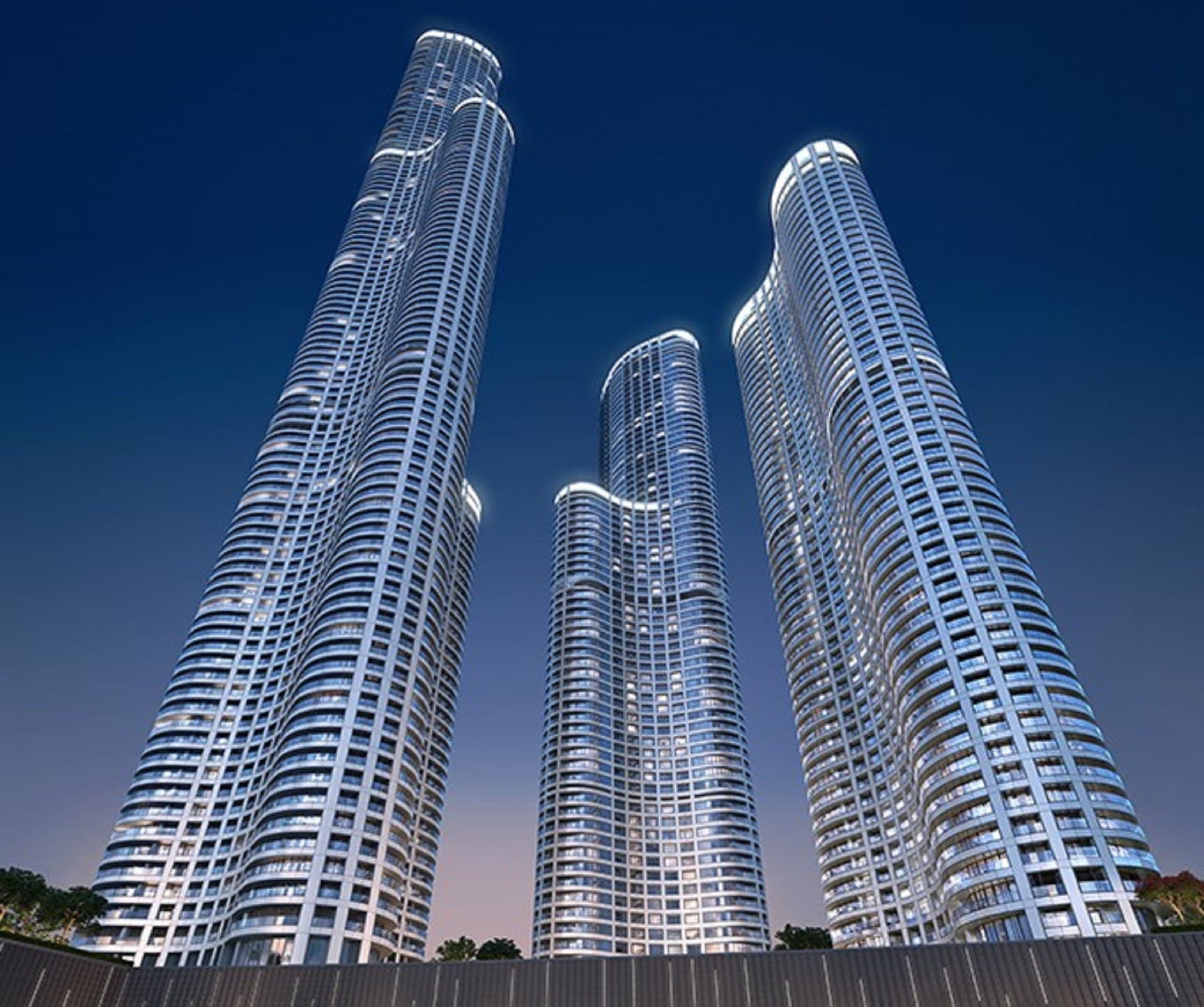
Lift systems, façade glazing systems, MEP electrical infrastructure and waterproofing all have a service life of roughly 12-18 years from commissioning. The Lower Parel mill-land conversion wave produced a dense cluster of towers commissioned between 2010 and 2015 — Marathon Next Gen Era, Lodha Vista, Equinox Embassy Citadel, Ashford Casagrand, Darsshan Ricco and several others. Most of these towers are now 11-16 years old, and life-cycle replacement is mathematically due. Property Butler tracks society AGM minutes across these towers — a meaningful share are now formally discussing major-repair budgets in the ₹8-25 crore range.
The buyer-side translation: a ₹15 crore resale 3 BHK in a Lower Parel 2012-vintage tower with an underfunded sinking corpus may carry a ₹6-14 lakh special-levy obligation that is not disclosed in the asking price. The seller is exiting before the levy. The buyer inherits it.
Prabhadevi has a different vintage profile. The big cluster — Rustomjee Crown phases, Lodha Grandeur, Kalpataru Oceana, Eon One — is predominantly 2018-2024 vintage. These towers are still inside the structural warranty + early-life window and the corpus build is on a slower clock. The high-risk Prabhadevi vintage is the older 2005-2012 society stock: Chaitanya Towers, Sumer Trinity, older Siddhivinayak Horizon buildings. For these, the same major-repair clock has either already triggered or is about to.
The four documents that reveal society financial health
Property Butler's standard pre-token diligence pulls these four documents from the society office. Sellers are obligated to provide them on request. Buyers who skip this step are taking a blind risk.
1. Last 3 financial-year audited accounts. Look at: opening and closing balance of sinking fund, major-repair reserve, operating reserve. Compute the year-on-year accretion rate. A society that adds less than ₹30 per sqft per year to its reserves is on a path to special levy. A society that adds ₹60-120 per sqft per year is building responsibly.
2. Last 3 AGM minutes and budget approvals. Look for: any approved or pending major-repair contracts, any special-levy resolutions, any disputes between the managing committee and the developer over warranty repairs, any pending or imminent legal disputes that could trigger an unbudgeted expense.
3. Maintenance bylaws and corpus contribution structure. What does the society's bylaw say about how new buyer's transfer fee flows into the sinking fund? In Maharashtra cooperative housing bylaws, a portion of the transfer fee (typically ₹25,000 per share or a sub-percentage of consideration, capped) flows into the sinking fund. Some luxury societies negotiate higher buyer-paid corpus contributions at transfer — confirm before agreeing to the deal.
4. Conveyance deed status and OC compliance. Societies that have not received conveyance from the developer carry a different set of structural and legal risks. Combined with corpus health, this is the full picture.
The five specific buyer questions for the society office visit
Questions to ask
- Current sinking fund balance per sqft of total area?
- Last 3 years' major-repair spend and source of funding?
- Any approved or pending special-levy resolutions?
- Pending litigation against developer or vendors?
- Conveyance status and any pending CIDCO/BMC dues?
Red flags that should pause the deal
- Sinking fund under ₹80/sqft on a 10+ year-old building
- Active special-levy resolution under discussion
- Society in litigation with developer over warranty
- 3+ year audit gap or non-filed accounts
- Pending BMC notice or building safety order
How to price-adjust if the corpus is under-funded
When the diligence reveals a real shortfall, buyers have three negotiation tactics. First, ask the seller to fund a corpus top-up at closing — typically structured as the seller depositing the gap directly into the society sinking fund on the day of transfer. Property Butler has closed deals with seller-funded corpus top-ups of ₹6-22 lakh on Lower Parel 2012-vintage 3 BHKs and 4 BHKs where the underfunding was clear.
Second, build the expected special levy into the negotiated price. If the society's major-repair plan suggests a likely ₹8 lakh per-unit levy within 24 months, that ₹8 lakh comes off the asking price. The negotiation needs to be evidence-backed — the society's own approved repair budget or RFP responses are the cleanest evidence.
Third, walk if the structural risk is too large. A society with sinking fund under ₹50/sqft on a 14-year-old building, simultaneously in litigation with vendor, with pending BMC notices — that is a stack of risks that no price adjustment can fully compensate for. Property Butler has walked clients out of three such deals across this corridor in the last 12 months.
Frequently asked questions
Can the seller refuse to share society financial documents?
Legally, the society is obligated to provide audited accounts to a prospective buyer on request from the existing member (the seller). A seller refusing to facilitate this is itself a red flag — it usually means the corpus is in worse shape than the seller is willing to disclose. Property Butler's standard pre-token checklist requires this disclosure; if the seller refuses, the deal does not proceed.
How much should I expect to pay into the sinking fund each year as a new owner?
Maharashtra cooperative housing bylaws require a minimum 0.25% of construction cost per year as sinking fund contribution — a token amount. In practice, well-managed Lower Parel and Prabhadevi luxury societies levy ₹3-7 per sqft per month towards combined sinking + major-repair contributions, on top of base monthly maintenance. For a 1,500 sqft 3 BHK, that is ₹4,500-10,500 per month dedicated to corpus build. The buyer should confirm this is being actively levied — many older societies have let this slip and are now underfunded as a result.
What is the typical major-repair cycle for a Lower Parel-Prabhadevi luxury high-rise?
Lift modernisation: 14-18 years from commissioning, typically ₹35-75 lakh per lift, with luxury towers running 6-12 lifts. Façade glazing rebuild: 18-25 years, total cost ₹8-25 crore on a 30-floor tower depending on glazing system. MEP electrical infrastructure refresh: 20-25 years, ₹3-9 crore. External waterproofing and terrace rebuild: 12-18 years, ₹1.5-5 crore. Pump and water-tank refresh: 15-20 years, ₹50 lakh-1.5 crore. These add up to ₹15-40 crore over the life cycle of a single luxury tower.
Does a high society maintenance charge mean a healthy corpus?
Not necessarily. High maintenance charges can reflect either active corpus building (good) or chronic vendor cost escalation, inflated salary bills, or poorly negotiated service contracts (bad). The buyer needs to look at the audited accounts to see how the high monthly charge is being deployed. A society charging ₹12,000/month per 3 BHK but only adding ₹2 per sqft per year to sinking fund is spending the money on operations, not building reserves.
Can a special levy be challenged after I have bought?
Special levies validly approved by the society general body are binding on all members, including new owners who inherited the obligation at purchase. Challenges are possible only on procedural grounds — improper notice, lack of quorum, ultra vires the bylaws. A buyer who took ownership after a special levy was approved but before it was collected is fully liable. This is exactly why pre-token diligence on pending resolutions matters more than buyers usually credit.
Related Reading
→ Prabhadevi Society Financial Health Audit Guide→ Vintage 2010-2018 OC Stock Decoder→ Lower Parel Maintenance Cost CAM Reality Check→ Society Conveyance Deed Buyer Decoder→ Society Resale NOC + Transfer Fee Playbook→ Lower Parel Area Guide→ Prabhadevi Area GuidePull the society financial health audit before you sign
Property Butler's pre-token diligence includes the society reserve, sinking fund and major-repair corpus audit — built into every Lower Parel and Prabhadevi resale transaction we handle.
Search LP and PD Inventory