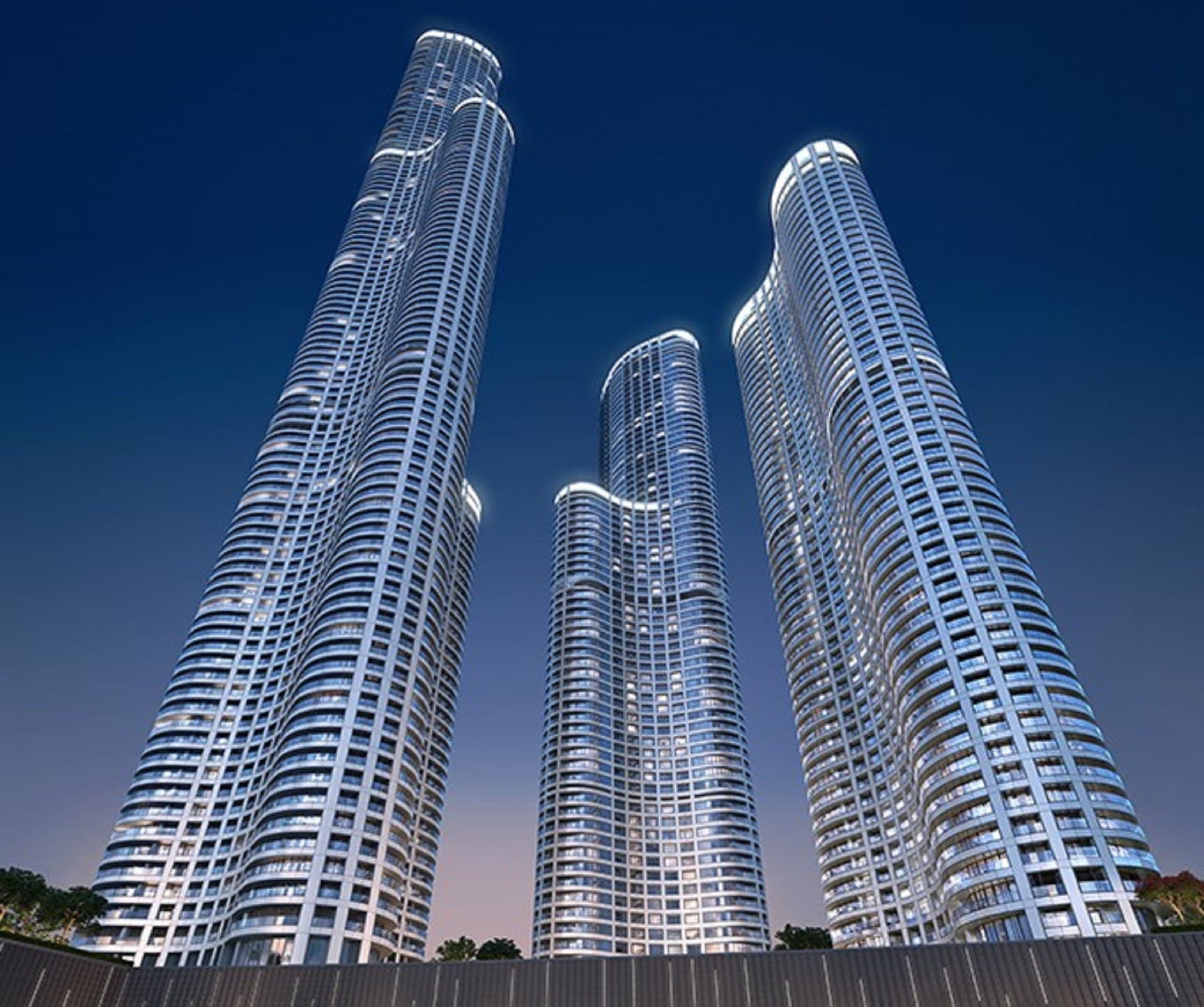
A flat purchase in Lower Parel or Prabhadevi cannot complete without society cooperation. The managing committee (MC) of the cooperative housing society issues the NOC that authorises share-certificate transfer, society membership induction, and the maintenance-billing changeover. Property Butler tracks approximately 15-20 active resale transactions per quarter in this corridor that hit NOC-objector friction — typically over transfer fees, lift-fund contribution, or a single MC member raising a procedural objection. This playbook decodes how those disputes are resolved, what the law actually permits, and the buyer + seller protocols that defuse the standard objection patterns.
Property Butler — NOC Dispute Snapshot
Maharashtra Co-op Societies Act (MCS) 1960: governs all society NOC + transfer matters | Maximum legal transfer fee: ₹25,000 (premium charge ceiling under bye-laws) | Typical Tier-1 LP/Prabhadevi society transfer fee + lift fund + sinking fund: ₹1.5-4 L combined | Society NOC objection window after application: 15-30 days standard | Cooperative Court appeal time on rejected NOC: 2-6 months.
What Society NOC Actually Authorises
A society NOC for resale is not a transfer of ownership — that happens via the registered sale deed at the sub-registrar. The society NOC authorises three downstream events: (1) the share certificate (the document that proves the flat-owner's membership in the cooperative society) is transferred from seller to buyer, (2) the buyer is inducted as a society member, and (3) the maintenance billing, common-area access rights, and parking allocation move from seller to buyer. Without society NOC, the buyer technically owns the flat but is not a member of the society — which means no AGM voting rights, no maintenance bill in the buyer's name, no parking allocation transfer, and no NOC for future resale.
This is why the NOC stage cannot be skipped. The legal sale is complete at registration; the practical sale is complete only when the society inducts the buyer and the share certificate transfer is recorded in the society's register.
The Six Most Common NOC Objection Patterns
| Objection | Standard MC Reasoning | Buyer Resolution Path |
|---|---|---|
| Excess transfer fee demand | Society wants 1-2% of sale value | MCS Act caps premium at ₹25,000; pay only what bye-laws permit |
| Unpaid maintenance arrears | Seller has outstanding bills | Settle from sale consideration at registration; escrow protocol |
| Lift modernisation special levy unpaid | One-time levy raised at AGM | Verify resolution + clear before NOC application |
| Buyer profile objection (NRI / firm / trust) | MC discomfort with non-individual buyer | MCS Act prohibits discrimination; cooperative court remedy |
| Pending alteration / renovation dispute | Seller did unauthorised work | Indemnify society in writing; complete reversal before NOC |
| Parking / loft / terrace allocation dispute | Seller's allocation contested | Resolution by society resolution; document allocation clearly |
The Transfer Fee Ceiling — Where MCs Routinely Overreach
Under MCS Act 1960 and the Model Bye-Laws notified by the Maharashtra Cooperative Department, the maximum transfer fee a cooperative housing society can charge is ₹25,000 per transfer. This is a hard statutory ceiling. Many luxury societies in Lower Parel and Prabhadevi attempt to charge 1-2% of the sale value — which on a ₹10 Cr buy translates to ₹10-20 L. This is illegal under the Act and the model bye-laws.
In practice, societies extract higher amounts through three accounting devices: (a) labelling the excess as "voluntary contribution to sinking fund", (b) routing it as "premium for transfer of additional parking", or (c) collecting it as a one-time levy for building maintenance. None of these have legal sanction if not authorised by a specific AGM resolution that has been registered with the Registrar of Cooperative Societies.
Buyer / Seller Defence
- Request copy of AGM resolution authorising any fee above ₹25,000
- Verify resolution is registered with the Registrar of Cooperative Societies
- Pay only the legally authorised amount under protest
- File complaint with Deputy Registrar if society refuses NOC without illegal payment
When to Concede
- Sinking fund contributions backed by AGM resolution — legally payable
- Lift modernisation levy from registered AGM — payable
- Unpaid maintenance arrears from seller's account — escrow at registration
- Construction-period special levies if formally raised and ratified
The Cooperative Court Remedy
If the society refuses NOC despite proper application + statutory fee payment, the buyer's remedy is the Maharashtra Cooperative Court. Under Section 91 of the MCS Act, any dispute touching the constitution or business of a cooperative society — including NOC refusal — falls within the cooperative court's exclusive jurisdiction. Civil courts cannot adjudicate. The cooperative court can:
- Direct the society to issue NOC within a specified time (typically 15-30 days)
- Quash illegal demand for excess transfer fee and direct refund of any over-payment
- Award damages for delay if the buyer can prove specific financial loss (interest on bridging loan, lost rental income, etc.)
- Order specific induction as a member of the society with full membership rights
The practical timeline: filing a Section 91 application takes 4-8 weeks (lawyer-led), the first hearing is typically scheduled within 2-3 months of filing, and a final order usually arrives 3-6 months from first hearing. Total clock from NOC refusal to court order: 6-12 months. This is why the threat of cooperative court action — backed by a properly-drafted demand notice — usually resolves disputes within 30-60 days. Societies that face the prospect of a cooperative court matter will typically settle to avoid the procedural cost.
Redevelopment Vote Vetoes — When a Single Owner Blocks Progress
The other side of the society-NOC question is redevelopment. A society that wishes to redevelop its building under Section 79A of the MCS Act and Regulation 33(7) of the Mumbai DCR requires a 75% majority vote of members to proceed. In Lower Parel and Prabhadevi, where many mid-vintage societies (1995-2010 construction) are ripe for redevelopment, the single-owner-veto pattern is increasingly common.
A buyer purchasing a flat in a society that is actively considering redevelopment needs to understand four things:
| Buyer Question | What to Verify |
|---|---|
| Is redevelopment AGM resolution passed? | Request copy + verify with Registrar |
| What is the developer offer? | Permanent alternate accommodation (PAA) size, monthly rent, corpus, hardship compensation |
| Has 75% threshold been crossed? | Society register of voted-in-favour members |
| Is there pending dissent litigation? | Search cooperative court + Bombay HC writ records |
If a society has not yet passed the 75% resolution, a single dissenting member can block the entire redevelopment. The Mumbai DCR 33(7) and the Maharashtra Slum Rehabilitation Act do not permit forced redevelopment of legitimate non-slum cooperative housing — the 75% threshold is binding. This means a buyer in a society where 70% of members favour redevelopment but 30% are dissenters is effectively buying into a stalled redevelopment. The flat keeps its current value; the redevelopment upside is contingent on the dissenters being persuaded or replaced through normal resale turnover.
NOC for Redevelopment-Era Transactions
A society that has approved redevelopment but not yet handed possession to the builder is in a transitional state. Resale during this transition is allowed under the MCS Act, but the NOC application becomes more complex. The society MC will typically require: (a) the buyer's agreement to all redevelopment terms already approved, (b) buyer's signature on the development agreement (DA) as a member-in-waiting, and (c) the buyer's acknowledgement of the hardship period without society NOC objections.
Property Butler's reading of redevelopment-era LP / Prabhadevi transactions: these trade at 12-22% discounts to comparable non-redevelopment-era stock in similar locations, because the buyer is essentially taking on the redevelopment execution risk in exchange for a guaranteed FSI uplift at completion. The buyer who is patient and well-capitalised can exit at 2-3x of purchase value within 3-5 years if redevelopment executes cleanly.
The 21-Day Auto-Approval Rule
Under Maharashtra Cooperative Societies (Amendment) Act and the Model Bye-Laws, if a society does not respond to a properly-filed NOC application within 21 days, the NOC is deemed granted by operation of law. This provision is not widely-invoked but is legally enforceable. Property Butler's protocol for clients facing slow-walking MCs: send the NOC application by registered post with acknowledgement-due, retain proof of delivery, and after 21 days send a formal claim of deemed approval to the society and the Registrar.
Society NOC Auto-Approval Rule
21 days non-response = deemed approval
Model Bye-Laws + MCS Act amendments — enforceable via Registrar / cooperative court
Property Butler Protocol for NOC Disputes
From our experience closing transactions in this corridor:
- Pre-application diligence: Verify all seller-side liabilities (maintenance arrears, special levies, parking allocation, modification work) before agreement-for-sale. Many "NOC disputes" are actually disputes the buyer inherited from the seller's unresolved matters.
- Formal application by registered post: Submit NOC application with full documentation by registered post with acknowledgement-due, not over email or in-person. This creates legal evidence of application date and starts the 21-day clock.
- Statutory fee payment only: Pay only what is legally authorised — ₹25,000 transfer premium + audited sinking-fund / lift-modernisation levy if backed by AGM resolution. Refuse all other demands in writing.
- Deemed approval claim after Day 21: If no NOC response in 21 days, send formal claim of deemed approval with copy to Registrar of Cooperative Societies.
- Section 91 cooperative court application if needed: For sustained refusal, file under MCS Act with lawyer specialised in cooperative law. Typical resolution: 6-12 months.
Related Reading
→ Society Resale NOC + Transfer Fee Playbook→ Society Litigation + MahaRERA Complaint Diligence→ Society Conveyance Deed Decoder→ Society AGM + Redevelopment Vote Playbook→ Prabhadevi Cluster Redevelopment Buy-In PlaybookFrequently Asked Questions
What is the maximum society transfer fee under Maharashtra law?
₹25,000 — set by the Maharashtra Model Bye-Laws under the Cooperative Societies Act 1960. Any demand above this requires a specific AGM resolution registered with the Registrar of Cooperative Societies. Tier-1 LP / Prabhadevi societies often layer in sinking-fund contributions and lift-modernisation levies that are legally separate from transfer fee — verify each charge has formal AGM authorisation.
Can the society refuse NOC because the buyer is an NRI or a company?
Generally no — the MCS Act does not permit discrimination on buyer category. NRI buyers under FEMA compliance and corporate buyers within their MoA powers are legitimate. Societies that refuse on these grounds face cooperative court action under Section 91 of the MCS Act. Some societies attempt to restrict via bye-law amendments — these amendments require Registrar approval and can be challenged.
What happens if the society does not respond to my NOC application?
If no response within 21 days of a properly-filed application (registered post with proof), the NOC is deemed granted by operation of law under the Model Bye-Laws. Send a formal claim of deemed approval to the society and to the Registrar of Cooperative Societies. Most slow-walking societies resolve at this stage.
How long does cooperative court resolution actually take?
Filing + first hearing: 4-12 weeks. Final order on a contested NOC matter: 3-6 months after first hearing. Total clock from refusal to enforceable order: 6-12 months. Most societies settle in the demand-notice or first-hearing window to avoid the procedural cost — final hearings happen in roughly 20-30% of filed matters in practice.
Should I buy a flat in a society where redevelopment is being discussed but not approved?
Only with eyes open. Pre-approval societies (under the 75% threshold) carry the risk that dissenting owners block redevelopment indefinitely. The flat trades at the standalone value, not the post-redevelopment upside. Post-approval societies (75% threshold crossed, DA signed) trade at a 12-22% discount during the hardship period and resolve to full uplift at handover. Property Butler typically advises waiting until DA signature for redevelopment-era buys.
Facing an NOC dispute in Lower Parel or Prabhadevi?
Property Butler's transaction team has handled 60+ closings in this corridor including 11 with active NOC objector disputes. We can verify legal authorisation of every society charge before you commit.
Search Verified Resale Inventory