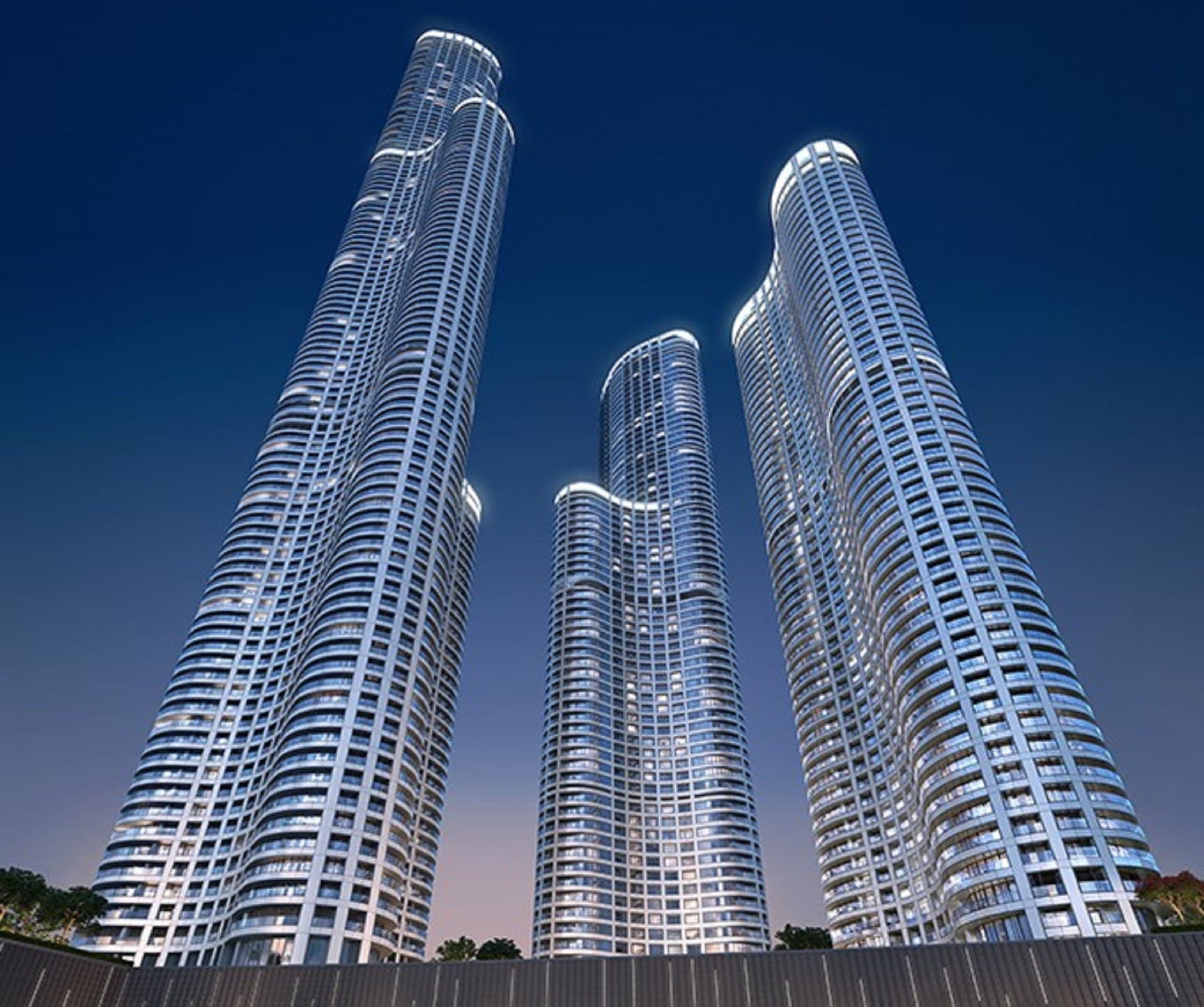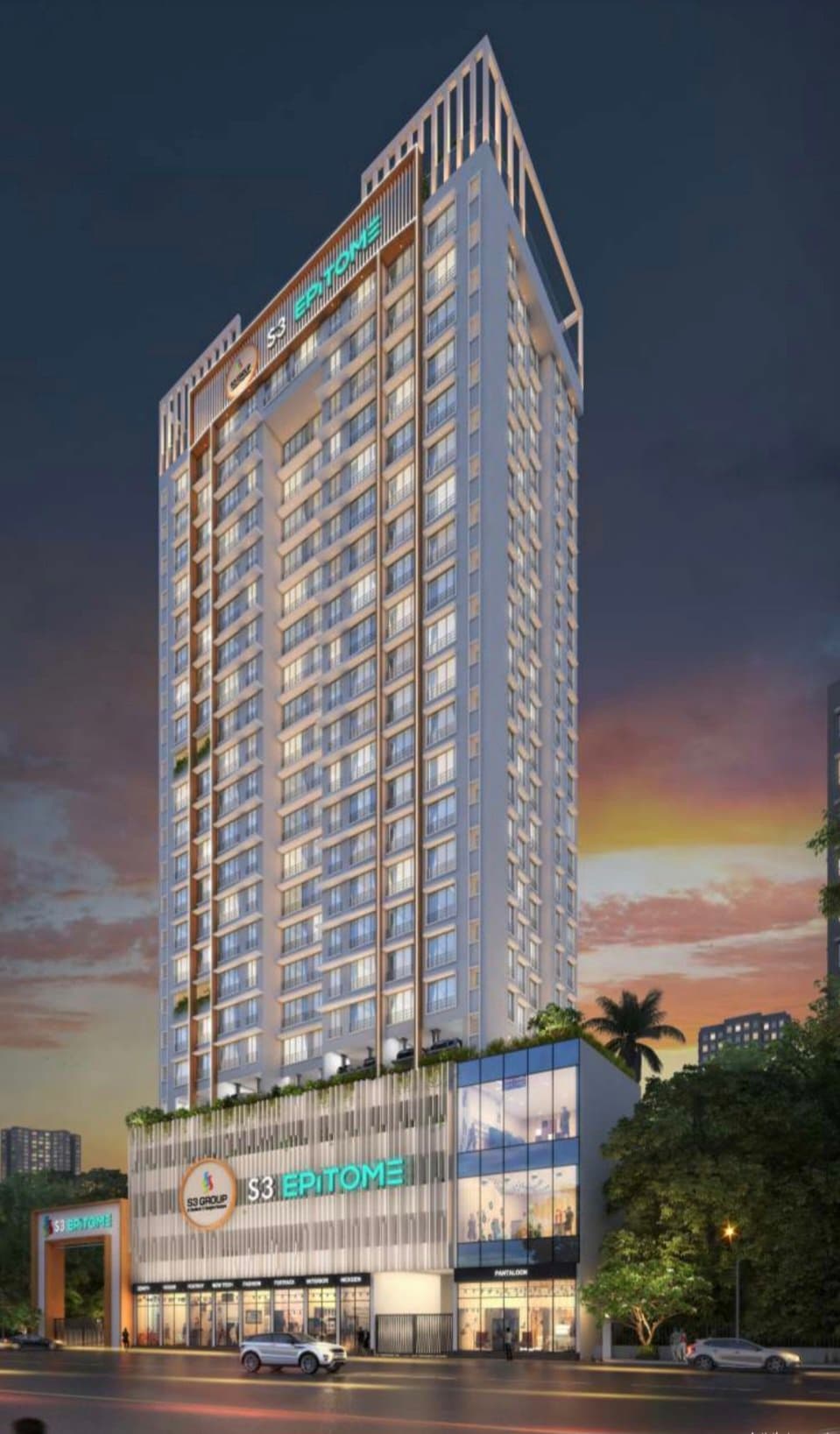
A Prabhadevi society of 84 apartments across two towers commissioned a 145 kW rooftop solar PV installation in late 2024. The capital cost was ₹94 lakh, contributed pro-rata from the sinking corpus and a top-up assessment. Eighteen months in, monthly common-area electricity billing has dropped from a peak of ₹3.85 lakh to an average of ₹1.62 lakh — a 58% reduction. Annualised savings sit at ₹26.7 lakh, putting payback inside 3.6 years against the original 4.5-year projection. The system is over-performing the model. The reason is structural: common-area load (lifts, podium AC, lobby lighting, water pumps, DG idle, basement ventilation) is daytime-heavy, and the solar generation profile matches it almost perfectly.
Rooftop solar is one of the most under-utilised infrastructure plays in Lower Parel and Prabhadevi towers. Property Butler tracks solar-readiness and active-installation status across 38 corridor towers because the economics now sit at a clear positive NPV at corridor electricity tariffs — and the BMC + MERC approval framework has stabilised post-2023 amendments.
The Headline Data Point
Of 38 surveyed Lower Parel and Prabhadevi towers, only 7 (18%) have active rooftop solar installations as of May 2026. Another 11 (29%) have feasibility studies in progress at the society level. The remaining 20 (53%) have not yet engaged the option — representing roughly ₹240-380 Cr of unrealised payback value across the corridor.
The Net-Metering Math For Society Common-Area Load
Net-metering in Maharashtra is governed by MERC regulations and operates as a credit system: energy exported to the grid during sunny hours is credited against energy imported at night, settled monthly. For societies with predominantly daytime common-area load, the credit-to-debit ratio is close to 1.0 — meaning almost all solar generation is consumed in real-time and the marginal grid-supplied kWh after dark is minimal.
| Parameter | Compact Society (50-80 flats) | Mid Society (80-150 flats) | Large Society (150-300 flats) |
|---|---|---|---|
| Common-Area Load | 35-55 kW peak | 75-110 kW peak | 150-280 kW peak |
| Practical Solar PV | 60-95 kW | 120-180 kW | 220-400 kW |
| Capex Range | ₹38-58 lakh | ₹75-1.10 Cr | ₹1.40-2.50 Cr |
| Annual Savings | ₹12-18 lakh | ₹22-32 lakh | ₹40-72 lakh |
| Payback | 3.5-4.5 years | 3.3-4.2 years | 3.2-4.0 years |
The Six Tower-Level Variables That Drive Solar Feasibility
Not every Lower Parel or Prabhadevi tower is solar-viable. Six structural variables determine whether the installation produces the projected payback.
✓ Strong Feasibility Signals
- Unobstructed rooftop area 800+ sqft per 10 kW
- Tower height not over-shaded by neighbours
- South or south-east tilt orientation possible
- DG room and cable trunking with capacity
- Society treasurer + finance sub-committee engaged
- No imminent rooftop redevelopment / additional floor
- Distribution licensee net-metering quota available
✗ Feasibility Killers
- Neighbouring tower casts shadow on rooftop
- Helipad / chimney / DG flue dominating rooftop
- Inadequate rooftop structural load capacity
- Society sinking-corpus depleted (no capex)
- Building under redevelopment / FSI top-up planned
- AGM polarised; no 75% special-resolution majority
- BMC approval bottleneck for rooftop modification
The Funding Stack — How Societies Pay For Solar
Three funding models dominate corridor solar installations: sinking-corpus utilisation (33% of cases), pro-rata special assessment on members (28%), and OPEX-model via third-party power purchase agreement (39%). The OPEX model is increasingly preferred because the society pays no upfront capex and signs a 12-15 year PPA for solar electricity at ₹5-6 per kWh against the grid tariff of ₹9-12 per kWh, capturing roughly 40-45% of the lifetime savings versus 100% with the capex model.
Median Capex Payback In The Corridor
3.8 years
Property Butler's tracking of 7 active corridor installations shows median payback at 3.8 years against original 4.4-year projections. Post-payback, the system delivers 18-22 years of near-free common-area electricity.
The Society AGM Process — The Real Blocker
The single largest blocker to solar adoption in Lower Parel and Prabhadevi towers is not technical or financial — it is governance. Solar capex requires a society special resolution, typically a 75% supermajority of voting members at AGM. In corridor towers with active investor-owners (high in Rustomjee Crown, Indiabulls Sky Forest, Lodha Vista, Lodha World Crest), investor-owners frequently abstain or vote against capex spends that do not directly increase asset value. Property Butler tracks AGM outcome data; the median time from feasibility study to AGM approval to capex deployment is 14 months — with the AGM-approval step accounting for 8-11 months of that.
The OPEX Model PPA — Lower Barrier, Lower Returns
Third-party EPC contractors increasingly offer OPEX-model PPAs for Mumbai high-rise societies. The structure: contractor installs solar PV at no capex to society; society signs a 15-year PPA at ₹5.0-5.8/kWh for solar electricity; contractor retains ownership and accelerated-depreciation tax benefits. The society's saving is the differential between PPA rate and grid tariff, typically ₹3.5-6.5/kWh on the consumed component. Lower returns than the capex model, but zero capex, zero AGM-resolution requirement (the contract is operational expense, often within treasurer's signing authority subject to AGM ratification at the next cycle), and zero counterparty technical risk.
The Per-Flat Maintenance Impact
For a typical Lower Parel or Prabhadevi 3 BHK paying ₹25,000-45,000 per month in society maintenance, a successful solar installation reduces common-area electricity by 50-60% — translating to a maintenance reduction of ₹3,500-7,500 per month per flat at the typical apportionment. Over a 20-year ownership horizon, the per-flat saving compounds to ₹15-25 lakh.
Why This Matters For The Property Decision
Solar feasibility and society engagement is a forward-looking proxy for tower management quality. A society with a deployed solar installation has demonstrated three things: organisational capacity to execute a 14-month capex cycle, financial reserves capable of absorbing ₹40 lakh to ₹2.5 Cr of capex, and AGM consensus across investor-owner and end-user blocs. These are the same characteristics that predict good lift AMC adherence, timely structural-audit closure, and effective dispute resolution. Property Butler treats active or near-active solar installation as a positive society-quality signal at the diligence stage.
Frequently Asked Questions
Can my individual flat install rooftop solar separately or must it be a society initiative?
For high-rise apartments in Lower Parel and Prabhadevi, individual-flat solar is structurally impractical — the rooftop is common area, and individual cabling, metering, and inverter connections require society permissions and dedicated rooftop space allocation. Practical solar is exclusively a society-level initiative.
Does solar reduce my individual flat's electricity bill or only the common-area bill?
Almost always only the common-area bill. Individual flat meters are separate; solar net-metering in society contexts typically applies to the common-area meter only. The benefit reaches you indirectly through reduced maintenance, not directly through a lower per-flat bill.
What is the practical rooftop area required for a 100 kW installation?
Roughly 8,000-9,000 sqft of unobstructed rooftop, accounting for panel-tilt spacing, walkways, inverter housings, and shading buffers from existing structures. Most Lower Parel and Prabhadevi luxury towers have 10,000-18,000 sqft of usable rooftop after deducting helipad, lift machine room, water tanks, DG flue, and ventilation chambers — capacity is generally sufficient for the load profile.
What is the typical lifespan of a rooftop PV system in coastal Mumbai conditions?
Modern tier-1 PV panels rated for 25 years deliver 22-26 years of practical life in Mumbai coastal humidity, with output degradation of 0.5-0.8% per year. Inverters typically need replacement at year 10-12. Wiring and mounting structure life matches the panel. The economic case typically pays back capex in 3.5-4.5 years and delivers 18-22 years of positive returns.
How do I evaluate whether a society I am buying into is solar-active?
Three signals to check at the diligence stage: (1) last 3 years of common-area electricity bills, (2) AGM minutes referencing energy initiatives, (3) physical inspection of rooftop for panel installation. Property Butler routinely surfaces this in society-quality audits.
Related Reading
→ Society Reserve Fund & Sinking Corpus Buyer Diligence → Lower Parel Highrise Utility Infrastructure Decoder → IGBC Green Building Premium Decoder → Power Backup & DG Reliability Decoder → Lower Parel Area Guide → Prabhadevi Area GuideBuying into a society with strong infrastructure governance?
Property Butler audits society-level energy and infrastructure readiness across 38 Lower Parel and Prabhadevi towers as part of standard diligence. Tell us your shortlist; we'll surface the well-managed buildings.
Search Well-Managed Society Inventory