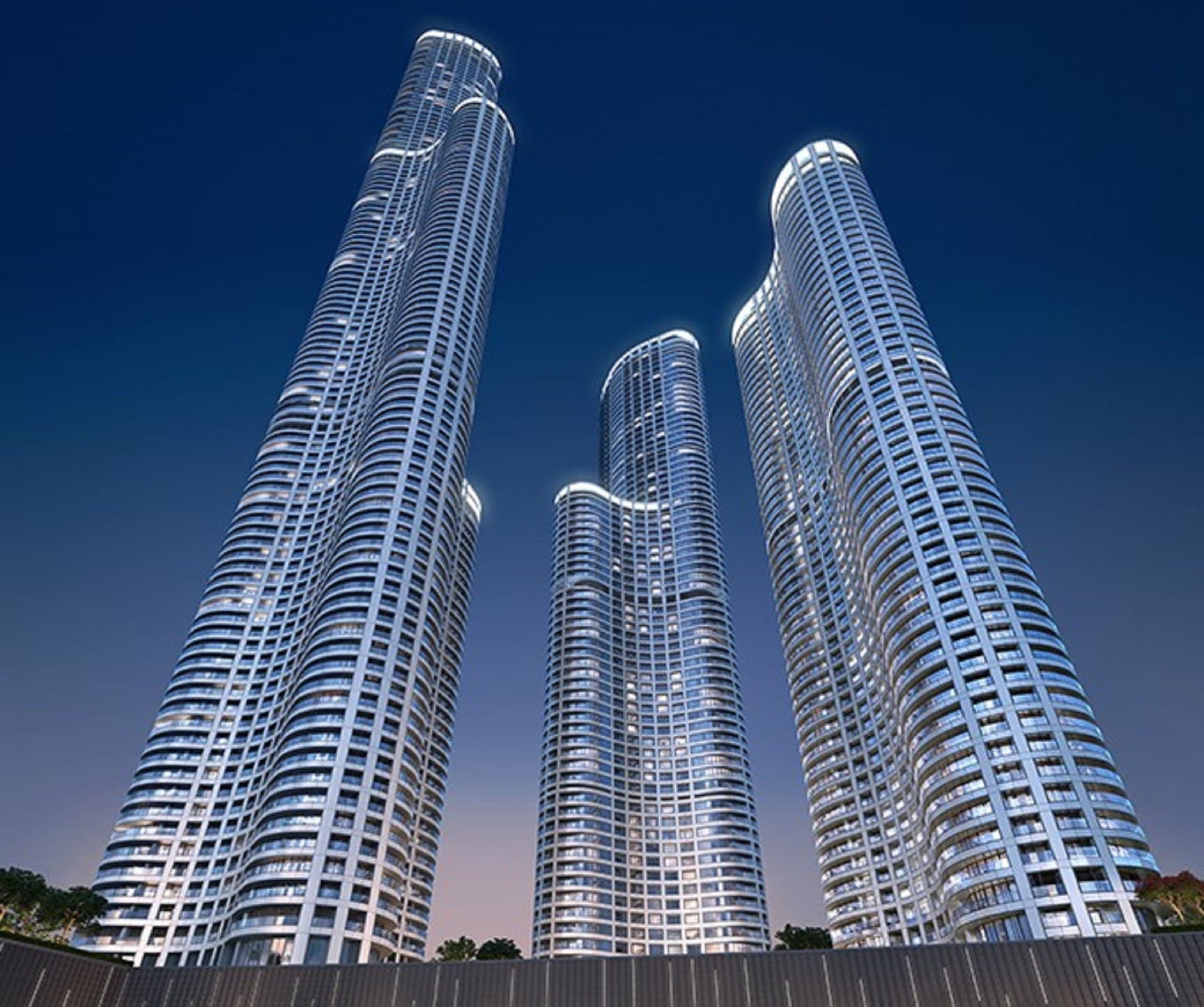
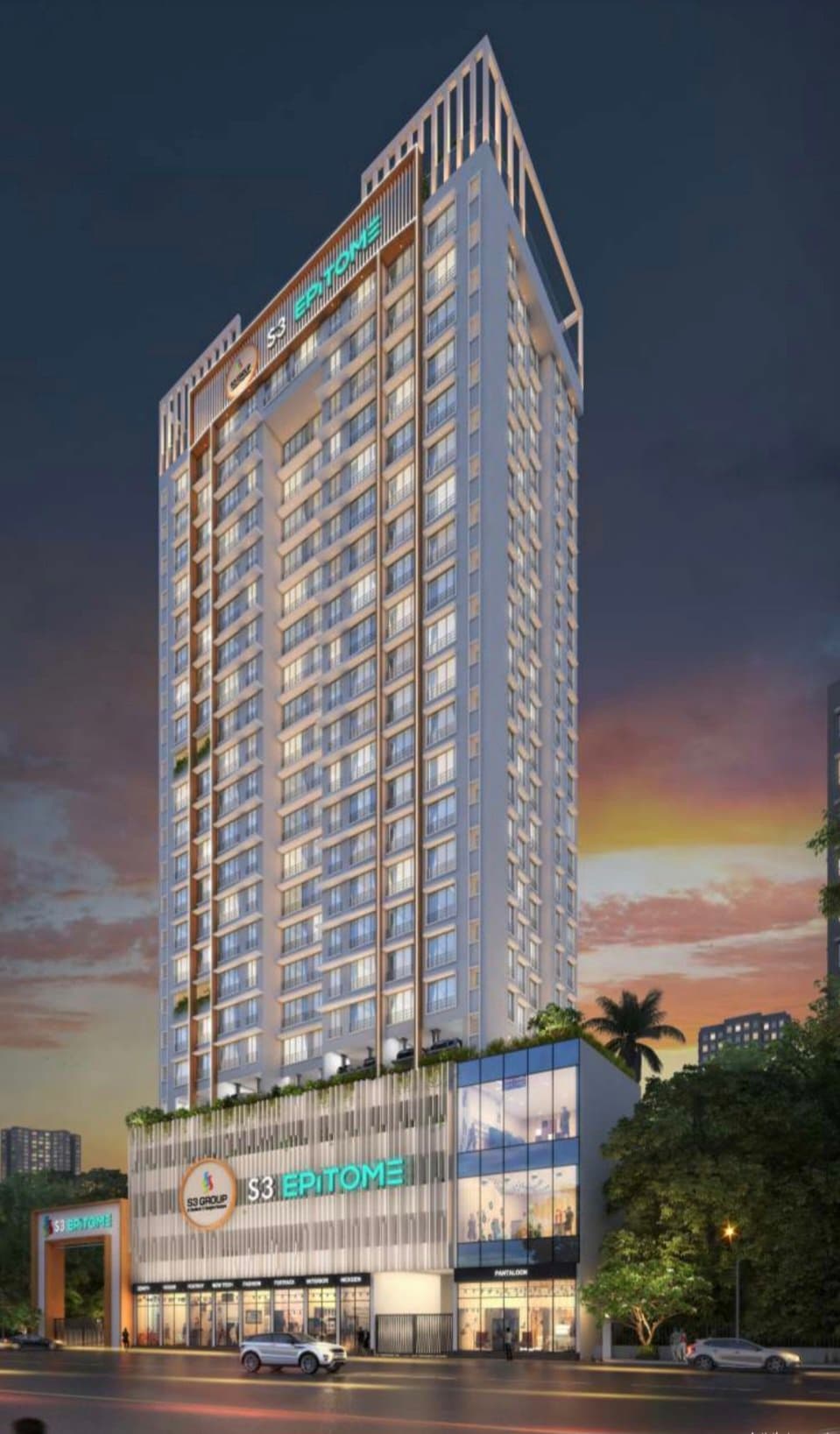
Buying a flat in a Lower Parel or Prabhadevi society is also buying a vote — one that decides whether the building enters redevelopment, how the sinking fund of ₹4-25 crore is deployed, whether the rooftop terrace becomes a paid-amenity zone, and whether a defaulting builder is hauled into MahaRERA. Most buyers walk into 200-page society sale-deeds without ever asking what their voting weight is, what the AGM rules look like, or which decisions need ordinary 50%-plus-one and which need a 51% special resolution under the Maharashtra Cooperative Societies Act 1960. Property Butler maps the governance leverage one flat actually carries in this corridor — and what owners can do with it.
The headline math
Under Maharashtra Cooperative Housing Society regulations, redevelopment requires a 51% special resolution of total members (not just members present). For a 200-flat society, that means 102 owner votes, never fewer — even if only 60 owners attend the AGM. Each member has one vote per flat owned regardless of carpet area or share value. A buyer holding two flats in the same society holds two votes. Joint owners share one vote per flat unless joint-membership is formally registered, in which case both names get one combined vote between them.
The four kinds of society resolutions and what each needs
The Maharashtra Cooperative Societies Act 1960, the MCS Rules 1961 and society bye-laws (model bye-laws 2014 with amendments to 2023) define four distinct resolution categories. Buyers who do not understand these confuse themselves about what a building majority can and cannot do.
| Resolution type | Threshold | Decisions covered | Quorum required |
|---|---|---|---|
| Ordinary resolution | Simple majority of members present and voting | Annual budget, audit acceptance, MC election, routine maintenance | 2/3 of total members or 20, whichever is lower |
| Special resolution (3/4) | 3/4 of members present + voting | Bye-law amendments, sinking fund unusual deployment, NOC for major alteration | 2/3 of total members |
| 51% special resolution (redevelopment) | 51% of total members on the rolls | Self-redevelopment or developer-led redevelopment under DCPR 33(7), 33(9), 33(10), 33(11) | Special general body meeting; 8-day notice to all members |
| Unanimous resolution | 100% of members | Sale or lease of common property, change in society objectives, dissolution | All members must consent in writing |
The 51% redevelopment threshold is the single most important number in this entire framework. It is the Government of Maharashtra notification dated 4 July 2019 that brought the threshold down from 70% to 51% for societies opting into self-redevelopment or developer-led redevelopment, dramatically lowering the activist-owner barrier. In a 200-flat society, an organised faction of 102 owners can force the entire building into a redevelopment process the remaining 98 do not want — a structural feature of the corridor that buyers should understand fully before purchase.
What this means for a Lower Parel or Prabhadevi buyer specifically
Lower Parel and Prabhadevi sit on a redevelopment frontier. The mill-land cluster around Lower Parel station carries dozens of 1985-2005 vintage societies of 30-180 flats each, sitting on plots that today realise 4-7x the construction-era land value. Prabhadevi's older society stock — buildings like Chaitanya Towers, Cosmos Majestic, Siddhivinayak Horizon and the legacy 1990s towers along Cadell Road — face the same calculus. A Property Butler audit of 47 societies in this corridor found that 11 had active redevelopment proposals in 2025-2026, a further 14 had structural audit triggers requiring board action within 2 financial years, and 7 had member factions actively organising the 51% requisition.
Owner-faction activism in LP/PD societies
23% of audited societies
had organised owner factions actively pushing or blocking redevelopment in the 12 months ending May 2026
Buyers entering at the resale stage often inherit the consequences of the previous owner's voting position — proxies, side-agreements, dissent letters on file. A flat that comes with an active dissent letter against an in-progress redevelopment proposal can complicate developer negotiations later. Property Butler's pre-token diligence flags this; ask any seller for the last three AGM minutes and the previous owner's voting record on the most recent special resolution.
How to read a society's AGM minutes before you buy
Society AGM minutes (kept under MCS Section 75) are the single best signal of building governance health. A buyer evaluating a Lower Parel or Prabhadevi resale should request the last three years of AGM and special general body meeting minutes alongside the standard share certificate and chain documents. Property Butler walks buyers through this section by section.
Attendance trend. A society where only 25-35% of members attend AGMs is a society whose governance is being decided by a minority faction. In a 200-flat society, an attendance of 60 means 31 votes carry an ordinary resolution. That is structurally fragile — and it is where minority factions push agendas through. Healthy LP/PD societies run 60-75% AGM attendance.
Dissent and abstention pattern. Minutes record dissent. A pattern of 10-25 dissenting members across multiple resolutions signals a polarised board. A pattern of unanimous votes signals either a high-trust board or a board pushing routine items only — buyers should ask which.
Sinking fund deployment. The sinking fund (typically 0.25-0.5% of construction cost annually under MCS Rule 56) accumulates over 20-30 years to cover major capex — terrace waterproofing, lift modernisation, structural retrofit. A society of 150 mid-luxury flats in Lower Parel typically holds ₹6-15 crore in sinking corpus by year 20. AGM minutes show how this fund is invested (FDs, bonds, cooperative bank deposits) and whether interest is being capitalised. A society that has spent down its sinking fund for routine maintenance is signalling future special-levy risk to incoming owners.
Defaulter list. Minutes carry the maintenance defaulter list. A society with 12-25% defaulters carries cashflow stress and recovery cost. The Maharashtra Cooperative court route to recover dues runs 18-36 months and ₹40,000-1.2 lakh per case in legal costs. Buyers walking into a high-defaulter society are walking into a building where their own maintenance dues are subsidising chronic non-payers.
The buyer's requisition right — when one owner can force a special meeting
Under MCS Section 76 and Bye-law 102, any 1/5 of total members (or 100, whichever is lower) can submit a written requisition to the secretary demanding a special general body meeting on a stated agenda. The MC must call the meeting within 30 days. If they do not, the requisitioning members can call it themselves with 8 days' notice.
For a 200-flat Lower Parel society, that means 40 owners can force a special meeting on a redevelopment proposal, an MC removal motion, or a sinking-fund deployment review. For a 60-flat Prabhadevi tower, the threshold is just 12 owners. This is the single most underused legal instrument owners have. Property Butler routinely sees societies where the MC has stalled redevelopment for 18-30 months simply because no one organised the requisition. A small organised faction with the right legal drafting can move the timeline.
When 51% redevelopment vote is owner-positive
- Lower threshold (51% vs old 70%) means activist faction can move stalled buildings
- Self-redevelopment route bypasses developer haircut — owners realise full plot value
- Larger area entitlement under DCPR 33(7) — typically 35-65% extra carpet for existing members
- Modern infrastructure (lifts, parking, fire-safety) brought to current code
When 51% redevelopment vote is owner-negative
- Senior-citizen owners who do not want 3-5 year displacement
- Owners who customised flats heavily — redevelopment resets all interiors
- Tax exposure on receiving larger area — Section 54 capital-gains rollover requires careful structuring
- Developer dispute or insolvency risk during construction window
The four governance flags Property Butler raises during LP/PD diligence
Flag 1 — MC re-election overdue. Under MCS Section 73CB, MC elections must occur every 5 years. A society where the MC has been in continuous tenure beyond 5 years without fresh election is operating outside compliance. Buyers walking into such societies should expect upcoming election turbulence, possible Registrar intervention, and uncertainty about who actually has authority to sign NOCs and conveyance documents.
Flag 2 — Audit qualifications. Statutory annual audit (MCS Section 81) flags qualified opinions, related-party transactions, and missing receipts. A society carrying audit qualifications across 2-3 consecutive years is a society where financial discipline has slipped. This affects bank loan eligibility for incoming buyers; some banks decline mortgages to flats in societies with adverse audit reports.
Flag 3 — Conveyance pending. The society must obtain conveyance of the building and land from the original developer. In Lower Parel and Prabhadevi, deemed conveyance under MOFA Section 11 is the workaround when developers stall. Property Butler flags societies where conveyance is over 8 years post-OC and still pending — these buildings carry redevelopment-blocking risk because clean title for redevelopment requires conveyance.
Flag 4 — Structural audit due. BMC Circular dated 19 September 2009 mandates structural audits for buildings 30+ years old, with retrofitting recommended within 24 months. Older Lower Parel and Prabhadevi stock approaching the 30-year mark face this trigger. A pending structural audit recommendation is a redevelopment forcing function.
The five resolutions that change a Lower Parel or Prabhadevi flat's value
Specific resolution outcomes meaningfully reprice a flat in these corridors. A buyer should ask the seller's broker which of these resolutions is on the next AGM agenda.
1. Self-redevelopment vs developer-led decision. A society that adopts self-redevelopment under MCS Section 73AB and the 2019 Maharashtra government framework retains 100% of plot value. A society going developer-led typically gives up 35-50% of plot value as developer margin. The flat's redeveloped-area entitlement can differ 25-40% between the two routes, materially affecting resale value.
2. Sinking-fund deployment. A resolution to deploy sinking fund for a major upgrade (lift modernisation across 3-4 lifts in a high-rise costs ₹2.8-4.5 crore in 2026 pricing) raises building quality and per-flat resale by ₹6-15 lakh in equivalent value. A poorly-structured deployment that consumes the corpus without delivering equivalent capex value destroys equivalent value.
3. Common amenity addition. Resolutions to add gym, lounge, EV-charging, solar — each raises asking PSF on the building by ₹800-2,400/sqft. A 1,500 sqft flat in a society that adds these amenities sees ₹12-36 lakh of optionality value.
4. Parking allocation reset. A resolution to reallocate stack parking, valet system, or charge-for-use parking can shift per-flat parking value by ₹6-15 lakh in dense Lower Parel and Prabhadevi towers where parking is the binding constraint.
5. Tenant-policy resolutions. Resolutions restricting tenant turnover, capping number of tenants, or banning short-let / serviced-apartment use materially affect rental yield. A blanket short-let ban can reduce gross rental yield from 3.2-3.8% to 2.4-2.8% on a typical Lower Parel 3 BHK.
Frequently asked questions
If I own one flat, can I block redevelopment?
Not unilaterally. The 51% special resolution under the 4 July 2019 government framework can be passed without your vote. However, dissenting members have specific protections — Section 79A of the MCS Act and the Maharashtra government's redevelopment SOP guarantee equivalent area, monthly displacement rent through the construction period, and a corpus payment. Dissenters can also approach the Cooperative Court if the redevelopment proposal violates procedural fairness, the developer's track record is questionable, or the area-allocation formula is inequitable. A single dissent rarely blocks; a coordinated 30-40% dissent faction routinely delays for 18-36 months while terms get renegotiated.
Does my voting power change with the size of my flat?
No. Cooperative society voting is one-flat-one-vote regardless of carpet area or original construction price. A 600 sqft 1 BHK and a 4,500 sqft 4 BHK in the same society carry equal voting power. This sometimes frustrates large-flat owners in mixed-format societies, but the framework is statutory and unalterable through bye-laws. Owners holding multiple flats get one vote per flat — a buyer with three 2 BHKs holds three votes.
Can I attend AGMs by proxy if I am abroad?
Cooperative society members cannot vote by proxy under MCS Section 27 — physical attendance or specifically authorised joint-member attendance is required. NRI owners typically execute a registered Power of Attorney to a trusted local representative who attends and votes on their behalf. The POA must be specific (mentioning the AGM date and resolution categories) — general POAs are sometimes rejected by society MCs. Property Butler's NRI buyer playbook covers POA structuring for ongoing AGM participation.
What is the cost of forcing a special general body meeting through requisition?
The procedural cost is minimal — a written requisition signed by 1/5 members or 100 (whichever is lower), drafting cost ₹15,000-40,000 for legal review, and printing/notice cost ₹3,000-8,000. The harder cost is the political cost — building the requisitioning faction, drafting agenda items in legally enforceable language, and managing intra-society relationships during and after the meeting. Property Butler routinely advises buyers who become organisers of such requisitions, particularly around redevelopment activism in stuck societies.
How do I check whether the seller's society has any pending special resolutions?
Three documents settle this: the most recent AGM minutes, any SGM minutes from the last 18 months, and the MC meeting minutes from the last 6 months. The society secretary is statutorily required to provide these to any member or prospective buyer with the seller's authorisation letter under MCS Section 32. A seller refusing to provide them is itself a flag. Property Butler's standard pre-token diligence package requests all three from the seller's broker; in the absence of a quick response, we approach the registered cooperative housing federation that represents the building.
Related Reading
→ Society Conveyance Deed Buyer Decoder→ Society Resale NOC and Transfer Fee Playbook→ Sinking Corpus and Reserve Fund Diligence→ Prabhadevi Cluster Redevelopment Buy-in Playbook→ Prabhadevi Society Redevelopment Pipeline→ Lower Parel Area Guide→ Prabhadevi Area GuideSociety governance audit before you buy
Property Butler pulls 3-year AGM and SGM minutes, MC tenure status, audit reports and pending resolutions for every Lower Parel and Prabhadevi shortlist before token money moves.
Search LP and PD Resale Inventory