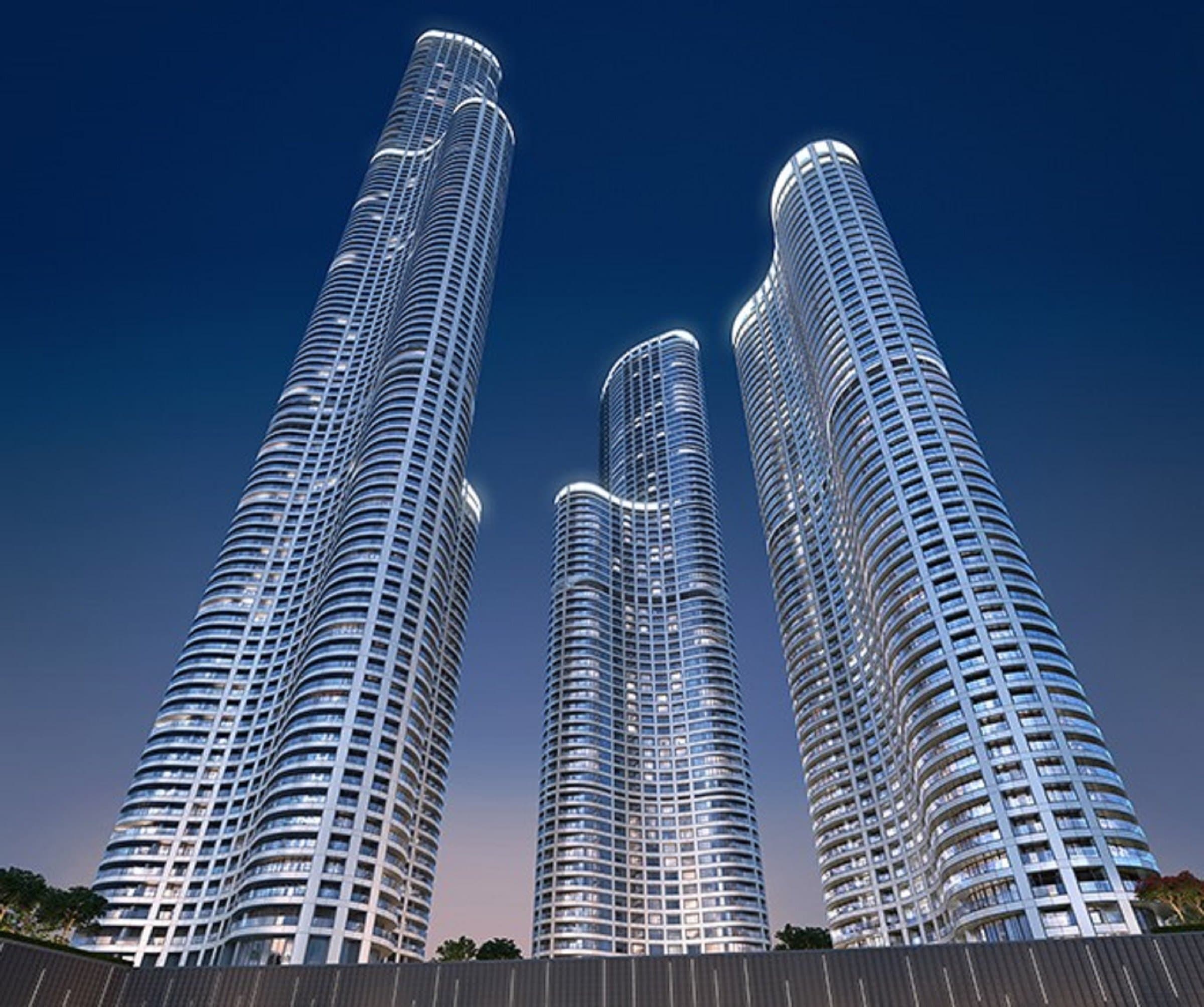
A 4 BHK on the 38th floor of Indiabulls Sky Forest with the floor-to-ceiling sea view costs the buyer the same ₹14–22 Cr regardless of whether the glass was last washed three weeks ago or fourteen months ago. The difference between the two states is a building-maintenance-unit (BMU) cradle system rated for the building height, a vendor contract with a credible rope-access team, and a society line-item of ₹14–30 lakh per year that buyers almost never ask about before they token. Property Butler's per-tower spec audit for Lower Parel and Prabhadevi pulls together what the glass costs to keep clean, how the major towers actually perform, and the four questions that surface whether the building was designed for facade maintenance or merely hopes for the best.
Why This Matters at PSF 60,000+
For a Lower Parel or Prabhadevi tower trading at an asking PSF of ₹60,000–1,20,000, the facade is roughly 35–45% of the visible building. A streaked, salt-stained, monsoon-blackened curtain wall depresses resale ask by 3–6% versus an identical tower whose glass is current. That's ₹30–90 lakh on a typical ₹15 Cr 3 BHK. The BMU contract that sits between “current” and “not current” runs the society ₹14–30 lakh a year — cheap relative to the resale optionality it protects.
What the BMU Actually Is
BMU stands for Building Maintenance Unit — the rooftop-rail-mounted davit-arm cradle system that lowers a two-person platform down the facade for window cleaning, sealant inspection and minor glass replacement. Sophisticated towers built post-2015 specify the BMU at the architectural-design stage; the cradle is integrated into the rooftop parapet, the rails extend over the facade outline, and the system is rated to the building's full height with redundant counter-weights and a manual emergency descent mechanism. Older towers retrofit the BMU as an afterthought — or skip it entirely and rely on rope-access teams.
Rope-access — technicians on industrial-grade harnesses descending from rooftop anchors — is the cheaper option but the more limited one. Rope-access teams certified by IRATA (Industrial Rope Access Trade Association) or SOFT (Society of Professional Rope Access Technicians, India) can work up to roughly 150 m of vertical descent in a single pitch. For towers in the 150–250 m range — which describes the supertall Lower Parel cluster (Lodha World One at ~280 m, Indiabulls Sky Forest at ~258 m, One Avighna Park at ~230 m) — rope-access requires intermediate rest platforms at refuge-floor levels, which adds time, cost and weather exposure.
The decision a tower's developer made between “integrated BMU” and “rope-access only” locks in the facade-maintenance economics for the building's life. You can retrofit BMU rails to a roof that wasn't designed for them, but the cost runs ₹2–4 crore and requires structural reinforcement — a capex item that very few existing societies will agree to fund.
The Mumbai Monsoon Multiplier
For five months a year — June through October — Mumbai's combination of sea-salt aerosol, monsoon rainfall (annual average 2,200 mm), and west-coast humidity (often 85%+) creates a facade-fouling regime that puts roughly 4x the cleaning load on a Mumbai high-rise compared to, say, a similar tower in Bengaluru or Hyderabad. The salt component is particularly aggressive for the Prabhadevi sea-strip and the Worli-facing flanks of Lower Parel — aluminium curtain-wall mullions corrode visibly within 18–24 months without sealant maintenance.
The defensible cleaning cadence for a sea-strip Prabhadevi tower (Rustomjee Crown, Kalpataru Oceana, The V Mansion) is four full-facade cleans per year: April (pre-monsoon), September (post-monsoon de-streaking), December (winter clarity), and February (pre-summer touch-up). The cost per cycle for a 50-storey tower with 35,000–45,000 sq ft of curtain wall runs ₹4–6 lakh per cycle for a BMU-equipped building, ₹6–9 lakh for rope-access. Annualised, that's ₹16–36 lakh per tower — the society absorbs this through maintenance charges that include a facade-line-item of typically ₹3–7 per sq ft of carpet area per month.
Per-Tower Reality — What the Major Buildings Actually Have
| Tower | Height (approx) | BMU System | Annual Cleaning Cadence | Society Levy (₹/sqft/month) |
|---|---|---|---|---|
| Lodha World One (LP) | 280 m / G+76 | Integrated BMU, twin-rail, redundant counter-weight | 4 full cleans + 6 spot cleans | ₹5.5–7 |
| Indiabulls Sky Forest (LP) | 258 m / G+74 | Integrated BMU, single rail | 4 full cleans | ₹4.5–6 |
| One Avighna Park (LP) | 230 m / G+62 | Integrated BMU | 4 full cleans | ₹4–5.5 |
| Marathon NextGen Era (LP) | 175 m / G+47 | BMU retrofit 2022 | 3 cleans + spot | ₹3.5–5 |
| Sarvesh One (LP) | 120 m / G+33 | Rope-access only (IRATA L3) | 3 cleans | ₹3–4.5 |
| Times Tower (LP) | 120 m / G+34 | Rope-access; rails proposed but not funded | 2–3 cleans (ad-hoc) | ₹2.5–4 |
| Rustomjee Crown (Prabhadevi) | 230 m / G+65 | Integrated BMU, sea-side priority | 4 full cleans, 2 sea-side spot cleans | ₹5–7 |
| Kalpataru Oceana (Prabhadevi) | 170 m / G+45 | Integrated BMU | 4 full cleans | ₹4.5–6 |
| The V Mansion (Prabhadevi) | 155 m / G+42 | Integrated BMU | 4 full cleans | ₹4–5.5 |
| Lodha Grandeur (Prabhadevi) | 140 m / G+38 | Integrated BMU | 3–4 cleans | ₹4–5 |
Three implications from the table. First, every Prabhadevi tower in the active inventory uses integrated BMU — the postcode is essentially BMU-standard. Second, Lower Parel's compact mid-rise stock (Sarvesh One, Times Tower, Arihant Towers) trades BMU for rope-access, which is fine at <120 m but introduces weather-window variability. Third, the society levy spread (₹2.5–7 per sq ft per month) reflects vendor cadence rather than building grade — a buyer can sometimes negotiate the cadence up at a society AGM without a punishing levy increase.
What the Vendor Contract Actually Says
Most Lower Parel and Prabhadevi BMU contracts run with one of three vendor categories: international-anchored (CBRE, JLL, Cushman & Wakefield handling facility management; sub-contracted facade vendor); domestic specialist (Concept Facade Pvt Ltd, Glaze Glass Cleaning, KK Facade Solutions); or developer-anchored (Lodha's in-house facility arm, Indiabulls' integrated operations, Rustomjee's PMC arm). Each comes with different incentives and outcomes.
✓ What a Strong BMU Contract Looks Like
- Annual cleaning cadence specified (4 full + N spot), not “as needed”
- Monsoon weather-window clause: vendor schedules around forecast, doesn't no-show
- Sealant inspection bundled into cleaning cycles (catches mullion corrosion early)
- Glass-pane replacement protocol: vendor stocks two spare panes per tower side
- IRATA L3 supervisor required on every rope-access descent
- Insurance with ₹5+ Cr public-liability cover (third-party injury or property)
✗ Red Flags in a Vendor Contract
- “Best-effort” cadence language without numerical commitment
- Single-vendor lock-in (no exit clause; society can't switch if dissatisfied)
- Vendor doesn't carry public-liability insurance — society absorbs claim risk
- No spare-pane protocol — broken glass means 6–10 week replacement window
- No sealant inspection in scope — mullion corrosion goes undetected
- No documented BMU annual safety re-certification
The Glass Itself — What the Spec Actually Costs Over Time
Two more wrinkles for the buyer who is shortlisting between Tier A and Tier B vintage. First, the glass spec on a 2020+ Lower Parel/Prabhadevi tower is typically double-glazed insulated unit (DGU) with low-emissivity coating and PVB interlayer — durable, easier to clean, more streak-resistant. The 2012–2017 vintage uses single-glazed or early DGU stock with surface coatings that mark more easily. The visible effect on resale is real: an Indiabulls Sky Forest facade looks materially crisper than a Lodha Vista facade of the same age, partly because of cleaning cadence and partly because of the underlying glass spec.
Second, the sealant between panes — structural silicone or two-part polysulphide — ages on a 12–18 year cycle in Mumbai's salt-and-monsoon environment. For 2010–2014 vintage Lower Parel towers, this sealant cycle is hitting now (2024–2028 window) and the society capex levy for re-sealing a 50,000 sq ft curtain wall runs ₹2–4 crore — or ₹5–10 lakh per flat in a 60-flat tower. Buyers shortlisting 2010–2014 vintage stock should ask the society manager whether the sealant programme is funded.
Real-Rupee Math — Annual Facade Cost for the Buyer
Tier A integrated-BMU tower (Indiabulls Sky Forest, Lodha World Towers, Rustomjee Crown, Kalpataru Oceana): facade line on maintenance bill ₹4–7 / sqft / month × 1,800–3,500 sqft carpet = ₹86,000–2,94,000 per year. Cadence: 4 cleans + ad-hoc. Outcome: facade looks current year-round.
Tier B BMU-retrofit tower (Marathon NextGen Era, Avighna): ₹3.5–5 / sqft / month × carpet = ₹75,000–2,10,000 per year. Cadence: 3 cleans + spot. Outcome: visible streaking by week 14 post-clean; resale photography requires planning.
Rope-access-only tower (Sarvesh One, Times Tower, smaller stock): ₹2.5–4 / sqft / month + occasional ad-hoc levies — ₹54,000–1,68,000 per year. Cadence: 2–3 cleans, weather-dependent. Outcome: facade ages visibly; sealant programme often unfunded; 2010-2014 vintage facing a ₹5–10 lakh per flat capex bullet in 2026–2028.
The Five Questions to Ask Before Token
- Is the BMU integrated or retrofitted, and what's the annual safety re-certification date? Integrated BMU with current safety cert is the gold standard; retrofitted BMU with cert is acceptable; rope-access-only is acceptable for sub-150 m towers and a no-go above that.
- What's the annual cleaning cadence per the vendor contract — not what the society manager promises, but what the contract specifies? “4 full cleans per year minimum” is the defensible answer for any sea-strip tower; “as needed” is not.
- When was the last sealant inspection and is the 12–18 year re-sealing programme funded in the sinking fund? Critical question for 2010–2014 vintage stock.
- Is there a spare-pane stocking protocol — what's the replacement window for a broken glass pane? Acceptable answer: 2–4 weeks. Unacceptable: 8+ weeks or “import from China.”
- What's the public-liability cover on the BMU/rope-access vendor, and who indemnifies the society against third-party claims? ₹5 Cr cover with vendor indemnity is the standard.
Frequently Asked Questions
Can I see the BMU cradle on a site visit?
Yes, and you should. Ask the developer's representative or the society maintenance manager to walk you to the rooftop. The BMU should be parked at its rail-end station with the safety harnesses tagged-and-dated. A current annual safety certificate (typically green sticker) should be on the cradle frame. If the cradle is locked away in a storage room with the rails covered in monsoon tarp, you're seeing a tower where the system has not been used in some months — ask why.
Does the cleaning happen with residents in the apartments?
Yes, almost always. The BMU cradle descends along the facade on weekdays during daytime hours (typically 9 am to 4 pm) and the technicians clean from outside the glass. Residents are notified 48–72 hours in advance via the society's intranet or building app. Floor-to-ceiling sliders and openable casements are politely requested to be closed for the duration. A typical 50-storey full-facade clean takes 5–8 working days. Sea-side faces clean first on sea-strip Prabhadevi towers because the salt fouling is heaviest there.
What happens when a pane breaks — e.g. monsoon hail, kite-string from a festival?
For Tier A towers with spare-pane stocking, replacement is 2–4 weeks. The procedure: facade vendor erects temporary scaffolding internal to the apartment, removes the damaged pane via the building's BMU on the exterior side, installs the spare, re-seals. Cost is typically ₹1.5–4 lakh per pane (large floor-to-ceiling units) and is covered by the society's building insurance if the cause is environmental. Apartment-owner insurance covers internal damage from broken glass. See our apartment insurance claim decoder for the claim-routing walkthrough.
Are sea-side units more expensive to maintain than land-side?
Yes, materially. The sea-side facade absorbs roughly 2.5–3.5x the salt-aerosol load of the land-side face. Sea-side mullions corrode faster; sealant ages faster; cleaning needs are more frequent. Most Prabhadevi sea-strip societies (Rustomjee Crown, Kalpataru Oceana) absorb this in the building-wide facade levy rather than charging sea-side flats differently — on the principle that everyone in the tower benefits from the sea-side facade looking maintained. Some societies have debated tiered levies and rejected them as too complex to administer. See our sea-spray corrosion decoder for the per-tower corrosion outlook.
If the society isn't cleaning the facade often enough, what's my recourse?
Raise it at the AGM. A facade-cadence motion can be tabled by any flat owner and passed by a simple majority of attending members under the standard Maharashtra Co-operative Societies model bye-laws. Practical experience suggests that pushing for a fourth annual clean cycle costs about ₹1–1.5 / sqft / month in incremental levy — less than ₹5,000 per month for an average 3 BHK — and is rarely contested when raised with a written vendor quote. See our managing-committee AGM decoder for the procedural walkthrough.
Related Reading
→ Facade Glazing & Curtain Wall Spec Decoder → Prabhadevi Sea-Spray Salt Corrosion Decoder → Facility Management Vendor Tier Matrix → Lower Parel Maintenance Cost Reality Check → Tower Managing Committee & AGM DecoderShortlist Lower Parel or Prabhadevi towers by facade-maintenance grade
Property Butler's tower-level filtering surfaces BMU-integrated buildings, cadence-defined vendor contracts and active sealant programmes — the inputs that decide how your glass looks in five years.
Search Tower-Level Inventory