Brochures sell view. Buyers pay attention to view. But the operational cost of running a Mumbai luxury apartment is dominated by a variable that almost no brochure mentions and almost no buyer asks about: the wall orientation that determines solar heat gain. Two identical 3 BHK units in Lower Parel - same carpet, same floor band, same building - can carry a Rs 80,000-1,40,000/year cooling-cost gap purely because one faces west and absorbs the full afternoon sun load while the other faces north and stays solar-shielded. Over a 10-year hold, that is Rs 8-14 lakh of operating-cost delta that compounds invisibly. Property Butler's tracked operating data quantifies the gap.
The Aspect-Cost Math
West-facing wall in Lower Parel absorbs 3.8-4.6 kWh/sqm of solar load per peak summer day. North-facing absorbs 1.0-1.4 kWh/sqm. Translated to AC tonnage: a 1,500 sqft west-aspect unit needs 4-5 tons of effective cooling capacity running 14-16 hours/day in peak summer; the same unit north-aspect needs 3-3.5 tons running 9-11 hours/day. The annual delta runs Rs 80,000-1,40,000.
Why Mumbai's Aspect Question Is Different From Delhi or Bangalore
Mumbai's climate compresses the aspect question. The city sits at 19 degrees north latitude with a 9-month cooling season; sun angles are high overhead in summer (April-June peak) but drop low and intense in winter mornings (December-February) and late afternoons across the year. Coastal humidity adds latent-heat load to sensible-heat load, meaning AC tonnage requirements scale with both wall temperature and indoor moisture levels. The result: aspect matters more in Mumbai than in continental climates, because the operating temperature differential is sustained 11 months/year rather than 4-5 months/year.
Within Lower Parel and Prabhadevi specifically, the corridor's high-rise density adds two further variables. Adjacent-tower shading can soften an otherwise punishing west aspect if the next building is within 30-40m and rises higher; conversely, an isolated tower at the edge of an open parcel gets unmediated solar load on its exposed faces. Sea-breeze cooling from the Worli-Prabhadevi sea-face benefits north-west and west-facing units in the corridor during summer afternoons - reducing the operational cost gap on west aspects by 8-15% versus inland west-facing equivalents.
The Four Aspects: Operating Cost Decoded
| Wall Aspect | Peak Solar Load | Daily AC Hours (Summer) | Annual Cost (3BHK) |
|---|---|---|---|
| North (best) | 1.0-1.4 kWh/sqm/day | 9-11 hours | Rs 1.8-2.4 lakh |
| East | 2.4-3.2 kWh/sqm/day | 11-13 hours | Rs 2.2-3.0 lakh |
| South | 2.0-2.8 kWh/sqm/day | 10-12 hours | Rs 2.0-2.7 lakh |
| West (worst) | 3.8-4.6 kWh/sqm/day | 14-16 hours | Rs 2.8-3.8 lakh |
The dominant pattern: north-aspect 3 BHKs are operationally cheapest, west-aspect are worst, and east trumps south in Mumbai's specific sun-angle geometry. The east-vs-south reversal surprises buyers used to north-Indian aspect logic; Mumbai's coastal-southern position means winter-morning east-aspect sun arrives at a softer angle than continental contexts. The delta from north to west is Rs 1.0-1.4 lakh/year - exactly the cooling-cost premium most buyers absorb without realising.
The Compounding 10-Year Math
A buyer holding a west-aspect unit for 10 years versus an otherwise-identical north-aspect unit absorbs an aggregate Rs 10-14 lakh of additional cooling cost, assuming flat electricity prices. Adjusting for the 6-8% YoY power-tariff escalation observed in Mumbai's BEST/Adani-Electricity grid since 2018, the real 10-year delta widens to Rs 14-19 lakh. For a Rs 12 Cr 3 BHK, that's 1.2-1.6% of the purchase price in pure operating cost penalty for the wrong aspect - meaningful, invisible, and almost never priced into the offer.
Tower-Specific Aspect Mapping
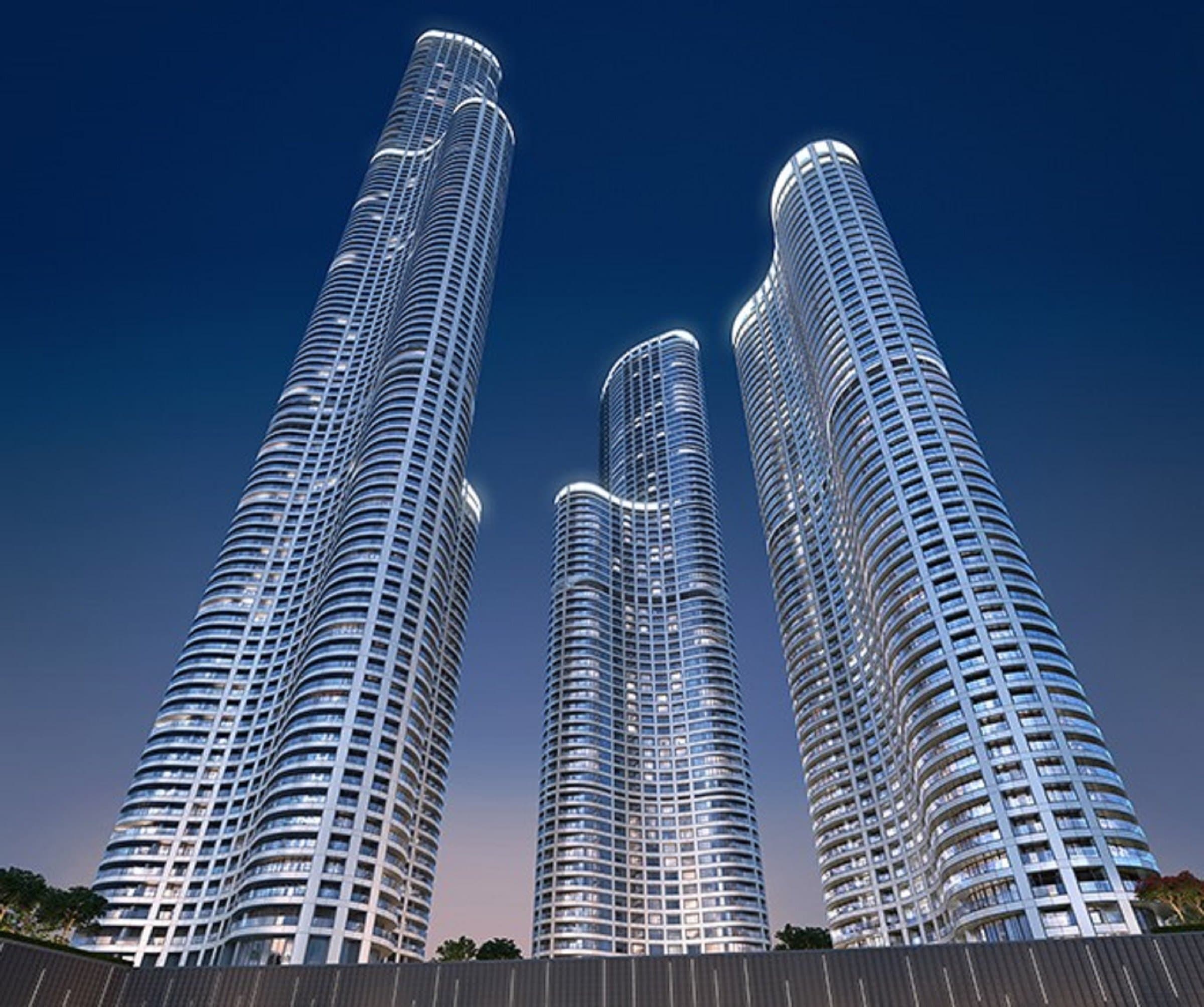
Within Property Butler-tracked inventory, the aspect distribution varies sharply by tower. Indiabulls Sky Forest's tower-A stack delivers a mix of north-east, north-west and west-facing 3 BHKs across its multiple wings - the north-east stack at 2,037 sqft is operationally cheaper than the open-view west stack at 2,912 sqft of similar carpet category by Rs 75,000-1,10,000/year. Lodha World Towers on the Apollo Mills parcel has a tower-by-tower aspect signature where some buildings face primarily north/east and others west/south.
At Rustomjee Crown in Prabhadevi, the A-wing units catch the sea-facing west aspect with attendant heat-gain penalty offset partially by sea-breeze ventilation; B and C wings sit more internal/north and trade off view for operational economics. Lodha Grandeur's 3 BHK at 1,085 sqft (currently in Property Butler's tracked range around Rs 5 Cr) sits north-east-aspect and is one of the most operationally efficient mid-luxury 3 BHK options in the corridor.
10-Year Operating Cost Delta (3 BHK)
Rs 14-19 Lakh
North-aspect vs west-aspect, including 7% annual tariff escalation; Property Butler estimate
The Facade-Glazing Variable
Aspect is not destiny. A west-facing unit with high-performance double-glazed-unit (DGU) curtain wall and low-e coating can cut solar heat-gain coefficient (SHGC) by 50-65%, narrowing the cost gap to north-aspect dramatically. Most Lower Parel and Prabhadevi Tier 1 luxury stock since 2018 specifies SHGC 0.30-0.40 glazing; older 2008-2015 stock and Tier 2 buildings often run SHGC 0.55-0.70 single-pane glass that delivers no meaningful solar shielding.
The diligence question is not just 'which way does the unit face' but 'what glazing system absorbs the solar load before it enters'. A north-aspect unit with bad glazing can underperform a west-aspect unit with premium DGU low-e specifications. Property Butler's pre-token inspection includes an aspect-plus-glazing audit precisely because the combined variable matters more than either alone.
Sea-Breeze Adjustment for Lower Parel & Prabhadevi
Aspects favoured by sea-breeze
- North-west: Captures evening sea breeze with mild solar load
- West (sea-facing): Heat-gain penalty offset 8-15% by ventilation
- North (sea-facing): Optimal - low heat plus afternoon breeze
Aspects penalised by orientation
- South-east internal: Heat from both morning sun and trapped humidity
- West (inland-facing): Full heat-gain with no sea-breeze offset
- South-west with no balcony: Highest sustained AC load in the corridor
How to Audit Aspect Before Token
Visit the unit twice: once at 11 AM-12 PM and once at 4-5 PM. The morning visit reveals east and south aspect exposure; the afternoon visit reveals west aspect exposure. Note which rooms feel notably warmer at each time. Place a thermometer against the inside wall surface - the wall temperature on the heated aspect runs 4-7 degrees Celsius above the indoor air during peak solar hours. Cross-reference the BMC-sanctioned plan compass-rose; verify the building's true compass orientation (some marketing materials rotate the compass for aesthetic purposes).
Ask the existing owner or seller for 12 months of electricity bills. The summer-to-winter cooling-cost ratio reveals aspect impact directly: a north-aspect unit shows 1.6-1.9x summer-vs-winter consumption; a west-aspect unit shows 2.4-2.9x. The bill is more honest than the brochure.
Frequently Asked Questions
Is east-facing actually better than south-facing in Mumbai?
Yes - Mumbai's coastal-southern latitude means winter-morning east-aspect sun arrives at a softer angle, while south-aspect catches consistent sun across the year with limited offsetting benefit. East-facing units run roughly Rs 20,000-40,000/year cheaper to cool than south-facing units of identical carpet and floor.
Can good glazing offset bad aspect?
Substantially. High-performance double-glazed-unit curtain wall with low-e coating cuts solar heat-gain coefficient by 50-65%. A west-aspect unit with SHGC 0.30 DGU performs operationally similar to a north-aspect unit with SHGC 0.55 single-pane. Verify the glazing spec sheet before discounting an aspect concern.
How much does sea breeze actually offset the heat-gain penalty?
8-15% reduction in AC operating cost for sea-facing west units versus inland west-facing equivalents. The reduction is meaningful but not eliminating - a sea-facing west aspect still runs operationally 25-35% more expensive than a sea-facing north aspect of identical carpet. Sea breeze helps; it does not invert the aspect hierarchy.
Should aspect change my offer price?
Yes, on west-aspect units in older stock without premium glazing - the 10-year cumulative cost delta of Rs 14-19 lakh translates to a 1.2-1.6% offer reduction on a Rs 12 Cr 3 BHK. Sellers rarely accept the full math, but framing the offer with operating-cost evidence creates negotiation leverage. For Tier 1 stock with premium DGU glazing, the gap is smaller and harder to monetise.
Does aspect matter for rental yield?
Yes for furnished corporate-leased stock where the tenant pays utilities - smart tenants notice high electricity bills within 60 days and either re-negotiate or vacate. Bare-shell rentals where the tenant absorbs utility cost see aspect impact rental yield through 30-60 days higher days-on-market and 3-5% lower realised rent for west-aspect units. Aspect compounds with view; both matter to a corporate-leased Sky Forest or Rustomjee Crown 3 BHK.
Related Reading
Facade glazing and curtain wall decoder AQI tower selection decoder Vastu and floor direction selection Power backup and DG reliability decoder Lower Parel area guideWant north-aspect or sea-breeze-favoured units in Lower Parel or Prabhadevi?
Property Butler maps aspect and glazing spec for every tracked inventory unit. We can identify operationally efficient stacks before you visit and structure your shortlist around 10-year cost economics, not just brochure aesthetics.
Search by aspect