Most Mumbai property buyers underwrite a 10-year hold and stop. The buyers acquiring Rs 12-30 Cr stock in 2026 should underwrite a 25-year hold - which puts the question of sea-level rise and 2050 coastal flood projections squarely on the diligence checklist. IPCC AR6 downscaled models for the western Indian coast suggest 16-30 cm of mean sea-level rise by 2050 under intermediate emissions scenarios, with high-tide flood frequency increasing 4-7x in current low-belt zones. For Lower Parel and Prabhadevi tower buyers, the question is not whether the risk exists - it is which specific tower plinths, basement parking levels and approach roads carry meaningful exposure, and which sit structurally above the 25-year line.
The 2050 Number That Matters
IPCC AR6 intermediate scenario projects 16-30 cm mean sea-level rise on the western Indian coast by 2050. Layered onto Mumbai's existing high-tide datum and the documented 2-4 cm/year subsidence in reclaimed pockets, the effective flood-line shift for a 2026 buyer holding to 2050 is 30-50 cm - enough to convert today's once-a-decade storm-surge event into a once-every-two-years occurrence in low-belt addresses.
The Geography: Which Pockets Are Exposed
Lower Parel and Prabhadevi are not uniformly exposed. The corridor is split into three flood-risk bands by elevation and historical hydrology. The low belt sits below 4 metres above mean sea level - this includes the eastern Lower Parel mill pockets near Senapati Bapat Marg, the southern Prabhadevi gaothan stretch, and the Worli Naka-adjacent flank. The mid belt at 4-7 m covers the central commercial Lower Parel district and the western Prabhadevi sea-face zone. The upper belt at 7+ m covers the Tulsiwadi rise and the Prabhadevi mainland cluster.
The flood risk that matters operationally is not pluvial flooding from monsoon rainfall - the BMC drainage upgrade since 2017 has reduced the catastrophic-event tail there. The risk that compounds with sea-level rise is tidal back-flow through the Mithi River and the Lower Parel stormwater outfalls during high-tide-plus-storm-surge events. A 30 cm rise in mean sea level transforms a 5-metre datum from comfortably above tidal back-flow to marginal during king-tide combined with cyclonic storm surge.
The Tower-Spec Variables That Determine 25-Year Resilience
Six spec variables separate the buildings that handle 2050 conditions from those that don't:
| Spec Variable | Resilient (2050-Ready) | Exposed (Marginal) |
|---|---|---|
| Plinth height above road | 1.5m or higher | Below 0.9m |
| Basement parking levels | 2 max with flood gates | 4+ without active pumping |
| DG/electrical room location | Podium or above (5m+) | Basement (B1 or below) |
| STP/water tank location | Podium + rooftop split | Basement only |
| Active flood barriers | Permanent + deployable | None or sandbag-only |
| Approach-road elevation | Tower on mid/upper belt | Tower above but road below |
The approach-road variable matters more than buyers realise. A tower can sit on a 6-metre plinth with rooftop DG and zero water-ingress risk, but if the 400-metre approach road dips to 3 metres, the residents are still stranded during high-tide storm events. Several Prabhadevi mainland-cluster buildings score well on tower spec but lose on access.
The Coastal Road Effect
The Coastal Road, opened in phases through 2024-2026, has a measurable but mixed effect on this risk. The sea-wall component of the road raises the immediate Worli-Prabhadevi sea-face buffer by 2-3 metres above former datum, reducing direct wave-action exposure. But the Coastal Road footprint also displaces tidal exchange volume into the Mithi River channel and Lower Parel outfalls during high-tide storm events, which can worsen back-flow risk in the eastern low-belt pockets. The net effect for a Prabhadevi sea-strip tower is positive; for an eastern-Lower-Parel low-belt building, the net is neutral to slightly negative.
Insurance Pricing Signals
The credible early warning of insurer flood-risk re-pricing is starting to appear in 2026 quotes. Building-cover quotes for low-belt Lower Parel addresses have climbed 12-18% over 2023-2026 versus 3-6% for mid/upper belt addresses - a delta that aligns with reinsurance reset for coastal Asian metros. Buyers should request 5-year insurance quote trajectories from the building's existing insurer as part of diligence; a doubling of cost-per-Cr-cover over five years signals embedded climate risk that headline brochure data won't show.
Insurance Premium Delta 2023-2026
+12-18%
Low-belt Lower Parel building cover vs mid/upper belt; Property Butler reviewer survey, March 2026
Which Towers in the Corridor Score Best
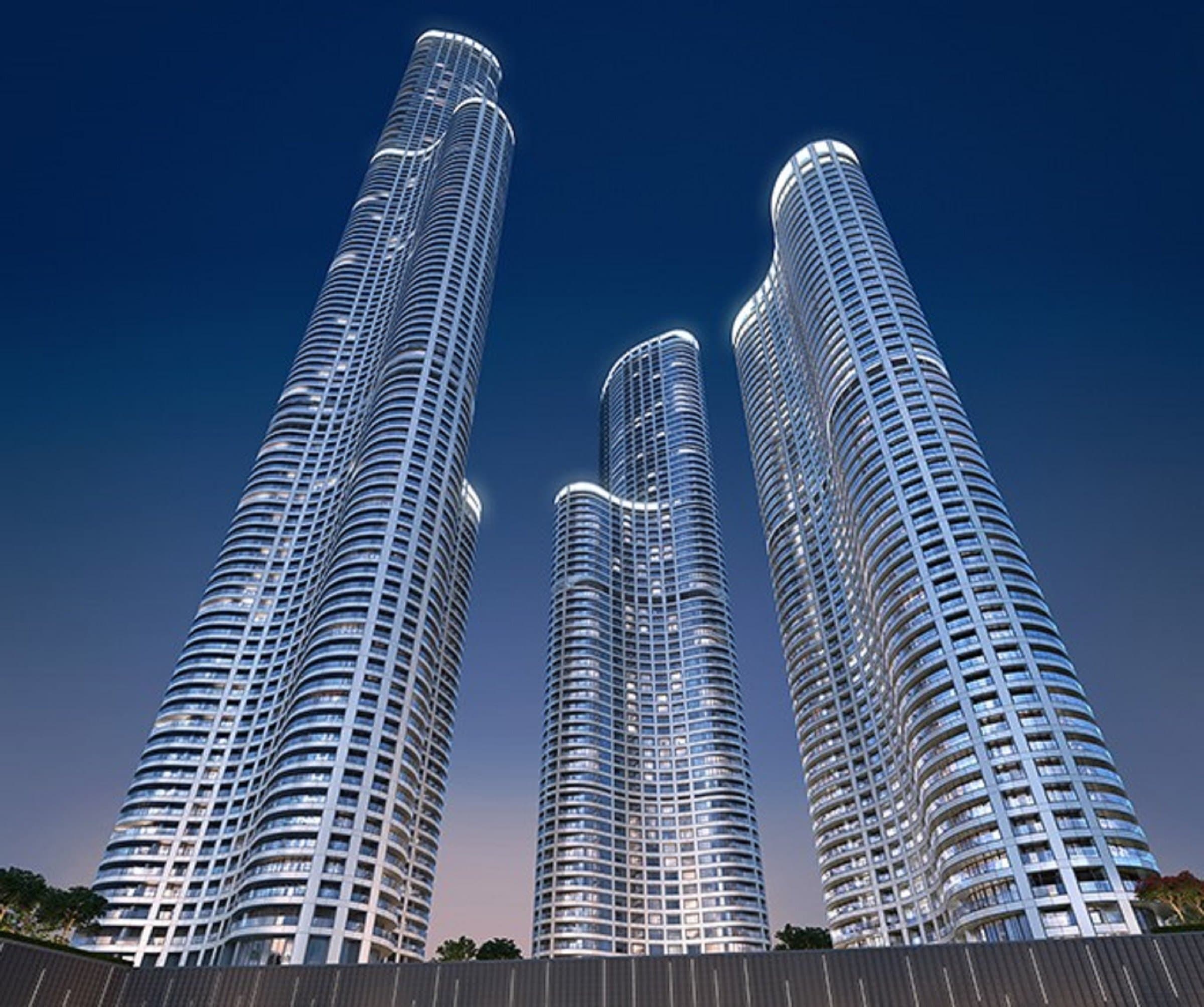
Tier 1 luxury stock generally scores well on spec but mixed on geography. Indiabulls Sky Forest's podium-elevated design and multi-tower drainage system rate it as resilient on spec; the eastern approach road dips at one point and adds a 2026-tracked vulnerability. Lodha World Towers sits on a higher mid-belt datum with rooftop split utilities - structurally well-positioned. One Avighna Park's podium design and dual-tower water redundancy push it into the resilient camp.
From Prabhadevi, Rustomjee Crown's position on the mainland cluster at 6+ metre elevation plus its podium utilities place it firmly in the upper-belt resilient category. Lodha Grandeur and The V Mansion share that profile. Suraj Ave Maria and Kalaya Tower at lower-belt addresses warrant deeper diligence on basement utility placement before underwriting a 25-year hold.
What a Buyer Should Actually Ask Before Token
Diligence checklist - resilience
- BMC ward G-North/G-South flood-zone classification of the plot
- Plinth elevation above road datum (request as-built drawings)
- Basement utility placement - DG, STP, water tanks, electrical rooms
- Building-cover insurance premium trajectory 2021-2026
- Approach-road elevation along the full 500m to-and-from corridor
Red flags that should kill the deal
- DG and main panel located in B2 or below with no active pumping redundancy
- Approach road sits 1.5m+ below the tower plinth
- Building has experienced flooding-related insurance claims since 2018
- Tower plot sits inside BMC's designated CFZ-A (coastal flood zone A)
The Long-Hold Math
For a buyer holding to 2050, the climate-resilient tower in the same corridor compounds advantage three ways: lower forward insurance cost (estimated cumulative 18-25% delta over 25 years), lower maintenance levy from flood-event recovery (no basement utility replacements every 8-12 years), and stronger forward resale narrative as climate disclosure becomes mandatory in luxury markets (the EU has moved on this; India will follow within the hold period). The premium paid for the resilient unit today is structurally arbitrage-priced against a 2040 market that will discount the exposed unit aggressively.
Frequently Asked Questions
Are sea-facing Prabhadevi towers more exposed than mainland Prabhadevi?
Counterintuitively, no in most cases. Sea-facing towers along the Worli-Prabhadevi strip benefit from the Coastal Road sea-wall buffer and sit on higher elevation reclamation. The eastern low-belt pockets in mainland Prabhadevi and inner Lower Parel near the rail corridor carry the higher tidal back-flow risk. Always check the specific plot elevation and approach-road datum, not the sea-distance.
How much higher should basement parking be?
The credible 2026 spec for 25-year resilience is maximum 2 basement levels, with B1 floor at minimum 0.5m above current 100-year flood datum, plus deployable flood gates at all ramp entries, plus active pumping with 6-hour generator backup. Towers with 4+ basement levels and no flood gates are not structurally disqualified but require a heavier insurance and society-corpus footprint to operate through 2050.
Does the Coastal Road help or hurt my Lower Parel address?
Mixed. The sea-wall component reduces direct wave-action exposure for Prabhadevi and the western Lower Parel flank. The displaced tidal exchange increases back-flow pressure through the Mithi River and Lower Parel stormwater outfalls during compound events. Net positive for sea-strip towers, net neutral-to-slightly-negative for eastern low-belt addresses.
Will insurance get materially more expensive?
Yes for low-belt addresses. The 2023-2026 premium climb of 12-18% for low-belt Lower Parel signals embedded re-pricing. Reinsurance resets globally are flowing through to coastal Asian metros, and mandatory climate-disclosure rules in luxury markets will accelerate the trend. Buyers underwriting a 10-year hold should model 30-40% cumulative premium escalation as base case for low-belt buildings.
What document should I request from the developer to verify resilience?
As-built architectural drawings showing plinth elevation, basement levels and utility placement; the building's structural report from the consulting engineer; the BMC sanctioned plan with elevation contours; and the existing building-cover insurance policy with 5-year claims history. Property Butler's pre-token diligence workflow includes a climate-resilience addendum that compiles these into a single underwriting view.
Related Reading
Monsoon flood resilience buyer guide Coastal Road and Metro 3 connectivity premium Sea spray salt corrosion tower selection Property insurance flood and fire coverage Prabhadevi area guideNeed climate-resilience diligence on a Lower Parel or Prabhadevi tower?
Property Butler's pre-token workflow includes a climate-resilience addendum: plot elevation, basement utility placement, approach-road datum and 5-year insurance trajectory.
Search resilient inventory