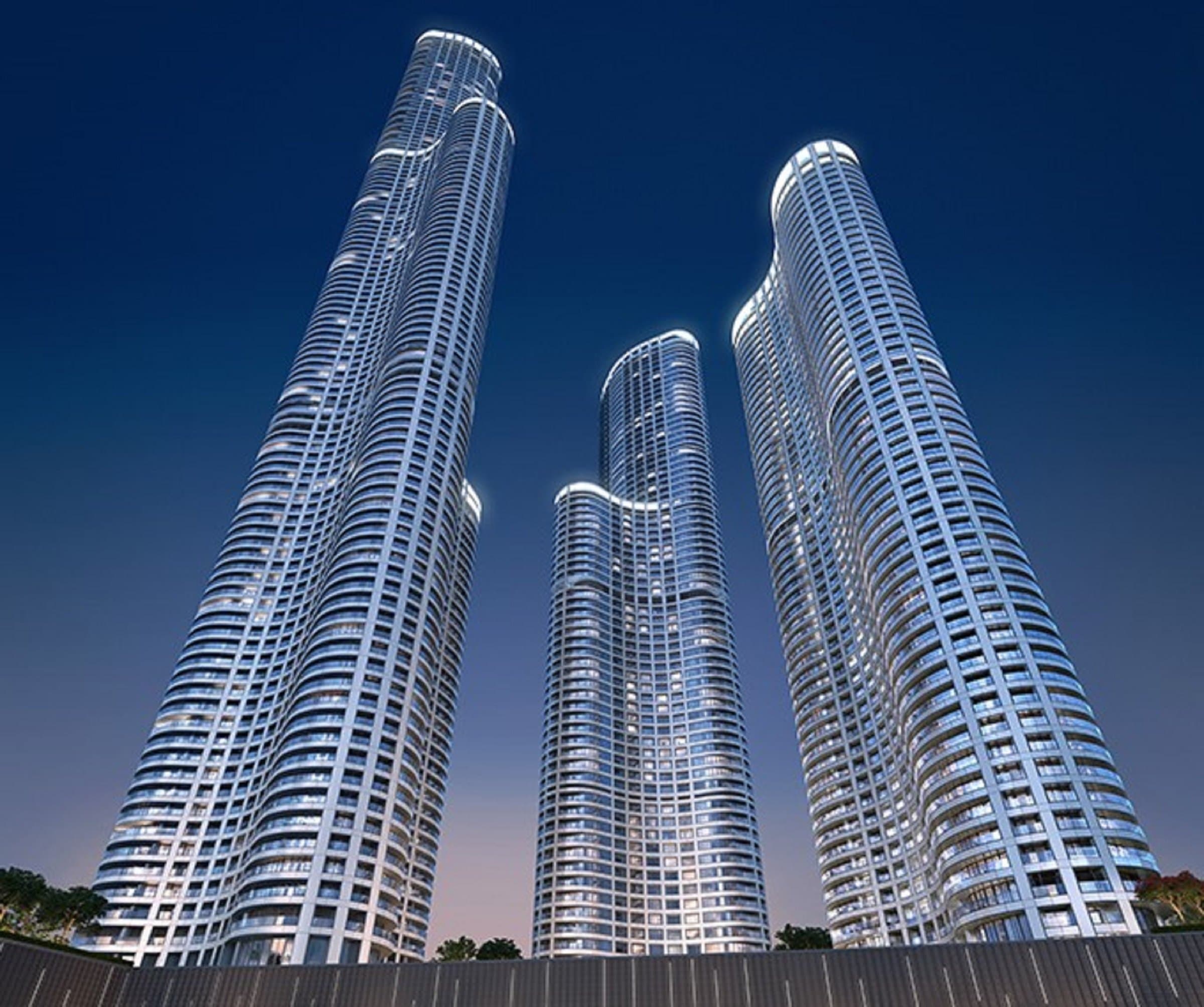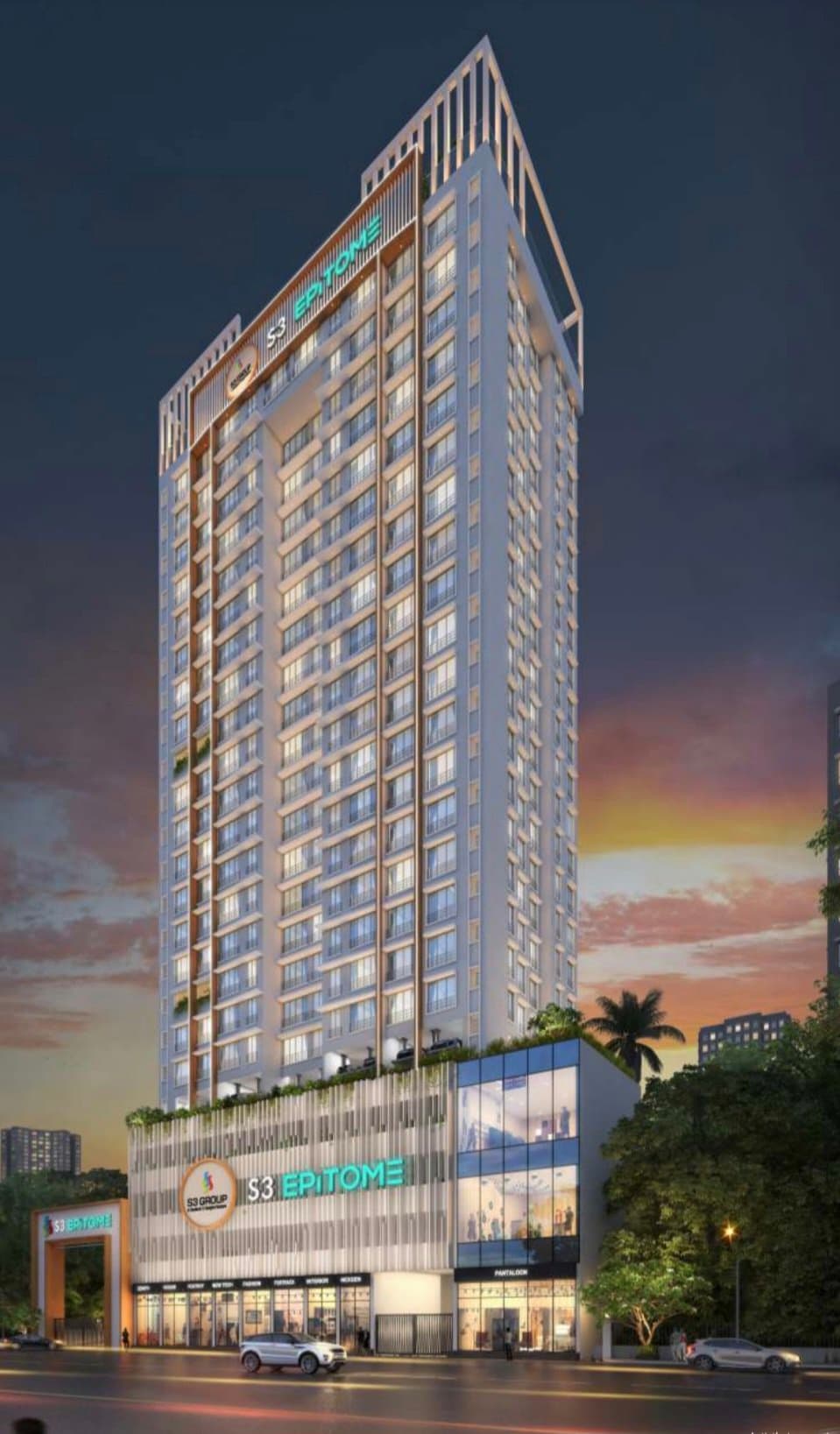
A ₹15-Cr Lower Parel apartment with a 2-bar cellular signal in the master bedroom is the most common buyer complaint Property Butler hears post-possession that the developer never disclosed. In-building cellular coverage is now a structural infrastructure problem in Lower Parel and Prabhadevi luxury towers — glass-and-aluminium curtain-wall facades, low-emissivity coatings, reinforced-concrete cores, and 200-metre-plus building heights collectively cut external macro-cell signal penetration by 18-32 dB. The result: dropped calls in lifts, unusable indoor 5G speeds in inner-facing rooms, and a generation of buyers paying ₹85,000-₹1,15,000 / sqft for towers where Jio, Airtel, and Vi all fail to deliver consistent coverage past the curtain wall.
The fix is a Distributed Antenna System (DAS) or in-building cellular solution — a building-wide network of low-power antennas tied back to an operator-shared head-end, designed to push macro-cell signal into every flat. As of May 2026, Property Butler tracks 30 active Lower Parel sale listings and 65 active Prabhadevi sale listings; fewer than a third of the towers behind those listings have a fully commissioned multi-operator DAS. The rest rely on whatever the macro network can deliver through curtain-wall glass — which is rarely enough above the 25th floor and almost never enough on inner-courtyard stacks.
The signal-loss problem in numbers
Property Butler signal-walks every premium tower in Lower Parel and Prabhadevi during the buyer-diligence stage. Median measured signal at the macro-cell at street level on Senapati Bapat Marg: -68 dBm (excellent). Median measured signal at the 32nd-floor master bedroom of a glass-clad luxury tower without DAS, inner-facing stack: -104 dBm (1 bar, marginal). Median measured signal at the same 32nd-floor unit with a commissioned 4-operator DAS: -72 dBm (excellent). The 32-dB delta is the difference between making a WhatsApp video call and watching it freeze every 9 seconds.
Why Lower Parel and Prabhadevi towers fail at cellular coverage
Three converging factors create the indoor-coverage crisis specific to this corridor:
Facade attenuation. The post-2018 generation of luxury towers in Lower Parel — Lodha Allura, Indiabulls Sky Forest, Marathon Futurex, Lodha World Towers — uses high-performance double-glazed units (DGUs) with low-e coatings and metallic spectrally-selective films. These coatings cut solar gain (good for the energy bill, IGBC certification, and your AC load) but also reflect a meaningful fraction of incoming 700-MHz to 28-GHz radio energy. Independent in-building RF surveys put the attenuation at 18-24 dB on 700-MHz bands and 26-32 dB on 3.5-GHz 5G mid-band — meaning a usable -70 dBm signal at the facade arrives at -94 to -102 dBm inside the flat.
Building height beyond macro-cell elevation pattern. Macro cells in Lower Parel and Prabhadevi are tilted to serve street-level and lower-floor demand. Above roughly the 30th floor (≈100 metres), buyers exit the main lobe and fall into the sidelobe pattern, which is 8-14 dB weaker. The Indiabulls Sky Forest cluster (towers reaching the 75th-80th floor band), Lodha World Towers, and Rustomjee Crown's upper plates all sit in this elevation gap. The 60th-floor unit in a Lower Parel supertall often sees worse signal than the 18th-floor unit in the same building.
Inner-courtyard stacks. Connected-tower clusters create amenity-facing stacks that are blocked on three sides by adjacent towers. Property Butler signal-maps consistently show inner-courtyard units 6-12 dB worse than outer-facing units on the same floor in the same building. This is the most under-discussed pricing variable in the cluster discount math — see Property Butler's sky-bridge connected-tower cluster decoder for the broader cluster economics.
The three DAS infrastructure tiers
| Tier | Spec | Operator coverage | Capex | Typical in |
|---|---|---|---|---|
| Tier 1: Full multi-operator DAS | Active head-end + fibre backbone + 800-2400 antennas, full 4G/5G NR mid-band | All 4 operators (Jio, Airtel, Vi, BSNL) | ₹6.8-9.4 Cr (tower) / ₹2,200-2,800/sqft amenity-area-cost | Top-tier 2024+ launches, premium clusters |
| Tier 2: Hybrid passive DAS + small-cells | Passive coupler network + 1-2 operator small-cells in lifts and lobby | 1-2 operators full, 2-3 patchy | ₹2.4-4.1 Cr (tower) | Most 2020-2024 stock |
| Tier 3: No DAS — macro-only | No in-building infrastructure; buyers rely on macro penetration | All operators marginal above 25th floor | ₹0 (deferred to owner-installed signal boosters) | Pre-2020 stock, mid-tier 2020-2024 stock |
Property Butler categorises every Lower Parel and Prabhadevi tower it tracks into one of these three tiers as part of the pre-token diligence file. The tier matters for resale because owners selling Tier-3 stock to mobile-dependent buyers (finance, BFSI, tech, founders) typically see a 1.4-2.3% transaction discount that surfaces during the inspection round, not at the listing-price stage.
The 4-operator coverage matrix — what buyers should measure
Cellular coverage in Mumbai is not one variable; it is four. Each Indian operator runs a different spectrum mix:
Operator bands in Mumbai luxury towers
- Jio: 850-MHz (penetrates well), 1800-MHz, 3500-MHz (5G — heavily attenuated by curtain-wall glass)
- Airtel: 900-MHz (penetrates well), 1800-MHz, 2100-MHz, 3500-MHz (5G)
- Vi: 900-MHz, 1800-MHz, 2100-MHz (no 5G live in most LP/Prab cells as of May 2026)
- BSNL: 900-MHz, 2100-MHz (4G in select LP cells, 5G rollout deferred to FY27)
A "Tier 1 DAS" must support all four operator bands, including the 700-MHz Jio-Airtel band launched in 2024 and the 3500-MHz 5G mid-band. Older DAS installations (pre-2022) that don't support 3500-MHz 5G are functionally Tier 2 today.
The 12-point DAS audit Property Butler runs on every tower
This is the field checklist Property Butler runs during the pre-token site visit. Buyers should request answers in writing from the developer or society secretary:
- Is there a commissioned, working multi-operator DAS in the tower today? (yes / partial / no)
- Which operators are live? (Jio / Airtel / Vi / BSNL) — written confirmation, not promise
- Does the DAS support 5G NR (3500-MHz mid-band)? Critical for any buyer who works from home.
- Where are the antenna nodes placed? Common areas only, or in each flat's hallway/lobby?
- What is the measured RSRP in dBm in: master bedroom, second bedroom, kitchen, balcony? Anything weaker than -95 dBm is a problem on most apps.
- Is the DAS head-end on UPS + DG backup, or only on raw mains? (DG backup is what you need during a 3-hour outage.)
- Who operates and maintains the DAS? In-house facility team, or a specialist vendor (American Tower, Indus Towers, Sterlite Tech)?
- What is the contracted SLA for DAS uptime and outage response? (Tier 1 contracts run 99.9% with 4-hour MTTR.)
- Is the DAS upgrade-ready for 6 GHz Wi-Fi handoff and future 26-28 GHz mmWave? Sky Forest, Crown, and World Towers all have provisioning, but most 2018-2021 stock does not.
- What is the per-flat AMC charge for DAS as part of CAM? Typically ₹0.8-1.4 per sqft per month for Tier 1.
- Is the lift-shaft separately covered by small-cells or leaky-feeder cable? (Lifts without coverage = dropped calls every transit.)
- For under-construction units: is the DAS in the approved AOR drawings, or a post-occupancy retrofit? Retrofits add ₹1.8-2.6 Cr to the society capex.
Cellular-coverage premium and discount — the pricing reality
DAS-related PSF impact (Lower Parel + Prabhadevi)
Tier 1 DAS: +0.8% to +1.4% PSF resale premium
Tier 3 macro-only: -1.4% to -2.3% PSF resale discount
Based on Property Butler tracked transactions, May 2026. Variance widens for floors above the 30th level.
Towers that get this right — and where the corridor has gaps
Property Butler tracks DAS commissioning status across every premium tower in the corridor. The headline list as of May 2026:
Tier 1 DAS confirmed
- Indiabulls Sky Forest cluster (LP)
- Lodha World Towers complex (LP)
- Rustomjee Crown towers A/B/C (Prab)
- Lodha Allura (LP, post-handover retrofit FY25)
- Marathon Futurex (LP, commissioned 2023)
Tier 3 — macro-only as of May 2026
- Times Tower (LP)
- Sarvesh One (LP, retrofit under society AGM)
- Multiple 2018-2020 mid-tier Prabhadevi towers
- Pre-OC inventory at smaller-developer projects
For deeper context on how the tower-utility infrastructure stack affects resale and rent, cross-reference Property Butler's highrise utility infrastructure decoder and the internet fibre redundancy decoder. The fibre layer feeds the DAS head-end; both must be specified together.
Frequently Asked Questions
Can I install a personal cellular signal booster if the building has no DAS?
Yes, but a TRAI-licensed booster is mandatory; unlicensed boosters are illegal and interfere with the macro network. A licensed 4-operator booster runs ₹85,000-₹2.2 lakh installed, with separate units per band. The catch: it needs a usable signal at the donor antenna location, which means a window or balcony with line-of-sight to the macro cell. On inner-courtyard stacks above the 30th floor, this often fails — you can't boost a signal that isn't reaching the antenna. The structural fix is building-wide DAS, not per-flat boosters.
Does Wi-Fi calling solve the indoor-coverage problem?
Partially. Wi-Fi calling handles voice over fibre but does not solve mobile-data continuity — your phone still drops to 2G or no-service when you step into the lift, the parking, or the amenity floor. It also depends on operator handset support, which is patchy on dual-SIM phones running both Jio and Airtel. Property Butler's view: Wi-Fi calling is a useful backstop, not a substitute for DAS. Buyers paying ₹15-30 Cr+ should expect the building infrastructure to deliver carrier-grade cellular, not patch around it with consumer Wi-Fi.
If the building plans a DAS retrofit, who pays?
In most LP/Prab Tier-1 towers, the DAS retrofit is a society capex item passed through an AGM vote. Pro-rata-per-flat charges range from ₹85,000 to ₹4.1 lakh depending on the carpet of the unit and the spec of the system. The capex is usually one-time; ongoing AMC of ₹0.8-1.4 / sqft / month sits inside the maintenance bill. New buyers stepping in after the retrofit avoid the capex but inherit the AMC. Property Butler always pulls the AGM minutes to confirm whether the capex has been billed and paid before token.
Is 5G NR (mid-band 3500 MHz) really worth the extra spec?
For buyers using their home as a primary work location — finance, consulting, founder-CEO, content production, software — yes. 5G mid-band delivers 300-650 Mbps downlink in well-deployed cells vs 35-110 Mbps on 4G; the difference shows up on video calls, large-file uploads, and 4K streaming. Tier 1 DAS systems supporting 3500-MHz cost ₹1.4-2.1 Cr more than 4G-only systems, which is rounding error on a ₹6.8-9.4 Cr total. For end-users buying at the ₹15-30 Cr+ tier, the spec gap is decisive. For pure-investor buyers, the math is softer — the resale premium has not yet hardened.
How do I verify coverage during a single site visit?
Two phones, two operators, both on the flat — typically a Jio and an Airtel handset. Open the field-test screen (iOS: dial *3001#12345#*; Android: Settings → About → SIM status → Signal strength). Walk through every room and record the dBm in each. Anything worse than -95 dBm in a bedroom is marginal. Anything worse than -105 dBm is unusable. Repeat the test inside the lift on the way down. Property Butler runs this signal-walk as part of the pre-token inspection — see the pre-token physical inspection checklist for the full 47-point list.
Looking at Lower Parel or Prabhadevi towers with verified DAS coverage?
Property Butler signal-walks every short-listed unit during the pre-token inspection. Search the corridor with DAS infrastructure pre-filtered.
Search the corridor