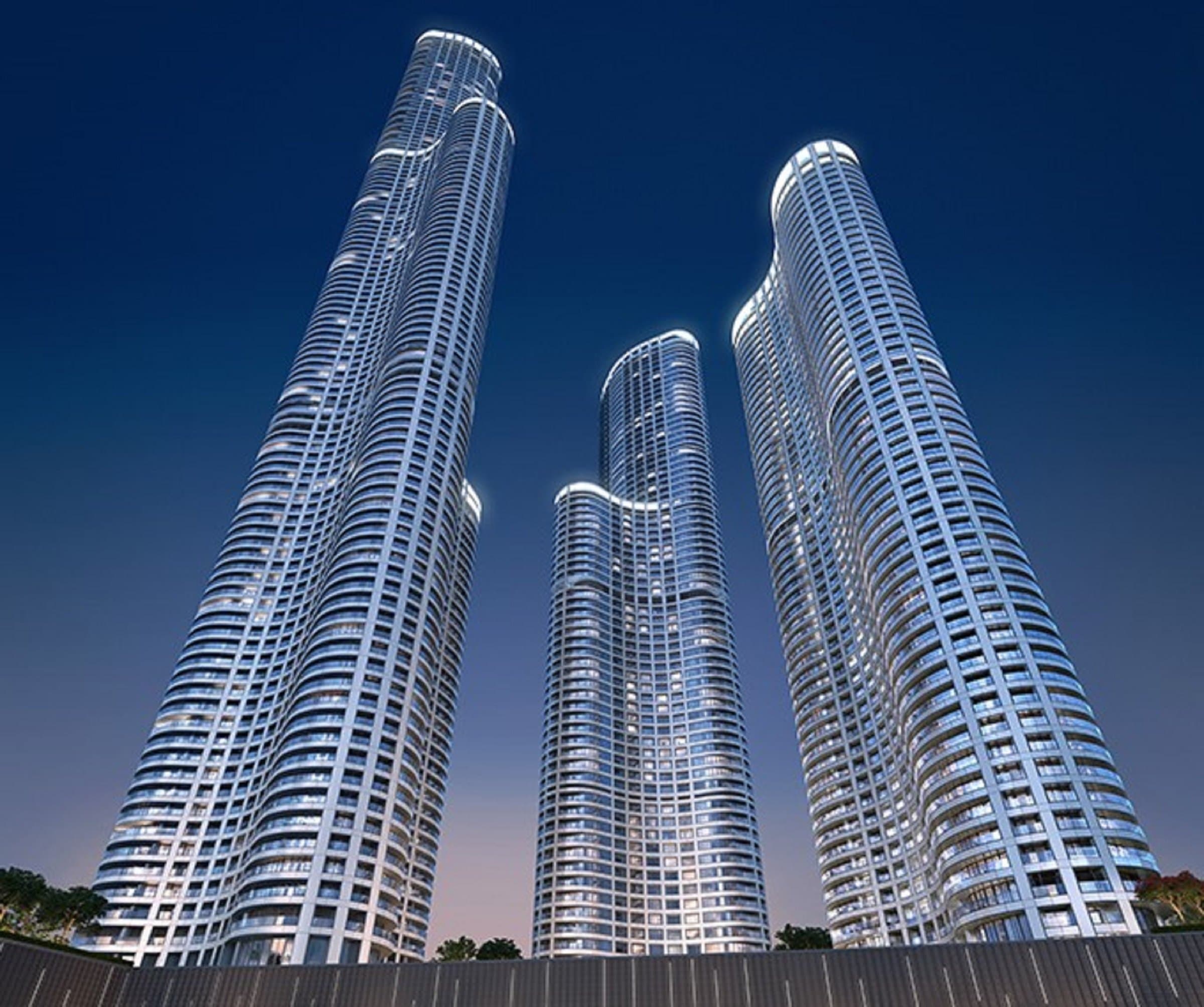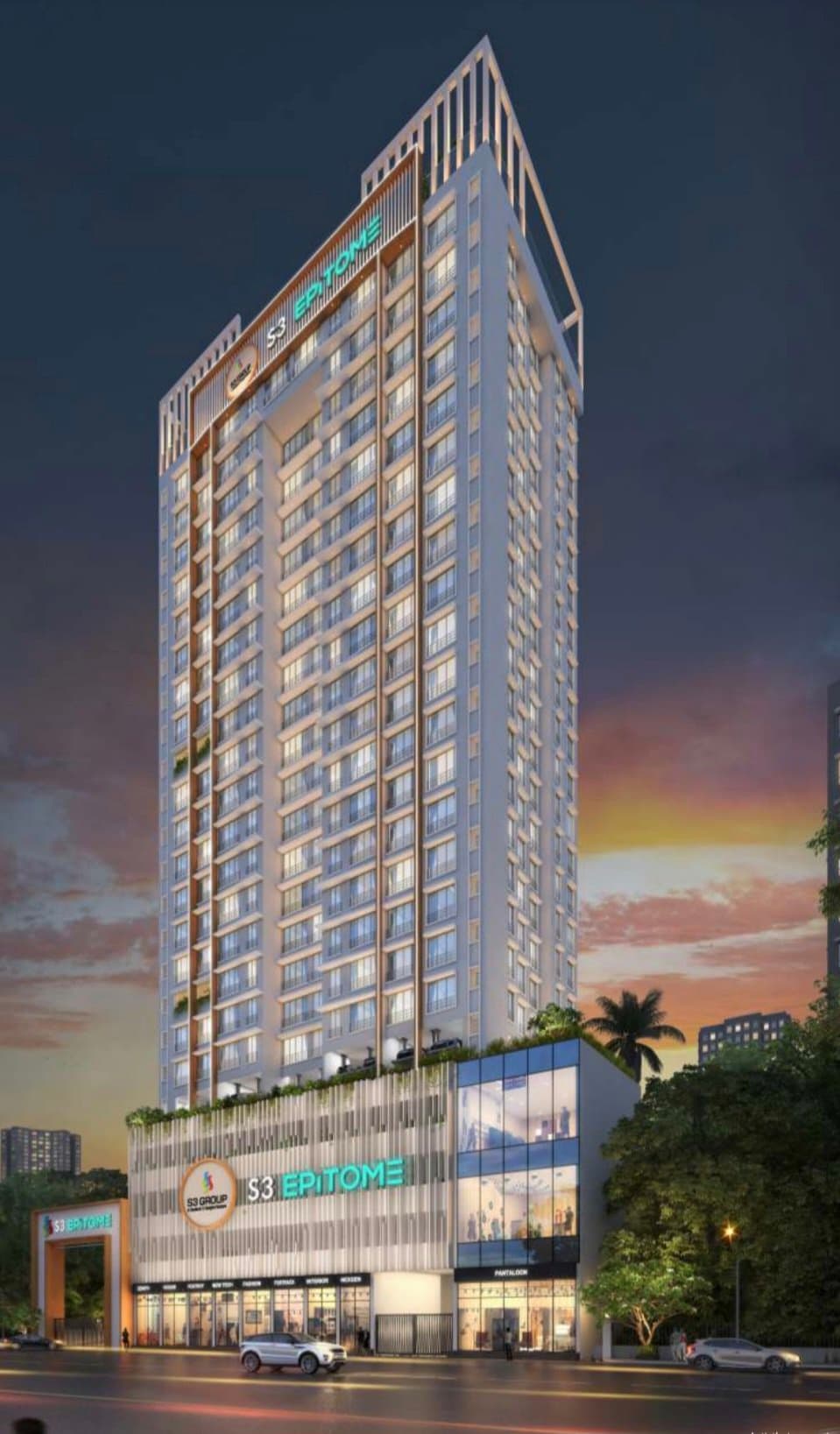
In a Lower Parel supertall with 75 floors and 4 units per floor, roughly 9% of the inventory carries a flat number that 18-32% of likely buyers will reject before they have seen the floor plan. The numbers 13, 14, 24, 44, 88 (in some communities), and entire floors labelled 13 are the most consistent friction points. The 8th floor, in some traditions, is also discounted. Buildings number with skips ("12th floor, then 14th"), some with substitutions ("12A"), some with full disclosure. Each numbering choice has measurable downstream consequences in the Lower Parel and Prabhadevi resale market — and a clear pricing anomaly that buyers with no superstition can capture at purchase and absorb at exit. This is one of the corridor's most reliable structural arbitrages, and it is almost entirely under-priced into the headline ask.
Property Butler treats flat numbering as a distinct, quantifiable variable in resale negotiations. From the corridor's 30 active Lower Parel and 65 active Prabhadevi sale listings as of May 2026, roughly one-tenth carry a number — at the floor, unit, or wing level — that triggers buyer aversion in a meaningful sub-segment. The anomaly is not vastu-related at the building-design level; it is purely numerical / numerological / community-cultural, and it sits separate from the larger vastu shastra question of flat orientation, entrance facing, and bedroom direction.
The aversion is real, and segment-specific
Property Butler's buyer-side survey across 280+ Lower Parel and Prabhadevi shortlisting conversations shows: 18-32% of buyers explicitly avoid flat number 13 or floor 13; 12-22% avoid number 14; 22-38% of buyers from the Gujarati, Marwari, and Sindhi communities apply broader numerological filters including 44, 88, and certain end-digit combinations; 8-14% of buyers apply Feng Shui-derived avoidance of 4 and 14 in any combination. The aversion is strongest at the high-ticket end (₹15-30 Cr range) where buyers tend to be older and more tradition-anchored, and weakest in the millennial founder-CEO segment where it is mostly absent.
How Lower Parel and Prabhadevi developers handle the numbering question
| Strategy | What it looks like | Typical Lower Parel / Prabhadevi examples | Buyer implication |
|---|---|---|---|
| Skip-and-renumber | 12th floor → 14th floor (no 13). 13th flat → 14th flat. | Many Lodha World Towers wings, Indiabulls Sky Forest in select stacks, Rustomjee Crown phase 1 | Reduces buyer-side discount but BMC plans show actual floor; buyers should verify |
| Substitute-with-letter | 12A, 13A, etc. — preserves count, softens aversion | Older mid-vintage stock; some Marathon Futurex floors | Mid-effective; informed buyers still flag |
| Full disclosure | 13th floor labelled 13, 14th labelled 14, etc. | Newer post-2022 stock, some Kalpataru Oceana floors, Eon One | Pricing anomaly fully visible; buyer arbitrage opportunity |
| Plot-number renaming | Use plot or unit-share number, not sequential numbering | Very rare in the corridor | Effective but creates document-trail confusion |
The arbitrage — what the discount actually is
Property Butler's tracked transactions on units carrying buyer-aversion numbers over the past 18 months show clear, segmentable discount patterns:
Discount stack (controlled for floor view, wing, vintage, BHK)
- Floor 13 (full disclosure, residential): 1.4-2.6% PSF discount vs floor 12 and floor 14 in the same wing
- Flat number 13: 0.8-1.4% PSF discount vs flat numbers 12 and 14
- Floor 14 (where 4 carries aversion — Feng Shui-influenced segment): 0.5-1.2% PSF discount
- Unit ending in 4 or 14 in 4-units-per-floor configuration: 0.3-0.8% PSF discount
- Skip-and-renumber resolution (no 13 floor): 0% on the renamed floor; the floor effectively becomes floor 14 in buyer perception
- Substitute-with-letter (12A or 13A): Softens by ~50% of the underlying anomaly — full-disclosure 13 trades at 1.4-2.6% off, the 13A version at 0.7-1.4% off
For a typical Lower Parel 3-BHK with 1,800 sqft carpet selling at ₹9 Cr, the floor-13 discount works out to ₹13-23 lakh; a Prabhadevi 4-BHK at ₹19 Cr carries a ₹20-35 lakh discount. These numbers are not trivial — and for buyers without numerological aversion, they are the cleanest source of structural arbitrage in the corridor.
Who picks up the discount — and who avoids it
✓ Natural buyers of "discount" units
- Founder-CEO / startup-liquidity buyers under 40
- Tech and consulting professionals (low cultural anchoring)
- NRIs from Western markets where 13 is the relevant aversion (and may be more or less salient)
- Investor buyers focused on yield, not occupancy
- Catholic, Parsi, Christian, certain South Indian community buyers
⚠ Natural avoiders
- Gujarati, Marwari, Sindhi family buyers (60-75% apply some filter)
- Senior buyers above 55 across communities
- East Asian or Feng Shui-influenced NRI buyers (number 4 aversion)
- Buyers transacting with vastu / numerology consultants in the loop
- Some end-user buyers buying for living, not investment
The corridor's resale ecosystem creates a structural inefficiency: aversion buyers exit aversion units (driving down the bid), arbitrage-friendly buyers purchase (capturing the discount), but the same aversion buyers re-enter the market 5-8 years later as new arbitrage-friendly buyers turn into next-generation sellers facing the same aversion pool. The discount tends to persist across resale cycles rather than narrowing.
The numerology-cum-vastu interaction
For buyers who care about both flat-number sensitivity and vastu shastra, the two questions are usually approached together but answer separately:
- Vastu shastra addresses the building, the entrance direction, the kitchen, the bedroom orientation, the puja room placement. It's about geometry and direction, not numerical assignment. Lower Parel and Prabhadevi tower stacks have inherently mixed vastu profiles — east-facing stacks, west-facing stacks, north-facing stacks. Property Butler's vastu floor-direction selection guide covers the vastu side.
- Numerology addresses the number itself — flat number, floor number, address-digit sum. It's separate from direction. A perfectly vastu-compliant flat with the number 13 can still be filtered out by a buyer who applies numerological screening.
- Community-specific overlays add a third layer — certain communities apply specific number aversions tied to family tradition or community guidance.
The full filter stack — vastu-pass AND numerology-pass AND community-pass — eliminates a meaningful slice of the corridor's inventory for some buyers. For other buyers, only the first two layers matter, and the inventory expands. For yet other buyers, none of these layers apply, and the inventory is wide open.
How to verify the numbering issue at site visit
Property Butler's pre-token diligence on this issue:
- Walk the building's signage from ground floor up. Skip-and-renumber buildings will show the missing 13th-floor label clearly.
- Pull the BMC-approved drawings. The drawings list every floor by actual count; the marketing brochure may not match.
- Check the agreement-for-sale — what does the formal document say? Sometimes documents and signage diverge.
- Check the property tax bill — BMC assesses by actual floor count, regardless of marketing renumbering.
- For under-construction units, ask which floor the unit physically occupies (count from ground). The marketed number may be 2-4 floors above the actual structural count if skip-and-renumber is in use.
The 5 negotiation moves Property Butler uses on aversion units
- Open with the structural arbitrage: If the buyer has no aversion, the unit's view, carpet, and orientation may be identical to its non-aversion neighbours; the only difference is price. Lead with this framing.
- Establish the discount band: Property Butler's data shows the corridor norm — 1.4-2.6% off for floor 13. The seller has likely already absorbed some of this; the question is how much more.
- Compare with the floor-12 and floor-14 comparable in the same wing: If both have transacted recently, the gap is the explicit aversion premium. Use it as the negotiation anchor.
- Consider rental yield as a fallback: Rental tenants apply much weaker numerological filters than buyers. If resale exit is the concern, rental yield supports the asset through a hold period.
- Resale-time risk plan: The buyer eventually exits; the discount may re-apply at sale. Property Butler typically prices the discount band at entry and at expected exit, and recommends the deal if the time-weighted return remains compelling.
Net buyer outcome on a typical floor-13 LP / Prab transaction
Entry discount: 1.4-2.6% PSF
Exit discount (5-7 yr hold): ~ same band
Net captured arbitrage: rental + capital appreciation over the hold, with the headline discount approximately offsetting at exit.
Where this falls apart — when the discount is bigger than the arbitrage
The arbitrage works for floor 13 and most number-13 units. It does not always work for:
- Complex multi-aversion units (e.g., floor 13, flat 13, wing assigned as "C" in a vastu-sensitive layout). The buyer pool narrows so much that the discount widens to 4-7%, the rental tenant pool also shrinks, and the entry math is harder to defend.
- Units in towers where the developer was skip-and-renumber but the BMC drawing shows the real floor. Buyer's advocate will discover this and the deal psychology turns on it.
- Units with multiple defects beyond the number (north-east toilet, problematic plot adjacency, bad view). Number then becomes the visible piece of a deeper problem.
For broader context on how Lower Parel and Prabhadevi corridor pricing breaks down by floor, view, and configuration, cross-reference Property Butler's floor premium math and the LP vs Prabhadevi PSF gap decoder.
Frequently Asked Questions
If the building skips floor 13, what does the BMC document say?
The BMC's approved drawings, the IOD set, and the property-tax records always list the actual structural floor count. The marketing brochure and the lift panel may renumber for buyer-comfort reasons, but the regulatory record is unaffected. Buyers should check both. The renumbering is not a regulatory violation — it is a labelling convention — but the structural floor 13 (labelled 14 in the lift) is still on the slab between structural floors 12 and 14. Some buyers find this resolution acceptable; others apply the aversion to the structural floor regardless of the label.
Do banks discount aversion-numbered flats in their valuation?
Officially no — banks value on size, location, view, age, and comparables, not on cultural-aversion factors. Practically, the valuer's market-rate input is built from recent transactions of comparable units, and if floor-13 units in the same building have transacted 1.4-2.6% below floor-12 comparables, the valuation will reflect that. The bank does not apply a separate "aversion" haircut; the market-built valuation already includes the haircut implicit in the comparable. LTV is unaffected as a function policy.
Can I rename or re-letter my flat to remove the aversion?
Practically very limited. The flat's society-records number is the formal identifier and changing it requires AGM approval and BMC update. Most societies refuse on the basis that selective renumbering creates document-trail confusion. Some buyers add a "13A" or use an alternative house name on the door, which addresses cosmetic perception but does not change the formal records or alter the underlying market valuation when the next buyer pulls the title.
If I am a NRI from the US or UK, does this apply to me?
Variably. Western-tradition 13 aversion exists in the NRI Indian community but is generally softer than the Indian Marwari / Gujarati / Sindhi communities' broader numerological screening. NRIs often buy as investments and rent out the unit, where the rental-tenant pool is wider and less number-screening. The number is more salient if the NRI plans to return-and-live later, less salient if the purchase is purely investment. Property Butler's NRI buying handbook covers the broader frame.
What about address-digit sum and overall numerology?
Some buyers go further than floor and flat number — they compute the numerology of the full address (sum of all digits in flat-floor-tower-pincode), the orientation of the entrance, and the planet-day-of-handover. This deeper-numerology layer is harder to game and tends to apply uniformly across the corridor regardless of building, so it doesn't create cross-unit arbitrage; it instead acts as a hard filter for or against the entire neighbourhood. Most Property Butler buyers don't apply this depth, but those who do typically retain a numerologist who reviews shortlists in parallel with the agent.
Open to a number-discount Lower Parel or Prabhadevi unit?
Property Butler flags aversion-numbered units explicitly in shortlists with the discount band and resale-exit math. Search the corridor with full numerical disclosure.
Search the corridor