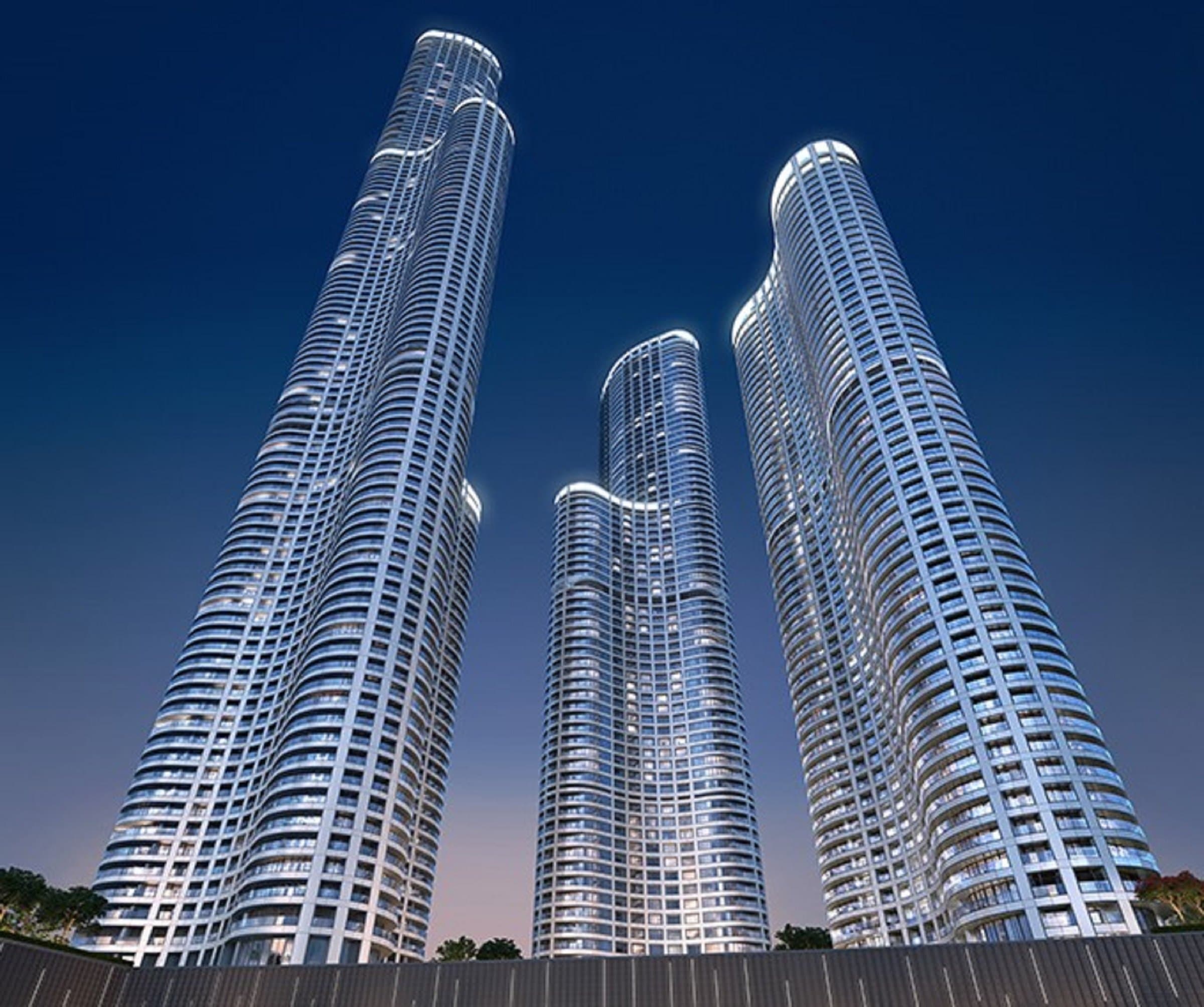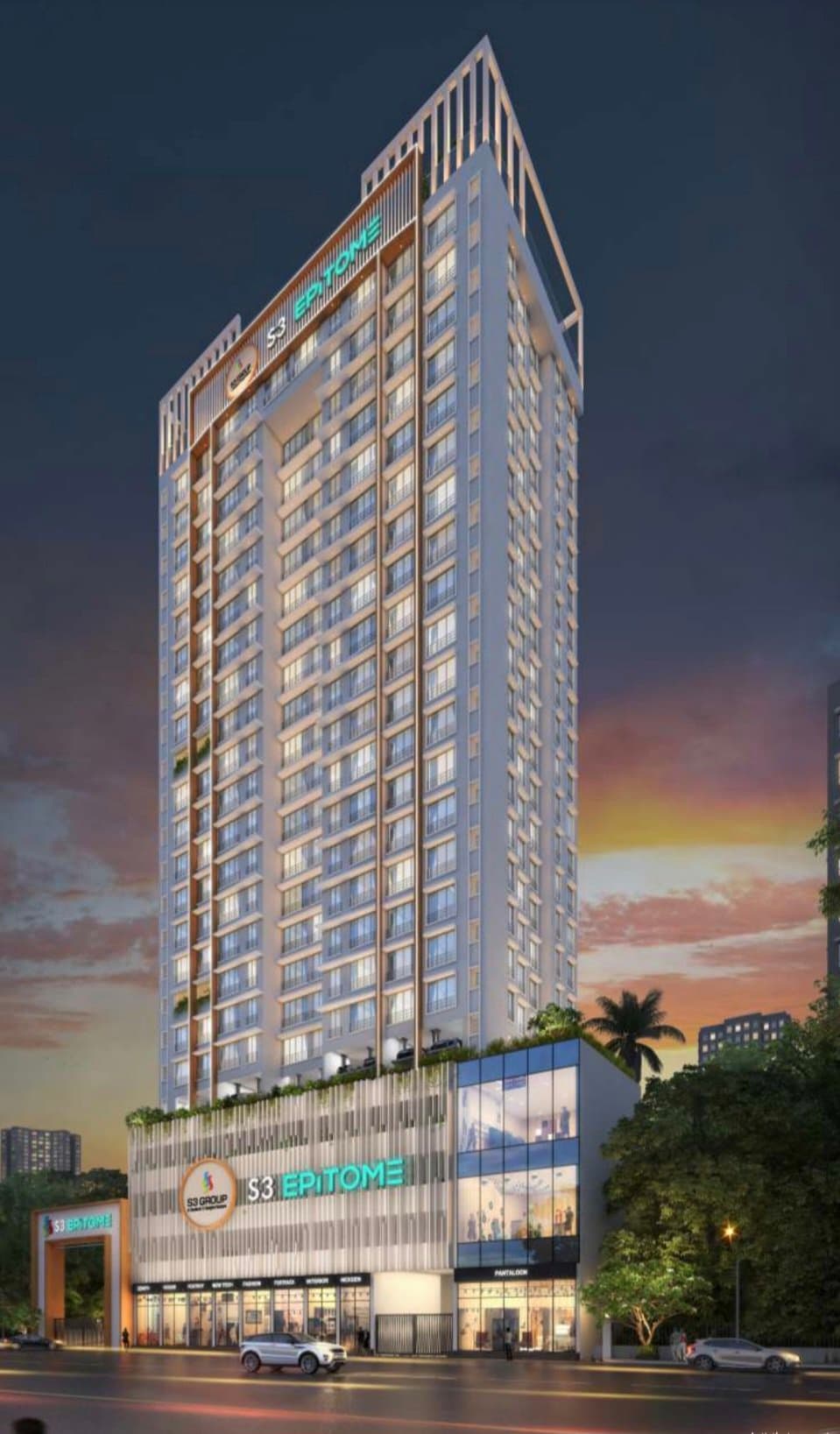
An infinity pool on the 47th floor of a Lower Parel supertall is one of the corridor's defining luxury images. The same pool — half a million litres of water sitting 150 metres above Senapati Bapat Marg — is also an engineering payload that, if mis-specified, mis-built, or mis-maintained, becomes the single highest concentrated structural risk in the building. A modern rooftop or sky-deck pool in the corridor typically holds 280-650 tonnes of water depending on size and depth. Multiplied by the kinetic loads of swimmers, the dead loads of pool decks and equipment, and the dynamic loads of wind-induced sloshing at altitude, the total imposed load can exceed 12,000 kN spread across a slab the structural engineer needs to have designed for at least 2.0x that for code compliance. Property Butler treats the rooftop / sky-deck pool as a separate, distinct due-diligence track on any Lower Parel or Prabhadevi tower it transacts in.
This decoder is built for buyers stepping into towers with rooftop or amenity-deck pools, and for prospective buyers in towers where the developer's marketing centres the pool. As of May 2026, Property Butler tracks 30 active Lower Parel sale listings and 65 active Prabhadevi sale listings; roughly two-thirds of these sit in towers with an elevated pool of some kind, and the audit framework below applies to all of them.
The structural physics — what the engineer is designing for
A 12 m × 5 m infinity pool of 1.4 m average depth holds approximately 84,000 litres (84 tonnes) of water alone. Add 25-30 tonnes of pool deck, 8-12 tonnes of equipment, 12-18 tonnes of finishes and tiling, and dynamic loads from swimmers and wind-induced sloshing — the slab below has to support a static dead load of ~155 tonnes and design for transient loads up to 1.6x that. For a tower at 150 m altitude, wind-induced sway can produce slab-acceleration peaks of 0.18-0.32 g during peak monsoon events, which translates into pool-water inertial forces of 18-32 tonnes acting laterally on the basin walls. None of this is hard; it is engineering. But every step must be specified, built, and maintained for the design to hold.
The 12-point structural and equipment audit
Property Butler runs this audit on every Lower Parel and Prabhadevi tower with an elevated pool. Buyers should ask for written confirmation against each point:
| # | Audit point | What to look for |
|---|---|---|
| 1 | Structural design drawings — pool slab | Design imposed load ≥ 600 kg/sqm + dynamic factor; signed by Structural Consultant of Record |
| 2 | Waterproofing system — pool basin | SBS-modified bitumen + cementitious sandwich, or PU membrane with 15+ year warranty |
| 3 | Slab below — leak / efflorescence inspection | Visit the floor below the pool slab. Stains, white deposits, or damp marks signal seepage |
| 4 | Overflow / surge / drain design | Continuous overflow gutter, double drainage downpipes (one primary, one redundant), drain capacity ≥ 1.5x peak surge |
| 5 | Pump room location | Adjacent to pool slab, on dedicated equipment floor, sound-attenuated, accessible for service |
| 6 | Filtration and chemical-dosing system | Sand + cartridge filtration; UV or saltwater chlorination preferred over manual chlorine dosing |
| 7 | Heating system (for monsoon use) | Heat-pump preferred; gas-boiler secondary; capacity sized for 26-28°C through monsoon |
| 8 | Slab below — usage | Equipment floor, not a residential floor. A leak above a flat is a financial disaster |
| 9 | Annual structural inspection — society log | Quarterly visual + annual instrumented structural inspection. Society should hold the log |
| 10 | Wind / seismic compliance certificate | IS 875 (Part 3) wind, IS 1893 seismic — referenced in design and verified at completion |
| 11 | Lifeguard, safety, child-protection | Lifeguard during operational hours; CCTV; child-fence; defibrillator and first-aid kit on amenity deck |
| 12 | Insurance cover | Society's property + liability cover should explicitly include pool failure scenarios; sub-limits matter |
The seven failure modes — and how to detect them early
Failure modes Property Butler has seen across Mumbai rooftop pools
- Pool basin waterproofing breakdown: The most common. Stains on the underside slab; visible within 18-36 months of OC if waterproofing is sub-spec. Detection: walk the floor below the pool. Cost to repair: ₹12-32 lakh society capex; weeks of pool downtime.
- Overflow / drain undersizing: Manifests during heavy use — diwali long-weekend, summer peak. Detection: visit on a weekend afternoon, watch overflow behaviour. Cost to fix: ₹8-18 lakh.
- Equipment-room vibration transferring to flats below: Pump-room not on isolation pads. Detection: stand on the immediate-below floor with pumps running; tactile vibration is audible. Cost to fix: ₹5-12 lakh.
- Filtration capacity vs occupancy mismatch: Cloudy water on weekends. Detection: visit on a Sunday at 5 PM and assess water clarity. Cost to fix: ₹6-14 lakh capex on filtration.
- Tile detachment / underwater hazard: Long-term issue from differential thermal expansion. Detection: check for chipped tiles on basin walls. Cost to fix: ₹15-40 lakh basin refinish.
- Heating system underperforming: Cold water in monsoon, reduced usage, member complaints. Detection: AGM minutes mention pool-heating issues. Cost to fix: ₹10-25 lakh heat-pump install.
- Wind-induced sloshing damage: Rare but consequential. Detection: instrumented monitoring during cyclone season. Cost: catastrophic if not designed for; nominal if designed correctly.
The vendor and operator question
Three names dominate the corridor's rooftop-pool engineering and service: Krishna Pool Care, Aqua Comfort, and Bombay Swimming Pool Co. The newer post-2020 luxury builds typically use specialist consultants (Suvi Aquatech, Aqua Designs India) for design and a long-tenor AMC operator for maintenance. Buyers should ask:
- Who designed the pool? Specialist firm or in-house architect?
- Who built the basin? Specialised swimming-pool contractor or general civil?
- Who is the current AMC operator? How long has the contract run? Renewed cleanly?
- How frequently is the basin emptied and inspected? (Quarterly drain + clean is the standard.)
- What's the contracted SLA for chemical-balance, water-clarity, and equipment uptime?
The slab-below problem — the highest-stakes question
Of all the failure modes, the one that turns into a real-money problem fastest is a leak above a residential floor. A 47th-floor pool with a 46th-floor flat directly below means any waterproofing breakdown produces visible damage in an apartment that someone owns at ₹85,000-₹1,15,000 / sqft. The financial mechanics of who pays — society common-area liability, developer warranty (if within 5-year defect liability), homeowner insurance, contractor warranty — get litigated for months. Property Butler's pre-token diligence on towers with rooftop pools always confirms two specific points: (a) the slab below the pool is not residential, (b) if residential, the owner of the immediately-below flat has been clear of seepage incidents for the past 36 months.
✓ Best-practice setup
- Pool on dedicated amenity deck floor; no residential below
- Twin-membrane waterproofing with 15-yr warranty
- Specialist pool engineering consultant retained
- Quarterly instrumented inspection log
- Society holds extended-tenor AMC with reputed operator
⚠ Risky setup
- Rooftop pool directly above residential floor
- Single-membrane waterproofing or no warranty
- No specialist pool consultant — built by general civil
- No quarterly inspection log
- Self-managed pool maintenance via society staff
Buyer cost of a pool-failure incident
Direct flat damage: ₹35-80 lakh per affected unit
Society capex repair: ₹25-65 lakh
PSF resale impact while incident is unresolved: -3% to -6% on the entire tower. Resolved cleanly within 9 months, the discount unwinds.
What to do if you find a problem at site visit
Three responses, in order of severity:
Visible underside seepage on a casual walk-by: Open a dialogue with the society — ask for the inspection log, the AMC operator, and the last basin-empty inspection. A society that has cleanly resolved a past seepage event and shows the documentation is a good signal. A society that is defensive or evasive is a red flag.
No structural inspection log, no AMC operator, no waterproofing warranty traceable: The risk profile is poorly characterised. Property Butler typically recommends buyers either negotiate a 1.5-2.5% PSF discount, or step away to a comparable tower where the pool-stack documentation is complete. See Property Butler's tower seismic / structural diligence decoder for the broader structural-engineering check that goes alongside this.
Active leak event in progress, unresolved: Walk away. Re-engage only after the society demonstrates a clean repair plus a 6-12 month dry period plus documentation of the failure-cause analysis.
Frequently Asked Questions
If the pool is on the 60th floor and I'm buying on the 32nd, does any of this affect me?
Indirectly. A pool-failure event at the 60th-floor level doesn't physically affect a 32nd-floor flat (water travels down through the structure rapidly to a few floors below, not 28 floors below), but it can affect the society's CAM (capex pass-through for repair), the building's overall resale velocity while the issue is unresolved, and the insurance premium for all units. The diligence holds even for floors well below the pool.
Are infinity pools (with the visible cantilevered edge) higher-risk than conventional pools?
Slightly. The cantilevered edge of an infinity pool changes the load distribution and the overflow-management geometry. Done by a specialist consultant with a tank-form structural design, an infinity pool is no riskier than a conventional pool. Done by a general civil contractor adapting a standard pool, the risk is elevated. Property Butler's view: ask who designed and built the specific pool — the form factor matters less than the team that delivered it.
What is the typical lifespan of a rooftop pool's waterproofing membrane?
15-22 years for a specialised PU or SBS-modified bitumen system installed correctly. 8-14 years for a budget cementitious system. The renewal capex is meaningful: ₹35-85 lakh on a typical Lower Parel-sized pool, including basin re-tiling. Buyers in 2015-2020 vintage towers should ask whether the membrane has been refurbished, and if so when. A society that has cleanly executed a planned refurbishment at the 12-15 year mark is a positive signal; a society that has deferred refurbishment past 18 years is structurally accumulating risk.
Is a temperature-controlled pool worth the extra CAM?
For families and habitual swimmers, yes. Mumbai's monsoon (June-September) drops uncontrolled pool temperatures to 21-24°C, well below the comfort zone for sustained swimming. A heated pool at 27-29°C extends operational use from ~8 months to year-round. Heat-pump systems cost ₹0.18-0.32 / sqft / month in incremental CAM on a typical Lower Parel tower; for a 2,000 sqft unit that's ₹360-640 / month. Buyers who never swim find this hard to justify; buyers who swim 3+ times per week find it transformative.
Are private balcony plunge pools the same diligence?
Smaller but yes. Private balcony plunge pools (typically 8-22,000 litres) on luxury duplex / penthouse units add 10-25 tonnes of imposed load to a cantilever balcony that may not have been designed for it. The dead-load capacity of a balcony slab is the constraint. Property Butler always insists on the structural consultant's certification before approving a private-pool retrofit, and on a waterproofing system with at least 10-year warranty. Buyers eyeing balcony-pool conversions during interior fit-out should engage the original building's structural consultant, not a fresh hire. See Property Butler's private terrace and sky deck decoder.
Buying in a tower with a rooftop or sky-deck pool?
Property Butler runs the 12-point pool diligence audit on every shortlisted Lower Parel or Prabhadevi luxury unit before token. Search the corridor's amenity-anchored inventory.
Search the corridor