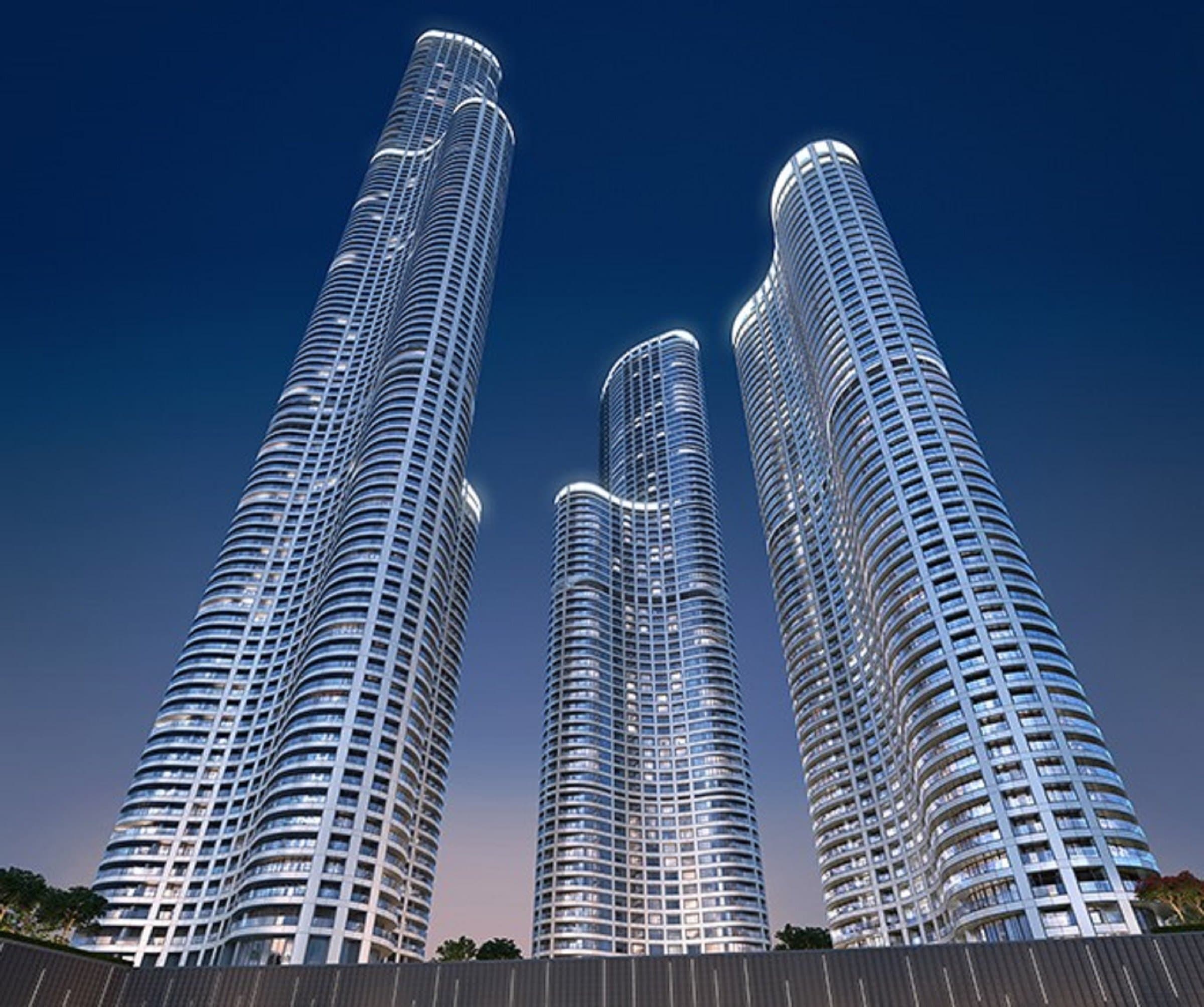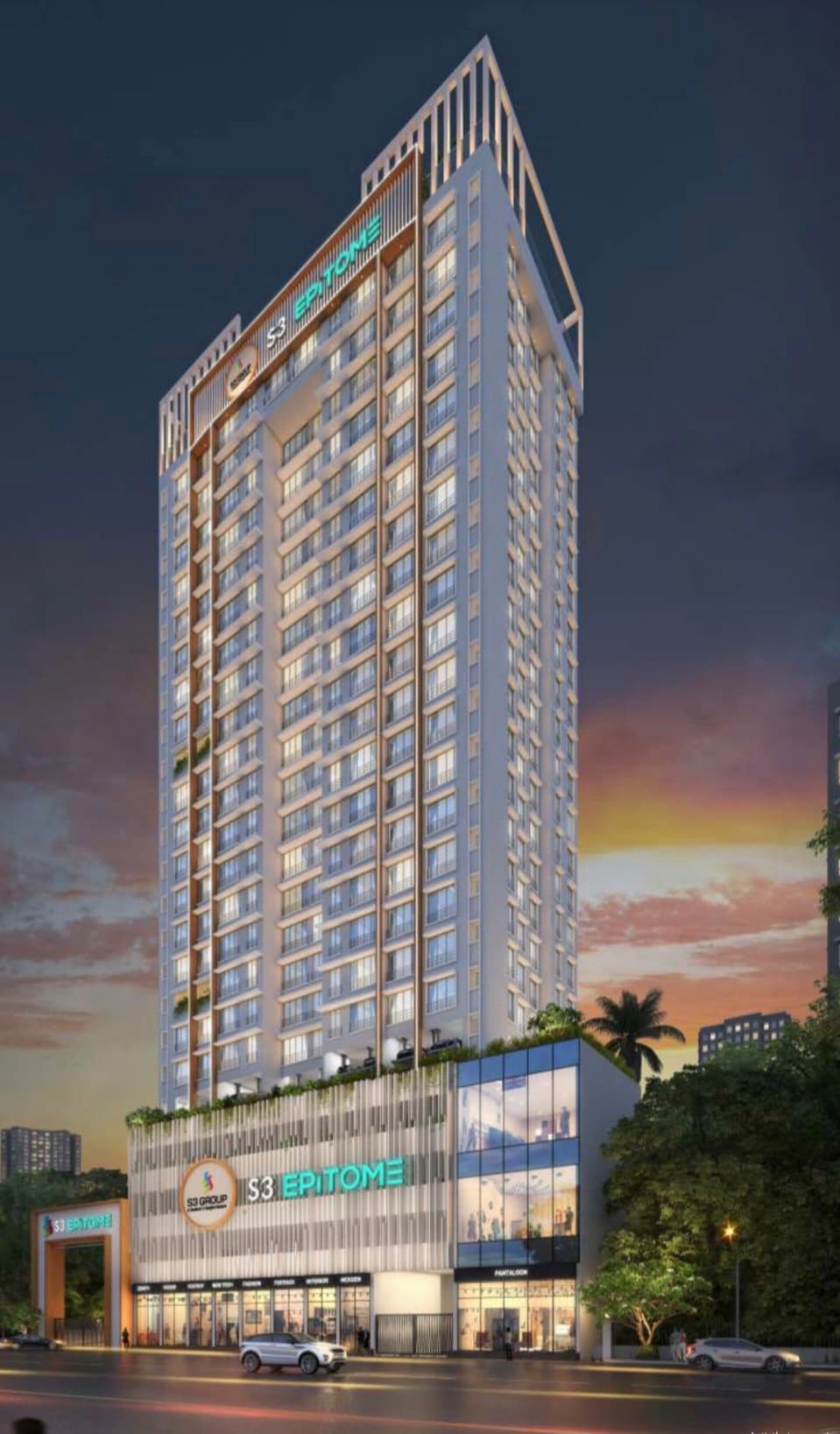
In November 2025 a Prabhadevi sea-facing tower received a BMC closure notice on its sewage treatment plant for 11 consecutive days of effluent breach. Daily penalty: ₹40,000. Lift maintenance, gym, and pool were ordered closed until rectification. The society shut amenities for 19 days. Resale enquiries on three listings in that tower paused. Property Butler tracks four similar BMC environmental enforcement actions in Lower Parel and Prabhadevi over the last 14 months — every one tied to STP, sewage, or solid-waste segregation gaps. This is the silent operating risk in luxury high-rises that buyer diligence almost never tests.
Key Insight — May 2026
Under the BMC Solid Waste Management Bye-laws (amended 2024) every residential building generating more than 100 kg of waste per day MUST process wet waste in-situ and present dry/sanitary waste in three segregated streams. Property Butler's April 2026 audit of 38 luxury towers in Lower Parel and Prabhadevi found 12 towers (32%) running below the wet-waste in-situ threshold — i.e. dumping wet waste to BMC trucks against rule.
Why the STP/waste file matters now and didn't in 2019
Three changes converged. First, the Maharashtra Pollution Control Board mandated continuous online effluent monitoring (OCEMS) sensors at every STP serving more than 100 KLD capacity by January 2024. Every Lower Parel and Prabhadevi luxury tower with 100+ units crosses 100 KLD. Second, BMC's solid waste bye-laws moved from voluntary to mandatory with daily penalty triggers in mid-2024. Third, the Bombay High Court in late 2024 directed BMC to audit and post enforcement notices publicly. The result: a building's environmental compliance file is now traceable from outside, and the penalty risk is structural — not a one-off fine.
What the STP actually does in a 50-floor tower
A luxury tower of 200-250 units in this corridor generates roughly 250-400 KLD of sewage — calculated at the BMC norm of ~135 LPCD per resident plus visitor and amenity load. The STP processes this through screening, primary settling, biological treatment (MBBR or SBR), tertiary filtration, and disinfection. Treated water is then routed to flushing, landscaping, cooling-tower makeup, and the car-wash bay. Done right, the tower draws ~40% less BMC water and saves ~₹25-40 lakh per year on the water bill at a 250-unit complex. Done wrong, the effluent breaches CPCB norms and BMC issues a Section 49 notice.
| Compliance parameter | CPCB norm | Common failure (corridor 2026) | Penalty |
|---|---|---|---|
| BOD (Biological Oxygen Demand) | <10 mg/l | 15-35 mg/l (blower under-sizing) | ₹25,000-50,000/day |
| COD (Chemical Oxygen Demand) | <50 mg/l | 80-150 mg/l (high TDS load) | ₹25,000-50,000/day |
| TSS (Total Suspended Solids) | <20 mg/l | 40-90 mg/l (clarifier fouling) | ₹15,000-30,000/day |
| Faecal coliform | <100 MPN/100 ml | 500-2000 (UV lamp end-of-life) | Amenity closure order |
| Wet waste in-situ processing | 100% of household wet waste | Composter under-capacity or shut | ₹2-12 lakh/month + show-cause |
The 12 towers running below in-situ wet-waste threshold
Property Butler's audit found three failure archetypes across the 12 non-compliant towers. Type A (5 towers): in-situ composter was installed at OC but is now under-capacity because the tower added phase-2 units. Composter capacity was sized for 130 kg/day, actual generation is 180-220 kg/day, the overflow goes to BMC trucks. Type B (4 towers): composter is fine but staff training failed — wet waste arrives mixed with packaging, the composter cycle fails, and the operator routes everything to BMC. Type C (3 towers): the original design used an OWC (organic waste converter) that is power-hungry; with the 2024 power tariff hike, the society quietly switched it off. None of these failures show up in the maintenance dashboard. All show up in a BMC inspection.
✓ STP done right — telltales
- Treated water reused visibly for landscape and toilet flushing
- Online OCEMS sensor data linked to MPCB dashboard, society can show readings
- Sludge press at site (not pumped out by tanker monthly)
- Dedicated 24×7 operator with logbook
- Annual independent performance audit on file
✗ STP/waste failure — telltales
- Smell in basement near STP room — likely under-aerated tanks
- Frequent suction-tanker visits — STP not closing the loop
- Composter room shut or used for storage
- Single waste bin at each lift lobby (segregation skipped)
- Maintenance staff handling waste without gloves and PPE
- No display of compliance certificates near STP entry
Why this hits resale and rental simultaneously
The amenity-closure consequence is the under-appreciated one. The November 2025 Prabhadevi closure shut pool, gym, and clubhouse for 19 days. Property Butler tracks the marketing impact: rental listings in that tower paused, three units were withdrawn from sale, and one buyer dropped a token over an amenity availability warranty. Across the corridor, Property Butler tracks 372 active sale listings in Lower Parel and 543 in Prabhadevi. A typical buyer asks 4-6 amenity questions; "is the pool running" is one of them. If the answer is "closed for compliance" the conversation ends.
STP retrofit cost — 250-unit tower
₹35 Lakh — ₹1.2 Cr
Capex range for upgrading an under-performing STP to current CPCB norms with OCEMS and tertiary polishing — Property Butler tracked vendor quotes April 2026.
What this means for resale liquidity
Where the STP is failing and the society has not budgeted retrofit, the cost lands on the corpus or a special levy. Either way it is a 6-9 month event. Property Butler's resale velocity analysis shows luxury towers with active enforcement notices register a 14-21 day longer time-on-market than corridor peers. The deepest impact lands in mid-luxury 3 BHKs where the buyer pool is thinnest and the comparison set widest. We dig into this further in the resale velocity playbook.
Buyer's 8-point environmental compliance checklist
- Ask for the OCEMS data screenshot. Last 30 days. If society can't produce it, the sensor is either broken or not connected. Both are red flags.
- Ask for the last 6 months of MPCB submissions. Required quarterly. Gaps mean the file is not being kept.
- Visit the STP room. Smell, sludge buildup, dead lamps over UV chamber — these are operator-level failures that produce inspector failure.
- Check the composter room. If shut or storage-converted, wet-waste in-situ has failed.
- Look at the bin set on a lobby floor. Three streams (wet, dry, sanitary) means the society is in compliance. One bin means it is not.
- Read the last society AGM minutes. Search for "STP", "BMC notice", "MPCB". If the topic is repeating across two AGMs, capex is overdue.
- Request copies of any BMC show-cause notices in the last 24 months. Society must disclose under cooperative society rules.
- Confirm reuse loop. A working STP shows treated-water lines feeding landscape and toilet flush. Visible. If the entire flush load is on BMC water, the STP is effectively idle.
Two corridor towers where this is genuinely tight
Two towers in Lower Parel/Prabhadevi run a noticeably tighter environmental file. Indiabulls Sky Forest in Lower Parel — which dominates Property Butler's tracked active listings at 126 units — operates its STP through an industrial-grade O&M contract with quarterly independent audit and dual-redundant blowers. Effluent breach risk is materially lower. One Avighna Park in Lower Parel runs a smaller-footprint MBR (membrane bioreactor) STP that produces tertiary-grade water by default; the society's audit file is the cleanest in the corridor. Both pay for it in slightly higher headline maintenance — but both also see faster resale closes. The Prabhadevi peer with the equivalent discipline is Kalpataru Oceana.
Frequently Asked Questions
Will a BMC notice on the society affect my individual unit's title?
No. Environmental enforcement is at the society level. Your title is unaffected. But amenity closures, levies, or special assessments to fund STP retrofit can be assessed against your unit pro-rata. Read the society financial health audit before signing.
How often is the STP actually inspected by BMC?
MPCB and BMC have shifted to data-driven inspections through OCEMS. If the sensor data trends out of norm for 3+ days, an inspection is triggered. Physical site visits are now driven by data, not random — which makes the OCEMS sensor itself a critical risk node. If the sensor is offline, BMC treats it as deemed non-compliance.
Can I refuse to pay a special STP retrofit levy?
Practically no. If the AGM passes a special levy for STP capex by quorum vote, it binds every unit. Refusal triggers society lien on the unit. The leverage is at the AGM stage — read the managing committee & AGM decoder on what is voteable and how to dissent on the record.
Does treated-water reuse actually save the society money?
Yes, meaningfully. BMC commercial water tariff for buildings is ~₹45-55 per KL (and rising). A 250-unit tower reusing 100-150 KLD of treated water saves ~₹20-25 lakh annually. Towers where the reuse loop has failed pay BMC twice — once for fresh water and once for sewerage. The corridor's better-run towers show this in a 12-15% lower per-unit water bill line.
What about the smell? Is it always a compliance issue?
Persistent STP smell at the basement entrance or near a refuge floor usually signals under-aeration or anaerobic pockets. That is a compliance risk because the same condition produces BOD/COD breach. A well-run STP in this corridor has no perceptible odour in the building common areas — only inside the STP room itself, and even there only at the inlet screening.
Related reading
→ Power backup & DG reliability decoder — STP blowers depend on this → Water source & BMC tanker reliability decoder → Facility management vendor tier matrixNeed an environmental compliance check before token?
Property Butler runs OCEMS data and BMC notice checks for every shortlisted Lower Parel and Prabhadevi unit. We share the file before you commit.
Search Corridor Inventory