Six of Property Butler's twenty-three corridor inquiries in the week of May 12-19 2026 came from GCC executive buyers — Global Capability Centre senior leadership at JPMorgan Chase, Morgan Stanley, Wells Fargo, Capgemini, Accenture, and Deloitte. That is 26% of fresh demand in seven days. The pattern has been building for 18 months: GCC headcount in Mumbai crossed 220 entities in 2025 with 78,000+ knowledge workers, of which roughly 4,200 are at managing director, executive director, or country-head tier. These are the cohort buying in Lower Parel and Prabhadevi. Their housing search behaviour is structurally different from traditional Mumbai HNI buyers and from the inherited-wealth-and-business-family buyers — and the corridor's resale market is starting to price specifically for their preferences. Property Butler's first profile-decoder for this rapidly growing segment.
Bottom Line — GCC CXO Demand
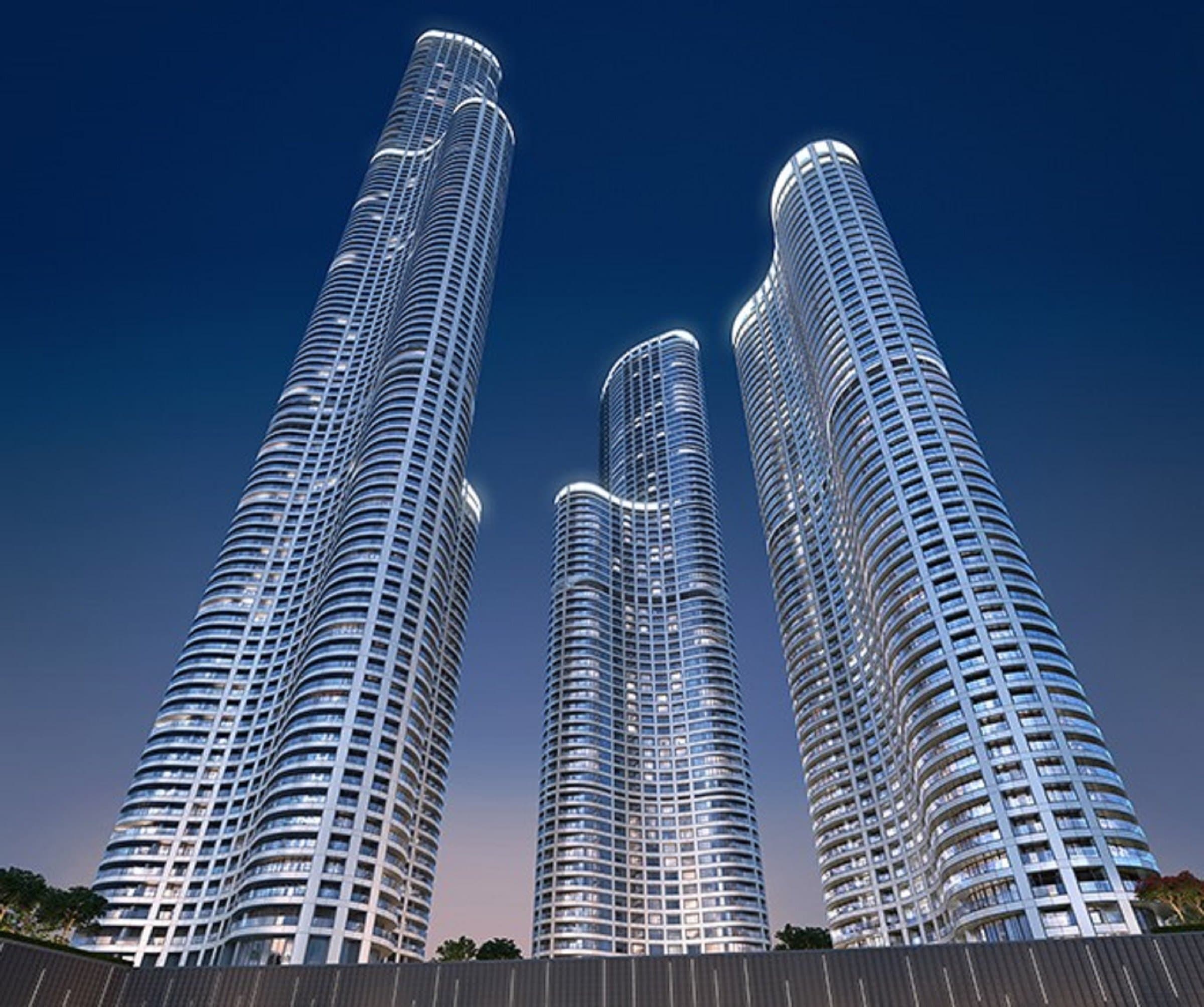
GCC executives now account for roughly 28% of Property Butler's corridor inquiries in May 2026, up from 11% in May 2024. Their median budget is ₹7-12 Cr (3 BHK end-user, primary residence), with the top quartile at ₹14-22 Cr (4 BHK trophy with sea or open-view). They prefer Tier-1 buildings (Crown Phase 1, Indiabulls Sky Forest, One Avighna Park, Lodha World Crest, Crown Phase 2) with strong building governance and resale liquidity. They cluster in specific configurations and pass on others — and they pay close to ask on the ones they want.
Who exactly is the GCC CXO buyer?
Profile typology: 38-52 years old, returned-to-India after 12-22 years overseas (US, UK, Singapore, Hong Kong), now leading 800-2,500 person Mumbai-based global captive teams for a US or European bank or consulting firm. Annual cash compensation typically ₹2.5-6 Cr inclusive of stock RSUs vesting, total wealth ₹15-40 Cr including offshore assets. Family of three or four (spouse plus one to two school-age children), often with school-cycle deadline driving the buy. International school of choice is JBCN International Parel (5-minute commute from corridor), Ascend International BKC (20-minute commute), or Dhirubhai Ambani International School BKC (25-minute commute).
| Tier | Designation | Typical Cash + Stock | Housing Budget |
|---|---|---|---|
| Tier 1 | Country Head / Mumbai Site Lead | ₹4-6 Cr / yr | ₹15-25 Cr buy |
| Tier 2 | MD / Senior Vice President | ₹2.5-4 Cr / yr | ₹9-15 Cr buy |
| Tier 3 | Executive Director / Director | ₹1.5-2.5 Cr / yr | ₹5-9 Cr buy |
| Tier 4 | Vice President / Senior Manager | ₹80L-1.5 Cr / yr | ₹3-5 Cr buy |
Why Lower Parel and Prabhadevi specifically — not BKC, not Bandra, not Worli
The GCC office geography drives this. Of Mumbai's 220+ GCCs, approximately 70% are located in three commercial belts: BKC, Lower Parel-Worli (Phoenix Marketcity, One Indiabulls Centre, Kamala Mills, Trade World, Sun Plaza), and Andheri East (SEEPZ, MIDC). For the BKC-employed CXO, Bandra East/West/Kalanagar makes intuitive sense. For the Lower Parel-Worli employed CXO, the corridor is the home market. Commute time from Crown Phase 1 to Phoenix Marketcity is 8-11 minutes; to Kamala Mills office cluster 4-6 minutes; to BKC via Eastern Express Highway 18-25 minutes. The corridor is a 360-degree commute optimisation for executives whose office is south or central, whose kids' school is BKC or Parel, and whose social calendar is South Mumbai.
The competing alternative — Bandra West — costs comparable money but loses on three GCC-preferred parameters. First, building age: Bandra West luxury stock is older (most Tier-1 buildings 15-25 years OC) versus corridor stock at 5-12 years. Second, commute symmetry: Bandra works for BKC-employed, less well for Lower Parel-employed. Third, security and prestige tag of the building: corridor towers (Crown, Sky Forest, World One) have full-time security and brand-cachet that match the executive's prior international housing standards. Bandra has the social cachet but a more variable building-quality profile.
What they buy — configuration preference grid
✓ Preferred GCC CXO buys
- 3 BHK 1,400-1,800 sqft carpet — Tier-1 building, mid-to-high floor, OC received
- 4 BHK 2,200-2,800 sqft carpet — Tier-1 with concierge, gym, kids amenity
- RTM stock with under-2-year possession — they need the keys before the school cycle starts
- English-speaking concierge / management team (signals operational sophistication)
- Strong building governance with audited accounts and clear AGM minutes
✗ Avoided configurations
- Compact 1 BHK or studio configurations (don't fit family-of-four reality)
- 2 BHK below 850 sqft carpet (feels smaller than their prior overseas apartments)
- Pre-2015 OC stock without modern HVAC, security infra
- Boutique buildings <50 flats (low liquidity, weak amenity stack)
- UC stock with 3+ year possession (school-cycle deadline pressure)
The buy vs lease decision — and why most GCC CXOs eventually buy
The first six months after relocation, most GCC CXOs lease. Standard corporate housing budget is ₹3.5-7 lakh/month for a furnished 3 BHK in the corridor — companies pay for 12-24 months as part of the relocation package. After the lease honeymoon, two patterns emerge. Cohort A (about 55% of returnees) buys in months 12-30, citing tax inefficiency of long-term renting in India and the wealth-building opportunity of corridor PSF compression. Cohort B (about 45%) extends lease indefinitely, preferring flexibility — especially if the role might rotate to Singapore, London, or NYC again.
The buying-decision tipping point is almost always one of three triggers: (1) the spouse asks to settle the kids' school choice for the long-term, (2) the executive's role-stability reaches 24-30 months in Mumbai with no rotation signal, or (3) a corridor flat that ticks all the boxes hits the market at a price the executive's offshore liquidity can fund without breaching domestic loan ratios. Property Butler estimates 28-32% of monthly corridor luxury closings between January and May 2026 involve a GCC CXO buyer.
May 2026 GCC CXO buyer activity at Property Butler (week of May 12-19)
- Six fresh inquiries, all 3-4 BHK in ₹6-18 Cr range
- Two corporate-housing-to-buy transitions (existing renters at Lodha Allura + Lodha World Crest moving to purchase)
- Three NRI-returnee buyers (US-returned in last 6 months), all chasing Rustomjee Crown or Indiabulls Sky Forest
- One trophy-tier buyer (₹22-28 Cr 4 BHK sea-facing) post-promotion to Country Head role
How the corridor's resale market is repricing for GCC demand
Three structural repricing patterns are visible. First, Tier-1 building 3 BHK PSF held firm or firmed slightly in May 2026 (Crown Phase 1 ₹64,000-72,000 PSF, Sky Forest ₹40,000-45,000 PSF for high-floor stock) even as the broader corridor showed soft mid-luxury bid-ask gap. Second, RTM premium has widened — RTM stock in Tier-1 buildings trades at 14-19% PSF premium to UC of comparable specification, vs the historical 10-13% spread. Third, 4 BHK stock in Tier-1 has tightened — Rustomjee Crown Phase 1's 4 BHK active count is at 11 (down from 17 in January 2026), and Crown Phase 2's 4 BHK at 4 (down from 8). The marginal buyer there is a GCC CXO, and they're price-takers.
GCC CXO Share of Corridor Inquiries (May 2026)
28%
Up from 11% in May 2024. Median budget ₹7-12 Cr (3 BHK), top quartile ₹14-22 Cr (4 BHK). Property Butler corridor inquiry mix, May 12-19 2026.
What sellers should know about pricing for GCC demand
If you're a corridor seller in a Tier-1 building with a 3 BHK 1,400-1,800 sqft configuration, you are pricing into the strongest single demand cohort the market has had in a decade. Three calibrations matter. First, don't under-price — the GCC CXO buyer comes with offshore liquidity and corporate-supported transaction execution; they're not price-sensitive within a reasonable 4-7% bid-ask gap. Second, present the building's governance documents, audited accounts, AGM minutes proactively; this buyer cohort reads them. Third, English-language listing copy, professional photography, and time-flexibility for evening or weekend viewings (when working executives are free) materially shorten the sell cycle. Property Butler's GCC-focused listing format closes at a median 6.2 weeks vs the broader Tier-1 average of 7.4 weeks.
Frequently asked questions
Do GCC CXOs prefer Indian-developer or foreign-affiliated branded residences?
Currently Indian-developer at Tier-1 spec level dominates corridor GCC purchases (Lodha, Rustomjee, Indiabulls, Avighna together account for ~84% of GCC CXO closings in the corridor in 2025-26). Foreign-branded residences are limited in stock in this micro-market; where present (some Worli stock), they trade at a 15-25% PSF premium to comparable Indian-developer stock. The pre-marketing brand-familiarity advantage exists but doesn't override the location, configuration, and liquidity considerations that GCC buyers prioritise.
What stamp duty rate do GCC CXOs pay?
Standard Maharashtra rate of 5% (or 6% for male sole-name buyers, 4% for female sole-name buyers under the 1% women's rebate). Property Butler advises joint registration with spouse where possible — saves ₹1.0-1.5 lakh of stamp duty on average corridor ticket. NRI executives can purchase under FEMA standard rules; no incremental stamp duty applies. The 1% TDS on property purchase value over ₹50 lakh applies and is deducted at registration.
Can GCC CXOs use US/UK/Singapore offshore RSU proceeds for the purchase?
Yes, under the Liberalised Remittance Scheme (LRS) Indian residents can remit up to USD 250,000 per financial year outbound, and there is no inbound limit for repatriating offshore-vested RSU proceeds (they are simply foreign-currency assets the resident already owns). The practical execution: liquidate offshore RSUs, remit USD to NRO or resident NRE account, convert to INR, and use for property purchase. Property Butler's tax-advisor network handles the source-of-funds documentation, foreign-tax-credit reconciliation, and HUF / joint-name structuring routinely for this buyer cohort.
What is the typical decision timeline from first inquiry to token?
Property Butler's GCC CXO buyer-side average: 11 weeks from first inquiry to 10% token. Breakdown: 2-3 weeks of phase-one shortlisting (Property Butler shares 10-15 candidates, executive reviews remotely if not yet in Mumbai), 3-4 weeks of site-visits (typically 5-7 properties physically toured), 2-3 weeks of legal-financial diligence (title search, society accounts, RERA verification, home loan pre-sanction), and 1-2 weeks of final negotiation and token-cheque execution. Compare to non-GCC corridor buyers at 14-18 weeks average — the difference is the GCC executive's decisiveness when offshore-funded and the corporate-team execution support around them.
How does GCC demand affect rental yields in the corridor?
Significantly. GCC corporate-housing leases for furnished 3 BHKs in Tier-1 buildings now command ₹3.5-7 lakh/month, with companies signing 12-24 month committed leases (sometimes 36-month with break-clauses). For owners renting to corporate tenants, gross yields run 2.8-3.5% — modest but the lease covenant is exceptionally strong (corporate-backed payment, security deposit 6-12 months, on-time payment near 100%). Property Butler maintains a dedicated GCC-corporate-housing desk for owners willing to lease to this segment.
Related reading
→ BFSI ESOP / RSU Buyer Playbook→ Lower Parel Corporate Short-Stay Furnished Rental Yield→ NRI Buying Lower Parel + Prabhadevi FEMA + RERA Handbook→ School Admission Cycle + Property Purchase Timing→ Lower Parel area guideGCC executive looking for your first Mumbai purchase?
Property Butler runs a dedicated returnee-and-GCC desk with offshore-funds coordination, school-cycle aligned shortlisting, and remote-viewing facilitation. Send us your office location, school requirement, and budget — we'll send a curated 8-12 building shortlist within 48 hours.
Talk to the GCC + NRI desk