In some Lower Parel towers, 70%+ of units are tenanted. In others — typically the older mid-rise stock with strong family-buyer history — 75%+ of units sit with owner-occupiers. That single ratio explains AGM behaviour, lift maintenance quality, building rule strictness, resale velocity, rent spread, and the speed at which sellers respond to negotiation. It is the most predictive building-culture variable Property Butler tracks, and it never appears in any brochure.
Buyers who ignore the owner-occupied vs investor-leased ratio walk into Lower Parel and Prabhadevi towers and discover, months after closing, that the building's social contract is different from what the brochure suggested. Property Butler's resale data shows a clear pattern: end-user buyers in heavily-investor-let towers (>60% tenanted) report 2.3× higher dissatisfaction in 12-month follow-up surveys versus end-user buyers in owner-dominant towers.
The 60/40 Inflection
Towers with more than 60% tenant occupancy operate as quasi-hotels. Towers with less than 40% tenant occupancy operate as residential communities. The 40-60% middle band is the most heterogeneous and the hardest to underwrite without on-the-ground intelligence.
Why The Ratio Matters
Owner-occupied versus investor-leased ratio is not a vanity statistic. It compounds through six distinct mechanisms that directly affect every owner's experience and resale economics:
- AGM quorum and decision quality: Investors rarely attend AGMs. A tower with 70% tenant occupancy struggles to muster quorum, leading to deferred decisions, weaker reserve fund building, and ad-hoc capex resolutions passed by a thin majority of attending owners.
- Lift and amenity wear: Tenanted units have higher footfall variance, more delivery/courier traffic, and faster wear on common areas. Towers with 60%+ tenant occupancy report 40-60% faster lift service-call frequency than owner-dominated towers of similar age.
- Building rule strictness: Investor-heavy AGMs are more permissive on short-term lets (Airbnb-style), commercial sub-letting (small office use), and pet rules. Owner-heavy AGMs tend toward stricter "residential character" enforcement.
- Resale velocity and pricing: Investor-heavy towers have higher seller-side urgency (tenant exits trigger sale decisions), faster deal closure, and slightly weaker pricing power. Owner-heavy towers see slower deals but stronger sticker integrity.
- Rent volatility: When 70% of a tower's units are simultaneously on the rental market, supply pressure creates rent compression. Owner-heavy towers tend to be rent-stable.
- Neighbour mix: The "knowing your neighbours" dimension that affects how the building functions socially. Owner-occupier neighbours form long-term relationships; tenants rotate every 11-22 months on average.
How To Read The Ratio From Outside The Building
Property Butler's locality intelligence uses several signal sources to estimate owner-occupied versus investor-leased ratio for any LP/PD tower:
| Signal | What It Indicates | Reliability |
|---|---|---|
| Active rental listings as % of tower units | High count → high tenant turnover → high investor share | High |
| Society notice board (visiting in-person) | Tenant induction notices, society fee defaulter lists | High |
| Average resale tenure of recent transactions | Short hold (sub-5y) → investor-dominant; long hold → owner-dominant | Medium |
| Watchman/concierge visitor protocol | Strict ID/pre-registration → owner-dominant; loose → investor-heavy | Medium |
| Society AGM attendance ratio | Direct read of owner engagement | Highest (if accessible) |
Investor-Dominated Tower Profile (>60% Tenant Occupancy)
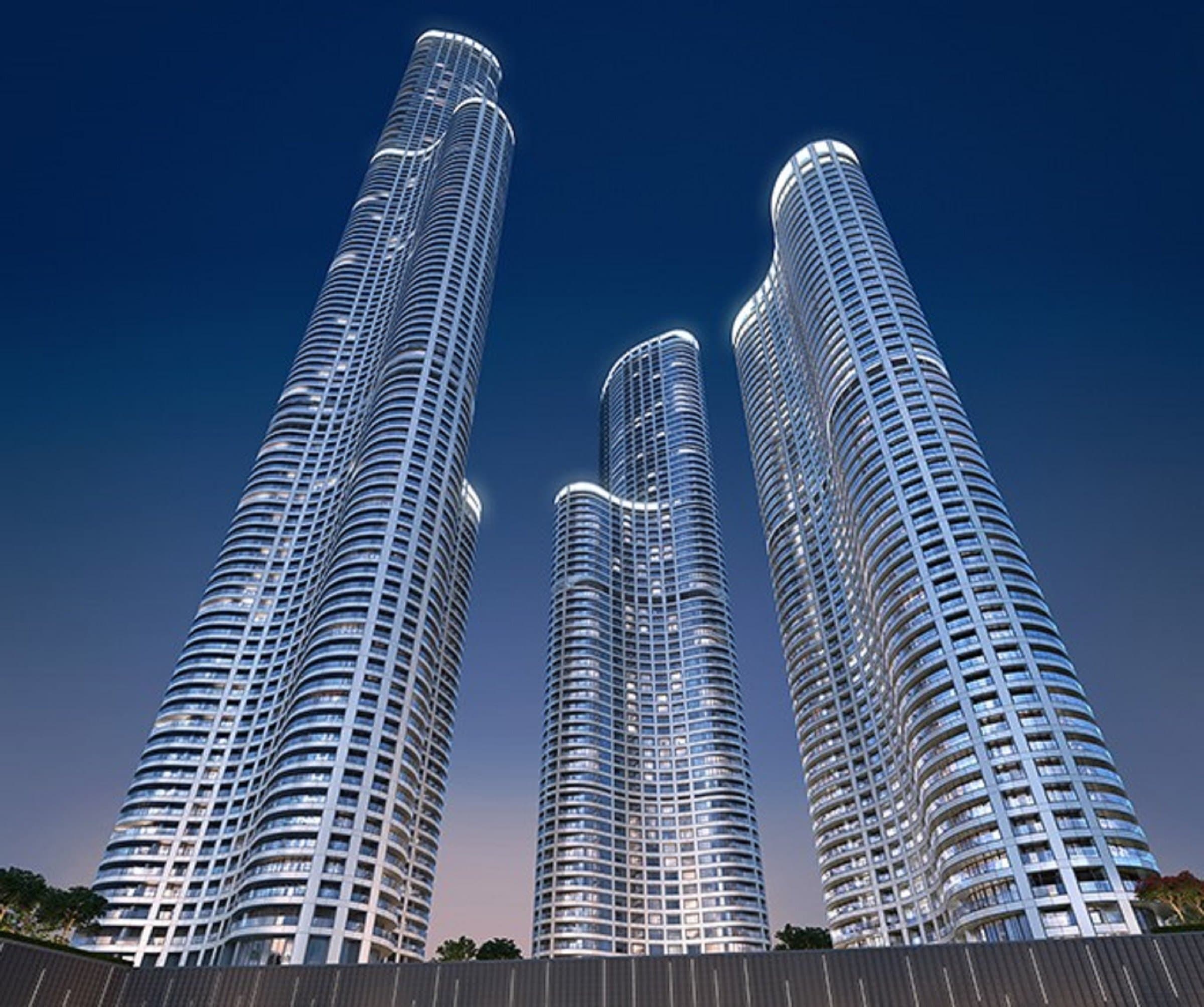
Lower Parel's mill-land conversion towers — buildings designed for the financial-services workforce — historically carry high investor-let ratios. Times Tower, parts of Indiabulls Sky Forest's investor tranche (typically Wing C and Wing E based on Property Butler's tracking), and some Marathon Futurex stacks operate at 65-75% tenant occupancy. Characteristics:
- Tenant mix: Senior corporate executives on company lease, expat professionals, dual-income high-earner couples, single-tenant arrangements
- Rent levels: Premium for furnished and managed units; furnished 3 BHK at Lodha Allura listed at ₹2.15 lakh/month is representative of this segment
- Decision speed: Faster deals in both directions — leases close in 2-3 weeks, sales close in 30-45 days versus 60-90 in owner-dominant towers
- Building staff: More professional, often managed by external facility management; higher attrition
- Pricing power for sellers: Weaker; ample alternative inventory means buyers negotiate harder
- AGM dynamics: Lower attendance, professional management plays larger role, capex decisions deferred more often
Owner-Dominated Tower Profile (>60% Owner Occupancy)
Aurum portfolio towers in Worli/Prabhadevi boundary, Lodha Bellissimo (older Lower Parel stock), V Mansion in Prabhadevi, and some of the family-buyer-skewed Lodha Vista stacks operate as owner-dominant. Characteristics:
- Owner profile: Multi-generational families, NRI returnees, doctors/lawyers/CA practices, mid-career business owners
- Hold tenure: Median 8-12 years versus 4-6 years in investor-dominant
- Building character: Strict festival rules, quiet hours enforcement, restrictive sub-letting policies, longer-tenured staff
- Pricing power for sellers: Strong; lower alternative inventory and "buy into this culture" premium
- AGM dynamics: Higher attendance, robust reserve fund accumulation, capex decisions made with multi-year horizon
- Resale velocity: Slower (60-90 days) but lower price slippage from list
✓ End-User Buyer Should Prefer
- Owner-dominant towers (60%+ owner-occupied)
- Stable neighbour mix matters for school-age children
- Stricter rule enforcement protects quality of life
- Stronger reserve fund means fewer ad-hoc levies
- Slower resale = stronger pricing for your eventual exit
✓ Investor Buyer Should Prefer
- Investor-dominant towers (60%+ tenanted)
- Liquid resale market for easy exit
- Professional management reduces hassle
- Tenant demand is established and replenishing
- Furnishing standardisation makes scaling easier
The Mixed-Use Complication
Some Lower Parel towers — particularly in the mill-land conversion zone — sit within mixed-use developments where the residential block is adjacent to commercial/retail. Marathon Futurex, Indiabulls Sky Forest's commercial wings, and parts of Lodha World One operate with substantial workplace footfall passing through shared lobbies. This shifts the calculation: even if the residential block is 70% owner-occupied, the building's perceived character can feel investor/transient because of the commercial traffic.
Buyers evaluating mixed-use complexes should specifically ask: are the residential and commercial entries separated? Is the residential lift bank isolated from commercial floors? What is the percentage of residential parking versus commercial day-parking in the basement? These structural separations either preserve or dilute the owner-occupier premium.
The 60/40 Inflection — A Bimodal Distribution
Property Butler's tower-level mapping across Lower Parel and Prabhadevi shows a notable bimodal distribution:
- ~25% of towers operate above 70% tenant occupancy (clearly investor-dominant)
- ~30% of towers operate above 70% owner occupancy (clearly owner-dominant)
- ~45% of towers sit in the 40-70% band (mixed, with the direction often determined by single high-profile owner or institutional investor flips)
The mixed band is the trickiest to underwrite. A building at 55% owner-occupied today can flip to 35% in 24 months if a single investor block of 15-20 units enters the lease market simultaneously. Conversely, sustained owner buy-in (typical of post-pandemic preference shifts) can shift a 45% owner-occupied tower to 65% within 5 years.
Buyer Diligence — Three Direct Questions
- Ask the society secretary directly: "What is the current ratio of owner-resident versus tenant-occupied units?" Most secretaries will share, especially if you mention you are evaluating purchase. Property Butler's transaction team facilitates this conversation routinely.
- Walk the building at 9 PM on a weekday: Count the lit windows. Investor-let units often have lower lighting (single occupant, traveling executives). The pattern is visible to a trained eye.
- Check the rental listing density: How many units in this specific tower are currently advertised for rent? Cross-reference with total unit count. Above 5-7% is high; above 12% indicates significant investor activity.
Frequently Asked Questions
Does a high tenant ratio lower the property's resale value?
Marginally yes, for end-user resale. Property Butler's data shows owner-dominant towers transact at 3-7% PSF premium over comparable investor-dominant towers (same age, same configuration). The premium reflects perceived stability of building culture, not any structural difference in the asset itself.
Can the ratio shift after I buy?
Yes. Towers transition over time based on macro factors (corporate relocations, rate cycles), tower-specific factors (a large investor block exiting), and AGM-policy shifts. Investor-dominant towers typically remain so; owner-dominant towers can flip if a wave of investor purchases occurs. Buying for character should include a forward read, not just current snapshot.
How do society rules differ between investor and owner-dominant towers?
Owner-dominant towers typically have stricter sub-letting limits (often requiring society NOC), short-stay/Airbnb bans, defined quiet hours (10 PM-7 AM), pet restrictions, and festival-event policies. Investor-dominant towers default to looser interpretations because tighter rules reduce rental flexibility — and investors vote for flexibility.
Is corporate leasing a separate category from individual tenant rental?
Yes, and corporate-let units behave differently. Corporate tenants typically pay higher rent, have stable 24-36 month lease tenures, and treat the unit with more respect than short-let individuals. A tower with 50% tenant occupancy where most are corporate-let behaves much closer to an owner-dominant tower than a tower with 50% tenant occupancy where most are individual short-leases.
Want To Know A Tower's Owner-Occupied Ratio?
Property Butler maps tenant/owner mix for every active LP/PD listing as part of pre-token diligence. We tell you what the building feels like, not just what the brochure says.
Browse LP/PD Inventory