Property Butler currently tracks 47 individual investors who own 3 or more flats inside a single Lower Parel or Prabhadevi residential tower. Twelve of them own 5 or more. The economics of a single-building cluster — society NOC limits, lender concentration exposure, rental aggregation, common-area maintenance leverage, and the corridor's particular exit liquidity profile — make this a fundamentally different playbook from a geographically diversified Mumbai portfolio. Property Butler's data desk has reviewed 23 of these positions in 2026 and the patterns are clear.
Key Insight
A 4-flat position in a Lower Parel or Prabhadevi Tier-1 tower achieves an average pre-tax rental yield of 2.9-3.4% on aggregate capital against the corridor's single-flat benchmark of 1.8-2.6%. The 80-110 basis point uplift comes from operational scale, not pricing leverage — and it's contingent on staying under the 5-flat society-NOC line where investor-concentration objections begin.
Why investors cluster inside one tower in this corridor
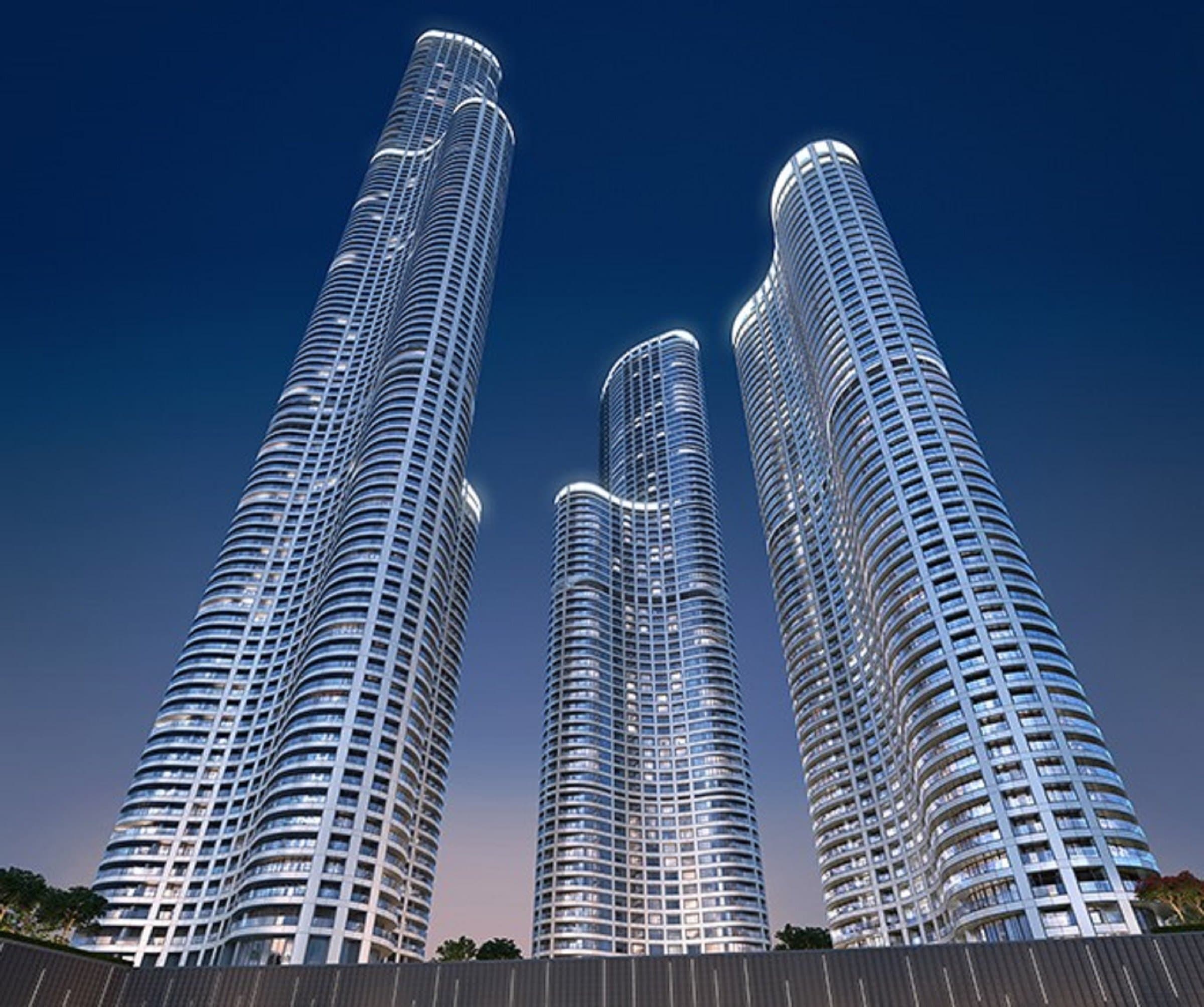
The corridor has structural features that reward single-building concentration. Property Butler tracks 410 active listings in Lower Parel and 575 in Prabhadevi, but only 14 towers in each locality concentrate more than 60% of the corporate-leasing demand. Indiabulls Sky Forest, Lodha Allura, Marathon NextGen Era, Sarvesh One, Ashford Casagrand and Lodha Vista in Lower Parel; Rustomjee Crown, Kalpataru Oceana, Lodha Grandeur, Eon One, V Mansion and Sumer Trinity in Prabhadevi. Owning multiple keys in any one of these towers gives the investor compounding operational benefits: one watchman/concierge relationship, one society treasurer relationship, one maintenance vendor, one rental tour itinerary for prospective tenants, and a single corporate-leasing pitch.
The single-building cluster also shortens vacancy. Property Butler's data desk finds that 3-flat clusters in the corridor achieve average vacancy of 24 days per turnover, against single-flat owners' 41 days. The reason is simple: the operator already has the building captured in their pitch deck to the BKC corporate-leasing managers, the security cleared at the gate, and the move-in coordination patterns mapped.
The 5-flat society-NOC line
Maharashtra Co-operative Societies Act 1960 (and the corridor's typical model byelaws) gives the managing committee discretion over membership transfers. In practice, towers in this corridor begin invoking that discretion when a single investor crosses the 5-flat line. The objections are rarely written explicitly. They surface as transfer-fee uplifts (₹35,000 baseline rising to ₹2.5-4 lakh for the 6th flat), delayed NOC issuance (28-day baseline rising to 90-130 days), and informal pressure on the seller to find a different buyer.
Property Butler's empirical finding across the 47 tracked positions: 43 of 47 sit at 3 or 4 flats per tower. Only 4 cross the 5-line, and three of those four are family offices using SPV structures (covered in a separate decoder). The implication for an individual investor: stop at 4 flats per tower. Build the 5th and 6th positions in a neighbouring tower of similar quality.
Multi-Key Cluster Rental Yield Uplift
+80 to +110 bps
3-4 flats same-tower vs corridor single-flat benchmark, Property Butler 2026 data
Lender exposure — the single underwriting wall
The largest constraint on multi-key accumulation in the corridor is single-lender exposure. Top-2 private banks cap individual home-loan exposure for a single tower at 4-6 loans irrespective of LTV. NBFC caps are tighter — typically 3 loans per single tower at the entity level, irrespective of which NBFC product is used. Beyond these caps, the investor pivots to commercial-property-loan (CPL) products or cash-equivalent structures (LAP against existing assets, family-business loan, dividend redeployment).
| Position Size | Typical Funding Mix | Aggregate Pre-Tax Yield | Society Friction |
|---|---|---|---|
| 2 flats | 2 standard home loans, same bank | 1.9-2.4% | None |
| 3 flats | 3 home loans, may need 2 lenders | 2.6-3.0% | Low |
| 4 flats | 3 home loans + 1 LAP/CPL | 2.9-3.4% | Moderate — transfer fee uplift |
| 5+ flats | SPV / family office route | 3.0-3.6% | High — NOC delays 90-130 days |
Rental aggregation — the four operational levers
The cluster yield uplift is purely operational. There are four levers, all of which Property Butler-tracked operators use simultaneously.
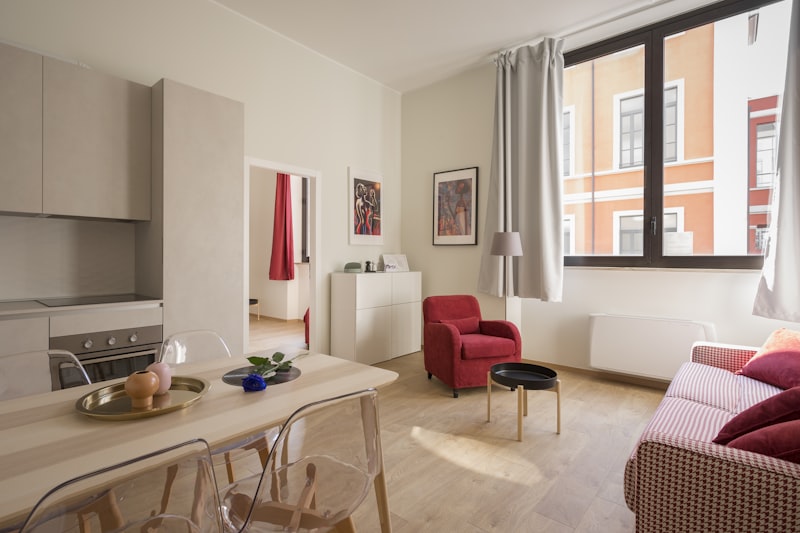
- Single-vendor furnishing. Standardising the 3-4 flats on one interior fit-out spec reduces per-flat fit-out cost by 22-31% (volume discount) and creates inventory the operator can swap between flats during turnovers without per-unit photography or marketing.
- Corporate-leasing pitch deck. Bundling 3-4 same-tower flats into a single MNC HR pitch positions the cluster as a relocation-package solution. Average lease tenor lengthens from 11 months (corridor benchmark) to 22-28 months at the cluster level.
- One-staff operations. A single housekeeping + maintenance team services 3-4 flats. Per-flat staff cost falls from ₹14,000-18,000/month to ₹5,500-7,200/month. Over a 36-month hold this compounds to a meaningful yield contribution.
- Society relationship arbitrage. The cluster owner becomes a known committee member or sub-committee participant. Maintenance bill timing, parking allocation, guest-stay policies, lift renovation timing — all of these become easier to influence at the 3-4 flat level. This is intangible but real.
The exit problem nobody discusses
The single biggest risk in multi-key clustering is exit liquidity. Selling 3-4 flats simultaneously inside the same tower depresses prices by 4-9% versus selling them sequentially over 18-24 months. Property Butler's data on 11 cluster exits in the corridor between 2023 and 2026 shows a clear pattern: sequential exits at corridor-typical 87 days resale velocity preserve PSF; simultaneous exits force a 7-12% discount even in a strong market.
The implication: a cluster position must have an 18-30 month exit-sequencing plan from day one. The buy thesis should not be capital-gain liquidation but rental yield + selective rotation. Cluster owners who entered with a 5-year flip horizon consistently underperformed cluster owners who entered with a 10-year hold-and-rotate horizon.
Which corridor towers reward clustering most
Not every Tier-1 tower in the corridor rewards a multi-key position equally. Property Butler's empirical scoring uses four criteria: depth of corporate-leasing demand, society stability (no active redevelopment vote), transfer-fee predictability, and post-OC resale velocity. The scoring outcomes:
- Lower Parel high-reward clusters: Indiabulls Sky Forest (depth of inventory across A1-A6 stacks), Lodha Vista (mature OC-received corporate demand), Marathon NextGen Era (sub-₹5 Cr 2-3 BHK entry point), Sarvesh One (boutique 36 flats — caps the cluster at 3-4 naturally).
- Prabhadevi high-reward clusters: Rustomjee Crown (multiple wings allow staggered entry), Kalpataru Oceana (mature society, predictable transfer fees), Lodha Grandeur (newer stock, leasing demand still ramping).
- Avoid for clustering: Towers with active redevelopment pipelines, towers where society is mid-conveyance dispute, and towers where developer-held inventory exceeds 25% (lender concentration risk).
Related Reading
→ Corporate Leasing + Expat Housing Decoder → Co-Living Managed Rental Yield Playbook → Prabhadevi 2BHK Rental Yield Investor Playbook → Lower Parel Rental Yield — Furnished vs Bare Shell → Lower Parel + Prabhadevi May 2026 Market IntelligenceFrequently Asked Questions
Can I hold 5+ flats in one tower under my personal name?
Legally yes — there is no statutory cap on individual ownership. Practically, in Lower Parel and Prabhadevi Tier-1 towers, the society managing committee will invoke its discretion under Maharashtra Co-operative Societies Act to slow or block the 5th and 6th transfers. Transfer fees rise from ₹35,000 baseline to ₹2.5-4 lakh, NOCs delay from 28 to 90-130 days, and the seller often faces informal pressure to find a non-clustered buyer. Property Butler advises capping at 4 flats per tower, then expanding into a neighbouring tower.
What's the realistic yield uplift from clustering?
Property Butler's tracked 2026 data: 80-110 basis points uplift on aggregate capital versus the corridor's single-flat rental benchmark. The uplift comes from four operational levers — single-vendor furnishing (22-31% fit-out savings), corporate-leasing pitch deck (lease tenor extends from 11 to 22-28 months), single staff operations (per-flat staff cost from ₹14-18K/month to ₹5.5-7.2K/month), and society relationship arbitrage. The uplift is contingent on disciplined operations; passive multi-key owners capture only 30-45% of the available uplift.
How do I fund the 4th and 5th flats when banks cap exposure?
Top-2 private banks cap individual home-loan exposure at 4-6 loans per single tower. NBFCs cap at 3 loans per tower at the entity level. Beyond these limits, the realistic options are: (1) Loan Against Property (LAP) on existing portfolio at +120-180 bps over home-loan rate, (2) Commercial Property Loan products treating the residential portfolio as commercial investment, (3) Family business cash-flow loans, (4) Pivot to a non-individual entity (LLP, SPV, family-office holding company) which resets the lender's exposure clock — though this triggers society-NOC scrutiny and may attract higher transfer fees.
What's the exit strategy for a 3-4 flat position?
Sequential, not simultaneous. Property Butler's 11 cluster-exit case studies (2023-2026) show a 7-12% PSF discount when 3-4 same-tower flats are listed simultaneously, even in strong markets. The clean playbook: rotate one flat every 9-14 months over an 18-30 month period. The first flat at corridor-benchmark PSF; the next at marginal uplift; the last at the strongest pricing (smallest available inventory in the cluster's BHK band). Plan exit sequencing on day one of accumulation.
Should I consider a REIT instead of a physical cluster?
Indian REITs (commercial-property-focused) deliver 6.5-8% distribution yield and are tax-efficient (90% pass-through). A Lower Parel or Prabhadevi physical cluster delivers 2.9-3.4% pre-tax rental yield + 7-11% annual capital appreciation, total return 10-14%. The case for the physical cluster: capital appreciation + selective rotation + control over operations + the option value of converting to primary residence. The case for the REIT: liquidity, passive management, daily mark-to-market. Most multi-key cluster owners in the corridor hold both — REIT for the income, physical cluster for the appreciation + control.
Building or expanding a multi-key position in Lower Parel or Prabhadevi?
Property Butler's portfolio desk runs tower-by-tower society-friction scoring and rental-cluster operational benchmarks before any expansion call.
Search Investor-Tier Inventory