In July 2005, Mumbai received 944 millimetres of rain in a single 24-hour window. In July 2023, Lower Parel and Prabhadevi recorded localised cells of 250+ mm in just 6 hours. A modern luxury tower's basement parking — typically B1 to B5 levels, six to thirty metres below road grade — relies entirely on sump pumps and gravity drainage to evacuate water. Most Lower Parel and Prabhadevi basements were specified for a 100-year return-period rainfall. Mumbai is now experiencing that event roughly once every three years.
This is no longer a hypothetical risk. Property Butler's transaction team has handled three deal cancellations in the last 18 months where the buyer walked away after discovering basement flood exposure that was not disclosed by the seller or developer. The financial damage is highly asymmetric: a single basement-level flood event can destroy ₹25-50 lakh worth of cars per affected unit, plus societal damage to mechanical/electrical rooms typically running ₹2-8 crore at building level.
The Asymmetric Risk
A basement flood is uninsurable in many cases (motor insurance exclusions during "act of god"), unmodelled in property valuations, and capable of destroying multi-crore vehicle fleets in 90 minutes of heavy rainfall.
Why LP/PD Is Structurally High-Risk
Lower Parel and Prabhadevi sit in BMC's G/South administrative ward. The micro-terrain has three structural vulnerabilities:
- Mill-land plinth elevation: Many Lower Parel towers were built on former textile mill sites where the original plinth was below the surrounding road grade. Developers raised the plinth, but adjacent road levels were not raised proportionately. When BMC stormwater drains back up, water flows toward these depressed compounds.
- Reclaimed coastal proximity: Prabhadevi's western edge runs close to the Arabian Sea. The combination of monsoon rainfall and high-tide cycles compounds flood risk — Mumbai has experienced multiple "double event" days where rainfall coincided with spring tide.
- BMC G/South SWD capacity: The ward's stormwater drainage network was designed in the 1970s-80s for then-prevailing rainfall patterns. Despite recent upgrades, the system has theoretical capacity for ~50 mm/hour. Modern cloudburst events exceed 100 mm/hour.
Basement Specification — What Actually Protects The Garage
A well-engineered basement is not waterproof; it is rapidly-de-watering. The defence is mechanical, not structural, and depends on five layers:
| Defence Layer | Premium Spec | Risk If Inadequate |
|---|---|---|
| Ramp entry flood gates | Automated/manual gates rising 1-1.5 m | Water enters via ramp entry — primary failure mode |
| Sump pump count + capacity | N+1 redundancy, 200-500 m³/hour each, total 1000+ m³/hour | Single-pump failure during peak event |
| DG backup for pumps | Dedicated DG for pump room; auto-transfer switch under 10 seconds | BMC power cuts during heavy rain are routine |
| Drainage gradient + intake | Floor sloped 1:100 to multiple intake grates per level | Pooling near electrical rooms or lift pits |
| Stormwater discharge | Building outlet to BMC SWD with non-return valve, sized for 24-hour peak event | SWD overflow back-flows into building |
The Specific LP/PD Tower-Level Picture
Property Butler's pre-token diligence checklist includes a basement spec review. Across the 38 most-tracked LP/PD towers, the spread is significant:
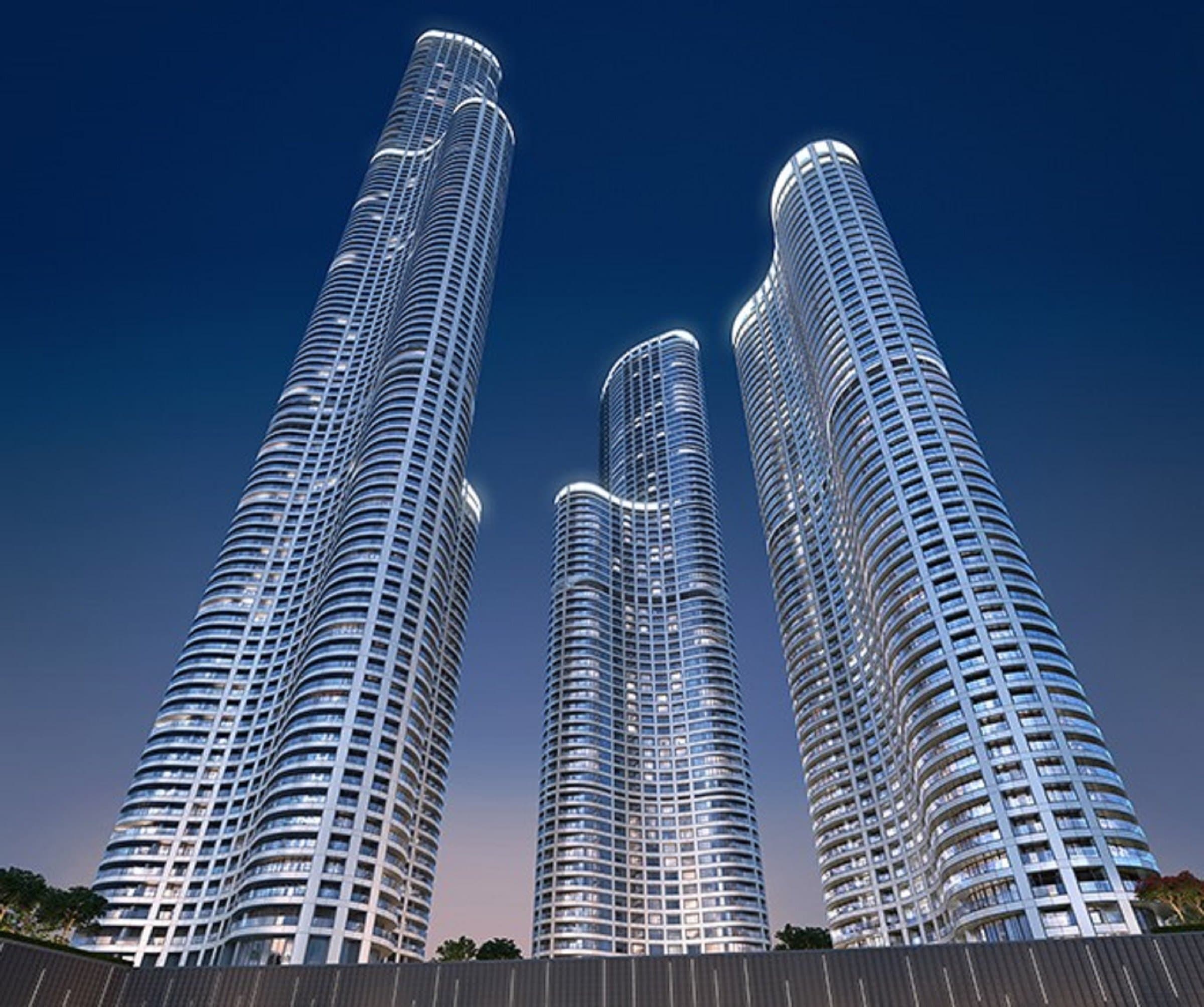
- Top-tier basement spec (Lodha World Towers, One Avighna Park, Lodha Ciel, Lodha Allura): Multi-pump redundancy, automated flood gates, dedicated DG, multi-level drainage. Negligible flood risk under normal events.
- Mid-tier basement spec (mid-2010s vintage Indiabulls/Marathon stock): Adequate primary pumps but limited redundancy; manual flood gates; shared DG with rest of building. Vulnerable in compounding event (rain + power cut + pump failure).
- Older mill-conversion stock (pre-2015): Often relies on retrofit-installed pumps; original drainage gradient may not meet current cloudburst standards. Higher historical flood incidence.
Buyers can ask for the building's drainage and pump-room maintenance log from the society. Towers that have not logged a pump test in the last 24 months are signalling deferred maintenance — a red flag regardless of original spec quality.
The Vehicle Damage Math
A Single LP/PD Basement Flood — Indicative Damage Stack
| Premium car (water above floorboard): typical replacement cost | ₹35-75 lakh |
| Average vehicles per basement level affected | 40-80 |
| Per-event vehicle damage (entire affected level) | ₹15-40 crore |
| Building electrical room damage (lift, fire, water systems) | ₹2-8 crore |
| Building generator + pump room damage | ₹50 lakh - ₹2 crore |
| Insurance recovery probability (motor + property) | 40-70% |
The recovery percentage matters. Comprehensive motor insurance covers flood damage to vehicles, but policies routinely exclude consequential damage (engine damage from cranking during flood, electrical system long-term effects). Building property insurance covers structure and equipment but typically caps individual claims and may have monsoon-event exclusions in some policy schedules.
The BMC G/South SWD Capacity Picture
BMC has invested ₹600+ crore in stormwater drainage upgrades across G/South ward in the 2020-2026 cycle, including Phase 2 of the Brimstowad project (Brihanmumbai Stormwater Drain). The improvements have measurably reduced flooding frequency in some Lower Parel pockets — N M Joshi Marg area, parts of Senapati Bapat Marg. But the system still cannot handle the cloudburst-magnitude events that have become increasingly common.
BMC's ward-level monsoon preparedness report (published annually, June-July) lists specific roads and zones with high flood probability. Cross-checking a target building's location against this list is the cheapest, most-overlooked diligence step a buyer can take.
Buyer Diligence Checklist — Pre-Token Basement Audit
✓ Must Ask Before Token
- Total sump pump count, capacity, redundancy ratio
- Last documented pump test result (must be within 12 months)
- DG backup specifically for pump room (Y/N)
- Flood gate at ramp entry (automated or manual)
- Building flood claim history in last 5 years
- Society reserve fund earmarked for flood capex
✗ Red Flags To Walk Away From
- Society cannot produce pump test logs
- Previous flood events not disclosed by seller
- Single-pump primary system with no redundancy
- Ramp entry has no flood gate at all
- Building plinth visibly lower than adjacent road
- Pump room shares panel with main building DG only
Insurance — What's Covered, What's Not
The insurance picture has three layers:
- Owner's motor insurance: Comprehensive policy with "engine protect" / "consumables" / "zero depreciation" add-ons covers flood damage to vehicles. Pure third-party policies do NOT.
- Building property insurance: Society-level policy covers common areas, lifts, electrical infrastructure. Some policies exclude monsoon flood events specifically; buyers should request the actual policy schedule, not the summary.
- Owner's home insurance: Covers contents inside the apartment. Flood damage to apartment-level contents is typically covered for monsoon events but excluded for direct seawater/cyclone events. Read schedule carefully.
For LP/PD buyers, Property Butler's transaction team recommends specifically asking the society for a copy of the building property insurance schedule before token. The cover, deductibles, and exclusions vary significantly between societies — and the cost of insurance gap is borne by the owner, not the society.
Frequently Asked Questions
My car is in B3 (third basement level). Am I safer than B1?
Counter-intuitively, no. Water entering at the ramp flows downward through the gravity gradient of the parking levels. B3 typically receives the cumulative flow from B1 and B2 if pumps fail. The safest level is B1, closest to surface drainage — provided ramp entry flood gates work.
Does podium parking (above ground) eliminate the risk?
Largely yes for vehicle damage. Podium parking sits 1-3 floors above ground level and is structurally immune to ground-level flooding. The trade-off: podium parking towers typically allocate fewer slots per unit and have access ramps that can themselves flood. The risk is operational (you can't drive in/out during peak event) rather than damage (your car remains dry).
If a flood damages my car in the basement, who is liable?
Primary liability rests with the vehicle owner's motor insurer. The society is liable only if negligence can be demonstrated — e.g., documented failure to maintain pumps despite member complaints. Successful society-liability claims are rare and require extensive documentation of prior warnings. Practical recovery is via motor insurance + comprehensive home insurance.
Should I avoid basement parking entirely?
In Lower Parel and Prabhadevi, basement parking is the norm — opting out usually means losing the slot allocation. Better diligence: pick towers with top-tier flood defence specifications and proven track records. Property Butler maintains a tier list of LP/PD towers by flood-defence quality, refreshed annually after monsoon.
Buying in Lower Parel or Prabhadevi?
Property Butler's pre-token diligence includes basement flood spec audit — pump count, redundancy, DG backup, ramp gate, historical flood incidents. The data the brochure won't show you.
Explore LP/PD Inventory