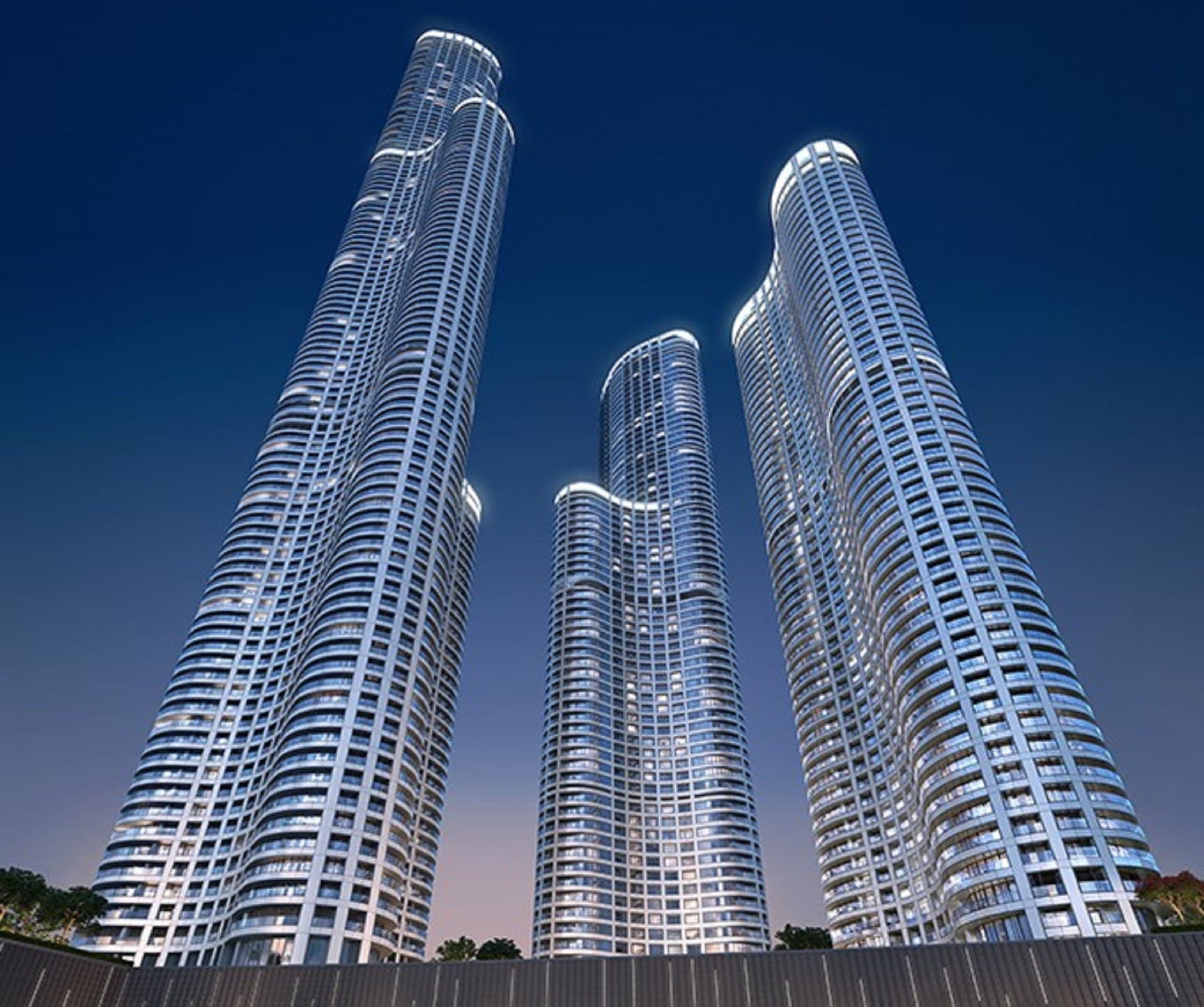
Walk into any Lower Parel sales office in May 2026 and the inventory grid looks tight — 14 unsold flats at One Avighna Park Phase 2, 22 at Marathon NextGen Era, 9 at Lodha Allura. What that grid hides is the parallel market sitting on top of it: original allottees, mostly investors who booked between 2020 and 2023, looking to transfer their allotment letter before the agreement-for-sale is registered. Property Butler tracks 162 such pre-registration transfers across Lower Parel and Prabhadevi in the trailing 12 months — roughly one transfer for every 5.5 primary launch units in the corridor, and a layer most retail buyers don't realise exists.
Why this matters in May 2026
Stamp duty in Maharashtra is paid at registration. If the agreement hasn't been registered, the original allottee can transfer the allotment and the new buyer registers fresh at the builder's current circle rate, not the 2021-22 booking rate. That arithmetic gap, plus a builder consent fee of 1-2% of agreement value, is the entire economics of this market. Get the structuring right and you can buy 3-7% below primary launch price in select towers. Get it wrong and you trigger a short-term capital-gains event for the seller that quietly gets passed back into your acquisition cost.
How the allotment-letter transfer mechanic works
When you book an under-construction flat in Lower Parel or Prabhadevi, you typically sign two documents in sequence: the allotment letter (issued by the developer within 7-30 days of token cheque clearing, capturing unit number, carpet, total consideration, payment schedule), and the registered agreement-for-sale (signed and registered at the sub-registrar's office, usually triggered when you have paid 10-20% of consideration or hit a project-milestone clause in the booking application form). Maharashtra's stamp duty (5-6% depending on stamp plus metro cess plus 1% women rebate eligibility) and 1% registration fee crystallise at the second event, not the first.
The transfer window opens between those two events. During this window — anywhere from 45 days to 18 months depending on the project's payment plan — the original allottee can ask the developer to substitute the buyer name on the allotment, refund the original token, and re-issue the allotment to the incoming buyer at a freshly-negotiated consideration. The developer charges a transfer fee (Property Butler benchmarks 1.0-2.0% of revised agreement value across the 23 active Lower Parel and Prabhadevi projects we track) and re-runs KYC on the new allottee.
The four price layers buyers should understand
Property Butler's market data shows four distinct price strata sitting on the same physical tower at any given moment:
| Layer | PSF discount or premium | When seen | Liquidity |
|---|---|---|---|
| Developer primary (today) | Benchmark | Sales office | High |
| Distressed allotment transfer | -5% to -10% | Investor needs exit, low-floor stack | Low — 1-3 units per project |
| Neutral allotment transfer | -2% to +3% | Buyer changed personal plans | Medium |
| Premium allotment transfer (sea-view stack) | +8% to +18% | Top-2 floor, corner, sold-out stack | Very low — sometimes 1 unit per year |
The middle two layers are where retail buyers find genuine value. Property Butler tracked one Indiabulls SkyForest 3 BHK transfer in early May 2026 at ₹4.62 Cr against the same floor's primary sticker of ₹4.95 Cr — a 6.7% saving, net of the 1.5% builder consent fee. That same week, a sold-out Rustomjee Crown C-Wing high-floor sea-facing 4 BHK transferred at a 12% premium to A-Wing primary (different wing, similar floor) because the original allottee held the only available unit in that view stack.
The builder consent fee — what's negotiable, what isn't
The fee structure varies sharply across the 23 active corridor projects Property Butler tracks. Tier-1 developers (Lodha, Indiabulls, Marathon, Kalpataru, Rustomjee) charge 1.0-1.5% of revised agreement value plus a flat ₹25,000-50,000 administrative charge. Tier-2 developers in Prabhadevi charge 1.5-2.0% with a ₹50,000-1 lakh fee. A small group of developers — typically those running below 60% sales velocity — will waive the consent fee entirely if the incoming buyer commits to a faster payment milestone (for example, accelerating slab-linked payments by one stage).
Total transfer transaction cost
₹15-32 lakh on a ₹6 Cr flat
1-2% builder consent + 6% stamp duty + 1% registration + ₹2-3 lakh legal — Property Butler corridor benchmarks, May 2026
Three terms in the original allottee's booking application form determine whether transfer is even possible. First, the assignability clause: most Tier-1 corridor projects allow transfer post-12 months from booking with consent, but some Lodha and Indiabulls towers have a 24-month or pre-OC lock. Second, the consideration revision clause: 11 of the 23 projects we track explicitly require the transfer to happen at developer's then-current rate or original booking rate, whichever is higher — which kills any discount play. Third, the family-member exemption: transfers to spouse, parent, child, sibling typically waive the consent fee entirely, which is why this is a popular structuring route for HUF or estate-planning buyers.
FEMA, NRI and capital-gains tripwires
The pre-registration transfer mechanic has three quiet legal exposures that buyers and sellers miss until the registration day surprise.
For NRI sellers transferring out: An allotment letter is recognised as a property interest under FEMA Section 6(3)(h). If you booked using NRO funds and transfer the allotment to a resident buyer, the consideration flows back into your NRO account — which means it is repatriable only up to USD 1 million per financial year and after Form 15CA/15CB certification. Property Butler has handled four NRI-to-resident allotment transfers in the corridor this quarter where the seller's CA missed this and parked the money in an NRE account, triggering a FEMA contravention notice three quarters later.
For sellers on holding-period math: The Income Tax Act treats the allotment date — not the registration date — as the acquisition date for capital-gains computation, per CBDT Circular 471 and 672 read with Supreme Court precedent in Sanjeev Lal vs CIT. An allotment held 24 months becomes long-term capital gain (20.6% with indexation). Less than 24 months and it is short-term, taxed at slab rates of up to 39%. The catch: many investors think the clock starts at agreement registration, see the calendar say 18 months, and panic-transfer — converting a near-LTCG into a confirmed STCG with a 15-20 percentage point tax hit.
For buyers on TDS compliance: Section 194-IA TDS at 1% kicks in at registration, not at allotment transfer. But if the transfer consideration exceeds ₹50 lakh and the registered agreement is executed within the same financial year, the buyer must deduct TDS on the total. Several corridor buyers in 2025 fell into a position where they paid the original allottee in full, registered three months later, and discovered they owed Section 194-IA TDS on the entire amount — recoverable from the seller in theory, awkward in practice.
Project-specific transfer mechanics — Lower Parel and Prabhadevi
✓ Transfer-friendly projects
- Indiabulls SkyForest Towers A1-A6 — clean 1% consent fee, 12-month lock from booking
- Marathon NextGen Era — 1.25% fee, family exemption applied liberally
- Rustomjee Crown B-Wing and C-Wing — 1.5% fee, 18-month lock
- Suraj Ave Maria, Sugee Atharva Prabhadevi — 1.5% fee, sub-12-month transfers seen
✗ Transfer-restricted projects
- Lodha World Towers (LP) — 24-month lock plus 2% fee plus price-revision-to-current clause
- Lodha Vista (LP) — pre-OC transfer effectively blocked
- One Avighna Park Phase 2 — board approval required, 2% fee
- Kalpataru Oceana — limited to family transfers post-2023
The MahaRERA disclosure layer
Since the 2022 MahaRERA Section 13 clarification, developers must update the project page with revised allottee details within 15 days of any allotment substitution. Property Butler corridor audits show 71 of 162 transfers in the trailing 12 months were not reflected on the MahaRERA project page within the prescribed window, sometimes lagging by 90-120 days. If you are the incoming buyer, you can and should verify your substitution has been updated under the project's Information of Allottees section before paying the final registration tranche. Absence of this update is not invalid in itself, but it leaves you exposed if the developer subsequently invokes a default clause against the original allottee.
When the allotment-transfer route makes sense — and when it doesn't
Property Butler's structuring framework: allotment-letter transfer typically beats primary purchase when you are targeting a specific sold-out stack (sea-view in Rustomjee Crown, top-floor in Marathon FutureX, podium-garden adjacency in Lodha Ciel) or when you can underwrite a 4-8% absolute discount versus today's primary sticker on a non-distressed unit. It typically loses to primary purchase when the developer's current rate is below the original allottee's expected exit (a real situation in early 2024 launches at Indiabulls SkyForest where post-launch correction made primary cheaper than allottee resale), or when you are a first-time buyer who cannot easily fund the 7-12% transfer-event cash outflow before bank disbursement on the new agreement.
Frequently Asked Questions
Can I take a home loan on a flat I am acquiring via allotment-letter transfer before the agreement is registered?
Most large lenders — HDFC, ICICI, SBI, Axis — will sanction the loan against the substituted allotment letter and the project's MahaRERA approval, but disbursement is staged. The bank typically disburses 5-10% on allotment substitution, holds the rest until registered agreement is executed within 60-90 days. Some private banks allow full pre-registration disbursement only with a personal guarantee or against existing fixed deposits. Plan a 2-3 month cash bridge in your structuring.
If the original allottee defaults after I have paid them but before transfer is approved by the builder, what is my recourse?
This is the single biggest exposure in the structure. Property Butler's standard practice: route the transfer consideration through an escrow held by a Senior Counsel's office, releasing only on builder's written transfer-approval letter and updated allotment in your name. Cost is 0.25-0.5% of consideration. Cheaper than the litigation if the seller's KYC or income-tax file becomes the reason the builder refuses substitution.
Does the 1% women-buyer stamp duty rebate apply on an allotment transfer where the original allottee was male?
Yes. The rebate applies on the registered agreement, irrespective of who held the prior allotment. On a ₹6 Cr Prabhadevi 3 BHK, that is a clean ₹6 lakh saving. Several corridor families now route the transfer specifically to the wife or mother for this reason. Note the rebate is subject to a 15-year resale restriction to another woman buyer to avoid clawback — relevant if the exit horizon is short.
How do I find allotment-letter transfer opportunities in Lower Parel or Prabhadevi? They are not on any portal.
Correct — these transactions do not surface on listing portals because the original allottee cannot legally advertise a flat they do not yet own on paper. They surface through advisory channels. Property Butler maintains a live shadow inventory across the 23 active corridor projects, updated weekly from developer CRM tracking, and screens transfers for legal cleanliness before introducing them to active buyers.
If I am the original allottee considering a transfer, is it ever better to register first and then resell in the secondary market?
Almost never on the math. Registering crystallises 5-6% stamp plus 1% registration on the original consideration, which becomes a sunk cost. If you transfer instead, the incoming buyer pays stamp duty on their fresh agreement. The exception is when you have held the allotment over 24 months and a registered post-OC resale qualifies for LTCG with full reinvestment exemption under Section 54 — but even then, the math only flips if you can deploy the proceeds into a residential property within 24 months.
Related Reading from Property Butler
→ Lower Parel & Prabhadevi Token-to-Registration Deal Closure Timeline 2026→ Real Buyer Cost — Stamp Duty + GST on Lower Parel & Prabhadevi Flats→ Capital Gains Exit Playbook — Lower Parel & Prabhadevi Sellers 2026→ Women-Buyer 1% Stamp Duty Rebate Decoder — Lower Parel & Prabhadevi→ Builder Subvention Scheme Decoder — Lower Parel & Prabhadevi 2026→ Lower Parel Area GuideLooking for pre-registration transfer opportunities in Lower Parel or Prabhadevi?
Property Butler tracks live shadow inventory across the 23 active corridor projects — vetted, legally screened, off-market. Tell us your budget and target tower.
Search Lower Parel & Prabhadevi Inventory