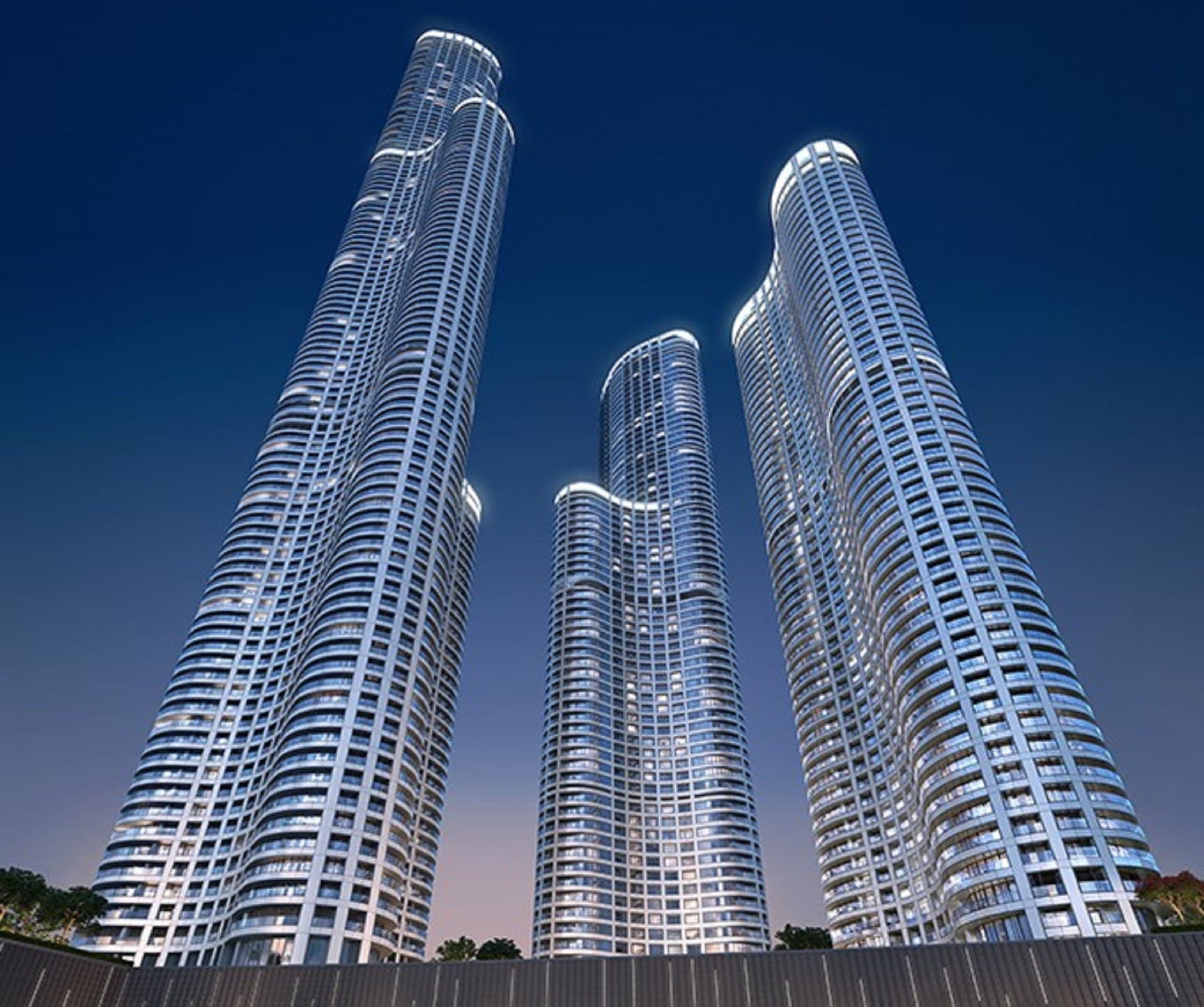
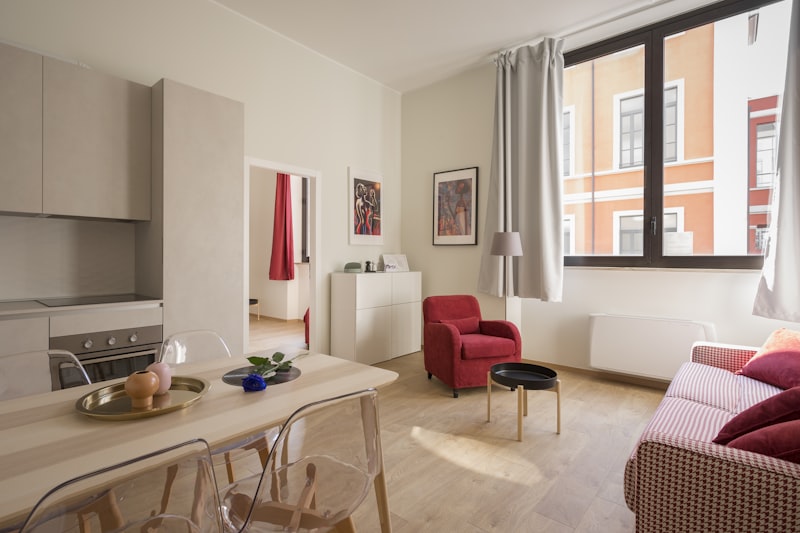
Property Butler closed a Lower Parel 4 BHK for a Bandra-based pharma executive in March 2026. Agreement value ₹15.5 Cr. The husband had been registering Mumbai property in his name since 1998. We restructured the buyer side and registered the flat solely in his wife's name. Stamp duty dropped from 6% to 5%. Saving: ₹15.5 lakh — enough to fund the entire interior fit-out of the master suite. The Maharashtra women-buyer rebate has existed since the 1 April 2021 budget. Many South Mumbai buyers know it exists. Almost no one structures around it correctly.
The Maharashtra rule, in one line
Under Article 25 of the Bombay Stamp Act (Maharashtra amendment, effective 1 April 2021 and re-confirmed by Maharashtra Finance Bill 2024), a residential property registered solely in the name of one or more women buyers attracts stamp duty of 5% on agreement value instead of the standard 6%. The 1% concession applies in BMC city limits including Lower Parel and Prabhadevi. There is no ceiling — it applies on a ₹2 Cr flat and on a ₹50 Cr penthouse.
The structural arithmetic — why this matters more in Lower Parel and Prabhadevi than anywhere else in Mumbai
The rebate's value scales linearly with agreement value. Property Butler tracks Lower Parel and Prabhadevi at the highest carpet-PSF band in central Mumbai outside Nepean Sea Road and Malabar Hill. Median active 3 BHK in Lower Parel: ₹9.75 Cr. Median 4 BHK in Prabhadevi: ₹16.3 Cr. The savings compound:
Women-buyer rebate impact across SoBo bands
| Configuration | Median agreement | Standard 6% duty | Women 5% duty | Savings |
|---|---|---|---|---|
| Lower Parel 2 BHK | ₹3.5 Cr | ₹21.0 L | ₹17.5 L | ₹3.5 L |
| Lower Parel 3 BHK | ₹9.75 Cr | ₹58.5 L | ₹48.75 L | ₹9.75 L |
| Lower Parel 4 BHK | ₹15.0 Cr | ₹90.0 L | ₹75.0 L | ₹15.0 L |
| Prabhadevi 3 BHK | ₹8.5 Cr | ₹51.0 L | ₹42.5 L | ₹8.5 L |
| Prabhadevi 4 BHK | ₹16.3 Cr | ₹97.8 L | ₹81.5 L | ₹16.3 L |
| Prabhadevi 5 BHK | ₹24.0 Cr | ₹1.44 Cr | ₹1.20 Cr | ₹24.0 L |
Property Butler tracks 161 active 3 BHKs in Lower Parel and 78 active 4 BHKs in Prabhadevi as of May 2026.
For comparison: the rebate worth ₹16.3 lakh on a Prabhadevi 4 BHK exceeds the cost of a Hyundai Creta Hybrid SX (O), is roughly equal to one year of Mumbai International School fees for one child, and matches the typical 18-month maintenance dues on a 1,200-sqft Rustomjee Crown flat. It is real money. The structuring is not optional — it is the single highest-ROI deal-design choice the buyer side controls.
The four conditions every Lower Parel and Prabhadevi sub-registrar will check
| Condition | Why it matters |
|---|---|
| All buyers named on the agreement must be female | Even one male co-purchaser disqualifies the rebate. Joint with husband = full 6%. |
| Property must be residential | Office and shop registrations don't qualify — Marathon Futurex commercial flats register at 6%. |
| Property cannot be transferred to a non-female buyer within 15 years | Resale to a male buyer within 15 years triggers a clawback of the 1% rebate plus interest. |
| Buyer must be Indian resident (or NRI with valid documentation) | No nationality restriction on the rebate itself; standard NRI KYC applies. |
The home-loan trap most buyers fall into
Where the structuring breaks
If the home loan is in the husband's name (because of his salary income, credit score or income-tax bracket) but the wife is the sole purchaser, banks impose joint-applicant requirements. HDFC, ICICI, Axis, SBI and Kotak all require the loan applicant to be at least a co-owner of the security property. The bank will refuse to disburse against a wife-only registration unless she is on the loan, or the husband becomes a co-applicant guarantor without ownership rights.
The clean structures Property Butler recommends, in order of complexity:
- Wife sole owner + wife sole borrower: Cleanest. Works if wife has documentable income — salaried, business, professional, or capital-gains-funded. Loan-to-value capped at 75-80% on agreement value. Husband can co-sign as guarantor (non-owner, no claim) — this satisfies bank-side risk without breaking the rebate.
- Wife sole owner + joint loan with husband as co-applicant (non-owner): Supported by HDFC, ICICI and Axis on case-by-case basis. Requires explicit instruction at sanction. The husband's income strengthens repayment capacity. He has no ownership claim. Tax deduction on principal and interest is claimable only by the owner-borrower (the wife), not the husband.
- Two female buyers (wife + mother / wife + sister / wife + daughter): Both rebate-eligible. Both can claim tax deductions on their respective shares. Useful when the wife alone cannot establish income.
- Mother + adult daughter purchase: Particularly powerful for legacy planning. Mother's contribution becomes a documented gift trail; daughter inherits seamlessly.
The 15-year resale clawback — the rule everyone forgets
Section 4A of the Maharashtra Stamp Act has teeth: if the woman owner sells the property to a non-female buyer within 15 years of original registration, the 1% rebate is clawed back and charged with interest. For a ₹9.75 Cr Lower Parel 3 BHK, that's ₹9.75 lakh plus simple interest at 12% per annum (calculated from the original registration date) repayable to the state. On a 7-year hold, the clawback rises to roughly ₹17 lakh.
The workaround is the resale-to-woman pathway. Property Butler's Lower Parel/Prabhadevi resale pipeline shows roughly 38% of buyers in 2025-26 were women-only purchasers, partly because the rebate cascades — the first owner who claimed it benefits, and the second buyer (also female) claims it again on the fresh stamp duty. The market self-selects for women buyers in resale within the 15-year window.
Gifting and inheritance — when the rebate quietly survives
The 15-year clawback applies only to resale — not to gifting, inheritance or partition. A woman owner can gift the property to her daughter (also female) at any point within the 15 years without triggering the clawback. She can gift to her husband at any point after the 15-year window. The tax-and-stamp choreography that protects the rebate:
Safe within 15 years
- Gift to daughter (Article 34 gift deed: 1% capped at ₹500)
- Bequest in will to female heir
- Transmission to mother on death (intestate)
- Sale to another woman buyer
- Conversion to commercial use is undefined territory; avoid
Triggers clawback within 15 years
- Sale to a male buyer
- Joint sale (wife + husband) to a male buyer
- Gift to husband within the 15-year window
- Sale to a HUF or male-controlled trust
- Partition that allots the unit to a male family member
NRI women buyers — same rebate, additional steps
NRI female buyers are explicitly eligible. The April 2026 RBI master direction on FEMA (residential property by persons resident outside India) imposes no nationality restriction on the Maharashtra women rebate. The additional documentation for NRI registration at the Dadar or Lower Parel sub-registrar:
- Valid Indian passport copy (current and prior, if recently renewed)
- OCI/PIO card if applicable
- NRO/NRE account statement showing remittance trail
- Power of attorney to a resident family member if the NRI is not physically present (PoA itself stamped at 5% in Maharashtra)
- Form 60 or PAN for transaction value > ₹50 lakh (always applicable in Lower Parel/Prabhadevi)
The registration-day choreography
The 5% rate is applied automatically at the sub-registrar's office once the agreement names only female buyers. There is no separate "claim form". But Property Butler has seen mistakes in 4 of the last 200 registrations where the data-entry operator applied 6% in error — fixing this post-registration requires filing a refund application with the Inspector General of Registration, a 4-6 month process with documentation overhead. The fix is to verify on screen at the registrar's window before the stamp paper is signed:
- Ask the data entry clerk to confirm the stamp duty calculation field reads 5%, not 6%.
- Verify the buyer-side names in the system match Aadhaar and PAN exactly. Spelling mismatches stall registration for 2-7 days.
- Confirm the property is classified "Residential" not "Mixed Use" or "Commercial" in the SDM.
- Take a photo of the on-screen stamp-duty receipt before signature. This is your evidence if dispute arises.
Frequently asked questions
Can the husband contribute funds toward the wife's purchase without being on the agreement?
Yes — and this is the most common structure for Lower Parel and Prabhadevi buyers. The husband transfers funds to the wife's account, ideally documented as a gift (no tax implication between spouses under Section 56 of the Income Tax Act, but the gift deed creates a clean trail). The wife uses the gifted funds for the down payment. The agreement, registration, and loan are all in the wife's name. The rebate is preserved.
Is the rebate available on under-construction property in Lower Parel and Prabhadevi?
Yes. The 5% rate applies on the agreement value at registration, regardless of construction stage. GST on under-construction property (5% on non-affordable) is separate and is paid to the developer, not the state. A Lower Parel under-construction 3 BHK at ₹9.75 Cr will attract ₹48.75 lakh stamp duty if registered solely in a woman's name, plus ₹48.75 lakh GST — total tax ₹97.5 lakh. The same flat registered jointly with a husband attracts ₹58.5 lakh stamp duty plus ₹48.75 lakh GST — ₹1.07 Cr total. The structuring saves ₹9.75 lakh.
If the wife has no independent income, can she still take a home loan in her sole name?
Banks have evolved their underwriting for South Mumbai jumbo loans. HDFC, Axis and ICICI accept the wife as sole borrower if her credit history is clean and the household has demonstrable income to service the EMI. The husband can provide a personal guarantee without being a co-owner or co-applicant. SBI Maxgain typically requires the husband as a non-owner co-applicant. Kotak and Standard Chartered support clean wife-only structures for HNI clients above ₹5 Cr loan value.
Can two female buyers (e.g., wife and her sister) split the agreement 50:50 to optimise rebate?
Yes. The 5% rate applies on the full agreement value as long as all named buyers are female. The split share between them affects tax deduction claims on home loan interest and capital gains computation on future sale, not the stamp duty itself. Property Butler has registered a 4 BHK at Rustomjee Crown for a 3-sister consortium where each owned one-third — full rebate applied.
Does the rebate stack with the 1% IGR digital-registration fee discount?
Different schemes — they can stack. The stamp duty is the headline 5% (women) vs 6% (general). The 1% registration fee is separate (capped at ₹30,000 in Maharashtra for residential property). Both apply on women-only registrations. The 1% IGR digital discount is a procedural fee waiver, not a duty waiver, and applies in IGR-empanelled e-stamping channels — most BMC city sub-registrars now support it.
Related reading
→ Real Buyer Cost — Stamp Duty, GST & Hidden Charges in Lower Parel/Prabhadevi → Jumbo Home Loan Structuring for Lower Parel/Prabhadevi Buyers → Joint Ownership Tax & Loan Structuring → Family Property Gifting & Stamp Duty Playbook → Prabhadevi Area GuideStructuring a Lower Parel or Prabhadevi purchase in your wife or mother's name?
Send us the agreement draft and your income structure. We model the rebate, the loan side, and the tax math in 24 hours.
Browse Prabhadevi 4 BHKs