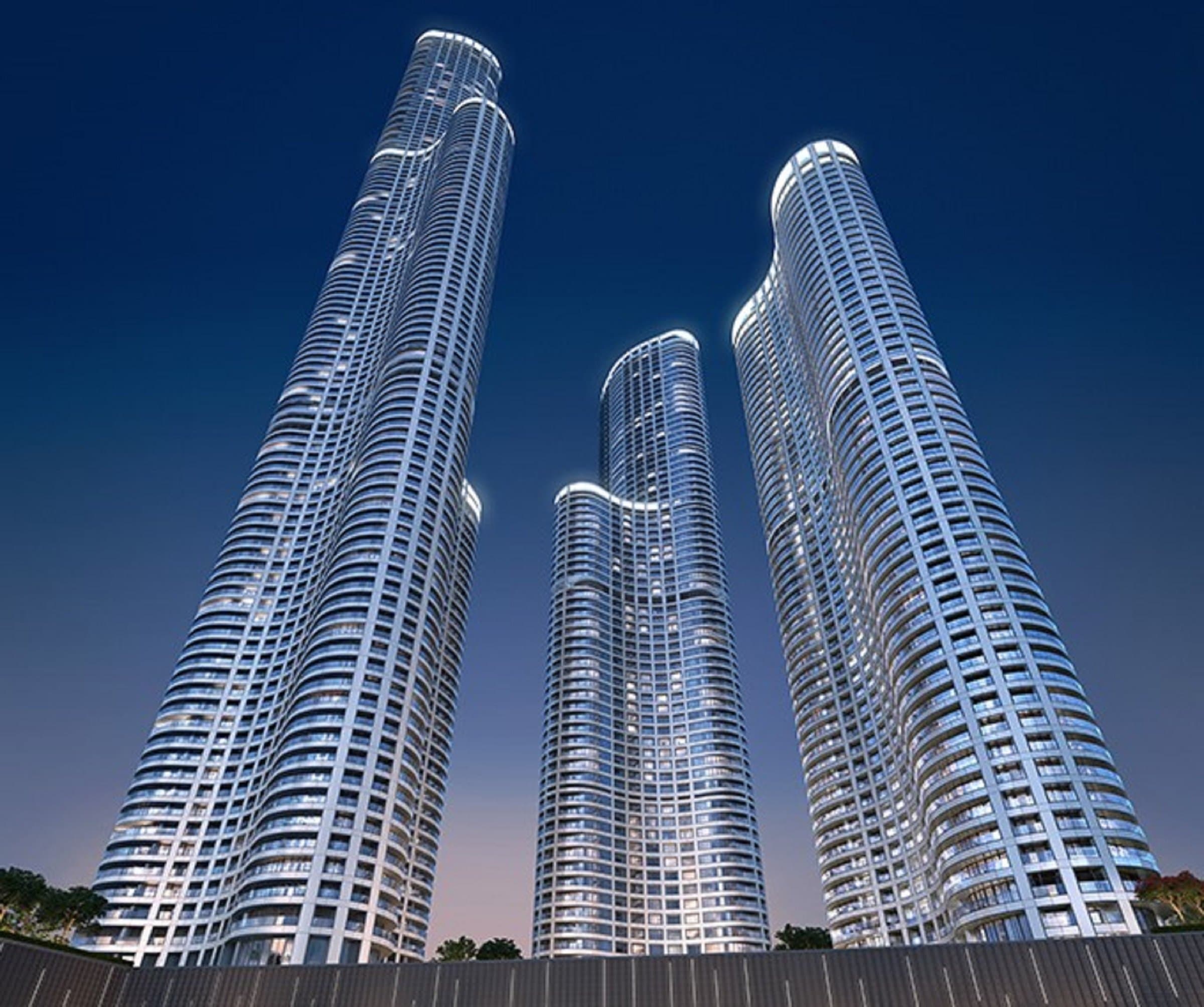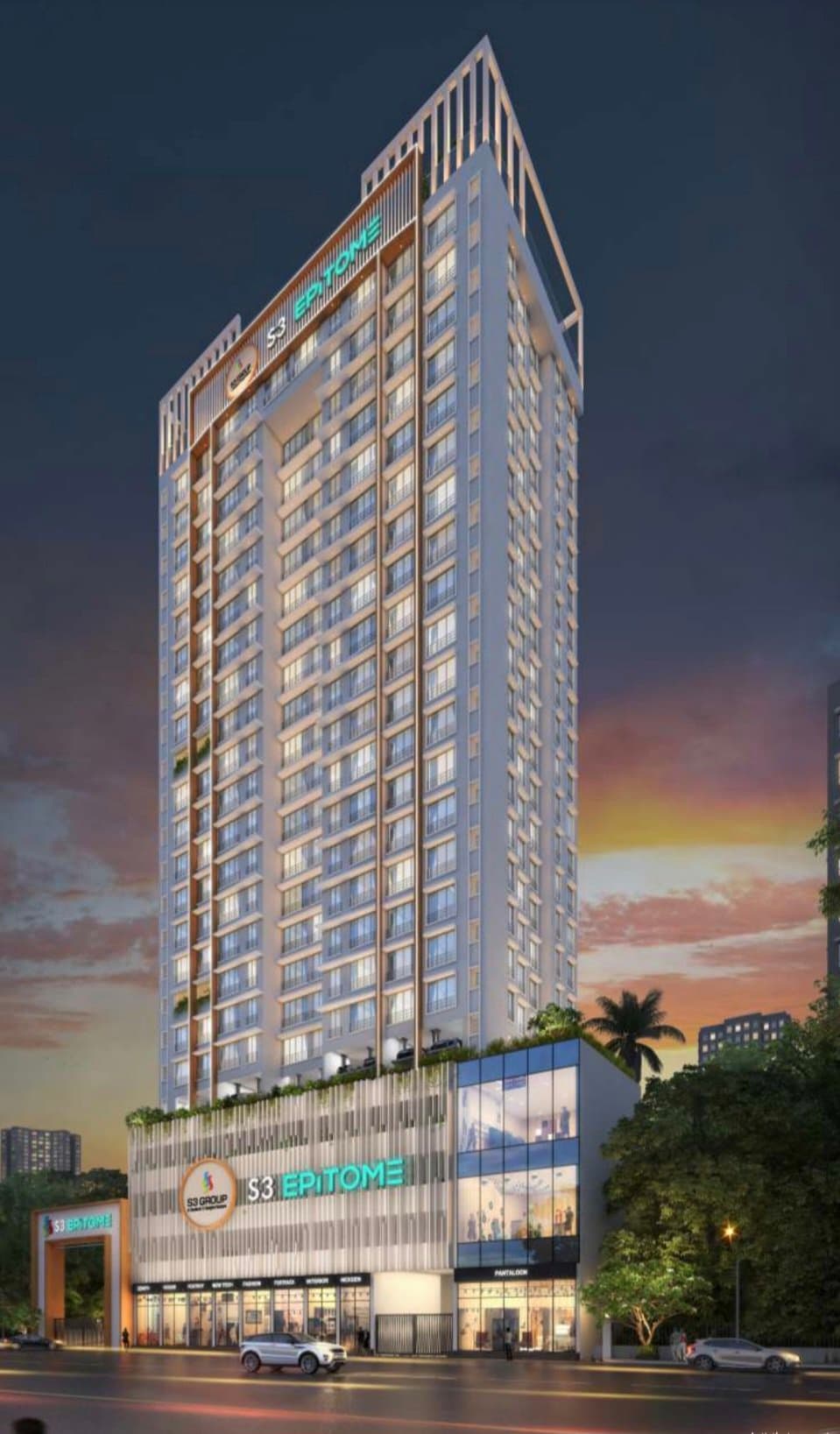
There are roughly 41 mill-land development plots in the broader Lower Parel / Curry Road belt. Most went residential or mixed-use under the post-2001 Regulation 58 framework. A subset — about 14 buildings by Property Butler's count — carry the residual zoning quirk where individual floor-plates were originally cleared as commercial / IT-office under the 'IT-ITES' carve-out, but the macro-development is residential-dominant. As Mumbai's BFSI office demand has consolidated into BKC and the new commercial CBD belt, owners of these mill-land office plates are quietly converting back to residential — and the units, when they surface, transact at a 14-22% discount to comparable launch-stock residential PSFs.
This is one of the highest-leverage sub-markets in Lower Parel right now. The discount exists because: (a) the title chain is more complex; (b) financing is harder (banks under-lend on converted commercial); (c) the conversion process can take 9-22 months to close; (d) most brokers don't know how to source these units. Property Butler tracks 8 active conversion-stage opportunities in the May 2026 pipeline. This is a buyer's playbook for engaging the sub-market.
The structural setup
Lower Parel office vacancy crossed 18% in Q4 2025 — the highest among South Mumbai commercial micro-markets. Office rentals have softened 11% from the 2022 peak. Meanwhile, residential asking PSF in Lower Parel held at ₹45,871 (May 2026 Property Butler tracking, 30 active sale units). The arbitrage between distressed commercial floor-plates trading at sub-₹38,000/sqft and residential at ₹46,000+ is the engine of this conversion sub-market. As long as the gap holds, the conversion play makes economic sense for sellers — which means the supply will keep coming.
The 5 paths from commercial to residential — and how each is priced
| Path | What it is | Buyer PSF discount | Risk |
|---|---|---|---|
| A. Already-converted RTM | User-conversion completed, fresh OC issued, society formed | -4% to -7% | Low — clean diligence |
| B. Mid-conversion (council approved) | BMC permission obtained, conversion under way, OC pending | -9% to -14% | Medium — possession timing risk |
| C. Pre-conversion (intent stage) | Owner has filed for change-of-use; approval not yet granted | -15% to -22% | High — buy as commercial, hope for residential |
| D. Mixed-use floor swap | Society agrees to swap a commercial floor for residential within an FSI-balanced framework | -7% to -10% | Medium — depends on society AGM consent |
| E. Live-work loft (no conversion, dual-use) | Buyer occupies commercial unit as residence, with society NOC, no zoning change | -22% to -30% | High — financing impossible, low resale |
What DCPR-2034 changed
The Development Control and Promotion Regulations 2034 (DCPR-2034), notified in 2018 and amended in 2022, simplified the change-of-use framework substantially. For mill-land developments specifically, paths A and B above became BMC-clearable within 7-11 months in cases where: (i) the building has not breached its sanctioned FSI; (ii) the original 33(7) / 33(7A) / Regulation 58 conditions did not lock the floor-plate as commercial-exclusive; (iii) the society has cleared the change in an AGM with two-thirds majority. The procedural friction dropped — and the conversion pipeline opened up.
What DCPR-2034 did NOT change: the title implication. A floor-plate originally allotted as commercial carries a different stamp-duty calculation, different MMC service charge, and (most importantly) a different home-loan eligibility profile at most banks. Banks classify the asset as 'previously commercial — verify present zoning' which adds 14-20 days to the loan sanction timeline and often forces a 65-70% LTV cap instead of 80%.
The banks that lend on converted units — and the ones that don't
✓ Lender-friendly
- HDFC Bank (post-conversion OC required)
- ICICI HFC (Path A only)
- Bajaj Housing (Path A, B with 65% LTV)
- Tata Capital (case-by-case, 70% LTV)
✗ Currently blocked
- SBI Realty (policy restriction)
- PNB HF (red-listed by central HF policy)
- Most NBFC LAP products (treat as commercial)
Who is the right buyer for this sub-market?
Three archetypes work well. Two should stay away.
✓ Works for:
- The end-user with cash dominance — 60%+ of cost from own funds, residual 40% from a lender-friendly bank. The discount on entry compensates for the loan-friction.
- The boutique-design buyer — Mill-land commercial floor-plates often offer 9-11 ft ceiling heights (vs 9 ft in residential), 18-28 m unobstructed slab spans, and column-free configurations that allow loft-style interior design. The architectural canvas is unique to this sub-market.
- The corporate / studio occupier — Buys at commercial PSF, uses as a primary residence-cum-private office under Path E with society NOC. Lower Parel society management is unusually flexible here vs other SoBo localities.
✗ Avoid if:
- You need 80% LTV to close. The bank pool that lends >75% on converted stock is shallow.
- You expect 5-year exit. Resale liquidity on Path B/C stock is roughly 2.4× longer than comparable launch-stock residential.
Sub-market entry math — Path B example
1,600 sqft @ ₹39,000/sqft = ₹6.24 Cr (vs ₹7.34 Cr for comparable RTM residential — 15% saving)
Add ₹35-50 L conversion-completion overhead → still ₹50-70 L net saving
The Property Butler conversion-stage diligence checklist (extract)
- Verify the 33(7) / 33(7A) / Regulation 58 clearance original — was the floor-plate granted as 'commercial only' or 'mixed-use permissible'?
- Pull the original sanctioned plan from BMC ward-office archive — confirm slab loading and partition flexibility
- Society AGM minutes for the last three years — change-of-use vote count, NOC pending or granted?
- MMC service-charge re-classification letter — confirms BMC has acknowledged the residential use
- Stamp duty differential payment receipt (Path A/B only) — residential rate is 1% lower than commercial, but back-conversion requires top-up payment + interest
- Fresh structural audit if the original was high-load office (servers, archive storage) — residential live-load is 200 kg/sqm, commercial often 350-500 kg/sqm
- Bank pre-approval letter from at least 2 lender-friendly banks before signing token
- RERA registration check — converted units must be re-listed under residential RERA if they were originally commercial-RERA registered
Frequently Asked Questions
Which Lower Parel buildings carry this conversion potential?
Property Butler doesn't publish the specific building list because the dynamics shift monthly and we share the active pipeline with engaged clients only. Generally: any 33(7A) or Regulation 58 mill-land redevelopment with an IT-ITES floor-plate carve-out, completed between 2008 and 2016, sits in this potential pool. The specific buildings span Senapati Bapat Marg, Tulsi Pipe Road, and the Kamala Mills perimeter belt.
Can I just buy commercial and use it as a residence (Path E)?
Technically possible if the society NOC permits it, but the costs compound. You pay commercial property tax (roughly 1.6× residential), you cannot claim Section 24 home-loan interest deduction, your insurance premium is higher, and the resale buyer pool is restricted to other commercial-end-users plus you. The discount has to be very deep to justify it — Property Butler sets the threshold at -25% PSF minimum.
How does GST work on converted stock?
If you buy a Path A unit (already converted to residential, OC in place), no GST. If you buy a Path B unit before the conversion OC is issued, the seller may be GST-leviable on the residential portion. The structure matters — see GST input credit audit for under-construction for the mechanics.
Is this sub-market available in Prabhadevi too?
Much less so. Prabhadevi's mill-land history is far smaller than Lower Parel's, and the developments that did emerge were predominantly residential from inception. The conversion sub-market is essentially a Lower Parel phenomenon, with a tiny adjacent footprint in the Senapati Bapat Marg / Curry Road overflow toward Prabhadevi's south edge.
What's the typical time from token to clean-title possession on a Path B deal?
Property Butler's median across 7 Path B closings in 2024-25 was 14 months from token. The drag points were: society NOC re-confirmation (3-5 weeks), MMC service-charge re-classification (6-9 weeks), bank loan sanction (8-12 weeks running in parallel), final OC + occupancy transfer (4-6 weeks). Budget for 15-18 months for safety.
Related Reading
→ Lower Parel mill-lands transformation story → Mill-land leasehold vs freehold title decoder → Lower Parel commercial office investment playbook → TDR/FSI air-rights decoder → Title search and encumbrance diligenceWant to see the May 2026 conversion-pipeline opportunities?
8 active mill-land conversion units in the Property Butler pipeline — discounts ranging -7% to -19% off comparable residential PSF. Shared with engaged buyers only.
Request the conversion pipeline