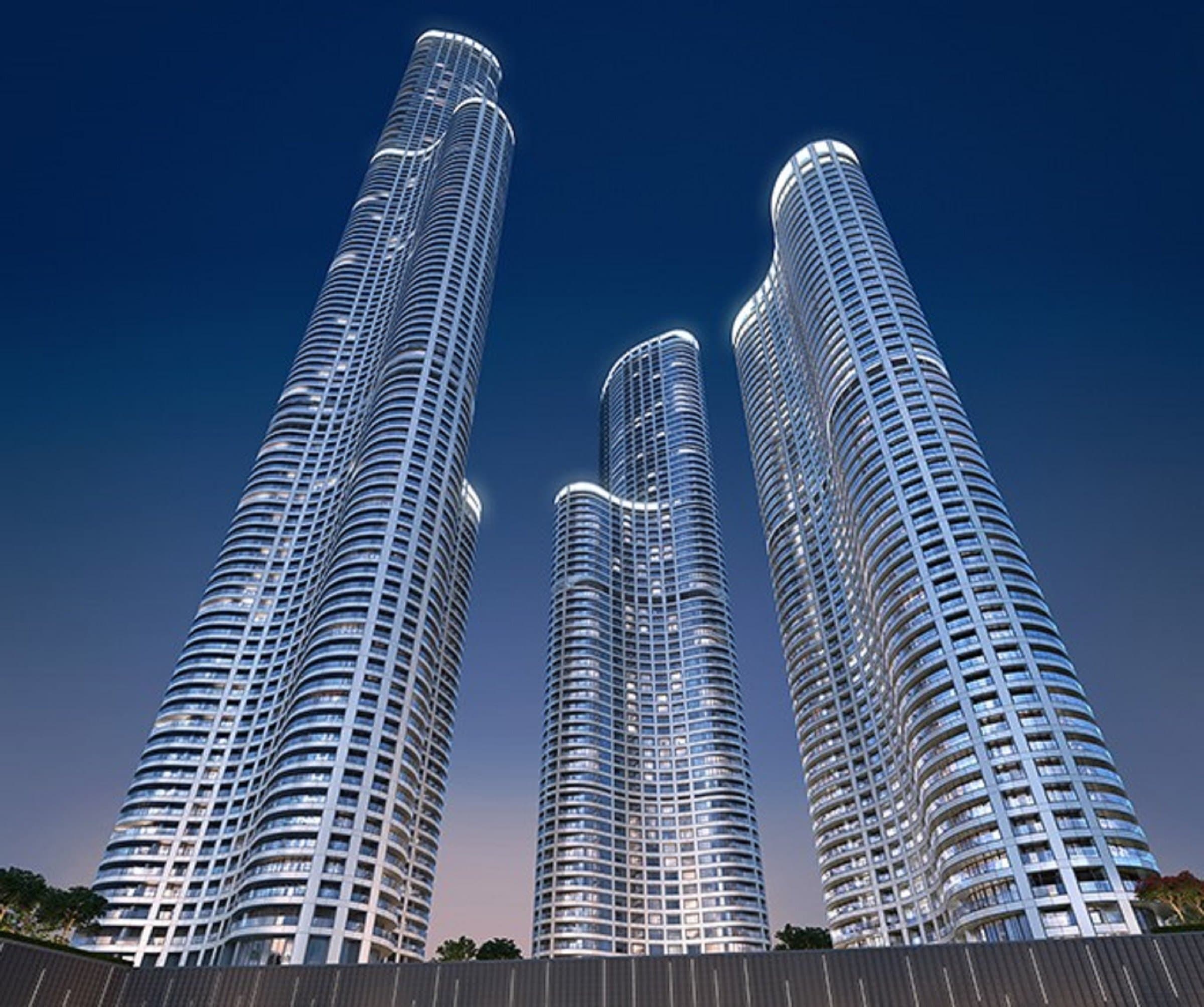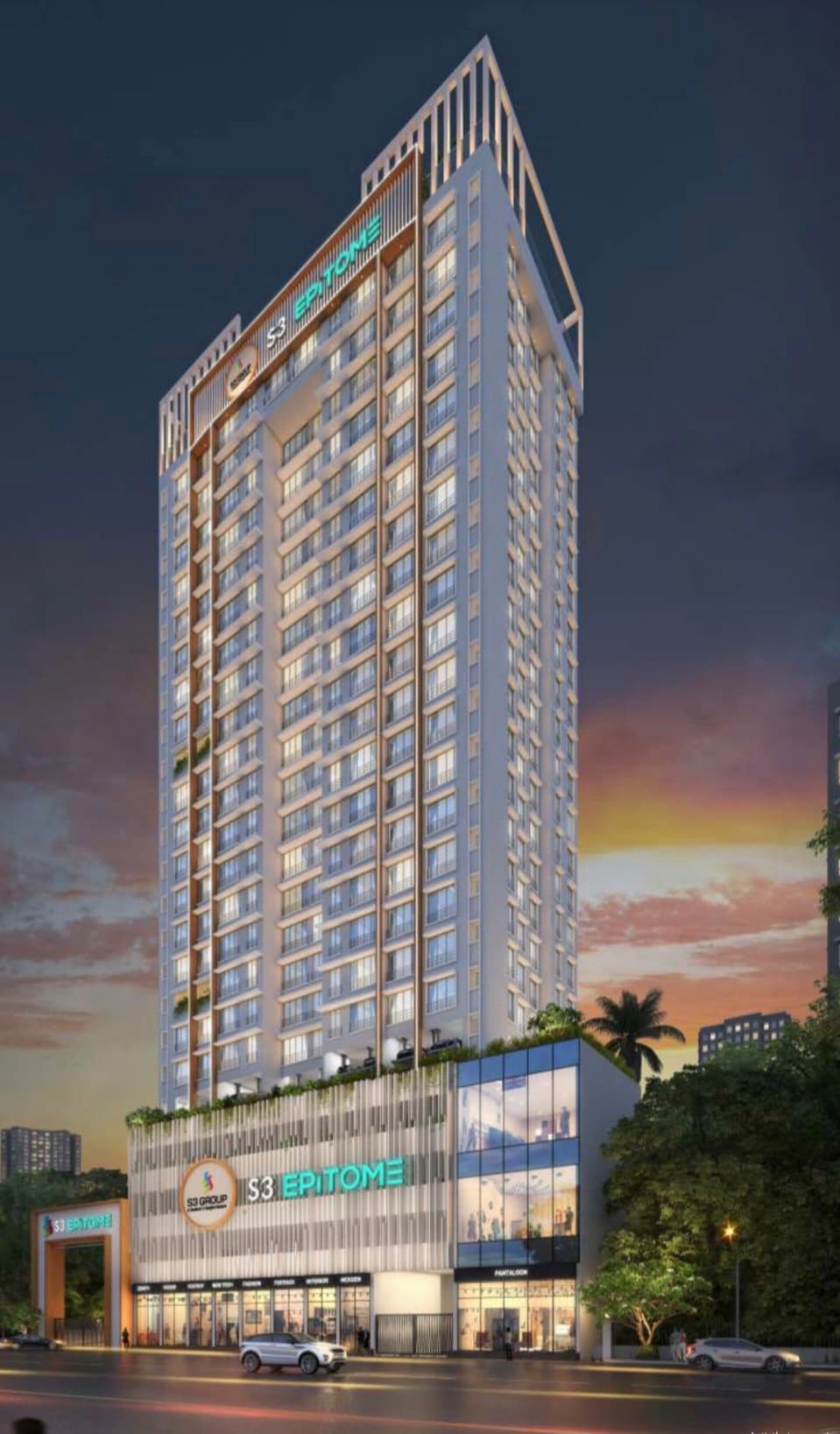
Stand on the Senapati Bapat Marg flyover today and look down at Lower Parel. To your left: Lodha Park, where a 4BHK sells for ₹18 crore. To your right: Indiabulls Sky, where the penthouse went for ₹28 crore. Behind you: One Avighna Park, Peninsula Brookfield, Ceejay House. In front: the Palladium Mall and its Four Seasons tower, where a night costs more than most Mumbaikars earn in a month.
Now imagine the same view in 1985. Every one of those towers was a textile mill. The skyline was chimneys, not glass. The air smelled of cotton and machine oil. And 250,000 workers — dyers, weavers, spinners, mechanics — walked these streets at shift-change time in a human tide that no property brochure will ever mention.
What happened between 1985 and 2026 is the largest urban land transformation in Indian history. 600 acres of industrial land — roughly 1.5 times the size of Bandra Kurla Complex — were converted from cotton mills into luxury real estate. The land that employed a quarter million people now houses perhaps 15,000 affluent families. The workers who built the city's wealth were pushed to Jogeshwari, Mira Road, Bhiwandi — far enough that their commute to the same geography now takes two hours by train.
This is the story of how that happened.
The transformation in one number
In 1990, land in the Lower Parel mill belt was valued at approximately ₹2,000-3,000 per square foot — industrial zoning, mill-worker tenements, no retail, no luxury market. By 2026, residential prices in the same geography range from ₹40,000 to over ₹1,00,000 per square foot. That is a 30-40x increase in 35 years — one of the highest land value multipliers in global urban history.
The Mill City: 1854-1982
Mumbai's cotton mills were the engine of the city's industrial identity for 130 years. The first — the Bombay Spinning and Weaving Company — was established in 1854 by Cowasji Nanabhoy Davar. By 1900, there were 82 mills. By 1950, over 130,000 workers were employed in the mills that clustered along the Central Railway corridor from Chinchpokli to Lower Parel, earning the area its Marathi name: Girangaon — the village of mills.
The mills weren't just factories. They were ecosystems. Each mill had a compound with worker chawls, a dispensary, a school. The neighbourhoods around them — Lalbaug, Parel, Chinchpokli, Currey Road — were overwhelmingly working-class Marathi, with a social infrastructure built around the union hall, the cooperative society, and the Ganpati mandal that still defines the area's cultural identity.
At its peak in the 1960s-70s, the textile industry employed 250,000 workers directly and supported another 500,000 in allied trades — dyeing, printing, transport, canteen services. It was the single largest private-sector employer in Bombay.
The Great Strike: 1982-83
What killed the mills wasn't globalisation or automation. It was a strike.
In January 1982, labour leader Datta Samant called what would become the longest industrial strike in world history. Over 250,000 workers walked out of all 58 active mills simultaneously, demanding bonus payments and better wages. The mill owners, many of whom were already struggling with obsolete machinery and cheaper competition from power looms in Gujarat and Tamil Nadu, refused to negotiate.
The strike lasted 18 months — the longest industrial strike in world history. Some workers never returned. Samant himself was assassinated on January 16, 1997 — 17 bullets fired at his head, chest, and stomach outside his Mumbai home. Gangster Chhota Rajan was suspected; a CBI court acquitted him in 2023 for lack of evidence. The man who called the strike that killed the mills did not survive to see what replaced them. The mills that reopened did so with skeleton staffs. And the mill owners — Mafatlals, Birlas, Goenkas, Wadia group — began doing the math. Their machines were from the 1940s. Their workers wanted wages that matched the 1980s. Their land, however, sat in the geographic centre of an island city that was running out of space.
The math was simple: the land under the mills was worth more than anything the mills could ever produce again.
DCR 58: The Law That Unlocked the Gold
The mills couldn't simply be demolished and replaced with towers. The land was zoned industrial. Changing that required a policy intervention — and in 1991, it arrived.
Development Control Regulation 58 (later revised as DC Rule 58 in the 2034 Development Plan) allowed mill owners to develop their land, subject to a three-way split:
| Share | Recipient | Purpose |
|---|---|---|
| One-third | MCGM (BMC) | Public open space — gardens, playgrounds |
| One-third | MHADA | Affordable housing for mill workers and EWS |
| One-third | Mill owner / developer | Commercial development at market rates |
On paper, this was equitable. In practice, a 2003 modification changed the formula so that only vacant land (excluding factory structures) would be divided — and that single change was devastating. Out of approximately 400 acres that should have gone to public entities under the original 1991 formula, 340 acres ended up occupied by residential and commercial towers. Open space shrank from a potential 166 acres to just 32 acres. Affordable housing land shrank from 160 acres to 25 acres. It was, by any measure, one of the largest transfers of public land to private developers in Indian urban history.
The Transformations: Mill by Mill
Every major Lower Parel luxury address today was a cotton mill within living memory:
The mill → tower map
| Phoenix Mills (est. 1905) | → Palladium Mall + Four Seasons + High Street Phoenix (2005-2011) |
| Kamala Mills (est. 1917) | → Mixed-use compound: offices + restaurants + co-working (2000s) |
| Spring Mills | → Marathon Futurex + Lodha Allura (2010s) |
| Kohinoor Mills | → Kohinoor Square + Kohinoor City (2012-2020) |
| Standard Mills | → Peninsula Business Park (2008) |
| Morarjee Mills | → Lodha Park (2016-present) — ₹40,000-80,000 PSF |
| Swan Mills | → Indiabulls Sky (2018) — penthouses at ₹28 Cr |
| Mafatlal Mills | → One Avighna Park (2015-present) |
The most dramatic transformation was Phoenix Mills. Atul Ruia — third generation of the Ruia family that had owned the mill since the 1950s — saw what nobody else did in the late 1990s: that a former mill compound could become a destination. High Street Phoenix opened in 2005 as India's first luxury mall. The Palladium followed in 2007. By 2010, Lower Parel had gone from a neighbourhood nobody would voluntarily enter to the kind of place where people drove in from Bandra for dinner.
Phoenix made Lower Parel sexy. Every development that followed — Lodha, Indiabulls, Peninsula, Marathon — benefited from the ecosystem that Phoenix anchored. Today, High Street Phoenix is the highest-revenue mall in India on a per-square-foot basis.
Lower Parel in 2026: The Numbers
The neighbourhood that mill workers built is now one of Mumbai's most expensive residential addresses:
| Project | Developer | PSF Range (2026) | Config |
|---|---|---|---|
| Lodha Park | Macrotech | ₹45,000-80,000 | 3-5 BHK |
| Indiabulls Sky | Indiabulls | ₹38,000-55,000 | 3-4 BHK |
| One Avighna Park | Avighna | ₹35,000-50,000 | 3-4 BHK |
| Lodha Allura | Macrotech | ₹40,000-60,000 | 3-4 BHK |
| Peninsula Brookfield | Peninsula Land | ₹32,000-45,000 | 2-4 BHK |
Property Butler currently lists 34 active properties in Lower Parel as of May 2026 — 18×3BHK, 4×4BHK, 3×1BHK, 3×2BHK, 2×3.5BHK — ranging from ₹1.86 Cr (Sarvesh One 1 BHK) to ₹39 Cr (Lodha Park penthouse). The predominantly 3 BHK inventory reflects the corridor’s positioning as Mumbai’s primary mid-luxury residential belt.
What the Workers Got
The mill workers — the reason these neighbourhoods existed in the first place — got the shortest end of every stick.
The numbers tell the story more brutally than any narrative can. Of the 250,000 workers who lost their jobs between 1982 and 2005, most received severance packages that were derisory — often ₹50,000 to ₹2 lakh, for 20-30 years of service. Under DCR 58, 175,000 mill workers applied for housing. As of 2026, approximately 11,000-18,000 have received homes — a failure rate above 90%. The promised worker housing was often built in locations far from the mill belt — Mankhurd, Govandi, Lallubhai Compound. The workers who had once walked to their shifts from Lalbaug or Chinchpokli now had two-hour commutes to casual labour jobs.
In 2024 — 42 years after the strike — the Maharashtra Cabinet approved a ₹5,000 crore plan to construct housing for approximately 80,000 former mill workers. The timing, ahead of state assembly elections, was not lost on anyone.
Some workers or their families received Pagdi tenancies in the old chawls near the mills — and these, ironically, may be the ones who benefit most in the long run, as redevelopment of those chawls eventually gives them new apartments in the most expensive land in the city. But that's a 30-year wait for a consolation prize.
The Girangaon museum on Senapati Bapat Marg — established in 2006 — sits in the shadow of the towers that replaced the mills. It preserves the looms, the union banners, the black-and-white photographs of shift changes. On most days, it is empty. The neighbourhood has moved on. The history is still there, if you know where to look.
Why this story matters for buyers today
Lower Parel's transformation is not just history — it's the template for what's happening now in other Mumbai corridors. Parel and Mahalaxmi are in the early stages of a similar mill-land transformation. Worli's BDD chawl redevelopment will unlock hundreds of acres. The Dharavi redevelopment — if it ever happens — could be the next Lower Parel. Understanding how these transformations work — the policy levers, the price trajectory, the timeline — is essential for any buyer evaluating a neighbourhood that's in the middle of structural change.
Frequently Asked Questions
What is the Lalbaug-Parel mill history?
The Lalbaug-Parel mill history begins in the 1850s, when the Lalbaug-Parel-Worli belt became the heart of Mumbai's cotton textile industry — at its peak in the early 20th century, more than 130 mills employed roughly 250,000 workers across this corridor. The Great Bombay Textile Strike of 1982-83, led by Datta Samant, crippled the industry and triggered four decades of decline. By the early 2000s, most Lalbaug-Parel mill compounds had fallen silent. The transformation from textile mills to luxury residential and commercial high-rises began with Phoenix Mills' redevelopment in the mid-2000s — what is today's Phoenix Lower Parel, Kamala Mills, and the cluster of premium towers (Lodha World Towers, Indiabulls Sky, Oberoi Three Sixty West) all stand on land that was once cotton-mill territory. The mill workers' chawls, Parel's residential character, and Lalbaug's civic identity are the last cultural footprint of that mill era.
Why did the Mumbai textile mills shut down?
The Mumbai textile mills shut down due to a combination of structural and political factors: technological obsolescence (Mumbai mills did not modernise loom technology while South India and Gujarat invested in newer power-loom infrastructure), the 1982-83 textile strike led by Datta Samant which lasted 18 months and broke labour-mill cooperation permanently, escalating land values in central Mumbai which made textile production economically irrational versus selling the land, and the eventual policy regime under the Maharashtra government that permitted mill-land redevelopment. By the late 1990s, the writing was on the wall; by the 2000s, demolition and redevelopment of Lalbaug-Parel-Worli mills was systematic.
When did the Mumbai mill strike happen, and how long did it last?
The Great Textile Strike began in January 1982, called by labour leader Datta Samant. It lasted 18 months — the longest industrial strike in world history. Over 250,000 workers walked out of all 58 active mills simultaneously. The mills never fully recovered; most closed for good between 1982 and 2005. Datta Samant was assassinated in January 1997; the Mumbai Police case remains officially unsolved.
What is DCR 58 and why does it matter for the mill lands?
Development Control Regulation 58 (DCR 58) was the 1991 Maharashtra government policy that allowed mill owners to convert their industrial land to residential and commercial use, subject to a three-way split: one-third to BMC for public open space, one-third to MHADA for affordable housing, and one-third to the mill owner for market-rate development. A 2003 amendment narrowed the formula to apply only to vacant land (excluding mill structures), which critics say reduced the public share from a potential 340 acres to roughly 57 acres. This single policy change shaped Lower Parel's property landscape — and why the area has luxury towers but almost no public parks.
How much do properties cost in Lower Parel today?
Property Butler tracks 34 active Lower Parel listings (May 2026) — 30 for sale, 4 for rent. Sale prices range from ₹1.86 Cr (Sarvesh One 1 BHK) to ₹39 Cr (Lodha Park penthouse). The overall PSF average is ₹45,900/sqft, with a wide range: legacy resale stock from ₹30,000/sqft to Lodha Park's sea-view floors at ₹80,000-1,00,000/sqft. The wide range reflects the corridor's uneven transformation — some pockets are still catching up to the luxury tier.
Is Lower Parel still a good investment in 2026?
For end-use, yes — the location (Phoenix Palladium, BKC proximity, Science Museum metro station on Line 3, Coastal Road Phase 1 access) remains exceptional. For pure investment returns, the easy appreciation phase is behind Lower Parel — prices have already increased 10-20x from mill-era valuations. The better investment case today is in adjacent corridors that are earlier in their transformation: Mahalaxmi (39 listings, avg ₹69,200/sqft) and Parel (28 listings, avg ₹46,900/sqft) where redevelopment-driven appreciation is still playing out.
Which other Mumbai areas are undergoing a similar mill-land-style transformation?
The Lower Parel mill transformation template is playing out in several adjacent corridors: (1) Mahalaxmi — racecourse-adjacent, Lodha Bellevue and Godrej Avenue Eleven anchoring a luxury cluster, still 15-20% below Worli pricing. (2) BDD Chawl Redevelopment, Worli — 33 BDD chawl buildings in Worli being redeveloped; will unlock significant supply in one of Mumbai's most expensive addresses. (3) Dharavi Redevelopment — 675 acres, currently delayed but if executed would be the largest single urban transformation in India's history. (4) Dadar West — redevelopment of aging society buildings is bringing new luxury inventory to a location with better infrastructure than almost anywhere else in Mumbai.
Interested in Lower Parel?
We track every project in the Lower Parel-Mahalaxmi corridor. Tell us your budget and configuration and we'll send you a curated shortlist with honest PSF analysis.
Talk to our advisor on WhatsAppSources
- Darryl D'Monte, Ripping the Fabric: The Decline of Mumbai and Its Mills (Oxford University Press, 2002)
- Meena Menon and Neera Adarkar, One Hundred Years, One Hundred Voices: The Millworkers of Girangaon (Seagull Books, 2004)
- Development Control Regulation 58, Greater Mumbai Development Plan 2034
- MCGM — Development Plan reports on mill land utilization
- Property Butler market research — Lower Parel market reports
- Maharashtra Industrial Development Corporation — textile mill closure records