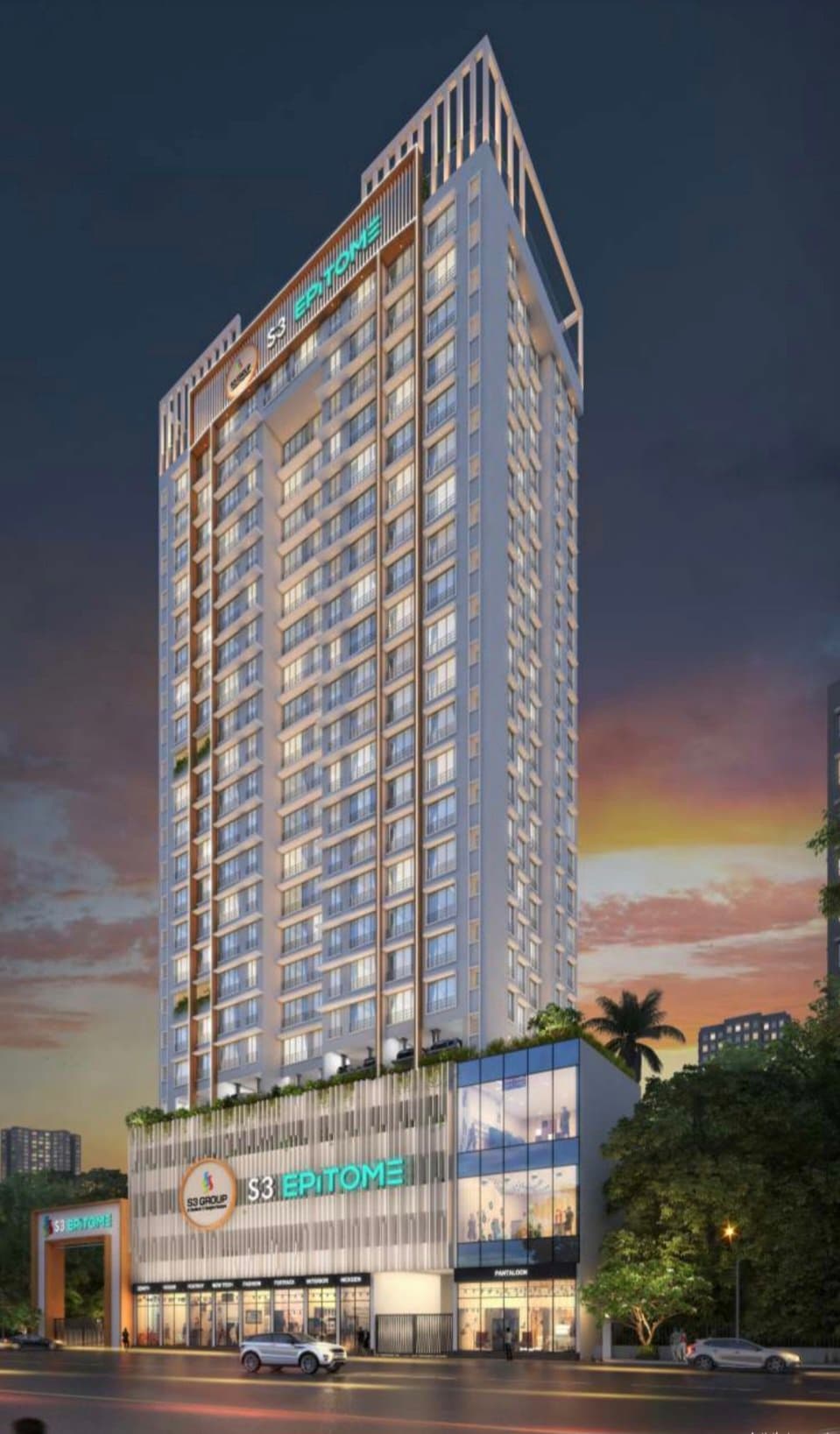
GST is the most-paid, least-understood tax in a Lower Parel or Prabhadevi under-construction purchase. The headline rate — 5% on residential under-construction without input tax credit (ITC), 1% on affordable housing, nil on Ready-to-Move with OC — is widely advertised by developers but masks a thicket of compliance, refund, and reconciliation issues that quietly erode buyer economics. On a ₹12 Cr under-construction 3 BHK in this corridor, the GST component is ₹60 lakh. The same 3 BHK bought 9 months later post-OC carries zero GST. Property Butler's audit shows that 30-40% of UC buyers in this corridor do not run the GST timing math properly — and the cost of that miss is structurally large.
GST Reality Check — Lower Parel + Prabhadevi UC Stock
5% GST on UC residential (no ITC pass-through) | 1% on affordable housing (sub-₹45 lakh agreement value — rarely applies in this corridor) | 0% on RTM with OC received | 18% on commercial / office UC | GST is on agreement value, not stamp duty value | GST is paid stage-wise with each milestone billing | Refund / mismatch claims after OC are rare but exist — and require specific documentation
The Five GST Mechanics Every UC Buyer Should Know
- The 5% is "without ITC" — meaning the developer cannot pass through input GST credits. Pre-2019 the regime was 12% with ITC; the post-1-April-2019 regime moved to 5% without ITC. Net effect: developers absorbed the input GST on cement, steel, fit-out and embedded it in the asking price. The buyer's 5% sits on top of that already-embedded cost — a hidden double-incidence that adds 1.5-3% to the effective UC premium versus RTM.
- GST stops the moment the OC is received. A unit booked on 1 March in a tower that receives OC on 1 May has GST only on payments made before 1 May. Post-OC payments are GST-free. This creates a specific gaming opportunity: aggressive buyers stagger payment schedules to push more cash flow into the post-OC window if the developer's tower is close to completion.
- GST is on agreement value, not stamp duty value. Stamp duty in Maharashtra is on the higher of agreement value or ready-reckoner (RR) value. GST sticks to the contractually billed agreement value. If a buyer negotiates the agreement value below RR (legal in some scenarios), GST goes down even as stamp duty stays anchored to RR.
- Penal interest on GST late payment is real. If the developer's GST compliance lags (3B or GSTR-1 filing delays), the GST department can issue notices that ripple back to the buyer's documentation trail. Always insist on receipts showing GSTIN, HSN code (9954), invoice number, and timestamp of payment. Keep these for 7 years.
- Refund on cancellation is partial. If a buyer cancels a UC booking, the developer is generally not required to refund the GST already paid to the government — only the residual amount net of GST. The 5% is sunk unless the developer agrees to a goodwill refund. This is why the cancellation cost on a ₹3 Cr booked unit can be ₹15 lakh of GST alone, plus the contractual cancellation penalty (typically 10-15% of paid amount).
The UC vs RTM GST Math — Worked Example
Consider a buyer evaluating two options for the same 3 BHK in Prabhadevi at Rustomjee Crown:
| Cost Line | UC Phase 2 (Dec 2026 possession) | RTM Phase 1 (OC Dec 2025) |
|---|---|---|
| Agreement value | ₹9.0 Cr | ₹10.5 Cr |
| GST @ 5% | ₹45 lakh | Nil |
| Stamp duty (assumed 6%) | ₹54 lakh | ₹63 lakh |
| Registration (1%) | ₹9 lakh | ₹10.5 lakh |
| Total acquisition cost | ₹10.08 Cr | ₹11.23 Cr |
| Carrying cost — 12 months opportunity (8% on ₹10.08 Cr) | ₹81 lakh | Nil (move in or rent now) |
| Effective net cost | ₹10.89 Cr | ₹11.23 Cr |
The UC option here is roughly ₹34 lakh cheaper net than the RTM option, even after GST — but only if the developer hits the Dec 2026 possession date. Every quarter of delay erodes that delta by ₹20-25 lakh of carrying cost. Above 2 quarters of delay, UC becomes the more expensive option.
The Compliance Audit Buyers Should Run Pre-Token
Pre-Token GST Checklist
- Developer's GSTIN on letterhead + bookings desk
- Last 12 months GSTR-3B filing status (public on GST portal)
- RERA project ID linked to GST registration
- Sample invoice showing HSN 9954, GSTIN, agreement value, GST line
- Confirmation that GST is 5% (residential UC) not 18% (mistakenly billed as commercial)
Red Flags to Walk Away From
- Developer refusing to issue GST-compliant invoices
- GSTR-3B filings overdue by 60+ days
- Verbal "GST waiver" promised — not legally possible
- 12% GST billed instead of 5% (post-April 2019 regime)
- Mixed-use UC tower where GST split between residential (5%) and commercial (18%) is unclear
The Anti-Profiteering Clause — A Mostly Forgotten Lever
Section 171 of the CGST Act requires developers to pass on the benefit of reduced tax rates and input tax credits to buyers. When the GST rate moved from 12% with ITC to 5% without ITC in April 2019, the National Anti-Profiteering Authority (NAA, now Competition Commission of India) issued multiple orders against developers who failed to reduce prices commensurately. For buyers signing UC agreements in the post-2019 regime, this is mostly historical — the embedded pricing has already adjusted — but two anti-profiteering scenarios still apply:
- Mid-project rate changes. If GST rates change during a UC project's life, the developer must adjust subsequent payments. Buyers who continue paying the old rate without verification can claim refund / adjustment.
- Affordable housing 1% rate misapplication. If a unit qualifies for the 1% affordable rate (agreement value sub-₹45 lakh, sub-60 sqm carpet in metro cities) and the developer bills 5%, the buyer can claim a refund. Rarely applies in Lower Parel + Prabhadevi at current price points but matters if buying compact stock at the very low end of the sub-market.
GST on a ₹12 Cr UC Acquisition
₹60 Lakh
Eliminated entirely if you buy the same unit RTM-with-OC at marginal ₹0.5-1 Cr higher agreement value
When UC Wins on GST Math — and When It Doesn't
UC stock is the right choice when three conditions hold simultaneously:
- The agreement-value discount versus RTM is greater than 12-15%. Below 12%, the GST + carrying cost erodes the savings. Above 15%, UC wins even with a 6-12 month delay.
- The developer has 80%+ on-time delivery track record on prior projects. Rustomjee Crown Phase 1's December 2025 OC was on schedule — Phase 2's December 2026 timeline has high credibility. Boutique developers without a clean track record can delay 18-36 months, destroying the UC arbitrage.
- The buyer doesn't need immediate possession. Buyers paying rent elsewhere while waiting for UC delivery should subtract rent paid from the apparent UC discount. A ₹3-5 lakh monthly rent across 18 months is ₹54-90 lakh of additional carrying cost that often doesn't appear in the buyer's mental math.
Related Reading
→ Real Buyer Cost — Stamp Duty + GST Decoder → Lower Parel RTM Handover Diligence Checklist → Lower Parel OC-Received Premium Decoder → OC Delay RERA Compensation Playbook → Prabhadevi RTM vs UC Supply Pipeline Q2 2026 → Prabhadevi Area GuideFrequently Asked Questions
Is GST applicable on Ready-to-Move with OC properties in Mumbai?
No. The moment a tower receives Occupation Certificate from BMC, residential units in it are GST-nil for the buyer. This is the single largest hidden cost differential between UC and RTM stock. Verify the OC date on the BMC certificate, not just the developer's marketing material.
Can I claim a GST refund if my unit was billed at the wrong rate?
Yes — within the limitation period. If the developer billed 12% under the old regime when 5% applied post-April 2019, or 18% commercial when 5% residential should have applied, you can pursue refund via the developer (preferred path) or directly via GST authorities. Keep all invoices and bank statements showing GST payments. The process typically takes 6-12 months and may require a chartered accountant or GST counsel.
What happens to my paid GST if I cancel my UC booking?
The GST is treated as already remitted to the government and is not refundable by the developer in most cases. The developer may refund the principal payment (less cancellation penalty, typically 10-15% of amount paid), but the 5% GST is generally sunk. This is a structural reason UC bookings carry higher cancellation cost than RTM resales — the GST overhang adds ₹4-6 lakh per ₹1 Cr of booked value to cancellation cost.
Does GST apply on the brokerage fee?
Yes — 18% GST applies on brokerage / commission paid to property advisory firms. On a ₹12 Cr ticket at the customary 1% buyer-side brokerage, that is ₹12 lakh brokerage + ₹2.16 lakh GST. The 18% rate is non-negotiable; it is a service-side tax separate from the 5% residential GST.
If my Rustomjee Crown Phase 2 unit gets delayed, do I get GST back on the delayed window?
No — GST is paid on each milestone billing regardless of project delay. RERA does allow for compensation claims on possession-date delays (interest at SBI MCLR + 2% on amounts paid is the typical formula), but this compensation is calculated on the principal payments, not the GST component. A delay-extended project means more total GST paid (because more milestone payments fall in the UC window before OC) — the opposite of a buyer-friendly outcome.
Comparing UC and RTM options in Lower Parel or Prabhadevi?
Property Butler runs the complete cost-of-acquisition math including GST, stamp duty, carrying cost and delay risk. Tell us your shortlist — we model side-by-side in 24 hours.
Search RTM-with-OC Stock