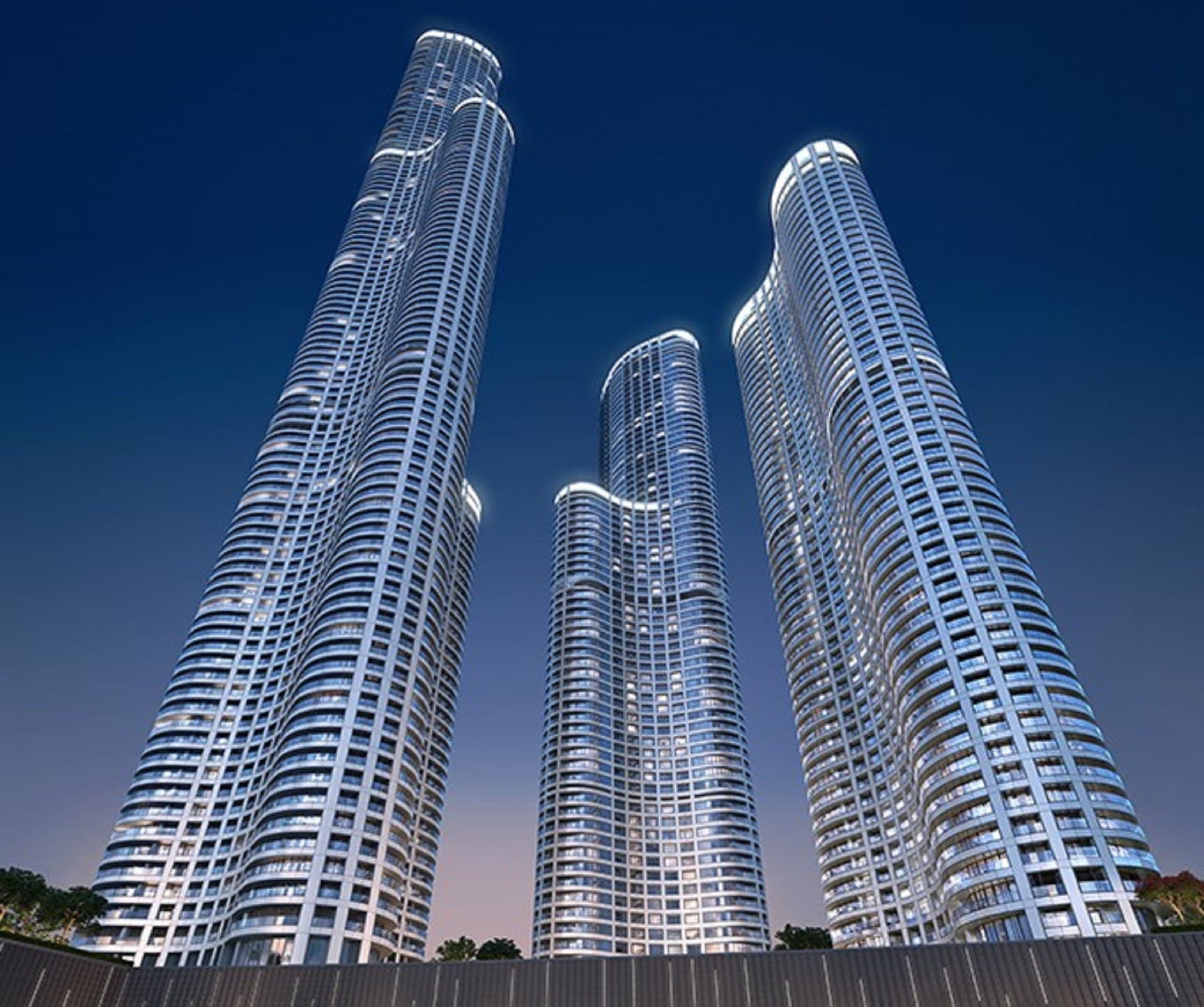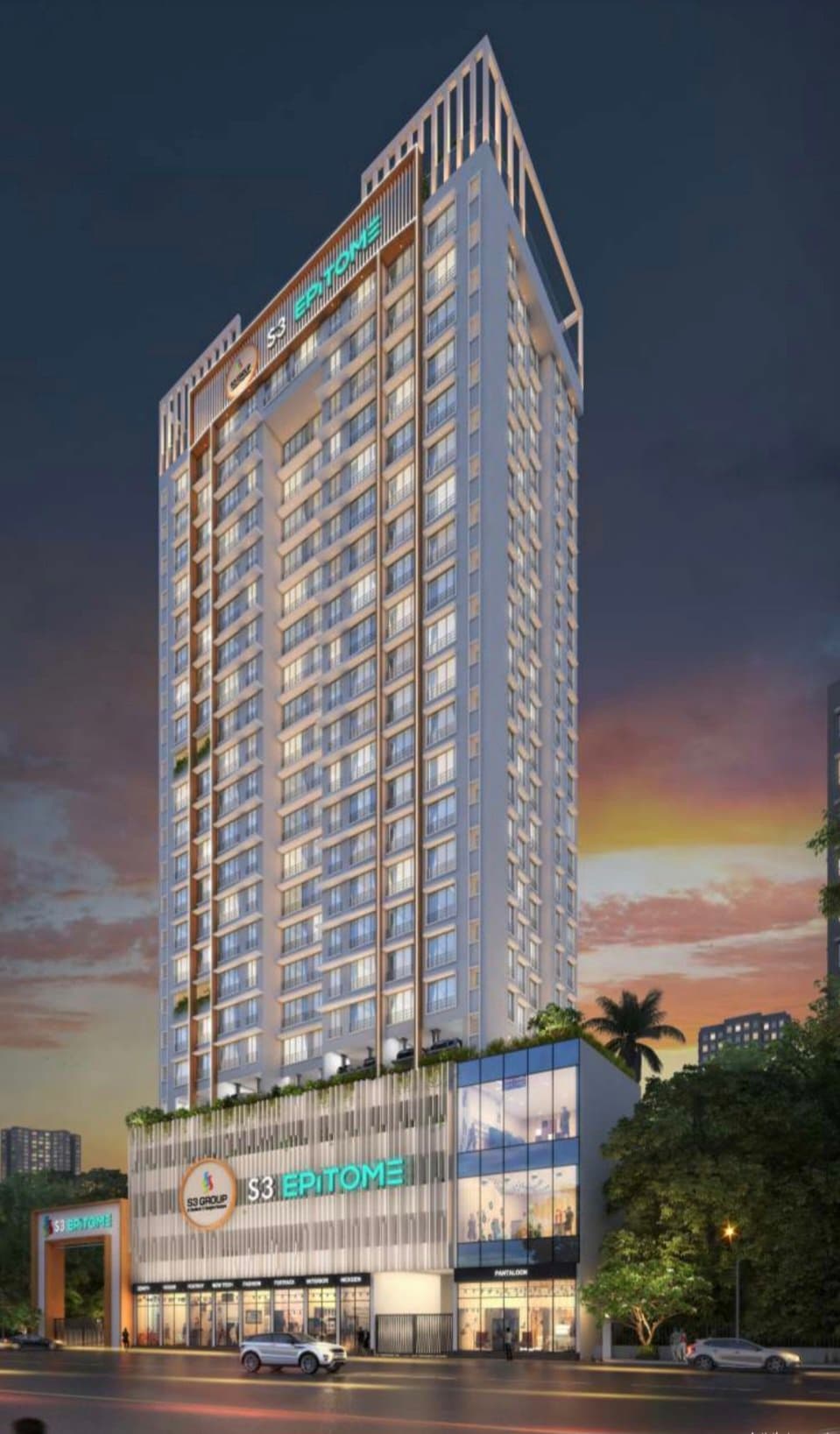
Two Lower Parel towers can sit on adjoining plots, carry the same locality address, and yet differ ₹15,000-22,000/sqft on per-square-foot asking. The buyer assumes it is a brand or amenity premium. Almost always, the deeper driver is how each tower has stacked its Transfer of Development Rights (TDR), base Floor Space Index (FSI), fungible FSI and premium FSI. The taller, denser tower paid more for the air it occupies, and that cost flows into every square foot you buy. Property Butler maps the math so buyers entering Lower Parel and Prabhadevi understand exactly what they are paying for above the carpet.
The headline math
Base FSI for residential plots in this corridor is 1.33. Stacking TDR, fungible FSI (35% additional on chargeable area) and premium FSI takes total realisable FSI to 3.5-5.5x on most luxury plots. Every FSI multiplier above base carries a per-square-foot cost — premium FSI alone runs ₹2,800-4,200 per buildable square foot in the Lower Parel-Prabhadevi belt depending on Ready Reckoner rate at sanction date. That cost is embedded into the asking PSF the buyer eventually sees.
The four kinds of FSI a Lower Parel or Prabhadevi tower is built on
Mumbai's Development Control Regulations 2034 allow developers to layer four distinct FSI sources on a single plot. Each carries a different cost and a different impact on per-square-foot economics. The interplay of these four sources is what drives a meaningful share of the launch-PSF difference between adjacent towers — far more than buyers typically credit.
| FSI source | Typical multiplier | Cost to developer | Buyer impact |
|---|---|---|---|
| Base FSI | 1.33x plot area | Free (statutory entitlement) | Sets the floor — no add-on cost in launch PSF |
| TDR (Transfer of Development Rights) | 0.4-1.0x additional | ₹3,200-5,800 per buildable sqft | Cost flows directly into asking PSF; taller buildings drive more TDR purchase |
| Fungible FSI | 35% of chargeable area | 35% of RR rate paid as premium | Counts as carpet rather than balcony — buyer pays per-PSF for it |
| Premium FSI | Up to 0.5-1.0x additional | ₹2,800-4,200 per buildable sqft | Direct cost addition to launch PSF |
A typical luxury Lower Parel high-rise stacks all four. A 1.0-acre plot (43,560 sqft) with base FSI of 1.33 gives 57,935 sqft of free built-up. With 1.0x TDR loaded, the developer adds 43,560 sqft of TDR-purchased space at roughly ₹4,500/sqft, a ₹19.6 crore line item. Premium FSI of 0.6x adds another 26,136 sqft at ₹3,500/sqft (₹9.1 crore). Fungible FSI of 35% on a 130,000 sqft chargeable base adds 45,500 sqft at 35% of the Ready Reckoner rate. Total project cost from FSI alone, before construction and land, lands in the ₹85-110 crore range on a single-acre plot. That cost is amortised across every sellable square foot the developer eventually launches — and that is what arrives in the buyer-facing PSF on the brochure.
Why this matters for the PSF you eventually pay
The cleanest way to read this: two adjacent Lower Parel towers built on similar plots can carry vastly different asking PSFs based on how much FSI loading their developer purchased. The brand stamp is real, the amenity premium is real, but the FSI loading line is meaningful and often invisible to buyers comparing units.
Embedded FSI cost in Lower Parel luxury asking
₹8,500 — ₹14,200 / sqft
Of every ₹55,000-95,000/sqft asking price, this is the FSI loading component alone
Indiabulls Sky Forest at Lower Parel is a textbook high-FSI build — the tower's 80-floor density on a relatively constrained footprint means heavy TDR and premium FSI stacking, and the asking ₹52,000-65,000/sqft band reflects that loading carried through. Lodha World Towers similarly carries multi-million-square-foot built-up on a tight plot, with maximum FSI utilisation. By contrast, an older mid-rise like Lodha Allura that uses closer to base plus fungible FSI without aggressive TDR purchase carries lower embedded cost — though its lower density also means less amenity overhead per unit, which buyers should weigh separately.
The Prabhadevi pattern
Prabhadevi towers tend to run lower aggregate FSI than peak Lower Parel projects, primarily because the corridor's plot mix is older society redevelopment plots with TDR loading constrained by negotiation with existing society members. The exception is Rustomjee Crown's multi-phase, multi-tower master plan — Crown's land aggregation across multiple plots and tower-by-tower phasing allowed full FSI optimisation, which is part of why Crown carries ₹59,500-66,200/sqft asking on the sea-facing band: high-load economics passed through to asking. Older Prabhadevi stock like Chaitanya Towers, built on less aggressively loaded plots, carries ₹48,000-58,000/sqft — a meaningful ₹11,000-18,000/sqft gap that reflects, in part, the FSI loading differential.
Kalpataru Oceana and The V Mansion follow a similar pattern to Crown — sea-facing premium plots with high FSI loading and aggressive amenity overlay. Their ₹70,000-95,000/sqft asking band carries the highest embedded FSI cost in Prabhadevi at around ₹13,000-16,000/sqft of loading alone. Lodha Grandeur sits a notch lower on loading and accordingly a notch lower on PSF at ₹62,000-78,000/sqft.
How buyers should read FSI loading at the diligence stage
High-FSI tower advantages
- Better amenity package (more sellable area means more amenity podium budget)
- Higher floor count delivers wider view band and premium-floor inventory
- Brand premium retention because of marquee positioning
- Stronger lift, power, water infrastructure designed for density
High-FSI tower trade-offs
- Embedded FSI cost adds ₹8,500-14,200/sqft to asking
- CAM and maintenance scale with density, not just unit size
- Lift density per unit tightens above 40 floors — wait times rise
- Tower spacing tightens, light and air can compress on lower floors
The three FSI-related diligence questions every buyer should ask
Property Butler routinely sees buyers focus on view, amenity and brand without ever questioning the FSI stack. Three specific questions surface the loading economics:
1. What is the sanctioned FSI versus base FSI for this plot? The development permission letter (IOA or CC, depending on stage) lists this. Sanctioned FSI above 3.0x on a luxury plot in Lower Parel-Prabhadevi means heavy TDR plus premium FSI stacking. Sanctioned FSI of 2.0-2.5x means mostly base plus fungible — lighter loading. This single number tells the buyer roughly how much loading cost is embedded in their PSF.
2. What share of the total chargeable area is fungible (35% balcony/flower-bed/dry-balcony loading converted to carpet)? RERA-carpet vs marketed-area is a separate audit, but the fungible component is where the developer's 35% premium payment translates into your usable carpet. A high fungible share generally signals tighter usable carpet relative to the marketed super-built-up, and a higher per-PSF cost because the buyer is paying full PSF on what was originally balcony or flower-bed entitlement.
3. What is the per-floor unit count? Towers with 2 units per floor are paying for the same FSI as towers with 4-6 units per floor, but the amenity and exclusivity premium is dramatically different. Lodha World Crest's 2-units-per-floor format carries embedded FSI cost similar to peer towers, but the per-unit experience is significantly more exclusive — that experience premium is on top of the FSI cost.
Where the FSI loading creates negotiation room
Three specific buyer scenarios open meaningful negotiation room based on FSI economics:
First, distressed or stretched developers who over-loaded FSI without realising the absorption they assumed at launch often discount aggressively on later-phase tower inventory. Property Butler has tracked instances of ₹4,000-7,000/sqft discounting versus original launch ask in such cases. The cleanest tell is a multi-tower project where Phase II or Phase III asking moves down rather than up year-over-year — a sign the developer is recovering loading cost on later phases by trading off margin.
Second, towers where the developer purchased premium FSI at peak Ready Reckoner rates (pre-2023 RR cycle) carry embedded cost above what current market would pay — this creates room for buyers to negotiate against the comparable that uses lower-RR-era FSI loading. Crown Phase I sanctioned at 2018-2020 RR rates carries different embedded FSI cost than newer Phase II inventory.
Third, low-FSI legacy towers (under 2.0x sanctioned FSI) typically carry lower embedded cost. They sometimes sell at a small absolute discount per square foot, but offer better usable carpet, wider tower spacing, less amenity overhead, and lighter CAM. For buyers prioritising livability over brand density, these are structurally undervalued in this corridor — particularly the 2008-2014 vintage stock that pre-dates aggressive FSI loading norms.
The May 2026 regulatory backdrop
Two regulatory shifts are reshaping FSI economics in this corridor. First, the Maharashtra government's incremental tightening of TDR generation areas has constrained TDR supply, pushing TDR rates up ₹600-1,100/sqft over the past 18 months. New launches loading high TDR ratios are seeing developer cost rise meaningfully, which will eventually flow into launch PSF. Second, premium FSI rates are linked to Ready Reckoner — the RR revision cycle in March 2026 added 4-7% to RR rates in the Lower Parel-Prabhadevi corridor, raising premium FSI cost proportionally. Developers launching projects in mid-2026 onwards will carry higher embedded FSI cost than projects launched in 2023-2024 — another reason ready-to-move stock in mature towers offers structural value over new launches at peak loading.
Frequently asked questions
Should I avoid high-FSI towers because of embedded cost?
Not automatically. High-FSI towers deliver amenities, view bands and brand positioning that low-FSI legacy towers cannot match. The point is to understand that you are paying for that — and to compare the embedded cost against what you actually use. A buyer who never uses the rooftop pool, sky lounge or concierge stack is over-paying for amenity built into FSI economics. A buyer who uses every amenity multiple times a week extracts value the FSI cost embeds.
How do I find the sanctioned FSI for a tower I am considering?
The Intimation of Approval (IOA), Commencement Certificate (CC) and the project's MahaRERA filing all carry sanctioned FSI numbers. MahaRERA's public portal lists the sanctioned built-up area and plot size, from which the FSI ratio can be calculated. Property Butler's relationship managers routinely pull this data during diligence on any unit Property Butler clients shortlist.
Does FSI loading affect resale value differently than launch value?
Yes. At resale, the embedded FSI cost the original buyer paid is sunk — the resale buyer pays market PSF, not original launch PSF. High-FSI luxury towers sometimes underperform PSF appreciation versus low-FSI tower resale because the high-FSI tower started higher because of loading cost, and incremental appreciation from that base is harder. Property Butler tracks year-on-year resale movement at building level for exactly this analysis.
Is TDR loading legal and fully approved?
Yes, TDR is a fully approved Maharashtra DCR mechanism. The buyer concern is whether the TDR was correctly registered, fully paid for, and sanctioned within the building's approved plans. Title-search diligence covers this — Property Butler's standard pre-token title review surfaces any TDR documentation gaps before token money moves.
Will the FSI rules change in 2026-2027?
Two changes are actively under discussion. First, TDR generation expansion would lower TDR rates and reduce embedded cost on future projects. Second, possible upward revision of base FSI in Mumbai island city plots — proposals for 2.0x base are circulating. If implemented, base FSI revision would reduce dependence on TDR/premium FSI stacking and structurally lower embedded cost in new launches. Neither has been notified yet.
Related Reading
→ Lower Parel vs Prabhadevi PSF Gap Decoded→ RERA Carpet vs Marketed Area Buyer Audit→ LP/PD 5-Year Price Trajectory 2021-2026→ Lower Parel Developer Trust Tier Matrix→ Real Buyer Cost — Stamp Duty + GST Stack→ Lower Parel Area Guide→ Prabhadevi Area GuideSee FSI-loading embedded cost in any tower you shortlist
Property Butler's tower-by-tower FSI map for Lower Parel and Prabhadevi flags high-load vs low-load towers — and shows where embedded cost creates buyer negotiation room.
Search LP and PD Inventory