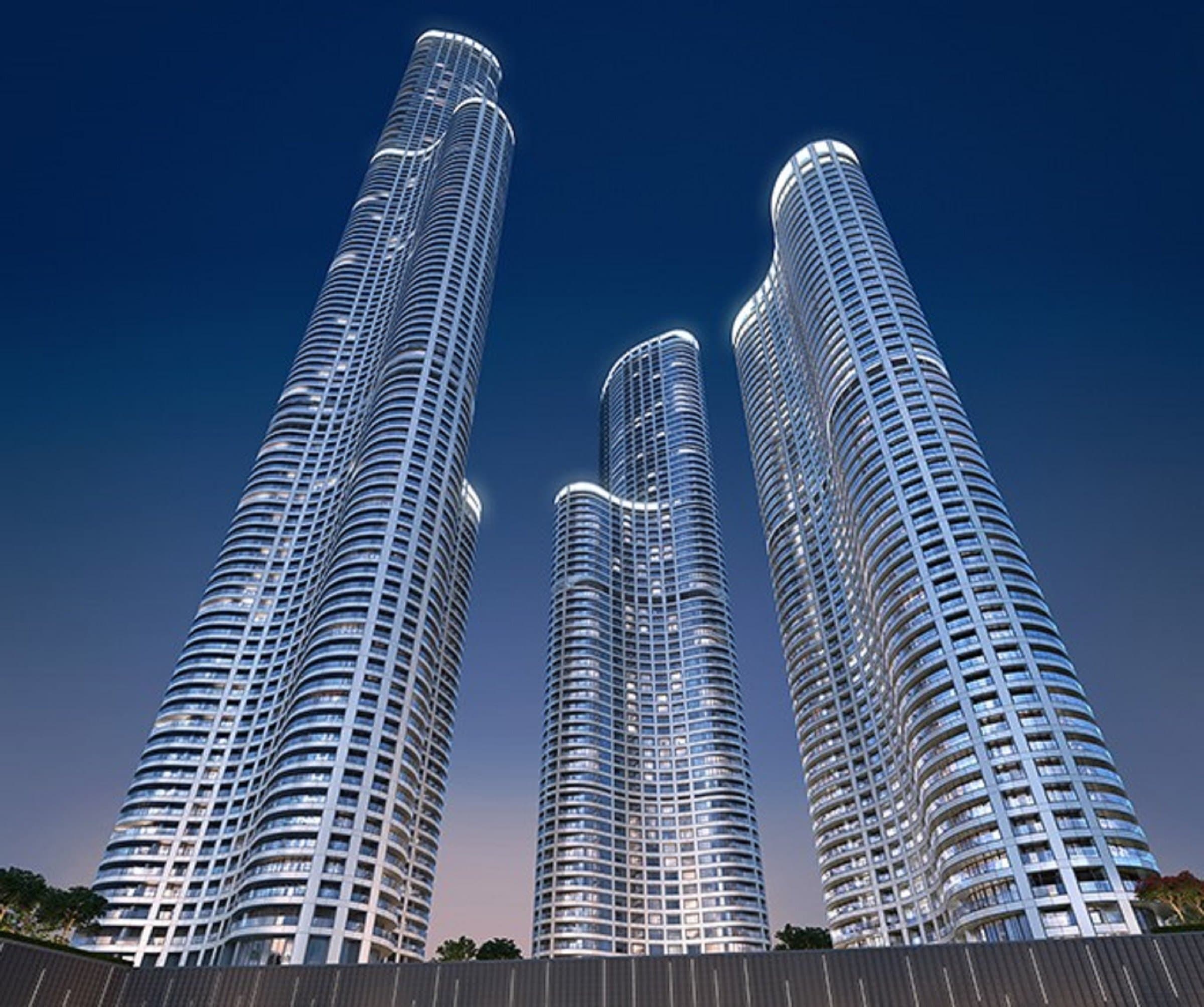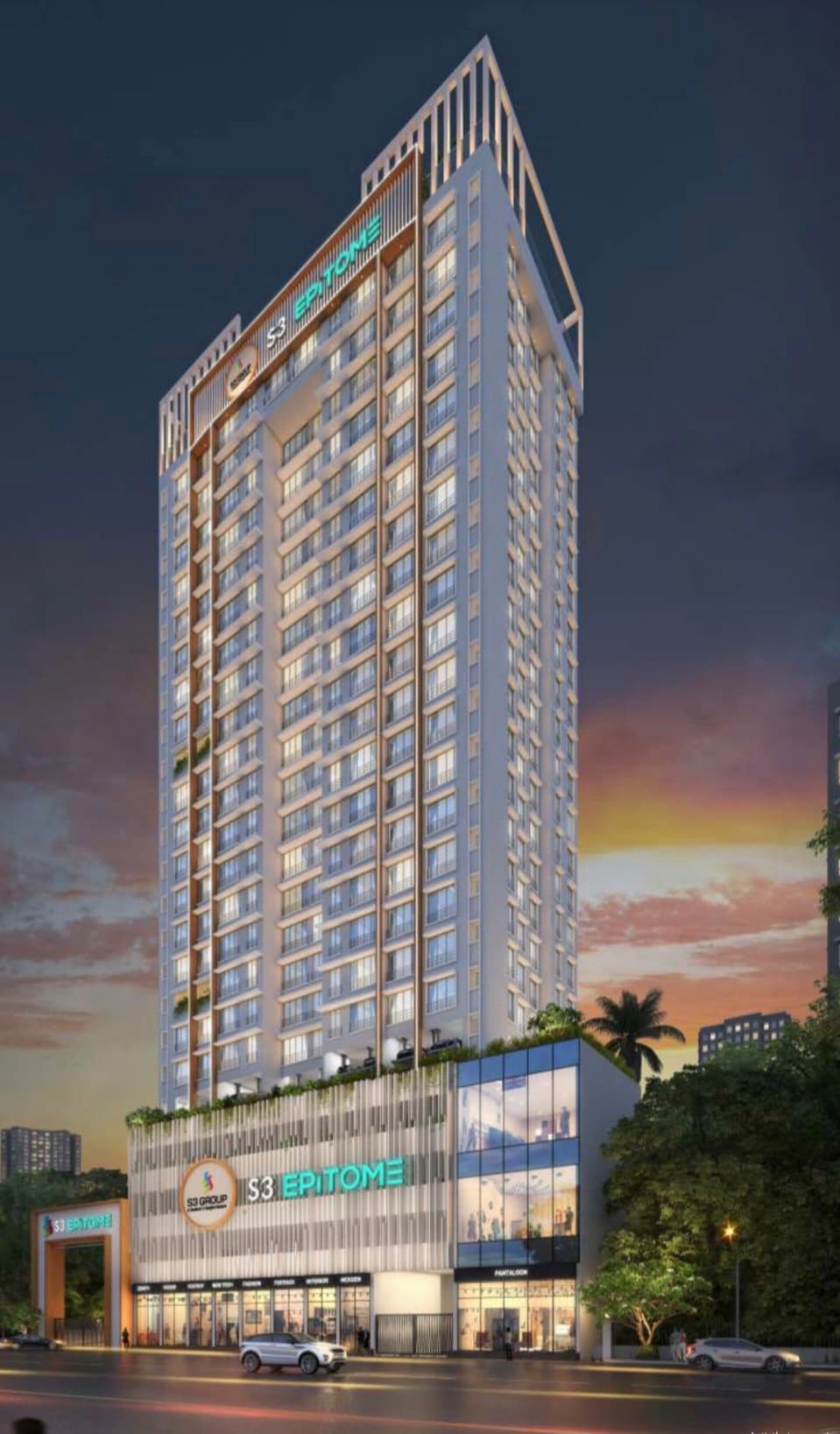
On 29 December 2017, a rooftop fire at 1 Above pub in the Kamala Mills compound killed 14 people. The post-mortem that followed produced the most consequential overhaul of Mumbai high-rise fire safety in two decades — the Chief Fire Officer (CFO) compliance regime, the structural-rooftop-load audit, the mandatory mock-drill cadence, and the “deemed-CFO” recall power that the BMC now exercises every quarter on Lower Parel's tower stock. Eight years later, Property Butler tracks 28 active sale listings in Lower Parel at a median ₹10 Cr ask, and the single biggest delta between a buyer who paid right and a buyer who got burned (literally and financially) sits in the fire-safety dossier they did or did not read before token. This decoder unpacks what changed in 2018, how the rules ratcheted again in 2023 and 2025, and the seven items you must extract from the developer or society before you sign.
The Number That Matters
Of Lower Parel's roughly 110 occupied high-rise residential towers (defined as 70+ metres), Property Butler's tracking puts the CFO-current count at approximately 78 as of May 2026 — meaning ~30% of the stock has at least one expired or contested fire-safety NOC. The risk isn't “fire” in the abstract; the risk is OC suspension, redevelopment delays, society-borne capex levies of ₹8–25 lakh per flat, and rental devaluation. Asking-price impact in the affected towers runs at a tracked discount of 4–8% versus comparable CFO-current stock.
The 2018 Pivot: What Actually Changed
The post-Kamala Mills overhaul moved Mumbai from a paper-compliance fire-safety regime to a physical-audit regime. The Maharashtra Fire Prevention & Life Safety Measures Act, 2006 had always required CFO certification for high-rise residential buildings; what changed in 2018 was enforcement. The BMC and the Mumbai Fire Brigade stopped accepting self-certified compliance from licensed agencies and started conducting random physical re-inspections. Towers found non-compliant at re-inspection — even with a valid paper NOC — were issued show-cause notices and given 90 days to remediate or face an OC-conditional suspension.
For Lower Parel specifically, the focus was the mill-compound cluster: Kamala Mills (the namesake), Phoenix Mills, Indiabulls Mills, Mathuradas Mills, Todi Mills, the ICC compound and the Marathon NextGen / Senapati Bapat Marg cluster. These compounds share three retrofit headaches that newer ground-up towers don't have: (i) mixed-use podium decks with commercial F&B at podium level and residential above, (ii) inherited heritage-grade mill structures repurposed as F&B venues with limited evacuation paths, and (iii) original mill-era electrical infrastructure that wasn't designed for the load of modern 40+ storey residential consumption.
By 2020, the post-audit Lower Parel cohort had been split into three tiers: Tier A (towers built post-2018 to the upgraded code, all current), Tier B (towers built 2010–2017 that completed retrofit within the 90-day window, mostly current), and Tier C (towers that contested findings, sought judicial relief, or are still working through phased compliance). Property Butler's view is that Tier C is where buyer due diligence concentrates — nine of the 30 active listings in Lower Parel as of May 2026 are in Tier C towers.
The 2023 + 2025 Ratchets
Two further regulatory tightenings since 2018 are worth understanding because they bite right now.
| Year | Rule Change | Impact on Lower Parel Tower Buyer |
|---|---|---|
| 2018 | Physical re-inspection regime, 90-day remediation | Tower-level CFO audit becomes a public-record item; pull it before token |
| 2020 | Rooftop structural-load audit mandatory for all towers with rooftop amenity | Skydeck pools and clubhouses re-certified; some closed pending audit |
| 2023 | Quarterly mock-drill mandate; refusal triggers OC-conditional flag | Society must produce drill register from last 12 months; ask for it |
| 2025 | Refuge-floor utilisation audit — storage and unauthorised partition treated as material breach | ~12 Lower Parel towers issued notices in Q4 2025; check refuge floor on site visit |
The 2025 ratchet on refuge floors deserves emphasis. Refuge floors are mandatory safe-assembly levels in high-rise residential buildings — typically every seventh or eighth floor in towers above 70 m. The rule is they must be kept clear: no storage, no partitioning, no encroachment by adjacent flats. The reality, in many 2012–2017 vintage Lower Parel towers, is that refuge floors quietly became overflow storage for society maintenance equipment, idle gym kit, festival decoration, sometimes even residents' surplus furniture. The 2025 audit cycle has put 12 Lower Parel towers in the BMC's correction queue — mostly mid-vintage mill-compound stock. For buyers, a 30-second walk onto the refuge floor during a site visit tells you more about the tower's compliance hygiene than any developer brochure.
The Per-Tower Reality (May 2026 Snapshot)
Property Butler's compliance tracking on the eight largest Lower Parel residential clusters as of May 2026:
| Tower / Cluster | Vintage / Tier | CFO Status | Median 3 BHK Ask (₹) | Buyer Notes |
|---|---|---|---|---|
| Indiabulls Sky Forest | 2020 / Tier A | Current | ₹14-22 Cr | Modern fire stack; podium F&B segregated by fire-rated wall |
| Lodha World Towers (Trump & World One) | 2018-2020 / Tier A | Current | ₹18-35 Cr | Refuge-floor audit cleared Q1 2026; mock-drill quarterly cadence |
| Marathon Futurex / NextGen Era | 2013-2017 / Tier B | Current after Q3 2025 retrofit | ₹6-12 Cr | Refuge-floor remediation completed Sep 2025; society levy ₹5 lakh per flat |
| One Avighna Park | 2017 / Tier A | Current | ₹10-16 Cr | Skydeck pool re-certified 2024; structural-load report public |
| Lodha Vista / Lodha Ciel | 2011-2014 / Tier B | Current with phased retrofit | ₹7-14 Cr | Electrical-stack upgrade ongoing; full clearance expected Q3 2026 |
| Times Tower | 2010 / Tier C | Show-cause notice Q4 2025 | ₹5-8 Cr | Refuge-floor and water-tank capacity flagged; capex levy ₹12-18 lakh / flat |
| Sarvesh One | 2019 / Tier A | Current | ₹4.5-7 Cr | Compact tower; single egress stack — verify drill timing yourself |
| Arihant Towers / Darsshan Ricco | 2012-2015 / Tier B | Current | ₹5-9 Cr | Last full mock drill Mar 2026 (within 90-day window) |
The asking-price spread within Lower Parel is real and traceable to compliance. The Tier C asks — Times Tower at ₹5–8 Cr for a 3 BHK against Lodha World Towers' ₹18–35 Cr — reflects more than vintage and amenity. They reflect the implicit overhead of a society levy that the next 24 months will likely produce, and the resale-time discount that a CFO show-cause carries.
What Actually Burns — The Three Failure Modes
The Kamala Mills 2017 fire was a podium-rooftop F&B incident, not a residential-tower failure. But the lessons cascade. Property Butler's review of incident data from the 2018–2025 period across Mumbai high-rise stock identifies three failure modes that buyers should specifically inspect for.
✗ Failure Mode 1: Refuge-Floor Encroachment
- Storage, gym overflow, society junk on the designated assembly level
- Adjacent-flat balcony extensions onto the refuge floor
- Test: walk the refuge floor unannounced; should be empty, marked, signposted
✗ Failure Mode 2: Stand-By Power Failure on Pumps
- Fire pumps must be on a separate DG circuit, not the main building DG
- Test: ask the society maintenance manager for the last 12-month pump-test log
- Pumps must run at full discharge for 15 minutes monthly
✗ Failure Mode 3: Hydrant-Line Pressure Drop
- Older 2010-2014 vintage towers had hydrants that lost pressure above floor 25
- Pressure-boosted hydrants are standard post-2018; verify if pre-2018 vintage
- Test: ask for the latest hydrant pressure-test report (typically annual)
✓ What Working Compliance Looks Like
- CFO NOC visible at security desk, current within 12 months
- Drill register signed by Fire Brigade officer, quarterly entries
- Refuge-floor signage in English / Hindi / Marathi at every lift lobby
- Annual third-party fire-safety audit report available to flat owners
The Mill-Compound Question
Six of the eight major Lower Parel residential clusters sit inside historic mill compounds. The mill-compound context matters because podium-level F&B venues remain a feature of the compound experience — Phoenix Marketcity, Kamala Mills' restaurant ring, the ICC compound nightlife. Buyers correctly want this lifestyle adjacency. The question is what fire-rated separation exists between the F&B podium and the residential tower above.
Post-2018, the standard answer is a two-hour fire-rated podium slab with independent ventilation, separate stair towers, and a fire-rated podium-to-tower transition lobby. New towers (Indiabulls Sky Forest, Lodha World Towers, One Avighna Park, Sarvesh One) implement this fully. Older towers retrofit it imperfectly — the slab is rated but the ventilation stack may share with the F&B level. This is the question to push the developer or society manager on: “Is the ventilation system shared with the podium F&B level, and if so, has it been fire-rated under the 2018 code?” A defensible answer cites the specific clause of the Maharashtra Fire Prevention Act, 2006 as amended.
For Lower Parel buyers shortlisting a tower inside a mill compound versus the standalone Senapati Bapat Marg cluster (Marathon NextGen, Sarvesh One, the Lodha Vista cluster, Avighna), the trade-off looks like this: the mill compound delivers walkable F&B and amenity density; the standalone tower delivers cleaner fire-stack independence. Neither is wrong; the buyer with young children or elderly parents on long-term medication usually weights the standalone tower; the buyer optimising for lifestyle adjacency and weekend convenience weights the compound.
What This Costs You (or Saves You)
Real-Rupee Impact of Fire-Safety Status
Tier C (show-cause) tower — expect a society capex levy of ₹8–25 lakh per flat over the next 24 months for retrofit. Resale ask absorbs a 4–8% discount until clearance restored. Home-loan banks may insist on a higher down-payment ratio (15–20% instead of 10%) due to OC-conditional risk.
Tier B (retrofit-completed) tower — capex levy already absorbed by the existing owner if completed 2024-2025. Buyer benefit: pay the post-clearance ask, inherit a 5–7 year compliance honeymoon. Verify the levy is paid in full before token.
Tier A (modern-code) tower — embedded in the developer's original construction. No levy risk for the next 8–12 years. PSF premium of approximately 8–15% versus comparable vintage Tier B; the premium is partially the fire-safety honeymoon you're paying for.
What to Ask Before You Token — The 7-Item Checklist
- CFO NOC copy — issued by Mumbai Fire Brigade, dated within the last 12 months, with the building's stilt-plus-floor count matching reality. If the NOC describes “G+25” and the tower is G+32, you have a problem.
- Quarterly mock-drill register — the past 12 months, signed by a Fire Brigade officer at each entry. Empty months are a flag.
- Refuge-floor inspection — do this yourself on the site visit. Ride the lift to the refuge floor; it should be empty, signposted, with the smoke-extraction louvres visibly functional.
- Hydrant pressure-test report — annual third-party. Acceptable working pressure is 3.5–5.0 kg/cm² at the topmost floor outlet.
- Fire-pump DG-circuit certification — the fire pump's standby power must originate from a dedicated DG, not the building's main DG. Ask for the electrical schematic.
- Refuge-floor utilisation audit report (post-2025 ratchet) — required from every Lower Parel high-rise. If the society can't produce it, they haven't completed the audit, which means a notice is in their future.
- Insurance-claim history — ask the society manager whether any insurance claim has been filed in the last five years related to fire, electrical fault, or sprinkler activation. A clean history is the desired answer; a history that exists is not disqualifying but tells you the failure modes that have actually shown up at this building.
Frequently Asked Questions
Can a tower be sold while under a CFO show-cause notice?
Yes, but disclosure is mandatory under RERA and the seller's broker is required to flag it. Most reputable buyer's brokers in Lower Parel (Property Butler included) will not proceed to token without the disclosure. Home-loan banks routinely insist on full disclosure before disbursing — HDFC, Axis and SBI now flag CFO show-causes as a covenant trigger. The practical effect: a Tier C tower trades 4–8% below comparable Tier B, and the buyer absorbs the future society levy.
If a refuge floor has been encroached on, can the society fix it before I move in?
Usually yes, within 60–90 days. The fix is operational rather than structural: clear the encroachment, restore signage, reinstate fire-stair access. Costs run ₹3–8 lakh society-wide. The complication is when adjacent-flat balcony extensions have been built onto the refuge floor — reversal requires consent or BMC enforcement, which can take 6–18 months. Buyers should ask whether the refuge-floor non-compliance is “clean” (storage) or “contested” (encroachment) and price accordingly. See our balcony-enclosure FSI violation decoder for the enforcement timeline.
Are Lower Parel mill-compound towers actually more fire-risk than standalone towers?
In the abstract, no. The 2018 code requires identical fire performance from a residential tower whether it sits in a mill compound or standalone. In practice, mill-compound towers have a more complex interface with the F&B podium and a longer compliance trail to walk. The actual buyer-relevant question isn't “is it more risky” but “is the developer's documentation more complete?” Tier A mill-compound towers (Indiabulls Sky Forest, Lodha World Towers, One Avighna Park) document the F&B podium fire-rated separation explicitly; Tier B/C mill-compound towers often don't.
Does my home insurance cover fire damage even in a non-compliant tower?
Yes, but with caveats. Standard apartment insurance (HDFC Ergo, ICICI Lombard, Bajaj Allianz) covers fire and consequential damage regardless of building compliance. However, if a tower has a documented CFO show-cause that the insurer can demonstrate the buyer knew about, claim settlement can be contested on grounds of material non-disclosure. The protective move: when you fill the insurance proposal, disclose any known CFO issue. Premium impact is small (5–10%); claim-protection impact is large. See our insurance-claim settlement decoder for the documentation walkthrough.
How does Lower Parel compare to Prabhadevi on fire-safety status?
Prabhadevi is materially cleaner because the tower stock is younger and the podium-F&B-residential interface is rarer. Of the major Prabhadevi clusters — Rustomjee Crown, Kalpataru Oceana, The V Mansion, Lodha Grandeur, Eon One — all are Tier A under the 2018+ code, with quarterly mock-drill registers and refuge-floor compliance current. There is no Prabhadevi equivalent of the mill-compound retrofit problem. The buyer who finds the Lower Parel compliance landscape exhausting often resolves to look at Prabhadevi for this reason alone. See our Lower Parel vs Prabhadevi PSF gap decoder for the corridor-level trade-off.
Related Reading
→ Fire Safety NOC & CFO Compliance Tower Decoder → Balcony Enclosure FSI Violation & BMC Enforcement → Lower Parel Mill Lands Transformation Story → Phoenix Palladium & Kamala Mills Adjacency Decoder → Lower Parel Property Buying Guide 2026Want only Lower Parel towers with current fire-safety compliance?
Property Butler's search filters Lower Parel inventory by CFO status, refuge-floor compliance and post-2018 vintage — so you start the shortlist from Tier A or cleared Tier B stock only.
Search Lower Parel Properties