Stand at the Worli flyover and look down. Lower Parel is on your left. Prabhadevi is on your right. They share a metro corridor, the same Coastal Road exit, the same school catchment, and an 8-minute drive between them. And yet a 3 BHK in Prabhadevi costs 28% more per sqft than the same 3 BHK in Lower Parel. Property Butler tracks the average asking price at ₹66,650 PSF in Prabhadevi versus ₹52,050 PSF in Lower Parel — a ₹14,600/sqft gap that translates into ₹2.2 Cr of extra ticket on an average 1,500 sqft 3 BHK. The gap looks irrational. It isn't. Five structural drivers explain it, and the gap is widening, not closing.
The headline number
Prabhadevi's average PSF is ₹66,650 against Lower Parel's ₹52,050 — a 28% premium. Over the past 5 years, Prabhadevi appreciated 30.4% while Lower Parel rose 17%. The gap is not a temporary mispricing — it has been widening since 2021.
Driver 1 — Sea face proximity asymmetry
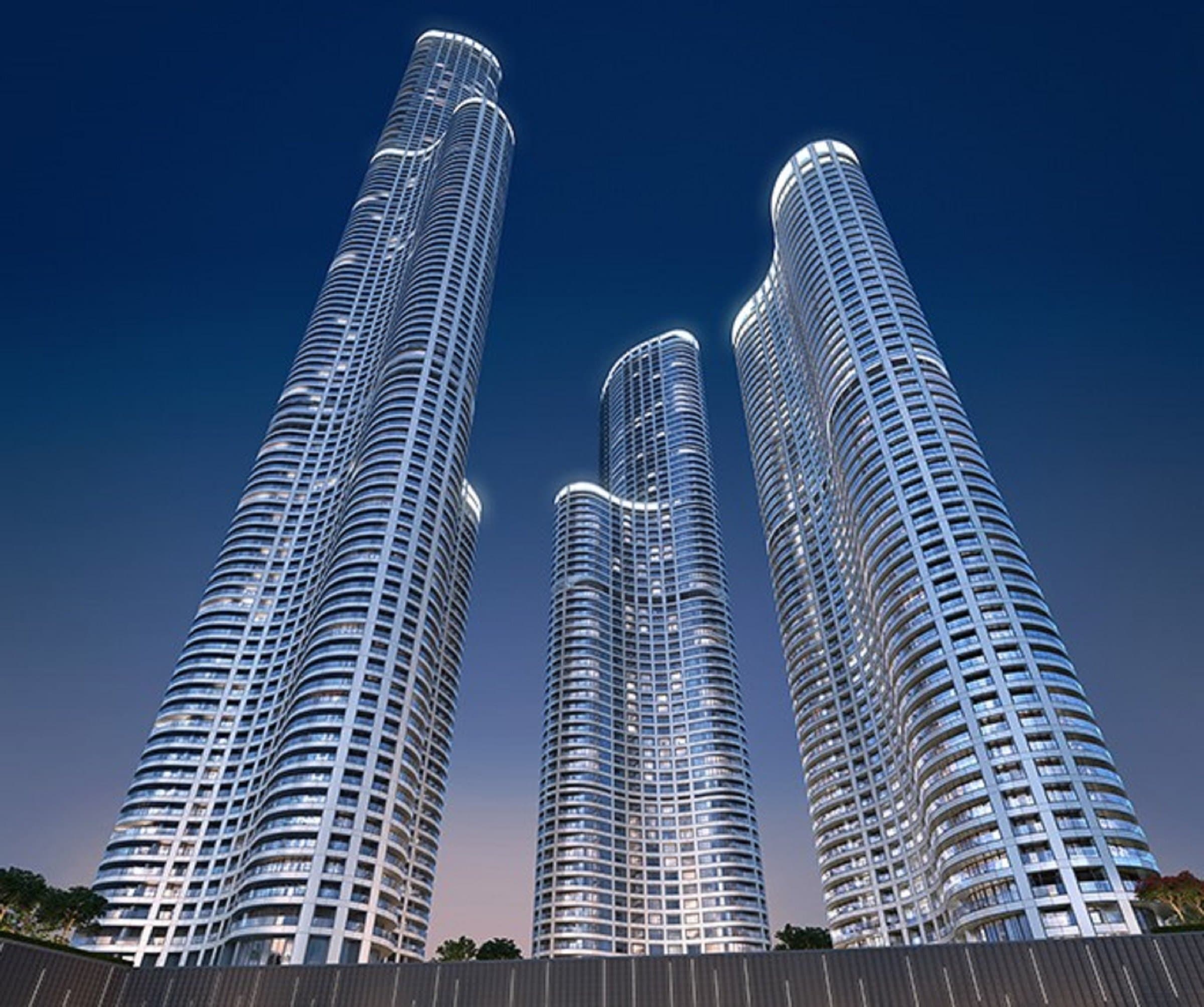
Prabhadevi is bounded on the west by the Worli Sea Face arc. The closest Prabhadevi towers — Rustomjee Crown, Kalpataru Oceana, Eon One, Sea Sequence — are 200–600m from the sea wall. Lower Parel is bounded by the Mahalaxmi racecourse and an inland industrial belt. Even the tallest Lower Parel towers — Indiabulls Sky Forest, Lodha World Crest, Marathon NextGen — sit 1.8–2.4 km inland. That distance is the price differential's foundation.
The sea-view PSF premium inside Prabhadevi alone runs 18–35% over internal-view units in the same building. That premium doesn't exist meaningfully in Lower Parel because no Lower Parel building has a clean sea view — the racecourse view at Lodha World Crest is the closest equivalent and it commands a smaller 8–12% premium over city-view units.
Driver 2 — Inventory density gap
Property Butler tracks 372 active listings in Lower Parel against 628 in Prabhadevi — but the locality area is similar. The density math runs the other way than you'd expect: Lower Parel's inventory is concentrated in three megastructures (Indiabulls Sky Forest with 126 listings, Lodha World Crest with 31, Lodha Vista with 24). Prabhadevi's inventory is spread across 20+ projects, with even Rustomjee Crown — the dominant tower — accounting for 254 of 628 listings (40%).
The implication: Lower Parel has a concentration discount. When 126 of 372 listings are in one tower, the marginal seller is competing with 125 others. Prabhadevi's diffuse inventory means each seller has fewer direct competitors per micro-segment, so asking prices stay sticky.
| Metric | Lower Parel | Prabhadevi |
|---|---|---|
| Avg PSF (asking) | ₹52,050 | ₹66,650 |
| 5-year appreciation | +17% | +30.4% |
| Active listings tracked | 372 | 628 |
| Listings in #1 tower | 126 (Indiabulls Sky Forest, 34%) | 254 (Rustomjee Crown, 40%) |
| Number of distinct projects | ~12 active | ~20+ active |
| Median 3 BHK sale PSF | ₹41,061 | ₹59,222 |
| Possession mix (sale) | 96% RTM, 4% UC | ~88% RTM, ~12% UC |
Driver 3 — Mill-land vs traditional residential land use history
Lower Parel was an industrial mill compound until the early 2000s. The land use redesignation that converted Phoenix Mill, Century Mill, Mafatlal, and the rest into commercial-residential mixed-use sites came with a structural cost: commercial-grade ceiling heights, floor plate widths, podium parking ratios built for offices, not luxury residences. Even the residential conversions (Indiabulls Sky Forest, Lodha World Towers) carry mill-land DNA — wider road frontages, but also denser plot loading and noise from adjacent commercial.
Prabhadevi was always residential. The plot ratios are smaller, the buildings are spaced apart, and the streets have 60-year-old residential character — Pandit Madan Mohan Malviya Marg, Cadell Road, the Siddhivinayak temple road. The land-use difference compounds into a perception premium: Prabhadevi reads as residential, Lower Parel reads as commercial-with-residential-bolted-on. HNI buyers pay for the residential read.
Driver 4 — The temple anchor effect
The Siddhivinayak temple is a 600m-radius price floor. Property Butler's tracked PSF for projects within 800m of Siddhivinayak runs 8–14% above the Prabhadevi average. The temple draws perpetual end-user demand from Mumbai's Marwari, Gujarati, and South Indian high-net-worth families for whom religious proximity is a non-negotiable. That demand pool doesn't shop on PSF — it shops on whether the unit is within walking distance to the temple. The result is a structural floor under Prabhadevi prices that Lower Parel doesn't have.
This effect compounds in resale. A Rustomjee Crown unit that is a 7-minute walk to Siddhivinayak transacts faster than the equivalent unit at Indiabulls Sky Forest because the Crown unit has a buyer pool that must live in this corridor. Lower Parel's resale buyer pool is purely lifestyle/work-driven, which is broader on paper but shallower at any given moment.
Driver 5 — New launch supply pipeline
Lower Parel has 13 active under-construction listings in our tracked inventory. Prabhadevi has roughly 75 across new launch and partial-completion. That's a 6x supply gap, but it cuts the opposite way you'd expect. Lower Parel's UC pipeline is thin because the mill-land redevelopment cycle is largely complete — most of what was redeveloped is now ready-to-move. Prabhadevi has a continuing UC pipeline because society redevelopment (older 1970s and 1980s buildings going for SRA + private redevelopment) is still actively trading.
The implication: Lower Parel inventory is largely the same stock being bought and sold. Prabhadevi inventory is being refreshed with new luxury launches at higher PSFs. New launches reset the price ceiling for the locality — a Rustomjee Crown Phase II launch at ₹65,000 PSF effectively raises the floor for resale Phase I at ₹61,000. Lower Parel doesn't have this refresh mechanism active right now, so its PSF curve is flatter.
Why Prabhadevi keeps the premium
- Sea-face proximity is a permanent asset
- Temple anchor creates structural demand floor
- Diffuse inventory keeps asking prices sticky
- Active redevelopment refreshes the price ceiling
- Residential land-use read attracts HNI families
Why Lower Parel will keep trading at a discount
- Concentrated inventory creates seller competition
- Mill-land DNA limits the residential premium
- No sea face, no religious anchor
- UC pipeline is thin — no PSF refresh
- Commercial neighbours dilute the residential feel
What this means for a ₹10 Cr buyer
If your budget is ₹10 Cr and you're choosing between Lower Parel and Prabhadevi, the PSF gap forces a real trade-off. At ₹52,050 PSF, ₹10 Cr buys you roughly 1,920 sqft of carpet in Lower Parel. At ₹66,650 PSF, the same ₹10 Cr buys 1,500 sqft in Prabhadevi. That's a 420 sqft difference — almost a full additional bedroom and a study.
₹10 Cr Buying Power
+420 sqft in Lower Parel
vs the same ticket in Prabhadevi at ₹66,650 PSF
The decision rule Property Butler uses with buyers in this corridor:
- If you want sea view or temple proximity — Prabhadevi is the only answer. Lower Parel cannot replicate either.
- If you want maximum carpet for a fixed budget — Lower Parel wins. The 28% PSF discount converts directly into more square footage.
- If you want long-hold capital appreciation — Prabhadevi has been outpacing Lower Parel by ~13 percentage points over 5 years. The structural drivers suggest this continues.
- If you want rental yield — Lower Parel is marginally better. The lower entry price + similar rental rates (corporate tenants pay for proximity to Lower Parel offices) gives 0.3–0.5% higher gross yield.
- If you want resale liquidity — Prabhadevi mid-floor inventory exits faster. Lower Parel has more inventory but lower transaction velocity per listing.
Will the gap close?
Three things would close it: a Lower Parel sea-water-front infrastructure asset (none planned), Lower Parel reverting to pure residential character (will not happen — commercial is locked in), or a Prabhadevi supply shock (unlikely given how slow society redevelopment moves). None of these are on the horizon. The gap is structural and likely widens for the next 3–5 years.
The only force that compresses the gap is commercial leasing demand pulling Lower Parel residential up — if Lower Parel office PSF rises sharply (BFC, BFG, Marathon Futurex, Lodha Excelus, Peninsula Towers), residential gets dragged with it because tenant families want to live near their offices. That's a 2–3 year tailwind, not a structural change.
Frequently asked questions
Is Prabhadevi's 30.4% 5-year appreciation real or just inflation?
Real. CPI-adjusted, that translates to roughly 18–22% real appreciation over 5 years, or 3.5–4% annualised real return. That's a respectable real-asset return for a ready-to-move luxury market in a high-cost city. Lower Parel's 17% nominal appreciation barely keeps pace with inflation — a real return close to zero. The gap in real returns is wider than the nominal gap suggests.
Why is the median 3 BHK sale PSF (₹41,061 in Lower Parel, ₹59,222 in Prabhadevi) lower than the average PSF (₹52,050 / ₹66,650)?
Because the average is dragged up by trophy listings — the ₹1.2 lakh PSF outliers at Kalpataru Oceana and Indiabulls Sky Forest's top floors. Median is the better reflection of where the bulk of transactions cluster. For a typical 3 BHK end-user, the median is the more useful benchmark — and the median gap (₹18,161 PSF, or 44%) is wider than the average gap. Prabhadevi's premium is even bigger at the median than at the mean.
Does the Coastal Road change this calculation?
Marginally and in Prabhadevi's favour. The Coastal Road exit ramps land closer to Worli–Prabhadevi than Lower Parel. Buyers commuting from the south (Cuffe Parade, Nariman Point) save 12–18 minutes via Coastal Road to Prabhadevi versus the inner-city route to Lower Parel. That's a connectivity asset that boosts Prabhadevi rental demand from corporate tenants who work in the south. Lower Parel is harder to reach via Coastal Road because the natural exit is the Worli flyover, which still drops you 1.5 km short.
If Lower Parel is cheaper, why does it not see arbitrage buying?
It does — but the arbitrage buyer pool is investors and corporates, not luxury end-users. The PSF gap is partly a tax on residential-use perception, which arbitrage capital can't unlock. An investor buying Lower Parel for yield is making a different bet from a family buying Prabhadevi for sea view. The two markets serve different buyers, so the gap doesn't close through arbitrage flow.
For a first-time luxury buyer, which is the safer bet?
For pure capital preservation, Prabhadevi sea-view 3 BHK at Rustomjee Crown / Kalpataru Oceana / Eon One. The structural drivers (sea face, temple, diffuse inventory) protect the price floor better than Lower Parel's. For first-time buyers willing to take more risk for more carpet, Lower Parel mid-band 3 BHK at Lodha Allura / Marathon NextGen Era. The carpet advantage (+25–30%) is the upside; the price flatness is the cost.
Related Reading
→ Parel vs Lower Parel Property Decoder → Floor Premium Math — Lower Parel & Prabhadevi → ₹10 Cr Budget Decoder: Lower Parel vs Prabhadevi → Worli vs Prabhadevi Corridor Comparison → Lower Parel Area Guide → Prabhadevi Area GuideDecide between Lower Parel and Prabhadevi for your budget
Property Butler tracks every active 3 and 4 BHK in both localities. Filter by budget, view, possession and floor band to see what your money actually buys today.
Search Both Localities