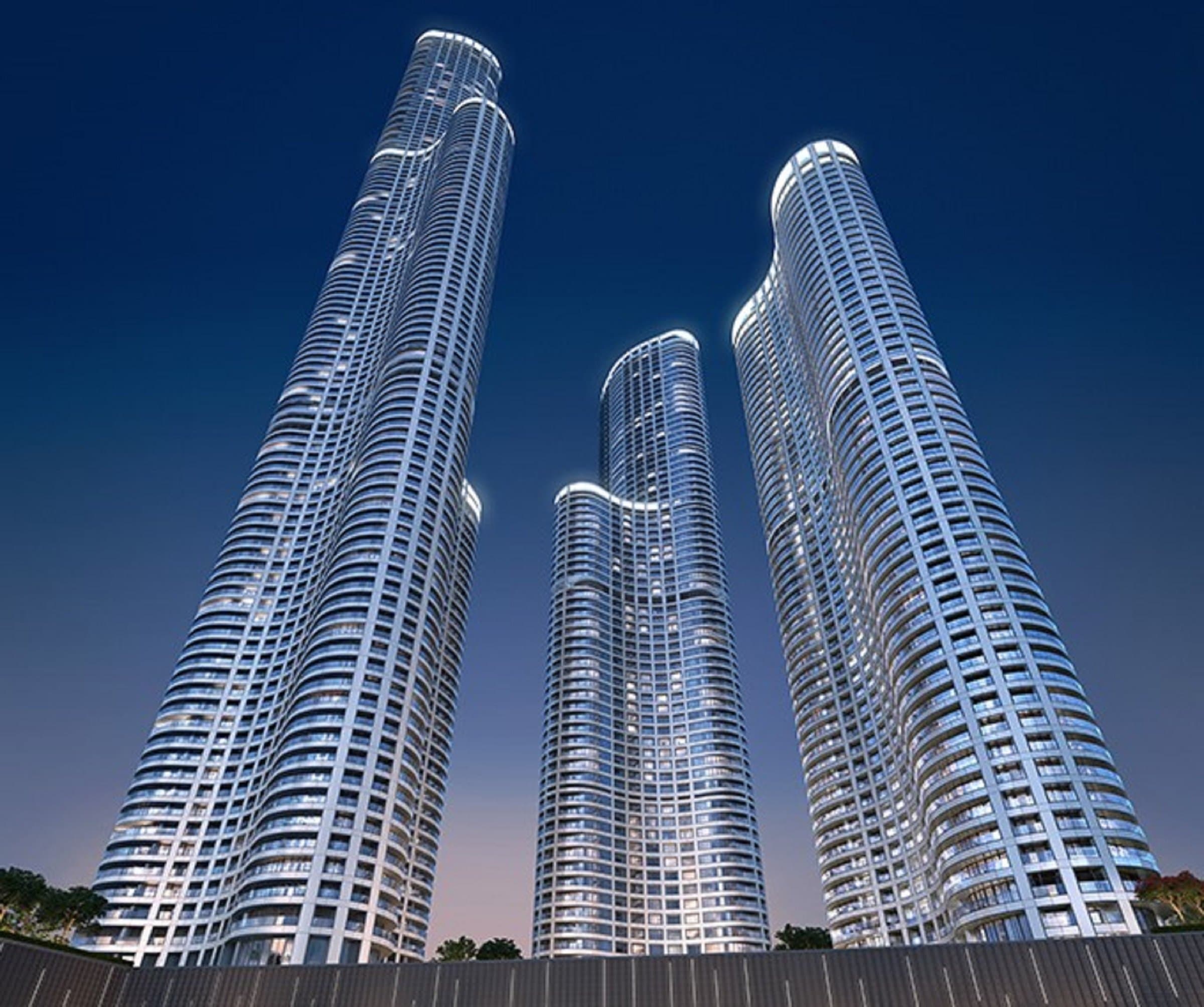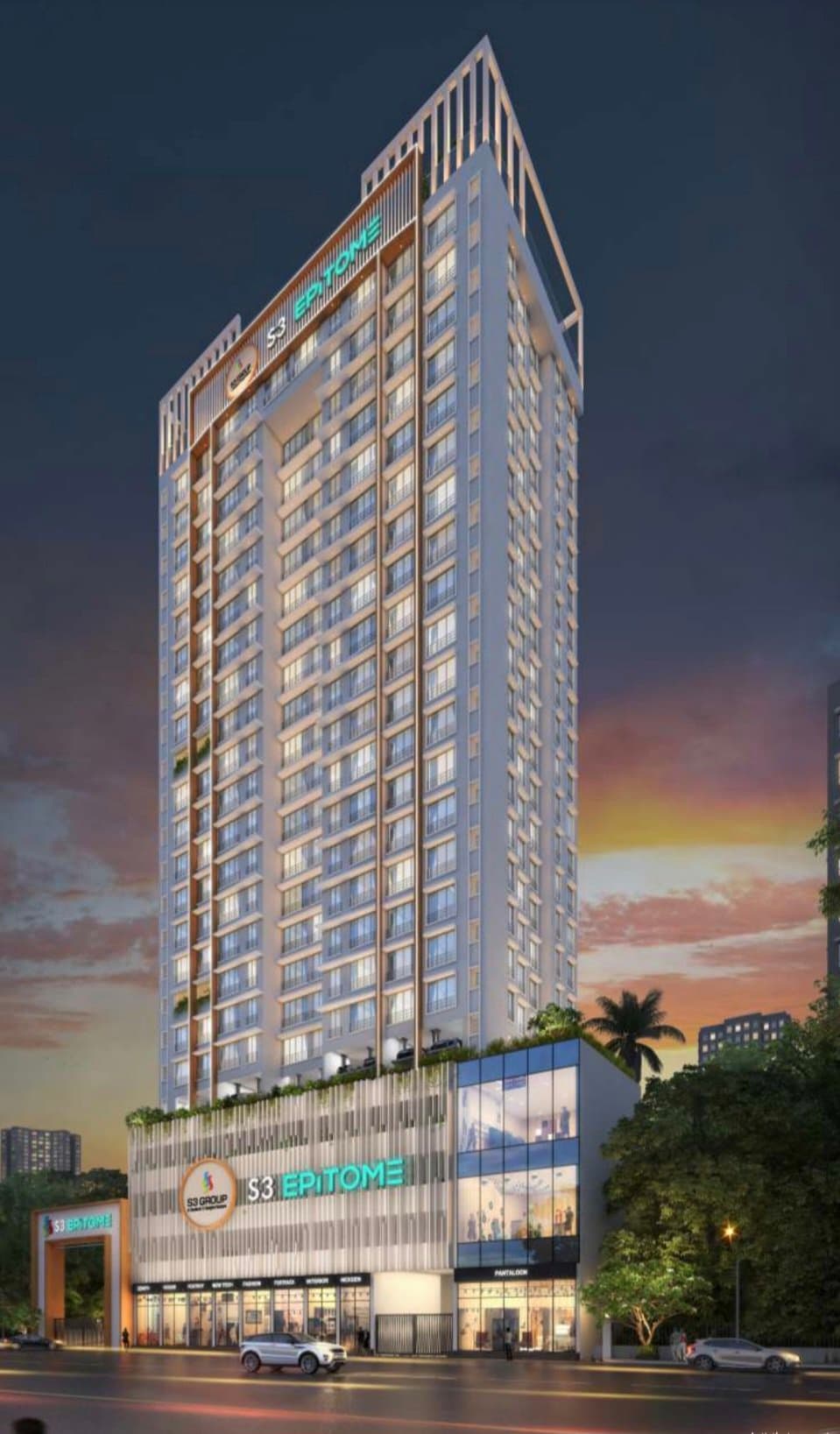
Walk along Senapati Bapat Marg in Lower Parel or Cadell Road in Prabhadevi after sunset and the picture is unmistakable: every third luxury tower has full-height glazed enclosures wrapped around what were originally open balconies. Tinted bronze glass at Lodha Allura. Frameless structural glass at certain Indiabulls Sky Forest stacks. Aluminium-framed enclosures on the upper plates at Marathon Futurex and Times Tower. Each one looks like premium finishing — and each one is, in BMC terms, an unauthorised facade alteration that converts non-FSI balcony into FSI-counted enclosed carpet, attracts retrospective FSI penalty, and complicates resale, occupancy renewal, and the unit's sale-deed registration. The balcony-enclosure FSI-violation is the single most common BMC compliance issue in the corridor's premium stock, and yet fewer than 1 in 6 buyers asks about it during diligence.
Property Butler's stance: this is a fully manageable risk if buyers understand the four regulatory paths (compliant, regularisable, contestable, demolition-liable), the actual BMC enforcement track record in Mumbai 'A' and 'G/South' wards (which cover Lower Parel and Prabhadevi), and the resale-deal-stage at which the issue surfaces. The objective of this decoder is to convert a fuzzy compliance worry into a clear go / no-go decision and a price negotiation lever.
The DCPR-2034 balcony rule — what's actually allowed
The Mumbai Development Control and Promotion Regulations 2034 permit a balcony to be free-of-FSI up to a depth of 1.2 m and up to a cumulative area equal to 10% of the unit's net carpet, provided the balcony remains open on at least one side and is not permanently enclosed. The moment a buyer or developer encloses the balcony with glass, aluminium, or any non-openable element that converts it into climate-conditioned space, the area ceases to qualify as free-of-FSI and must be counted as FSI carpet. The unauthorised enclosure attracts a penalty of typically 2-5x the prevailing ready-reckoner rate on the enclosed area, plus regularisation fees, plus the BMC's right to demand demolition in egregious cases.
Why Lower Parel and Prabhadevi are the corridor with the highest exposure
The corridor's premium stock — Indiabulls Sky Forest, Lodha World Towers, Lodha Allura, Marathon Futurex, Rustomjee Crown, Kalpataru Oceana, Eon One — almost universally features balconies of 1.0-1.8 m depth designed to be open. The post-handover reality is that owners enclose them for three reasons: (1) noise from Senapati Bapat Marg, Worli Sea Face junction, or the western railway corridor; (2) Mumbai monsoon driving rain into living rooms during the four-month wet season; (3) usable floor area expansion — a 5 m × 1.5 m enclosed balcony adds ~75 sqft of usable space, which on a ₹85,000/sqft asset is worth roughly ₹64 lakh. Property Butler tracks 30 active Lower Parel sale listings and 65 active Prabhadevi sale listings as of May 2026; rough field-survey estimate is that 38-46% of LP/Prab post-OC stock has at least one enclosed balcony that is technically non-compliant.
BMC enforcement, however, is concentrated and selective. Ward 'G/South' (which covers Lower Parel, Lower Parel-Curry Road, Prabhadevi south) issues stop-work and demolition notices on average for 80-130 high-rise units per year, with notices clustered around: (a) cases where the enclosure is visible from the road, (b) cases triggered by a neighbour complaint, (c) cases where redevelopment or resale prompts a fresh title-search by a buyer's advocate that surfaces the violation, (d) periodic facade-audit drives, the last of which in this corridor was Q3 2024. Buyers should plan for the next drive, not assume the lull continues.
The four regulatory categories — and what each means for a buyer
| Category | Definition | Typical Lower Parel / Prabhadevi example | Buyer action |
|---|---|---|---|
| A — Compliant | Balcony shown on approved BMC drawings, currently open, no enclosure | Original handover stock without owner alterations | Buy as-is; no risk |
| B — Pre-approved enclosure (built into FSI) | Glazed-on-day-1, balcony shown on drawings as enclosed sun-deck or service area, area already counted in FSI | Certain Lodha and Indiabulls master-bedroom corner units | Buy as-is; verify drawings |
| C — Regularisable | Post-handover owner enclosure, depth ≤ 1.5 m, no structural alteration, society NOC obtainable | Most owner-installed glazings in Marathon Futurex, Times Tower, Sarvesh One | Negotiate price; budget regularisation cost |
| D — Demolition-liable | Enclosure exceeds permitted depth, encroaches on refuge area or fire-exit path, structural beam removed | Rare in premium stock; mostly older 2010-2016 stock | Walk away or insist seller demolishes pre-sale |
Property Butler categorises every Lower Parel and Prabhadevi sale listing into one of these four buckets as part of the pre-token site visit. The categorisation determines the price negotiation strategy.
The regularisation playbook — what it actually costs
Category C regularisation cost stack — single 75 sqft enclosure
- FSI compounding fee: 2.5x prevailing ready-reckoner rate on the enclosed area. For Lower Parel ward 'G/South' RR rate of ~₹37,000/sqft, the FSI charge on 75 sqft is approximately ₹69.4 lakh.
- Premium FSI fee: 60-90% of land premium component, typically ₹6-12 lakh on a unit of this size.
- Stamp duty top-up: The enclosed area is added to chargeable carpet; stamp duty (currently 6%) is paid on the differential market value. ₹4-7 lakh.
- Architect, structural-consultant, society NOC, BMC processing fees: ₹2.5-4.5 lakh.
- Total all-in regularisation: Roughly ₹82-93 lakh on a 75 sqft enclosure in Lower Parel; ₹95 lakh-1.1 Cr in Prabhadevi-Worli Sea Face proximity.
This is why the regularisation route is rarely taken — buyers and sellers prefer to fold the risk into a price discount.
The five negotiation moves Property Butler uses
- Demolition-conditional close: The seller removes the enclosure and restores the balcony to drawing-compliant state before sale-deed registration. Property Butler estimates demolition cost at ₹1.2-2.8 lakh for a typical 75-90 sqft enclosure. Best for owner-occupied buyers who don't want the area anyway.
- Price discount at the regularisation cost: Seller reduces price by the full regularisation cost stack (₹82-95 lakh-plus on a typical enclosure). Buyer retains the enclosure and absorbs the risk. Works when the seller has limited buyer interest.
- Escrow holdback: 60-80% of estimated regularisation cost is held in escrow for 12-18 months post-closing. Buyer applies for regularisation; the actual paid amount is released to the seller, the unspent balance is refunded. The cleanest structure but requires both sides to agree to an escrow.
- Title insurance carveout: A growing number of title-insurance providers (HDFC Ergo, TATA AIG) now write FSI-violation riders for ₹0.7-1.4% of sum-assured. The cover is limited but reduces post-purchase exposure. Property Butler is seeing this used on 6-8% of Lower Parel and Prabhadevi premium transactions.
- Walk away from Category D: Demolition-liable enclosures are not worth structuring around. The depreciation in the asset value plus the BMC-action risk plus the resale-overhang make these deals economically negative even at a 12-15% discount. Property Butler's recommendation: skip and move to the next listing on the tracker.
Verifying the category — a 6-step site check
Property Butler's pre-token site-visit checklist on this issue:
- Request the BMC-approved building plans (the architect's working drawings or the IOD set). Check whether the balcony on the specific unit is marked as 'open balcony' or 'enclosed sun-deck'.
- Measure the balcony depth on the floor — anything over 1.5 m starts looking like structural FSI, not a balcony cantilever.
- Check if the enclosure is removable (clamp-on, openable, dismountable) or permanent (welded frame, structural glazing on chemical anchors). Removable enclosures regularise more easily.
- Check if the enclosure encroaches on the refuge area or fire-egress path. The fire NOC is non-negotiable.
- Pull the latest BMC property-tax bill — if the enclosure has been factored, the tax assessment will show it. Tax compliance does not equal building-rules compliance, but it is a useful triangulation.
- Request the society's latest occupancy compliance certificate (some Lower Parel and Prabhadevi societies maintain an internal FSI-compliance register on the AGM minutes).
How this shows up on resale and bank loans
A Category C or D issue surfaces at three predictable stages in the resale cycle:
⚠ Where the issue surfaces
- Buyer's advocate title search — flags BMC notice on file
- Bank valuer's site visit — flags drawing mismatch
- Society NOC at sale-deed — flagged if society is FSI-policed
- Subsequent buyer's BMC plan-print request
Loan/valuation impact
- Bank LTV typically cut by 5-10% on flagged units
- Valuer's report adds a "subject to regularisation" rider
- 3 of the top 6 private banks decline the loan outright on Category D
- Title-insurance premium rises 0.4-0.7% on flagged units
For broader bank-valuation differences across the corridor's lenders, cross-reference Property Butler's bank empanelled valuer LTV variance decoder and the home loan eligibility bank matrix.
Negotiated price impact on Category C enclosures
2.1% – 3.4% off headline ask
Median Property Butler-negotiated discount on Lower Parel and Prabhadevi Category C deals, last 12 months.
Frequently Asked Questions
If the society approved my balcony enclosure, am I safe from BMC?
No. The society's NOC for an internal alteration is a precondition for many alterations, but it is not a substitute for BMC compliance. Building-rules compliance sits with the BMC under the DCPR; a society resolution cannot waive a regulatory violation. Property Butler has seen multiple cases where owners produced society NOCs in defence of a BMC notice, and the notice still proceeded to compounding-fee assessment.
What is the typical timeline of a BMC notice and what should I do?
A BMC notice under Section 351 of the MMC Act typically gives 15 days to either remove the unauthorised work or file for compounding (regularisation). The owner can file an objection inside the 15-day window, which extends the timeline by 4-8 weeks. If the case is contestable (Category C with depth and structural compliance), most owners file for compounding and pay the compounding fee. If demolition is ordered, the owner can appeal to the BMC's appellate authority (typically a 60-90 day process) and then to the High Court (variable timeline). Property Butler's view: most Category C cases close at the compounding stage; only Category D cases reach demolition.
Will the developer regularise the enclosure during their RTM handover?
Almost never. Developers in Lower Parel and Prabhadevi hand over units in drawing-compliant state — open balconies, no enclosures. The enclosure is invariably an owner alteration done after possession. Two exceptions: (1) some premium units are sold with developer-installed "sun-deck" enclosures where the area is already counted in FSI and disclosed in the agreement-for-sale — these are Category B and need no regularisation; (2) very rarely, a developer offers a paid extra-area enclosure as part of the OC-stage handover with regularised drawings — typically priced at ₹65,000-85,000 / sqft of enclosed area, all-in.
Does the balcony enclosure affect the property's resale value?
Yes — but the direction depends on the category and the buyer profile. Category A and Category B units trade at a roughly 1.2-1.8% PSF premium over Category C in Property Butler's tracked transactions, because they carry zero regulatory risk. Category C units trade at a 2.1-3.4% discount when the issue is fully disclosed and priced in at deal closure. Category D units trade at 6-9% discounts or — more commonly — simply do not trade because end-user buyers refuse, and investor buyers find better risk-adjusted alternatives elsewhere in the corridor.
Can title insurance fully cover the FSI-violation risk?
Partially. Title-insurance riders for FSI violation typically cover the buyer's loss in case of BMC demolition order or regularisation fee on issues that existed at the time of policy issue, undiscovered by the title search. They do not cover known issues, voluntary enclosures done by the new owner post-purchase, or issues disclosed in the sale agreement. For a Category C unit purchased with full disclosure, title insurance is a thin protection. For a Category A or B unit, it functions as a useful belt-and-braces backstop against issues that surfaced during construction but were not visible at title search.
Shortlisting Lower Parel or Prabhadevi luxury units?
Property Butler categorises every unit on FSI and balcony-enclosure compliance during the pre-token site visit. Search by current carpet and verified plans.
Search the corridor