Prabhadevi looks homogeneous on a map. It isn't. The 1.6 sq km that the area covers is stitched together from at least three distinct land-tenure regimes, each created by different statutes across the colonial and post-colonial periods. A buyer paying ₹12 Cr for a Prabhadevi 3BHK touches one of these three regimes depending on the building's land history — and each carries a different title-defect probability. Property Butler runs a 9-point title-tenure check before any token. Buyers who skip it carry tail-risk on resale, redevelopment, and society-conveyance, none of which appears in the asking-price PSF.
This guide unpacks the three regimes, names the structural risks for each, and shows the buyer what to demand from the seller's title package before signing.
Property Butler's risk-tier ranking
Freehold / reclaimed-land redeveloped under 33(7A): clean title, low risk. Gaothan-origin redeveloped under 33(7) plus city-council orders: medium risk, manageable. Koliwada / tribal community land or reclaimed-but-CRZ-tagged: high risk, walk away unless title chain is exceptional. Of the 65 active Prabhadevi sale listings May 2026, Property Butler estimates roughly 7 sit on gaothan-redeveloped land, 4 on or adjacent to koliwada zones, and the balance on clean freehold / reclaimed parcels.
Regime 1: Freehold / Reclaimed-land redevelopment
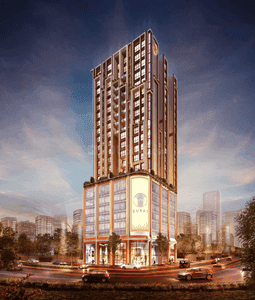
The cleanest title regime in Prabhadevi. This covers most of the post-1990 mid-mainland Prabhadevi development cluster — buildings sitting on land that was either originally freehold (private ownership traceable through pre-Independence sale deeds) or reclaimed-and-allotted under post-1947 Bombay Reclamation Boards with clear title vesting. Most of Lodha Grandeur, Sumer Trinity, Suraj Ave Maria, Akruti Kalaya, and the newer Lodha Sea Crest sit on this regime.
What to verify (Property Butler's 4-point check for this regime):
- 7/12 extract or City Survey Record showing freehold vesting trail back to at least 1970
- CTSR (City Title Survey Record) — class of land must read 'private' not 'government' or 'collector'
- Property Card with no 'restrictions' notation in the encumbrance column
- Development Permission letter from BMC ward office citing the 33(7A) or 33(7B) provision used for redevelopment
Risk profile: low. Title insurance available from National Insurance / New India / TATA AIG at 0.04-0.07% of property value (one-time premium). Bank loan eligibility full 80% LTV. Resale velocity normal.
Regime 2: Gaothan-origin redevelopment
'Gaothan' literally means 'village settlement'. Prabhadevi contains historical gaothan pockets — pre-Bombay-municipal-corporation village settlements where land was held communally by extended families and tribal/caste groups under customary tenure. Post-1947 land-reform statutes recognised existing gaothan occupancy but did not always convert it cleanly to freehold. When such land redevelops under 33(7) (provision for redevelopment of cessed and dilapidated old buildings), the developer's title can be derivative — clean for the structure, but with conditional vesting that survives in the title chain.
Some of the older Prabhadevi residential stock east of Cadell Road and toward the area's central spine traces back to gaothan land. The buildings themselves are well-built; the title chain takes longer to verify.
What to verify (Property Butler's 5-point check for this regime):
- All four points from Regime 1, PLUS:
- 33(7) redevelopment approval from the relevant cessed-building board (MHADA / Bombay Repairs & Reconstruction Board)
- List of original tenants / occupants from the cessed-property era — required to verify no displaced-tenant claim survives
- Cessation Certificate from the city-survey office confirming the gaothan classification has been formally converted
- If applicable, a no-objection from the original village-settlement trust / cooperative society confirming the redeveloper had clear rights
Risk profile: medium. Title insurance available but premium rises to 0.08-0.14% of property value. Bank loan eligibility usually 70-80% LTV with extra documentation. Resale velocity 15-25% slower than Regime 1 because subsequent buyers also run this diligence.
Regime 3: Koliwada / CRZ-tagged reclaimed land
Koliwada land is fishing-community settlement land — historically pre-municipal, traditionally held by the Koli community along Mumbai's western coast. Prabhadevi has koliwada-adjacent pockets near the Worli sea face boundary and at the southern fringe near Worli Koliwada itself. These are NOT inside the standard Prabhadevi residential cluster, but a small number of Prabhadevi buildings sit on land that touches the koliwada perimeter or on reclaimed-land plots whose Coastal Regulation Zone (CRZ) status was contested.
The risk: koliwada land titles often have ongoing community-rights claims, and reclaimed CRZ-tagged land can carry post-fact regulatory challenges. The 2019 CRZ notification updates clarified much of this, but residual cases are slow to resolve.
What to verify (Property Butler's 9-point check for this regime):
- All points from Regimes 1 and 2, PLUS:
- CRZ certification from the Maharashtra Coastal Zone Management Authority (MCZMA) confirming the plot is OUT of the no-construction CRZ-1 zone
- If reclaimed, the original allotment letter from the Public Works Department or Reclamation Board, with date and condition
- Search of the District Consumer Redressal records for the past 15 years for community-rights litigation against the plot or building
- If koliwada-adjacent, written confirmation from the koliwada society's gram panchayat that no traditional-rights claim subsists
Risk profile: high. Title insurance often refused or quoted at 0.18-0.30% with carve-outs. Bank loan eligibility commonly capped at 60-65% LTV; some banks decline outright. Resale velocity 35-50% slower. Property Butler's general advice: walk away unless the seller's title package is exceptional and the discount is ≥18% off Regime 1 comparable PSF.
✓ Regime 1 (Freehold)
- Insurance premium 0.04-0.07%
- 80% LTV available
- Resale velocity normal
- Title risk low
⚠ Regime 2 (Gaothan)
- Insurance premium 0.08-0.14%
- 70-80% LTV available
- Resale 15-25% slower
- Title risk medium
✗ Regime 3 (Koliwada/CRZ)
- Insurance 0.18-0.30% or refused
- 60-65% LTV cap
- Resale 35-50% slower
- Title risk high
How to identify the regime BEFORE you pay the inspection fee
The seller's broker rarely volunteers this information. Three free-public-data signals tell you the regime in 20 minutes:
- Pull the City Survey Record from the MahaBhulekh / DILRMP portal. Class of land — 'Private' = Regime 1; 'Gaothan' = Regime 2; 'CRZ-marked' or 'Government allotted' = potentially Regime 3.
- Check the MahaRERA project page for the building. The land-tenure disclosure tab often (not always) lists the redevelopment authority used — 33(7A) vs 33(7) vs MHADA-aligned. The choice indicates the regime.
- Cross-check the SRA / MHADA project list. If the building or adjacent plot appears, the regime is more likely 2 or 3, not 1.
Pricing implication — Prabhadevi May 2026
Regime 2 stock should price 4-7% below Regime 1. Regime 3 stock should price 14-22% below.
The market rarely applies this discount automatically — it must be negotiated
The redevelopment angle — why title regime matters even more in 30 years
Most Prabhadevi luxury towers will face their first major redevelopment cycle in the 2050-2060 window. At that point, the title regime determines who gets to make the redevelopment decision, what FSI / TDR / air-rights uplift the project can claim, and how cleanly the conveyance can transfer to the redeveloper. Regime 1 properties enjoy the highest redevelopment optionality. Regime 2 properties face additional clearances from the cessed-buildings board. Regime 3 properties may require multi-stakeholder consents (state government, community trust, MCZMA) that can stall redevelopment by 4-7 years.
Translation: today's title regime is tomorrow's redevelopment liquidity. For long-hold buyers (15+ years), this is not academic.
Frequently Asked Questions
Does this affect Rustomjee Crown or Kalpataru Oceana?
Both sit on private freehold parcels developed under 33(7A) / Regulation 58 with clear vesting. They are firmly Regime 1. Property Butler's 4-point check passes cleanly on these towers. The same is true for The V Mansion, Eon One and Sea Sequence.
Does the building's RERA registration shield me from title issues?
No. RERA registration confirms project compliance with consumer-protection regulations. It does NOT independently verify the underlying title chain — the developer's title statement is taken as filed and is not adjudicated. RERA helps with construction delays, defect liability, and disclosure failures. Title risk is a separate diligence — see title search and encumbrance diligence.
How much does Property Butler charge for a full title-regime audit?
For Property Butler clients who close through us, the title-regime audit is included. For standalone audits (buyer pursuing a deal not sourced by us), our empanelled solicitor charges ₹85,000-1.35 L depending on regime complexity. The Regime 3 audit is typically the most expensive because of CRZ documentation pulls and panchayat consultations.
Can title insurance protect me even if I miss the regime classification?
Partially. Indian title insurance policies pay out on covered defects up to the sum insured (usually the property value), but they exclude pre-known defects, fraud by the previous owner, and rights of third parties not on public records (which is exactly where gaothan/koliwada community claims sit). Insurance is a backstop, not a substitute for diligence.
What about Lower Parel — does the same framework apply?
Lower Parel has its own land-tenure quirks, dominated by mill-land redevelopment (33(7A), Regulation 58) and a few cessed-building pockets along Senapati Bapat Marg. The framework is similar but the regime mix is different. See our Lower Parel mill-land conversion playbook and leasehold vs freehold title decoder.
Related Reading
→ Title search & encumbrance diligence playbook → Society conveyance deed decoder → Prabhadevi MahaRERA decoder → Cluster redevelopment buy-in playbook → Mill-land leasehold vs freehold title decoderRun a title-regime check before you pay token
Property Butler audits the title regime on every Prabhadevi unit before any client engagement. Free for buyers who close through us; standalone audits available.
Browse Prabhadevi inventory