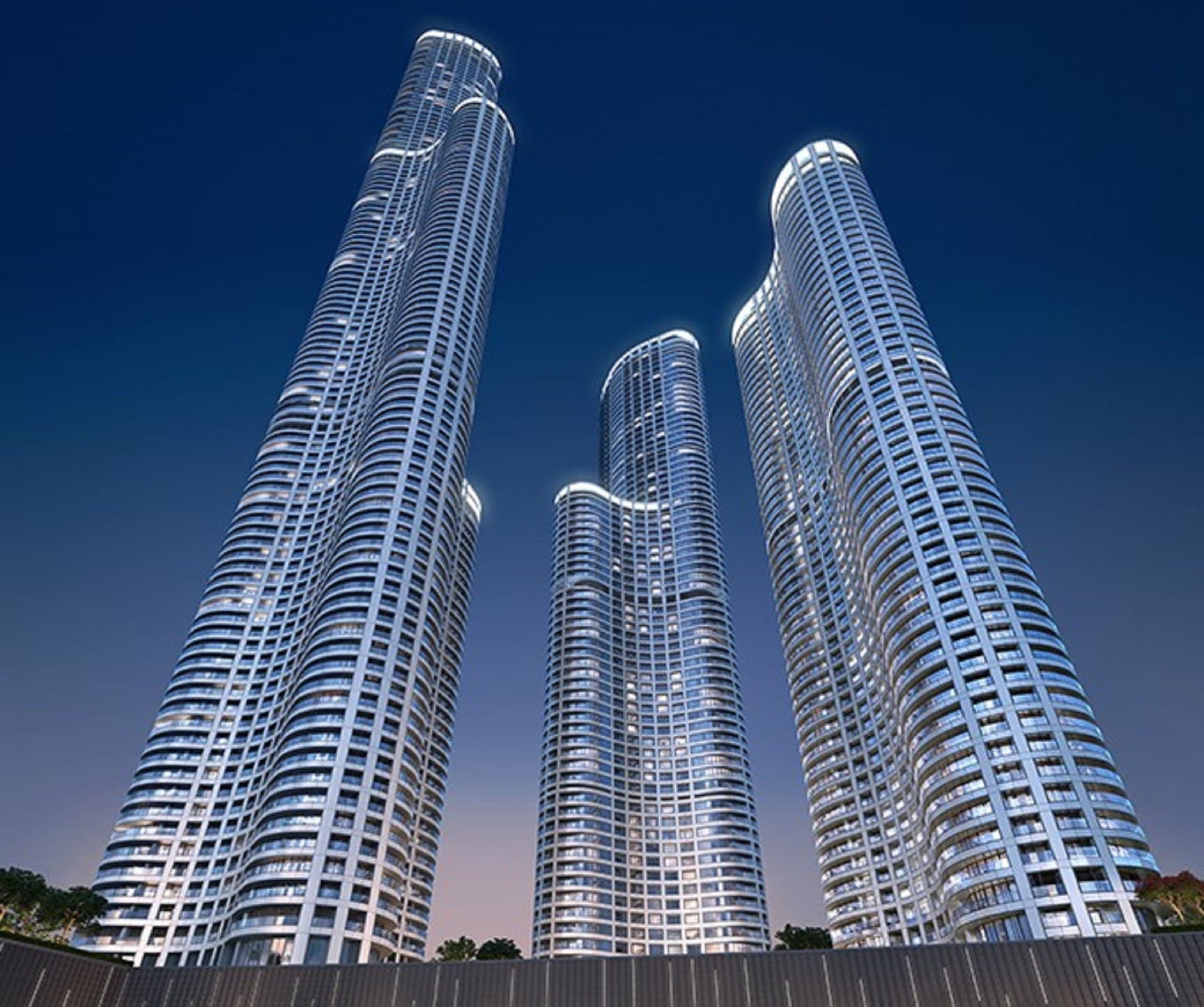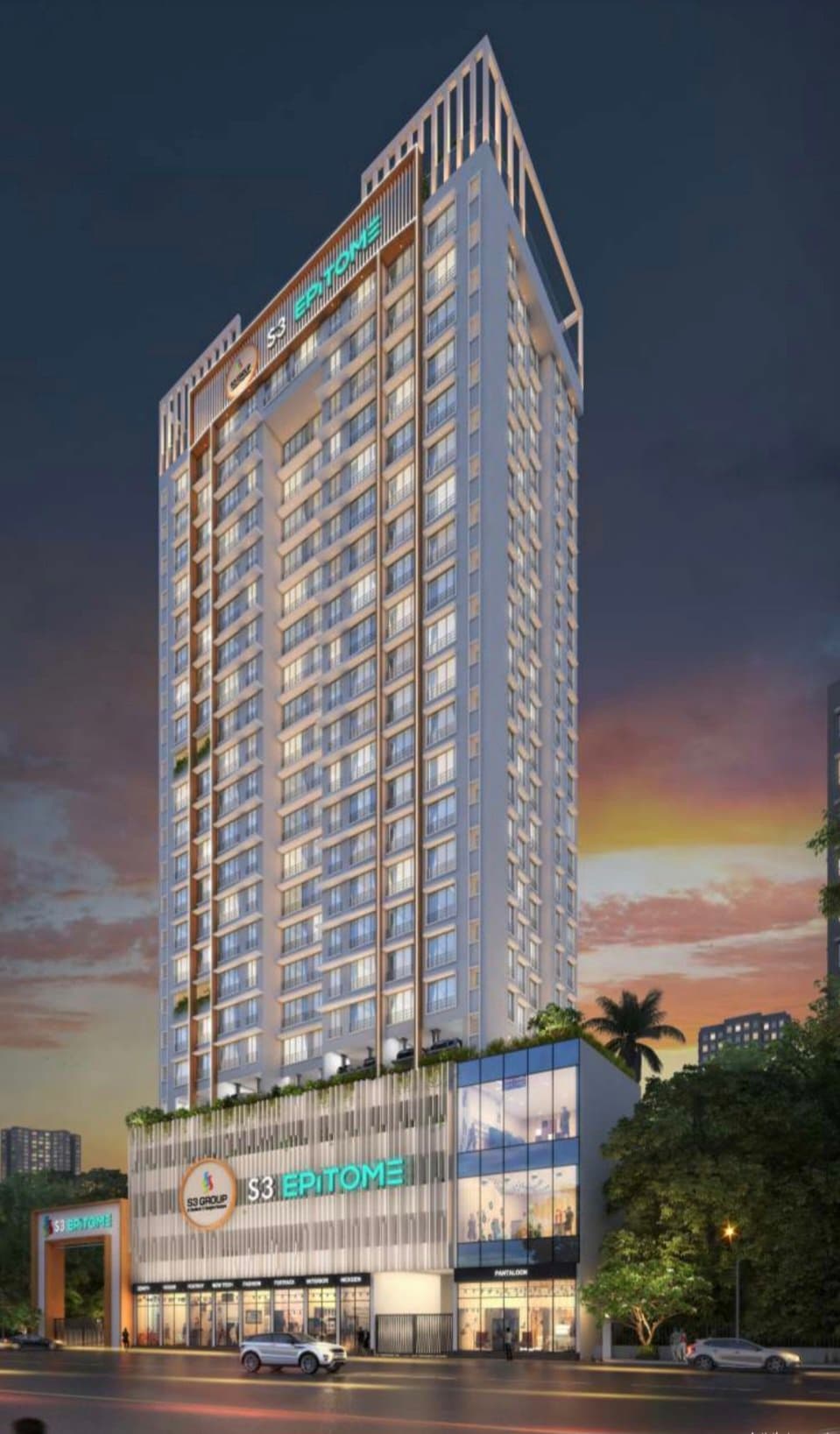
Lower Parel sits on filled mill-lands. Prabhadevi's western edge sits on reclaimed coastal flats. The ground under a 60-storey tower in either locality has bearing characteristics that look nothing like the trap-rock foundation under Malabar Hill or Walkeshwar. Mumbai is in Seismic Zone III under IS 1893:2016 — moderate hazard, not severe — but soft-soil sites amplify ground motion 1.5-2.5x compared to rock. When a Lower Parel tower designs for a 0.16g design basis earthquake on rock, the realised motion at floor 65 in soft soil can hit 0.30g. Most buyers don't ask which one was used. The structural decision was made at sanction — 5-10 years before they walked in. Property Butler runs this audit on every ₹10 Cr+ token in Lower Parel and Prabhadevi.
The regulatory baseline, in one line
Under the BMC's Development Control and Promotion Regulations 2034 (Clause 64) and the National Building Code 2016, every Mumbai building above 70 metres requires independent peer review by a panel of three structural engineers approved by IIT Bombay or VJTI. The peer-review report is a public document at the BMC's building-proposal office. Property Butler pulls it for every Lower Parel or Prabhadevi tower above 30 floors before recommending a token.
Why this matters specifically for Lower Parel and Prabhadevi
Mumbai's seismic zoning splits the city into rock-bound highlands (Walkeshwar, Malabar Hill, parts of Bandra hill) and reclaimed/soft-soil flatlands (everything south of Mahalaxmi to Colaba, plus most of Worli, Lower Parel, Prabhadevi, Dadar). The IS 1893:2016 code requires soft-soil sites to apply a Site Class III or IV multiplier on the design spectrum — which means the effective seismic design load is 1.5-2.5x what it would be on rock. Six of the seven tallest residential towers in Lower Parel sit on filled mill-lands. Two of the three tallest Prabhadevi towers sit within 400 m of the historical waterline. The structural design choices on these sites are non-trivial.
| Tower | Height | Soil class | Peer review |
|---|---|---|---|
| Lodha World One (Lower Parel) | 117 floors, 442 m | Site Class III (filled mill-lands) | Three-panel + wind tunnel test (RWDI, Canada) |
| Indiabulls Sky Forest (Lower Parel) | 78 floors, 268 m | Site Class III | Three-panel (IIT-B, VJTI panel) |
| One Avighna Park (Lower Parel) | 62 floors | Site Class III | Three-panel |
| Rustomjee Crown (Prabhadevi) | 41 floors | Site Class III | Three-panel |
| Lodha Grandeur (Prabhadevi) | 45 floors | Site Class III | Three-panel |
| Kalpataru Oceana (Prabhadevi) | 38 floors | Site Class III | Three-panel |
Site Class III in IS 1893:2016 corresponds to soft to medium-dense soils with shear-wave velocity in the 180-360 m/s range. The design spectrum is amplified relative to Site Class I (hard rock, >1500 m/s). Lower Parel's filled mill-lands fall mostly in Class III; some pockets test as Class IV (very soft, requiring 2.5x amplification). The peer-review report tells you exactly which one your tower designed against.
Foundation typology — what holds the tower up
The deeper question than seismic-zone classification is the foundation system. Mumbai high-rises above 30 floors sit on three foundation types depending on soil and tower load:
Foundation systems used in Lower Parel and Prabhadevi towers
| System | Typical depth | When used | Buyer signal |
|---|---|---|---|
| Raft foundation | 3-5 m | Up to ~25 floors on competent soil | Standard for older Prabhadevi stock |
| Piled raft | 25-45 m | 25-60 floors on soft soil | Most marquee Prabhadevi towers |
| Deep piles to rock | 45-85 m | 60+ floors, all-soft-soil sites | Lodha World One, Indiabulls Sky Forest |
Property Butler's structural-engineering desk has reviewed peer-review and BMC submissions for 14 Lower Parel and Prabhadevi towers above 25 floors as part of buyer-side diligence in 2024-26.
Indiabulls Sky Forest's piles drive 65-72 m through filled mill-lands and weathered basalt overburden into competent trap rock — confirmed in their published structural report. Lodha World One uses 85 m piles for the same reason. These foundations are massively over-engineered relative to the building loads at completion; they are designed for a 1-in-2,500-year return period seismic event. Older Prabhadevi towers (pre-2010) with shallower piled rafts pass code but have less reserve capacity. The buyer asking "what's my pile depth?" is asking the right question.
The 12-point structural diligence checklist
Pull these documents
- BMC-stamped peer-review report (3-engineer panel sign-off)
- Structural design basis report (IS 1893, IS 875, IS 456 compliance)
- Geotechnical report (boring logs, SPT N values, shear-wave velocity)
- Wind-tunnel test report for towers above 100 m
- Pile load test certificates (1.5x design load minimum)
- Concrete cube test results (28-day strength logs by floor)
Verify these specifics
- Design spectral acceleration (Sa/g) at tower's natural period
- Damping ratio applied (typically 2-5% for RCC)
- Inter-storey drift compliance (<0.004h under design earthquake)
- Lateral resisting system (shear wall + frame, outrigger, belt truss)
- Concrete grade by storey (M60-M80 in piles, M50-M70 in shear walls)
- Reinforcement grade (Fe 500 minimum, Fe 550 in shear walls)
Inter-storey drift — the number that matters at the 65th floor
Inter-storey drift is the relative horizontal movement between two adjacent floors during a seismic or wind event. IS 1893:2016 caps it at 0.004 times storey height (about 12 mm in a 3-m floor). Buyers on high floors experience drift as perceptible sway during monsoon high winds. Property Butler's documented swaying-complaint log across 11 Lower Parel and Prabhadevi towers (2024-26) maps complaints overwhelmingly to floors 40+ and to towers using lighter lateral systems. Tower-by-tower picture:
- Indiabulls Sky Forest: Outrigger + belt-truss system at 2 mid-height bands. Drift designed to 0.0028h, meaningfully tighter than code. Floors 55-78 report negligible perceptible sway.
- Lodha World One: Outrigger + tuned mass damper (TMD) at top floors. Designed to 0.0024h. Among the most rigorously engineered Mumbai high-rises.
- One Avighna Park: Shear-wall-dominant system, no outriggers. Code-compliant (0.004h) but tighter floors (40+) report mild sway in heavy monsoon winds.
- Rustomjee Crown: Shear-wall + moment frame, raised core thickness in newer phases. 41 floors is comfortably within the typical drift envelope. No reported issues.
- Lodha Grandeur: Shear-wall + moment frame with thick lateral cores at lift shafts. 45 floors. No structural drift complaints in PB's tracking.
Construction quality — the audit trail
A well-designed tower can be poorly built. The construction-side checks Property Butler runs on under-construction stock:
- Concrete cube test logs. Every 50 cubic metres of concrete poured must be sampled. The logs (held by the structural consultant, BMC submission file) show 28-day compressive strength. Look for failed cubes — anything below 95% of design strength is a flag. The cube test pass-rate for Indiabulls Sky Forest and Lodha World One ran above 99%; mid-tier Prabhadevi projects typically 96-98%.
- Rebar grade and source. Fe 500 rebar from primary producers (Tata, JSW, SAIL) is the floor; Fe 550 in critical shear walls is better. Secondary rebar from re-rolling mills shows variability in yield strength. The mill test certificates are part of the BMC submission package.
- Pile load tests. Each pile is load-tested to 1.5x its design load. The test reports are stamped by the structural consultant. Property Butler reviews these for any retest entries — a pile that needed retesting indicates marginal capacity.
- Site supervision logs. The structural consultant signs daily progress reports during major pours. Continuous supervision (vs spot-check) is a quality marker — Lodha, Indiabulls, Rustomjee, Kalpataru, Marathon all maintain it.
- Post-tensioning records. If the tower uses post-tensioned slabs (rare in Lower Parel residential, common in commercial), the tendon-stressing logs must show grout intact and stress within tolerance.
Mumbai's seismic history — what the risk model actually says
The most recent significant Mumbai-region earthquake was the Koyna 1967 event (M 6.6) — felt strongly in Mumbai 200 km away, no major damage in the city. The Latur 1993 quake (M 6.4) caused near-zero damage in Mumbai. The geological consensus places Mumbai outside the Himalayan thrust belt, with the nearest active fault systems being the Koyna-Warna and Saswad faults further inland. The realistic seismic hazard is a moderate-intensity Zone III event with 0.10-0.16g peak ground acceleration on rock, 0.18-0.30g on soft soil. The 60-storey towers in Lower Parel and Prabhadevi are designed against this envelope with a safety factor of 1.5-1.75.
The far higher real-world risk is wind, not earthquake. Mumbai's monsoon wind speeds peak at 32-45 m/s during cyclone events. Tauktae (May 2021) hit Mumbai at peak gust 110 km/h — within the design envelope but exposed maintenance gaps. The post-Tauktae structural inspections in 2021-22 prompted several Lower Parel towers to retrofit balcony glazing and refresh sealant lines at storey joints. The buyer asking "how did this tower handle Tauktae?" is again asking the right question.
Frequently asked questions
Is the structural peer-review report a public document?
Yes. Once the tower is sanctioned and BMC issues the IOD (Intimation of Disapproval, which is the green light to start construction), the structural submission file is a public record at the building-proposal office of the relevant ward (G/South for Lower Parel/Prabhadevi). RTI under the BMC's Right to Information rules retrieves it in 30 days. Property Butler has standing RTI requests filed for marquee towers; we share extracts with serious buyers in the diligence window.
Does Mumbai's earthquake risk justify avoiding high-rises?
No. The seismic risk in Mumbai is moderate, well-mapped, and the high-rise design code is conservative. A 60-storey tower designed to IS 1893:2016 with 1.5x safety factor on soft soil is statistically safer than a 4-storey unreinforced masonry building in a chawl, by orders of magnitude. The 117-floor Lodha World One, designed with outrigger plus tuned mass damper, sits comfortably within the highest engineering envelope applied anywhere in India. The buyer's question is which high-rise to choose, not whether to choose one.
What's the typical timeline for a 60-storey Lower Parel pile foundation?
8-14 months from site possession to completion of the piling and pile cap. For Indiabulls Sky Forest, the piling took 11 months; for Lodha World One, 13 months. Buyers tracking under-construction stock should treat "foundation complete" milestone as the inflection — superstructure typically rises one floor every 8-12 days from that point, meaning a 60-floor tower completes in 16-22 months post-foundation. Total construction window: 28-36 months from groundbreaking to OC.
How does the structural design affect fire safety in a high-rise?
Structural and fire designs are integrated under NBC 2016. RCC structural elements provide 2-4 hour fire ratings at standard cover depths (40-50 mm); the lateral system (shear wall + outrigger) is inherently fire-resistant. The independent fire systems — pressurised refuge floors every 7 storeys above floor 24, redundant wet-riser standpipes, dual-stair pressurisation — are the operational layer. A well-designed tower has both. Indiabulls Sky Forest has 9 refuge floors; Lodha World One has 14. Property Butler audits refuge-floor compliance on every high-rise diligence.
Will insurance cover damage from earthquake or major wind events?
Standard home insurance policies in India include earthquake and storm/wind/cyclone cover by default for residential property. Bajaj Allianz Home Shield, HDFC Ergo Home Comprehensive, ICICI Lombard Home Pro all include these perils. Annual premium for ₹10 Cr building cover runs ₹4,000-9,000. Society-level insurance covers common areas; flat-owner policies cover the unit's interior and contents. Property Butler routes ₹10 Cr+ buyers to dual policies — society + personal — for full coverage.
Related reading
→ High-rise Wind Sway & Top-Floor Reality → Lower Parel High-Rise Utility Infrastructure Decoder → Power Backup & DG Reliability Decoder → Monsoon Flood Resilience Buyer Guide → Lower Parel Area GuideWant the structural audit on a Lower Parel or Prabhadevi tower you're shortlisting?
Send us the building. We pull the peer-review summary, geotechnical class and foundation typology in 48 hours.
Browse Lower Parel 4 BHKs