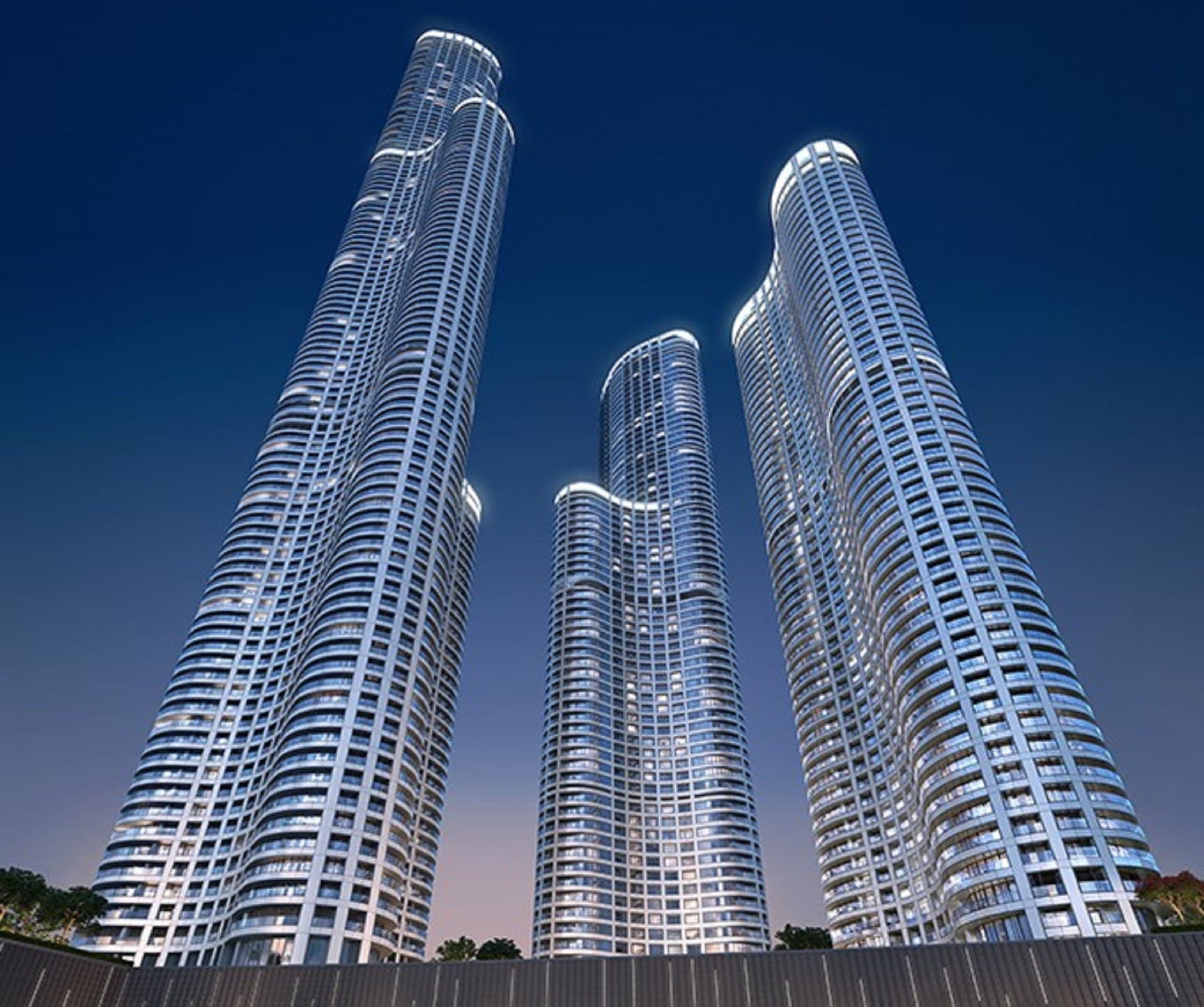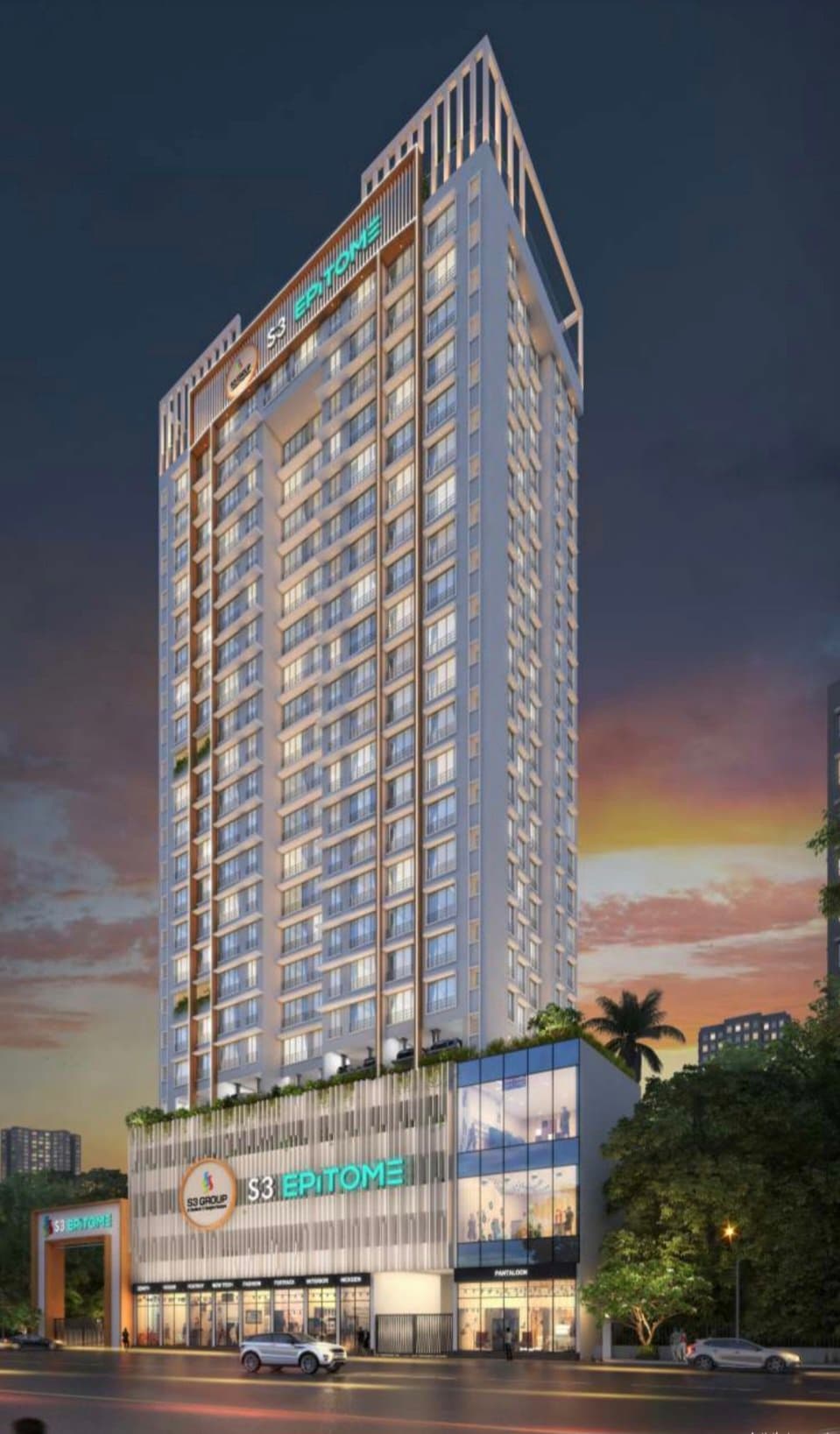
Inside almost every Lower Parel and Prabhadevi luxury high-rise there are 4-9 units that consistently transact ₹6,000-12,000/sqft below the building median — and yet are perfectly habitable, well-laid-out, often with the same view band as the floors above. These are the refuge-floor-adjacent units, the service-floor units, the plinth-level units and the floor-just-above-podium units. The discount is structural, well-understood by experienced buyers, and almost invisible to first-time entrants. For end-user buyers prioritising livability over peak resale, these units represent the single largest structural-value opportunity in Lower Parel-Prabhadevi luxury inventory. Property Butler's tower-level matrix tracks them building-by-building.
The headline math
A 1,500 sqft 3 BHK at Indiabulls Sky Forest on a "normal" floor at floor 35 transacts around ₹58,000/sqft (₹8.7 crore). The same configuration two floors below on the floor immediately above a refuge floor (floor 33) transacts around ₹50,000-52,000/sqft (₹7.5-7.8 crore). The unit is structurally identical. The view is materially identical. The discount is ₹90 lakh to ₹1.2 crore on the same apartment — driven entirely by the proximity to the refuge floor below.
The four anomaly floor types
| Floor type | Typical PSF discount | Real impact on livability |
|---|---|---|
| Refuge-floor-adjacent (immediately above or below) | ₹6,000-10,000 / sqft discount | Minimal day-to-day; refuge floor is an open-air evacuation deck not a traffic level |
| Service floor units (mid-tower service zone) | ₹4,000-7,000 / sqft discount | Some HVAC and pump noise; lift access typically separate; livable if well-insulated |
| Just-above-podium units (floor 2-5 typically) | ₹5,000-9,000 / sqft discount | Pool-deck noise; limited view; better outdoor connectivity |
| Plinth / ground-adjacent units | ₹7,000-12,000 / sqft discount | No view; street noise; faster lift access; better for elderly residents |
The refuge-floor-adjacent anomaly explained
Mumbai high-rise building regulations require a refuge floor every 7 to 15 floors depending on building height — an open-air evacuation deck where residents can shelter during a fire emergency awaiting fire-brigade rescue. The refuge floor is a structural feature, not an active-use level. Day-to-day, the refuge floor sits empty. It does not generate noise, traffic, or any livability impact on adjacent floors. Yet the units immediately above and below the refuge floor consistently transact at a meaningful discount.
The discount stems from three factors: lift logic that may pause briefly at refuge floors during emergency mode, slight resale-buyer perception risk (the unit is associated with the emergency feature even though the unit itself is fully residential), and pure scarcity-of-demand on these specific floor numbers in resale comparables. None of the three factors meaningfully affect the actual lived experience of the apartment.
For an end-user buyer planning a 10-15 year hold, the refuge-floor-adjacent discount is almost pure capture. The discount exists because the next resale will face the same buyer perception, but if the buyer is not selling, the discount is a permanent cost saving. On a ₹9 crore Lower Parel 3 BHK, a refuge-adjacent floor saves ₹90 lakh-1.2 crore at acquisition — that is a meaningful capital improvement budget for furnishing, an automatic 10-13% PSF outperformance versus standard floor buyer.
The service-floor anomaly explained
In luxury high-rise towers above 40 floors, building services (chillers, water tanks, pump rooms, electrical distribution panels) often occupy a dedicated service floor mid-tower — typically around floors 22-28 depending on building height. The service floor itself is non-residential. The floors immediately adjacent can carry HVAC noise, mild vibration from pumps, and limited natural light if service-floor envelope features wrap the upper or lower face.
Service-floor-adjacent units transact at a discount, but the magnitude depends sharply on building-specific design. Towers with well-engineered acoustic isolation (Lodha World Crest, One Avighna Park) carry minimal residual noise even on service-adjacent floors — and the discount is correspondingly small. Towers with weaker isolation (some older Indiabulls Sky Forest service-adjacent units) carry meaningful noise residual and accordingly larger discount. Property Butler's tower-by-tower noise audit specifically tests these floors during the diligence walkthrough.
The just-above-podium anomaly explained
Luxury towers in this corridor typically build a 4-7 floor podium covering parking, amenities, lobby and pool. The first residential floor above the podium (typically floor 5-8) sits directly over the amenity deck. The discount-driving factors are pool-deck noise (children's pool, music during events), party-lawn noise on weekends, and limited horizon view because the unit is below the surrounding tower density.
For buyers who use the amenity stack heavily (young families, fitness-focused households), the just-above-podium unit is structurally optimal — fastest access to pool, gym, garden, podium parking. The discount captures the perceived noise risk that, for the right buyer profile, is actually a feature not a bug.
The arithmetic on a Lodha Vista just-above-podium unit: ₹3,800/sqft discount versus mid-tower equivalent, on a 1,400 sqft 3 BHK that is ₹53 lakh of acquisition saving. For a young family using the pool deck weekly, the discount is unambiguous capture.
The plinth and ground-adjacent anomaly
Floor 1 and floor 2 in luxury towers (above podium) typically transact at the deepest building-level discount — ₹7,000-12,000/sqft below the building median. The view is heavily compromised, street noise is a factor depending on the road exposure, and the resale comparable pool is shallowest. For elderly residents with mobility constraints, lift-access timing concerns, or post-surgery rehabilitation, the plinth-level unit is structurally optimal.
Property Butler has placed multiple elderly-buyer transactions on plinth-level units across the Lower Parel-Prabhadevi corridor specifically for the lift-access advantage. The discount of ₹80 lakh-1.5 crore on a 3 BHK becomes the renovation budget for accessibility upgrades, walk-in safety features, and dedicated caregiver-accessible layout.
The four buyer profiles for whom anomaly floors are structurally optimal
Buyer profiles that capture the anomaly discount
- End-user planning 12+ year hold (refuge-adjacent floors)
- Young family using amenity deck heavily (just-above-podium)
- Elderly residents prioritising lift-access (plinth-level)
- Buyers prioritising tower-brand entry over peak floor band
Buyer profiles that should avoid these floors
- Investors planning 3-5 year flip (resale comparable is shallowest)
- Buyers paying view-premium for sea or skyline (no upside on plinth/podium)
- Status-led buyers for whom upper-floor brand association matters
- Noise-sensitive remote-work professionals (service-floor adjacency)
The negotiation tactic — how to surface and price the anomaly
The anomaly discount is real but only visible to buyers who specifically map building section drawings. The seller may not volunteer that the unit is refuge-adjacent. Three diligence moves surface it:
First, request the building cross-section drawing from the seller (or society office for resale, or developer for new launches). Map every refuge floor, service floor, and amenity deck position. Identify which floor numbers are adjacent to these levels.
Second, walk the unit during late afternoon (typical pool noise, party-deck setup time) and again on a weekend morning (pool-deck usage peak). For service-floor adjacency, ask to walk the corridor outside the unit on the service floor itself — listen for HVAC, pump room noise that would carry into adjacent units.
Third, compare PSF asking on the candidate unit against three comparables in the same building on non-anomaly floors. If the asking PSF is ₹3,000-5,000/sqft below the comparable, the seller has priced in only a partial anomaly discount and there is further negotiation room. If asking PSF is ₹8,000-12,000/sqft below, the seller has priced in the full discount and the buyer is capturing the saving at agreement value.
Frequently asked questions
Does the refuge-floor-adjacent discount disappear at resale?
Partly. The next resale will face the same building-wide perception discount, so the buyer captures the discount on acquisition but inherits it on exit. The net effect over a 10-year hold is roughly 60-70% capture — the buyer realises most of the discount as a permanent cost saving. For end-user buyers, that is unambiguous capture. For 3-5 year flip investors, the capture is meaningfully smaller and probably not worth the resale-velocity penalty.
Are service-floor units actually noisy?
It depends on the building. Well-engineered towers with proper acoustic isolation and vibration-dampening on service equipment can deliver service-floor-adjacent units that are indistinguishable from any other floor. Poorly engineered towers can carry meaningful residual noise. Property Butler's tower-by-tower noise audit specifically tests service-floor-adjacent units during the walkthrough so buyers know what they are actually getting before agreement.
Why do plinth-level units stay slow to clear even with the discount?
Plinth-level units sell to a narrower buyer pool — primarily elderly residents and accessibility-prioritising buyers. The general luxury buyer pool wants higher floors with view. The narrower addressable demand means longer days-to-sale even at discount. For the right buyer, this is a feature (less competing demand, more negotiation room) not a problem.
Do refuge floors actually get used in emergencies?
Rarely. Refuge floors are a regulatory safety requirement and serve as planned evacuation infrastructure. In a fire emergency, residents move to the nearest refuge floor and await fire-brigade rescue via aerial ladder or via dedicated fire-rated stairwell descent. Mumbai high-rise fire incidents over the last decade where refuge floors were actively used are countable on one hand. The refuge floor is a permanent safety asset that exists for the rare emergency scenario — the day-to-day livability impact on adjacent floors is negligible.
Can I extend a refuge-adjacent unit's outdoor space onto the refuge floor?
No. Refuge floors are statutorily designated as common evacuation infrastructure and cannot be encroached upon by any individual unit. Doing so would invalidate the building's occupation certificate. The refuge floor remains common open space for the life of the building.
Related Reading
→ Floor Premium Math Lower Parel + Prabhadevi→ Lower Parel CEO-Floor Top-5 Premium Decoder→ High-Rise Wind Sway + Top Floor Reality→ Lift Density Wait-Time Tower Decoder→ Senior Citizen + Multi-Gen Flat Selection→ Lower Parel Area Guide→ Prabhadevi Area GuideCapture the structural-value floors most buyers never see
Property Butler's tower-by-tower section map flags refuge-adjacent, service-floor, just-above-podium and plinth-level inventory across every Lower Parel and Prabhadevi luxury building.
Browse Inventory