When a Worli buyer in their late fifties asks Property Butler about "hospital nearby", they are not asking about the South Mumbai healthcare ecosystem in general. They are asking a sharper question: if my spouse has a cardiac event at 2 a.m. on a monsoon Tuesday, how many minutes does it take to get from this lobby to a cath-lab table? That number — the door-to-stretcher window — is the most under-priced variable in Worli luxury. Property Butler tracks 95 active Property Butler-listed Worli units and 788 market-wide; here is the tower-by-tower medical proximity read every senior, NRI-returnee, and family-medical-priority buyer should run.
The single number that matters
Cardiac, stroke, and major trauma outcomes are determined in the first 60-90 minutes — the so-called golden hour. The Worli question is therefore not "is there a hospital nearby" but "can a Mumbai ambulance, in a Mumbai monsoon, reach a cath-lab within 15 minutes door-to-door?" Three Worli pockets clear this bar comfortably; three pockets clear it only with active society planning; and at least one pocket fails it during monsoon afternoons.
The Worli tertiary-care anchor map
Worli sits at the centre of one of South Mumbai's densest tertiary-care clusters. Within a 4 km radius of central Worli are six full-service tertiary hospitals: Hinduja Hospital (Mahim), Lilavati Hospital (Bandra Reclamation), Bhatia Hospital (Tardeo), Saifee Hospital (Charni Road), Wockhardt Hospital (Mumbai Central), and the Asian Heart Institute (Bandra-Kurla Complex). Each has a different competence profile — Hinduja for neurology, Lilavati for general tertiary, Bhatia for cardiology, Saifee for trauma, Wockhardt for orthopaedic and oncology, AHI for high-end cardiac surgery.
The implication for buyers: Worli's medical advantage isn't a single hospital, it's the optionality of having multiple tertiary anchors within a 7-12 minute drive in non-peak conditions. But "non-peak" hides the failure mode. Mumbai morning traffic between 8:30-10:30 a.m. and evening 6:30-8:30 p.m. degrades all six routes by 40-90%. Monsoon rainfall exceeding 50 mm/hour can render two of the six approach roads unusable for ambulances above the kerb-line. Buyers should plan for the worst-case window, not the average drive time.
Tower-by-tower door-to-cathlab read
| Tower | Nearest Anchor | Off-peak / Peak / Monsoon | Backup Anchor |
|---|---|---|---|
| Lodha The Park / Adrina / World View | Bhatia (Tardeo) | 9 / 18 / 26 min | Hinduja (Mahim) |
| Lodha World One / World Crest | Bhatia (Tardeo) | 10 / 19 / 28 min | Wockhardt (Mumbai Central) |
| Birla Niyaara / Lodha Trump | Hinduja (Mahim) | 11 / 20 / 27 min | Bhatia (Tardeo) |
| Raheja Imperia / Riviere Skyline | Hinduja (Mahim) | 12 / 22 / 30 min | Lilavati (Bandra) |
| Embassy Citadel / Indiabulls Blu | Hinduja (Mahim) | 10 / 19 / 26 min | Bhatia (Tardeo) |
| Ahuja Towers / Hubtown Celeste | Bhatia (Tardeo) | 8 / 17 / 24 min | Hinduja (Mahim) |
| Worli Sea Face heritage co-ops | Bhatia (Tardeo) | 7 / 16 / 22 min | Saifee (Charni Road) |
| Chaitanya Towers / Prabhadevi border | Hinduja (Mahim) | 7 / 14 / 20 min | Lilavati (Bandra) |
The reading: every Worli tower clears the 15-minute golden-hour window in off-peak conditions. Most clear it in peak conditions if the route is correctly chosen. Monsoon-day windows slip out of the cardiac-safe band for two-thirds of the towers — which is why the second column on this table (the backup anchor) matters as much as the first.
The four medical-readiness questions for your shortlist tower
✓ Society and tower readiness
- Does the lobby have an AED (automatic external defibrillator)? Last service date?
- Is the security staff CPR-trained, with refresher within 12 months?
- Is there a stretcher-capable lift, and is it always accessible (not blocked by goods movement)?
- Is there a registered standing arrangement with a nearby tertiary hospital for ambulance dispatch?
- Is the tower entry-gate width ambulance-passable (not just car-width)?
✗ Red flags for senior-occupancy buyers
- No AED on premises or device shows expired battery / pad date
- Stretcher-fit lift requires manual override or staff intervention (not 24x7 ready)
- Service / utility lift used as ambulance lift but blocked routinely by domestic logistics
- No standing pre-paid arrangement with a tertiary hospital for after-hours dispatch
- Society medical SOP last reviewed before 2022 — pre-pandemic playbook is now stale
The stretcher-lift question, decoded
Mumbai high-rise luxury towers vary widely on stretcher-capable lift specs. The minimum stretcher-fit lift cabin is roughly 1.6 m × 2.4 m internal. Most luxury Worli towers built post-2015 have at least one such lift in the bank — typically a service or utility lift, occasionally also the primary passenger lift if the tower targets ultra-luxury occupancy. Older co-operative buildings on Worli Sea Face (1970s-1990s vintage) often have lift cabins that cannot accommodate a stretcher in the horizontal orientation. The standard workaround — vertical-orientation stretcher transit — is medically inappropriate for spinal, cardiac arrest, or post-stroke patients.
Property Butler routinely runs the lift-dimension verification during pre-purchase site visits for senior buyers. The cost is zero (a tape measure and 90 seconds) and the outcome is binary: either this tower can move a Sundara stretcher horizontally with two paramedics and a patient, or it cannot. For a household where one or both occupants are above 65, this is a non-negotiable spec.
Coastal Road's medical-access dividend
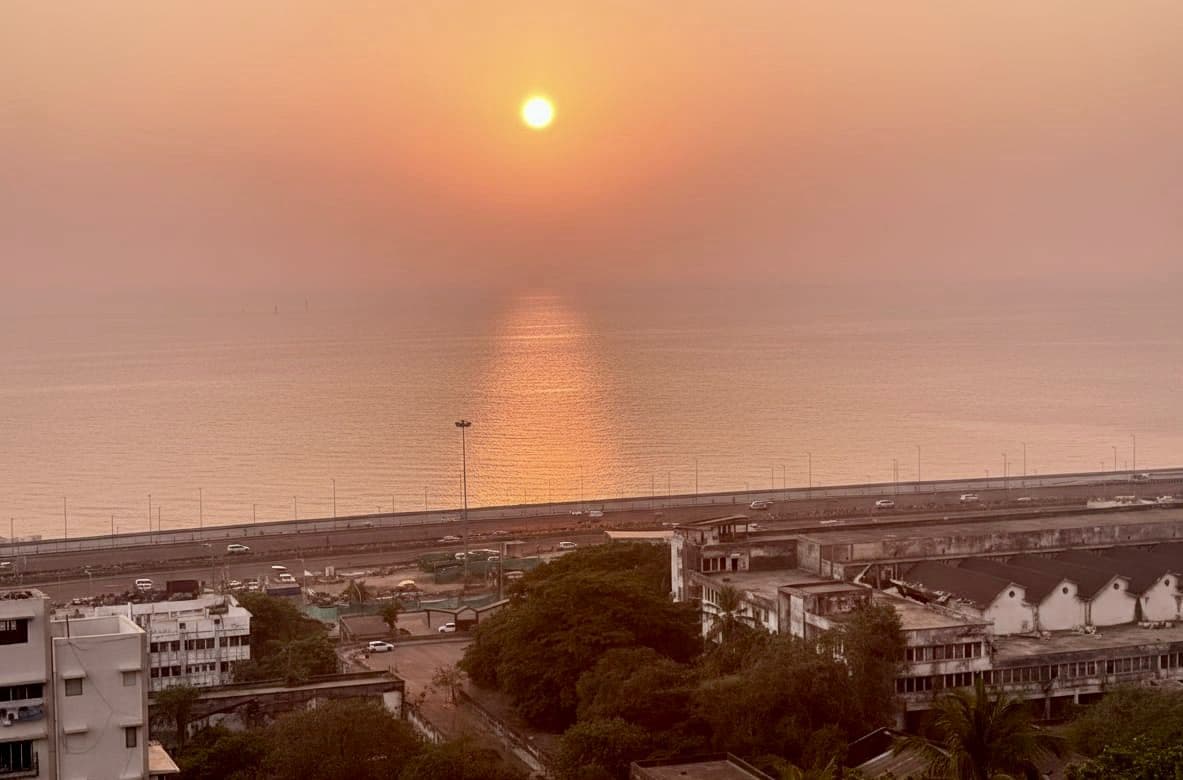
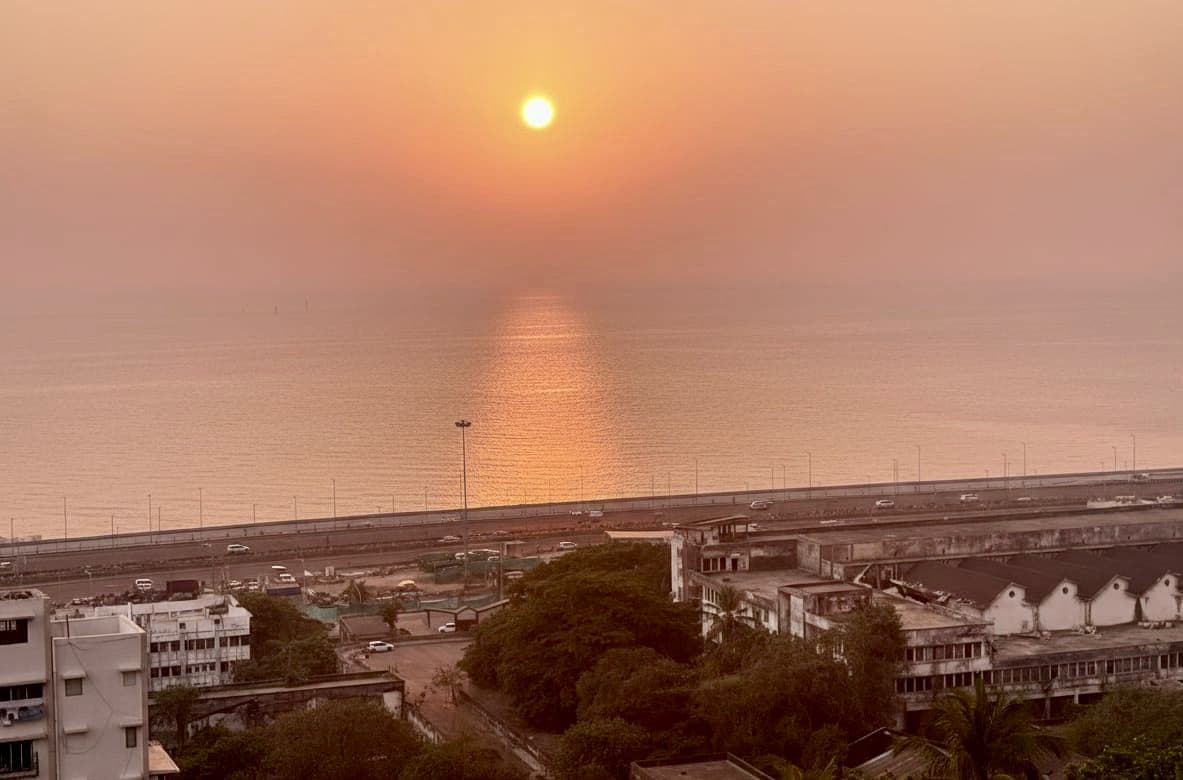
The Mumbai Coastal Road Phase 1 commissioning created a parallel ambulance corridor between Worli and South Mumbai's central hospital cluster (Saifee, Wockhardt, Bombay Hospital). For Worli sea-face inventory, this added a second viable approach during the morning and evening peak windows when the inland routes (Khan Abdul Gaffar Khan Road, Annie Besant Road) are choked. The peak-hour drive time to Saifee Hospital from Worli Sea Face dropped from ~28 minutes pre-commissioning to ~16 minutes post-commissioning, based on Property Butler's drive-time tracking through 2025.
Phase 2 (Worli to Versova) will further extend this dividend by giving north-flank Worli (Birla Niyaara, Lodha Trump) a faster route to Lilavati and the BKC cluster including Asian Heart Institute. Buyers prioritising medical-access value should overweight sea-face and north-flank Worli inventory in their shortlist for this reason.
The Worli Medical Optionality
6 tertiary anchors within 4 km · 4 cardiac cath-labs within 12 minutes off-peak
Hinduja, Lilavati, Bhatia, Saifee, Wockhardt, Asian Heart Institute. Property Butler ambulance-route tracking, 2025.
Standing arrangements: the Worli high-end advantage
What separates a luxury Worli tower from a generic high-rise is not the marble. It is whether the tower has a standing pre-paid arrangement with a tertiary hospital for after-hours ambulance dispatch and bedside-priority admission. Property Butler's tracking shows that roughly 60% of Worli towers above the ₹50,000/sqft tier have such an arrangement; the figure drops below 25% in older co-operative inventory.
The arrangement typically structures as follows: society pays a flat annual retainer (₹2-6 lakh range for a 50-100 unit tower) to a tertiary hospital. In return, the hospital guarantees ambulance dispatch within 8-12 minutes for any registered resident, automatic admission processing without front-desk paperwork delay, and priority ICU/cath-lab access if available. For senior-occupancy households, this is a meaningful safety net — and it is verifiable in the society audited statements as a recurring expense line.
Pre-purchase medical-readiness audit
- Walk the ambulance route from gate to apartment door at peak hour. Time it. Note any chokepoints — narrow gate, blocked basement ramp, lift waiting times.
- Ask for the AED service log. Battery and pad expiry dates within 12 months. If absent or evasive, the AED isn't truly operational.
- Verify the stretcher-lift dimensions. Tape measure. Internal cabin should accommodate 1.6m × 2.4m horizontal stretcher with two paramedics standing.
- Read the society medical SOP. Date of last review. Named hospital partners. Named designated medical liaison among security staff.
- Spot-check the security training log. CPR / basic first-aid certificates with expiry dates. Untrained security adds 4-9 minutes to door-to-stretcher latency.
Frequently asked questions
Which Worli tower is closest to a cardiac cath-lab?
In off-peak conditions, towers along the Worli Sea Face corridor reach Bhatia Hospital cath-lab in 7-9 minutes, and Saifee Hospital cath-lab in 12-14 minutes via the Coastal Road. North-flank Worli (Chaitanya Towers, Prabhadevi border) reaches Hinduja in 7-9 minutes. Lodha The Park, Lodha Adrina, and Worli Sea Face heritage co-operatives all clear the 10-minute off-peak threshold to a tertiary cath-lab. The differentiator is which routes hold up during peak hour and monsoon — the Coastal Road parallel approach is the major buyer-protective infrastructure that emerged in 2024-2025.
Should I buy in Worli if my parents have chronic medical conditions?
Worli is one of Mumbai's better choices for medical-priority household siting because of the six-anchor tertiary network and the multiple route redundancy post-Coastal-Road. The diligence list shifts though — prioritise stretcher-lift dimensions, AED operational status, society standing-arrangement with a hospital, and CPR-trained security. A ₹15 Cr Worli unit in a tower without these makes less sense for a chronic-care household than a ₹13 Cr unit in a tower with all four. Property Butler can rank shortlisted towers on these criteria.
How much value does a society hospital arrangement add?
It is rarely priced explicitly into the listing, but Property Butler's resale tracking shows towers with documented standing arrangements outperform on resale metrics for ₹10 Cr+ tickets — both shorter days-on-market and modestly tighter PSF discounting. The arrangement signals overall society professionalism, which itself is the resale value driver. Estimated implicit price impact: 1-3% PSF for senior-buyer-targeted resales, less for younger buyer pools.
Are 24x7 doctor-on-call services worth subscribing to in Worli?
For chronic-care households, yes — but pair it with the tower-level fundamentals. Doctor-on-call adds 4-7 minute response time for non-emergency stabilisation but does not substitute for ambulance dispatch in cardiac, stroke, or major trauma situations. The right configuration is: society standing arrangement with tertiary hospital (for emergency), plus doctor-on-call retainer (for triage and stabilisation), plus operational AED (for arrest events while waiting). Total cost typically ₹35,000-90,000 per family per year.
Does monsoon really degrade ambulance times that much?
Yes — Property Butler's drive-time tracking through the July-September 2024 and 2025 monsoon windows showed routine 60-110% degradation on Worli-to-tertiary routes during heavy-rain events (50 mm/hour and above). The two corridors most affected are Khan Abdul Gaffar Khan Road and the Atria Junction approach to Hinduja. The Coastal Road remains operational under most monsoon conditions, which is why its emergence as a parallel ambulance corridor is the most material medical-access change for Worli in a decade.
Looking for a senior-occupancy-friendly Worli tower?
Property Butler ranks Worli inventory on stretcher-lift dimensions, AED status, society medical SOP, and ambulance-route resilience. We'll surface the top three matches for your medical-priority profile.
Search Worli Senior-Friendly Inventory