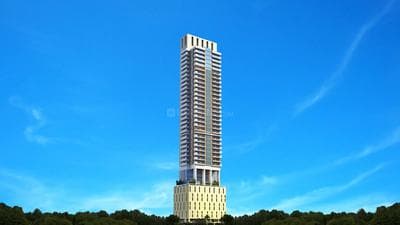
Property Butler's 2025 transaction tracking shows that 32% of Worli buyers in the ₹15 Cr+ ticket band already own at least one electric vehicle, and that share is rising at roughly 8 percentage points per year. The four-year forward extrapolation places EV ownership at over 60% of the same buyer cohort by 2029. Yet the tower-level EV charging infrastructure across Worli's flagship buildings is wildly inconsistent — three towers offer 24-charger ready-to-use installations; six towers offer single-charger workarounds; and at least four towers actively block resident-installed charging due to legacy electrical engineering. Here is the tower-by-tower audit every EV-owning buyer should run.
Why this is a buyer-decision variable, not just a convenience
A Worli HNI household running two EVs (typical: a Mahindra XUV.e9 + a BMW iX, or a Mercedes EQS + a Tata Curvv) needs roughly 22-32 kWh of charge per day on average, and one fast-charge session per week. A tower without proper electrical headroom in the basement parking limits the household to public charging — workable for occasional use but not for primary-residence EV operations. Resale buyers in 2028+ will heavily discount tower inventory that cannot accommodate at-home charging.
The four EV-readiness specs every Worli tower must clear
- Basement electrical headroom: The basement transformer and distribution board must have spare load capacity for resident-installed chargers. A typical 7.4 kW Level 2 charger draws 32 amps; a tower with 100 parking spots and full EV adoption would need ~600 kVA of dedicated EV-charging headroom.
- Conduit / cable routing: Pre-laid conduit from the distribution board to each parking spot, or at minimum to charging-ready zones. Without this, every retrofit becomes a ₹40,000-90,000 cabling job per spot.
- Sub-metering capability: Each charger needs a sub-meter so that resident's electricity consumption is billed to that resident, not to the society common-area account. Older towers without per-spot metering face billing-attribution disputes.
- Society approval framework: A society resolution that pre-authorises resident-installed charging on documented spec, with clear cost-allocation rules. Without this, every charger install becomes an individual society-meeting item.
Tower-by-tower EV readiness
| Tower | Pre-Wired Spots | Charger Type Available | Tier |
|---|---|---|---|
| Birla Niyaara (under construction) | 100% of spots EV-ready (planned) | 7.4 kW + 22 kW available + DC fast-charge in lobby | Tier 1 |
| Lodha World View / Adrina (newer Lodha) | ~40-60% pre-wired, balance retrofit-ready | 7.4 kW Level 2 | Tier 1 |
| Lodha The Park / World One | ~25-40% retrofit-ready | 7.4 kW Level 2 (resident install on approval) | Tier 2 |
| Embassy Citadel | ~50% pre-wired | 7.4 kW + select 22 kW spots | Tier 1 |
| Raheja Imperia / Riviere Skyline | ~15-25% retrofit-ready | 3.3-7.4 kW Level 2 retrofit | Tier 2 |
| Lodha Trump Tower | ~30% retrofit-ready | 7.4 kW Level 2 on approval | Tier 2 |
| Indiabulls Blu / Hubtown Celeste | ~10-20% retrofit-ready | 3.3 kW slow-charge, Level 2 on case-by-case approval | Tier 2 |
| Ahuja Towers / Chaitanya Towers | ~5-15% retrofit possible | 3.3 kW slow-charge, society approval required | Tier 3 |
| Worli Sea Face heritage co-ops | 0-5% — heavy electrical retrofit needed | Mostly blocked or 1.5 kW slow trickle only | Tier 3 |
The pattern is clear. Inventory built or designed post-2022 has EV-readiness as a default spec. Inventory delivered 2015-2020 typically has retrofit capability but requires case-by-case society approval. Pre-2010 inventory is structurally constrained — the basement transformer and distribution board lack spare capacity, and retrofit costs run into society-level capital expenditure rather than individual-resident installation.
The cost of retrofitting EV charging in older Worli inventory
✓ Tier 1 / Tier 2 retrofit costs
- Charger unit (7.4 kW Level 2): ₹35,000-90,000
- Cabling and conduit: ₹15,000-40,000 (lower if pre-laid)
- Sub-meter and DB modification: ₹8,000-18,000
- Society NOC and electrical certification: ₹3,000-12,000
- Total typical: ₹60,000-1,50,000 per spot
✗ Tier 3 retrofit complications
- Basement transformer upgrade: ₹4-15 lakh society-level CAPEX
- Distribution board redesign: ₹2-6 lakh society-level CAPEX
- Common-cable backbone laying: ₹3-8 lakh society-level CAPEX
- Society resolution and dispute timeline: 9-24 months
- Per-resident cost share: Often ₹50,000-2,00,000 in society-level levy before any individual install starts
The DC fast-charge question
A small but growing number of Worli luxury towers are installing common-area DC fast chargers (50 kW+) in the lobby drop-off or visitor parking area, available to residents on a pay-per-session basis through an app-based booking system. These are not substitutes for in-spot Level 2 chargers — they are complements, intended for occasional 30-minute fast-tops rather than overnight charging. Birla Niyaara has signalled this in its design pipeline; Lodha has begun piloting in select complexes; Embassy Citadel offers a single 50 kW unit in visitor parking.
For buyers, the DC fast-charge availability adds resilience but does not change the in-spot Level 2 question. Daily-driver economics still depend on dedicated home charging in your own parking spot. The DC fast-charger is for the occasional weekend road trip prep or guest convenience.
The PSF impact — has EV-readiness started pricing in?
Property Butler's resale tracking shows the EV-readiness premium is just beginning to surface in 2026 transaction data. Tier 1 EV-ready inventory transacts at a 1-3% PSF premium versus comparable Tier 3 inventory in the same locality, controlling for floor band and view. The premium is small today because EV ownership at <35% saturation is still dispositive only for a sub-segment of buyers. As ownership crosses 50% in the buyer cohort (Property Butler models 2028 for ₹15 Cr+ Worli buyers), the premium is expected to widen to 4-6% PSF.
For sellers in older Tier 3 inventory, this is a forward problem. Investing in society-level EV-readiness retrofit before the next 24 months protects resale value; deferring it until EV adoption forces the issue means the resale buyer prices in the upgrade cost as a discount rather than the seller capturing it as an investment.
Worli EV Adoption Forecast
~32% of Worli ₹15 Cr+ buyers own an EV today, projected 60%+ by 2029
Property Butler buyer-side transaction tracking. Adoption rises 8 percentage points per year in this segment, faster than the Mumbai median.
The pre-purchase EV-spec audit
- Visit the basement parking and ask the security to point out the EV-charging zone or pre-wired spots. If the answer is vague, the tower is Tier 3.
- Ask for the society's EV-charging policy document. A formal resolution with technical spec and cost-allocation framework is the Tier 1 marker.
- Verify the parking spot allotted to your specific apartment is or can be EV-ready. Pre-wired or retrofit-ready, with a route to the distribution board.
- Ask for an estimate from the society or a recommended electrical contractor. ₹60K-1.5L is Tier 1/2; ₹4 L+ is Tier 3 territory.
- Confirm the sub-metering arrangement. Without it, charging electricity gets billed to society common area and creates downstream disputes.
Frequently asked questions
Will my building approve installation of a 7.4 kW Level 2 charger?
In Tier 1 towers, yes — typically within 2-4 weeks of a standard application supported by an electrical contractor's certification. In Tier 2 towers, yes but conditional on basement headroom and case-by-case board approval, typically 4-12 weeks. In Tier 3 towers, often blocked or contingent on society-level retrofit being completed first. Always ask for the society's approval rate over the prior 12 months — the actual approval cadence is the more useful number than the policy on paper.
What's the difference between 3.3 kW, 7.4 kW, and 22 kW charging?
3.3 kW (single-phase, 16A) is trickle-charge — adds ~20-25 km of range per hour, useful for plug-in hybrids but not for full-EV daily operation. 7.4 kW Level 2 (single-phase, 32A) is the residential standard — adds ~40-60 km per hour, fully charges a typical EV battery overnight. 22 kW (three-phase, 32A per phase) is luxury-tier home charging — adds ~120 km per hour, useful for heavy-use households or those running larger battery packs. Most Worli luxury inventory should target 7.4 kW as the minimum, with 22 kW as the upgrade option for two-EV households.
Is solar-plus-EV a workable combination in Worli?
Society-level rooftop solar in Worli high-rises is constrained by available rooftop area and lift-room/water-tank infrastructure that occupies the prime southern exposure. A typical 60-floor tower might deliver 80-160 kW of rooftop solar, sufficient for common-area lighting and pump operation but not for individual-EV charging at scale. Standalone solar-plus-EV doesn't yet pencil out for Worli ultra-luxury — most EV-owning households simply pay grid electricity rates for charging, which at ₹8-12/unit is roughly ₹50-75 per 100 km of driving, materially cheaper than petrol-equivalent.
If I'm buying an under-construction Worli unit, what should I ask the builder about EV?
Five questions: (1) Is my allotted parking spot pre-wired with a conduit to the distribution board? (2) What charger types (kW rating) does the basement infrastructure support? (3) Will the conveyance and society documents include the EV-charging entitlement as part of my parking allotment? (4) Is sub-metering pre-installed for the charging point? (5) What is the warranty on the basement electrical infrastructure relevant to EV operations? Get the answers in writing as part of the booking documentation, not as verbal assurance.
Should I avoid Tier 3 inventory just because of EV?
Not necessarily — but price the upgrade into your bid. A Tier 3 Worli unit that's otherwise excellent (right floor, view, configuration) can be acquired with the EV-readiness gap factored as a 1-3% PSF discount, plus a planned post-purchase society-level retrofit campaign. Buyers who want zero retrofit hassle should bias toward Tier 1 / Tier 2; buyers comfortable with society-management leadership can extract Tier 3 value at a discount. Property Butler can model the full economic comparison for your specific shortlist.
EV-owning buyer? Want a tower-readiness audit?
Property Butler verifies basement electrical headroom, pre-wired spot availability, society approval framework, and retrofit cost on shortlisted Worli inventory. We rank the top three EV-friendly options for your specific tower preference.
Search EV-Ready Worli Inventory