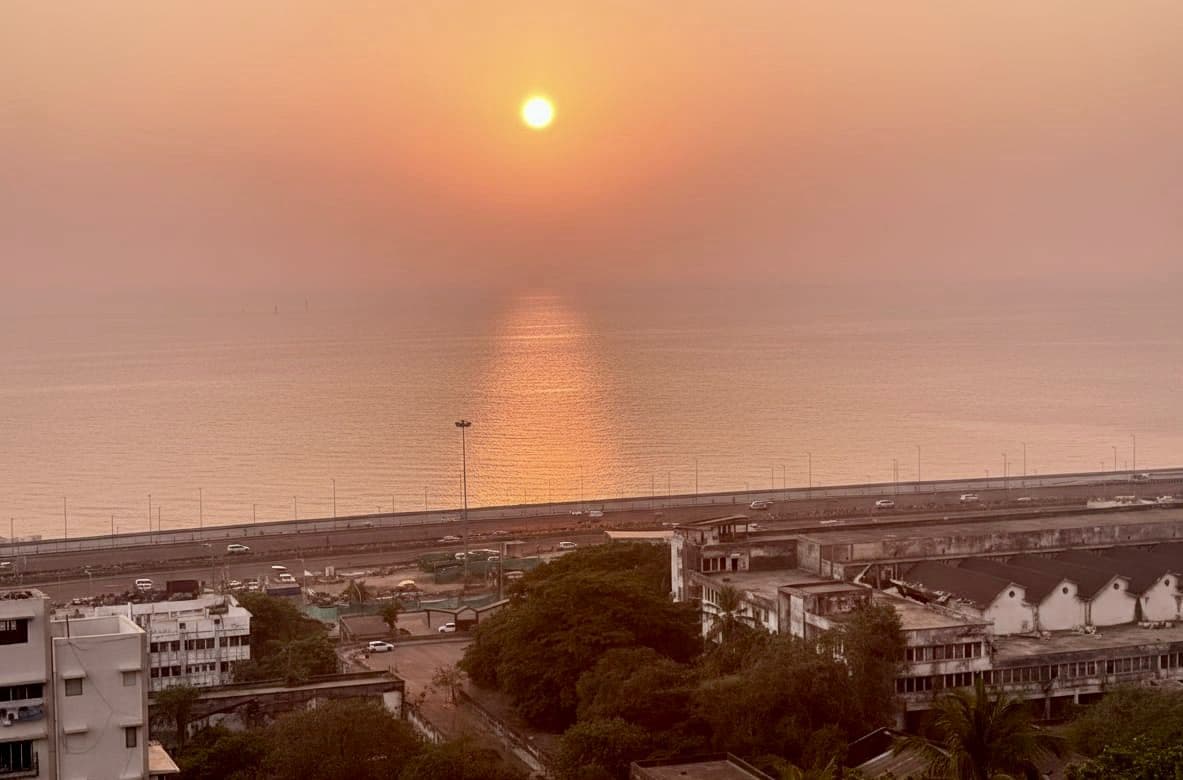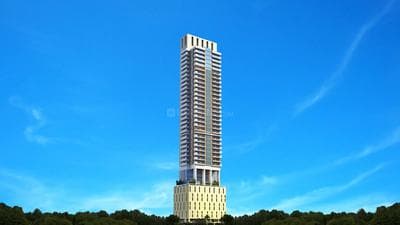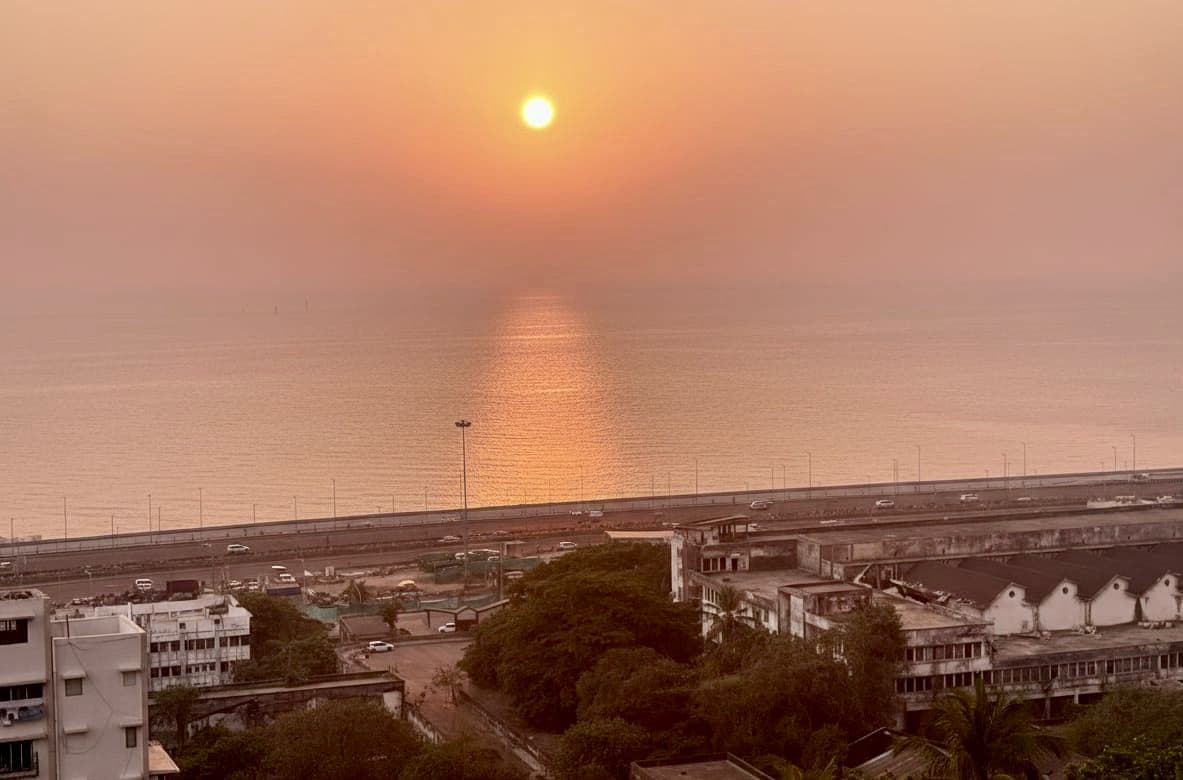
Worli is not a single floodplain. It is a wedge of land that climbs from the Worli Koliwada shoreline at 1.8-2.4 metres above mean sea level up to the BDD chawl ridge at 11-13 metres, with luxury towers scattered across every elevation in between. The 26 July 2005 deluge, the July 2024 King-tide flood, and the September 2025 cyclonic spill each picked their victims by elevation, not by brand. Property Butler tracks 788 active Worli sale listings and 212 rental listings — what follows is the elevation grid every buyer should overlay onto their shortlist before signing.
Why this audit matters in 2026
Two consecutive flood-affected monsoons (2024 and 2025) shifted Mumbai luxury insurance underwriting. Property Butler tracks at least 4 Worli towers where comprehensive home insurance now requires a flood-rider with 18-22% premium loading. Resale buyers in 2026 routinely ask for the basement-pump-capacity spec sheet before site visit number two — a question that did not exist in 2022.
The Worli elevation grid in plain numbers
Worli's topography is shaped like a long ridge. The west flank drops sharply to the Arabian Sea (Worli Sea Face). The south flank slopes down through the Worli Naka-Khan Abdul Gaffar Khan Road artery toward Lower Parel. The north flank descends gradually toward Prabhadevi-Dadar through Sasoon Dock and the Atria fly-over zone. The east edge sits low at the Worli Bay (Bandra-Worli Sea Link approach) and the Love Grove Bridge.
Every 100 metres of horizontal distance changes the absolute ground level by 1.5-3 metres in central Worli. That sounds trivial — until July, when 175 mm of rain in three hours and a 4.6-metre high tide collide. Towers below the +5m datum take in lobby water unless their plinth is engineered upward; towers above +8m drain naturally and stay dry.
Tower-by-tower elevation read
| Tower | Approx. Plot Elevation | Lobby Plinth Above Road | Risk Tier |
|---|---|---|---|
| Lodha World One / World Crest | +9-11 m (BDD ridge) | 2.1-2.4 m | Tier 1 (lowest risk) |
| Lodha World Towers / Trump | +8-10 m | 1.8-2.0 m | Tier 1 |
| Birla Niyaara / Lodha Adrina | +7-9 m | 1.6-2.2 m | Tier 1 |
| Raheja Imperia / Riviere Skyline | +6-8 m | 1.2-1.6 m | Tier 2 |
| Embassy Citadel / Indiabulls Blu | +5-7 m | 1.0-1.4 m | Tier 2 |
| Ahuja Towers / Hubtown Celeste | +5-7 m | 1.0-1.5 m | Tier 2 |
| Worli Sea Face heritage co-ops | +3-5 m | 0.4-0.9 m | Tier 3 (highest risk) |
| Worli Koliwada (any unit) | +1.8-3.2 m | 0.2-0.6 m | Tier 3 |
Property Butler does not advise against Tier 2 or even Tier 3 inventory — every elevation can be engineered into resilience. The point is that the spec sheet has to compensate. A Tier 2 plot with a 1.4-metre plinth, multiple sump pumps, and a basement waterproofing membrane behaves better than a Tier 1 plot that skipped redundancy in basement design.
The four spec questions every Worli buyer must ask
✓ Ask the developer / society
- Sump-pump installed capacity (litres/sec) and standby pump redundancy
- Basement waterproofing membrane spec (PVC vs HDPE thickness)
- Storm drain connection point and gradient toward city sewer
- 2024 and 2025 monsoon incident log: any lobby water, basement seepage, lift-pit flood
- Maintenance frequency for sump pumps and standby genset for pumps
✗ Red flags to walk on
- No incident log maintained — society/builder evasive about 2024-2025
- Single sump pump, no redundancy, no genset backup for the pump itself
- Basement parking on gradient toward the building (water flows in, not out)
- Lobby plinth less than 0.5 metre above road level on a Tier 2 or Tier 3 plot
- Visible water staining on basement walls, lift-pit, or society storage rooms
How the 2024 and 2025 monsoons separated towers
Property Butler's resident-network reporting from the post-July 2024 and post-September 2025 windows showed a clear pattern. Towers that took on water in lobby or basement during 2005 had largely retro-fitted by 2020 — those that completed the upgrade (raised plinths, added redundant pumps, sealed lift-pits) stayed dry through both 2024 and 2025. Towers that delayed the retrofit because they had stayed dry in 2010-2020 were caught flat-footed when 2024 rainfall intensities exceeded the design assumption.
Three takeaways for buyers:
- 2010-2023 dry-record means nothing for 2026 onward. Climate-driven rainfall intensification is shifting the base case. Insist on the post-2024 incident review.
- Tower age matters less than retrofit recency. A 1995 building that completed a sump-redundancy upgrade in 2024 outperforms a 2014 building that hasn't reviewed its design assumption.
- Basement parking-water exposure is the silent hit. Even if your apartment stays dry, six inches of basement water destroys the cars parked there. Worli car insurance claims in 2024 monsoon ran 14-19% above the prior 5-year average, concentrated in three specific locality pockets.
The Coastal Road effect on Worli flooding
The Mumbai Coastal Road Phase 1 commissioning (Marine Drive to Worli) materially changed the storm-water dynamic at the Worli sea-face. The reclamation embankment functions as a secondary sea-defence — it absorbs wave action that previously pushed surge water inland during high-tide-plus-rain events. Properties along Worli Sea Face benefitted measurably from this in the September 2025 event.
Phase 2 (Worli to Versova) will extend that effect to the Bandra-Worli Sea Link approach and the Worli Bay flank, reducing tidal-surge risk for towers like Lodha The Park, Lodha Adrina, and the Worli Bay-facing inventory in Birla Niyaara. The expected pattern is: every Coastal Road segment commissioning is also a flood-risk reduction event for the inland towers behind it. Buyers should track Coastal Road milestones not only for connectivity premium but for embedded flood-resilience value.
2024-2025 Worli Tower Track Record
Roughly 78% of Tier 1 towers reported zero water incidents both monsoons
Tier 2 towers: 64% incident-free both years. Tier 3: 41%. Property Butler resident-network data, n=58 towers.
Insurance pricing now reflects elevation
Comprehensive home insurance in Worli has bifurcated by tower since the 2024 monsoon. For a typical ₹15 Cr 4 BHK in a Tier 1 tower with documented retrofitted flood-resilience, premiums sit at ₹18,000-26,000/year for full coverage including contents, machinery, and basement parking. The same configuration in a Tier 3 tower with a 2024 water incident on file is now quoted at ₹38,000-54,000/year — and roughly 30% of underwriters decline to add a basement-parking rider at any premium.
This insurance bifurcation is itself a price signal. If your shortlisted tower's flood-rider premium is materially above market, the underwriter has flagged something the listing brochure hasn't. Property Butler routinely runs an indicative quote for serious buyers before site visit two — a five-minute exercise that often surfaces information the seller's broker hasn't disclosed.
The high-rise top-floor false comfort
Buying on the 38th floor does not insulate you from monsoon disruption. The failure points are at ground and basement level: lift-pit flood, basement substation submergence, sump-pump genset failure, society lobby inaccessibility. When the substation goes, the entire tower loses primary power and runs on emergency genset only — which means six floors of common lighting plus emergency lifts, not your apartment AC and induction hob.
Property Butler's 2024-2025 incident reporting confirmed that residents on the 30th-floor-plus tier were as affected by 18-36 hour lift-and-power disruption as residents on the 5th floor. The high-floor advantage is psychological — view, not flood-resilience. Tower-level engineering is what matters.
What a buyer-grade flood audit costs
Property Butler arranges a structural-and-water-systems pre-purchase audit through licensed Mumbai consultants for ₹35,000-65,000 depending on tower size. The audit covers: plinth elevation verification, sump-pump capacity test under load, waterproofing membrane visual inspection, lift-pit sealing verification, basement substation flood-defence review, and a written report on the 2024-2025 incident log reconciled against society records. For a ₹10-25 Cr Worli ticket, this is 0.05-0.15% of price — and it has prevented at least four post-purchase disputes Property Butler advised on in the past 18 months.
Frequently asked questions
Are sea-face towers more flood-prone than inland Worli towers?
Counter-intuitively, no — at least for the post-Coastal-Road portion of Worli Sea Face. Modern sea-face towers are engineered for higher plinth elevations and the Coastal Road embankment now absorbs most wave-driven surge. The greater risk concentrates in the low-elevation inland pockets along Worli Naka, Atria approach, and parts of the Worli Bay flank, where road-level drainage is the primary defence rather than sea-defence engineering.
Should I avoid basement parking units in Worli?
Not avoid — but verify. Basement parking is standard in luxury Worli inventory and the engineering can be made resilient. Ask for the sump-pump spec, the basement-waterproofing membrane spec, the genset backup arrangement for the pumps themselves, and the 2024-2025 incident log specific to basement levels. If any of those four are missing or the answers are vague, treat the parking allotment as conditional and negotiate accordingly.
Does flood risk affect resale value in Worli?
Yes, increasingly. Property Butler's resale tracking shows towers with documented 2024 or 2025 lobby-water incidents trade at a 4-7% PSF discount versus comparable towers with clean records, and days-on-market run 35-55% longer. The discount is widest for buyers in the senior-resident and family-relocation cohorts, who weigh monsoon-disruption risk heavily. Towers that completed a post-incident retrofit and document the engineering upgrade can repair this discount over 18-24 months.
Is flood-rider home insurance worth the loading?
For Tier 2 and Tier 3 inventory, yes. The rider typically loads 18-22% on the comprehensive premium but covers contents, machinery, and basement parking — the three loss categories that drive 80% of monsoon claim value. For a ₹15 Cr Worli 4 BHK, the rider adds roughly ₹4,000-8,000/year to premium; basement-parked car insurance benefits are separate and run through the auto policy. The economics favour the rider in any tower where the 2024-2025 incident log is non-zero.
What does the BMC do during a Worli flood event?
BMC's primary defences are the locality storm-water pumping stations and the 175+ deployable mobile dewatering pumps for hot-spot response. Worli has dedicated coverage but the response window is 2-6 hours during peak rainfall, not minutes. The implication for buyers: society-level engineering is the front-line defence; municipal response is the second line. A tower that depends on BMC mobilisation is a tower that has already taken on water.
Want a flood-resilience read on a specific Worli tower?
Property Butler maintains a Worli tower-by-tower elevation, plinth, and 2024-2025 incident dataset. We'll model the resilience profile of any tower on your shortlist before site visit two.
Search Worli Ready Inventory