Lower Parel station is the corridor's most under-discussed infrastructure variable. The station handles an estimated 4-4.5 lakh daily commuters - rivalling Bandra and Dadar by footfall - but operates on platform infrastructure that predates the corridor's commercial high-rise boom by three decades. Foot-over-bridges date to the 1970s, platform widths constrain peak-hour flow, and east-west connectivity from Senapati Bapat Marg to the Curry Road side requires either the station foot-over-bridge or a 1.2 km detour. Western Railway's 2024-announced modernisation programme, the planned east-west deck and the broader Mumbai station-redevelopment template (Bandra Terminus, CSMT redevelopment) all converge on a 2026-2030 implementation window. For Lower Parel and Prabhadevi property buyers, the station upgrade is a quiet but meaningful pricing variable.
Station Catchment In Numbers
4-4.5 lakh daily commuters. 14 office buildings within 600m radius housing approximately 1.8 lakh corporate employees. 11 residential tower clusters within 1 km. The station upgrade compounds with the 2025-2026 Metro Line 3 underground station at Worli Naka and the Coastal Road interchange points - the cumulative effect on the western-corridor commute economics is one of the most significant 2026-2030 infrastructure stories in central Mumbai.
What Modernisation Actually Means
Indian station modernisation programmes have a specific architecture. Three layers typically deliver: platform infrastructure (widening, surface upgrade, new shelter, signage), passenger amenities (concourse decks, retail, accessibility ramps, lifts and escalators), and access improvement (east-west connectivity, parking and pick-up zones, last-mile pedestrian decks). The Lower Parel programme is expected to deliver all three layers across a phased 2026-2029 timeline, with the east-west connectivity deck being the most consequential for property economics.
The current east-west disconnection is a binding constraint. A resident of a Senapati Bapat Marg tower has access to the Lower Parel station's west exit; a resident or office occupant on the Curry Road side accesses the east exit, with the only ground-level connection being a 1.2 km detour or the existing congested FOB. The proposed station deck eliminates the detour and creates a 350-400m walk-equivalent corridor between addresses that today function as two separate sub-markets. The pricing implications for the Curry Road-side residential stock are material.
Property Premium Patterns From Comparable Upgrades
The Indian station-redevelopment template has documented pricing impacts. Bandra Terminus area saw 8-14% PSF lift in the immediate 600m residential catchment during the 2018-2022 redevelopment cycle. Mahalaxmi station's 2019-2024 incremental upgrade contributed an estimated 4-7% to adjacent residential PSF over and above the broader corridor's appreciation. Andheri station's pre-modernisation 1.5 km catchment lagged the broader area by 3-5% PSF; post-modernisation, the gap closed to 1-2%.
Applying this template to Lower Parel: a 6-10% lift in PSF for station-adjacent residential stock over the 2026-2029 implementation window is a credible central estimate, with upside skew if the east-west deck delivers as designed. The lift is not uniform - it concentrates within 400m of the new station deck access points and tapers steeply beyond 800m.
| Address Position | 2026-2029 PSF Lift Estimate | Sub-Cluster Examples |
|---|---|---|
| Within 250m of station deck | +9-13% | Senapati Bapat Marg immediate, Curry Road-side stock |
| 250-500m | +6-9% | Tulsi Pipe Road luxury cluster, Indiabulls precinct |
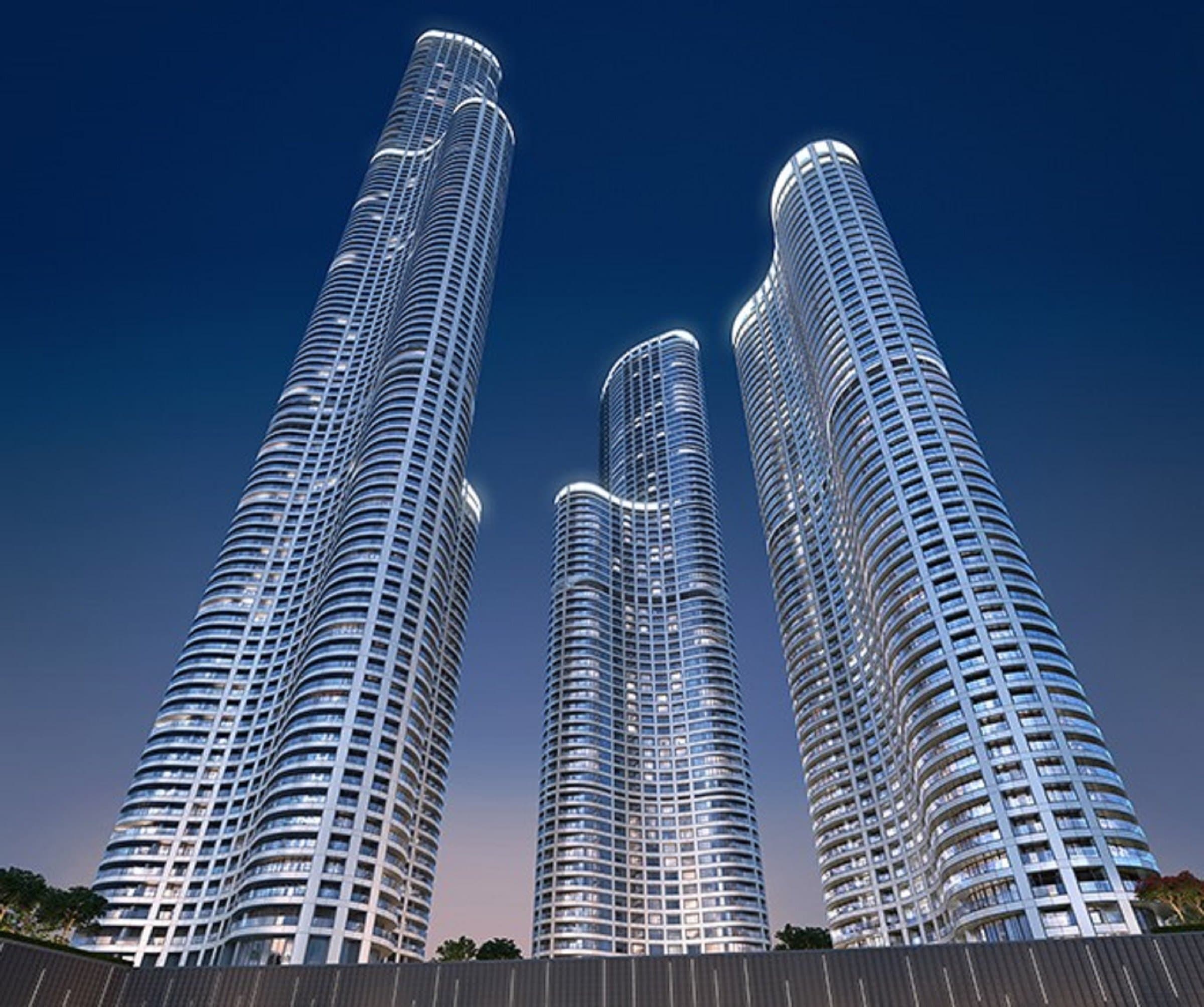
| 500-800m | +3-6% | Apollo Mills, Lodha World Towers cluster |
| 800m-1.2km | +1-3% | Outer Lower Parel, Prabhadevi mainland |
The Curry Road Sub-Cluster Story
The most interesting opportunity in the modernisation thesis is the Curry Road station-side residential belt. Curry Road station sits at the corridor's southern edge and currently operates with a smaller footprint than Lower Parel but with similarly outdated infrastructure. The redevelopment thesis extends here - Curry Road's adjacent residential stock has historically traded at a 12-18% PSF discount to Lower Parel-immediate stock for reasons that are largely about commute convenience rather than physical quality. A connected, modernised station infrastructure narrows that discount.
Property Butler tracks select Curry Road-side projects (the older 2010-2018 OC stock plus a handful of newer launches) at Rs 35,000-44,000/sqft PSF range; the equivalent Lower Parel-immediate stock trades at Rs 42,000-58,000. The 2026-2029 station modernisation creates a credible scenario where the discount narrows to 8-12% from the current 18-25%, delivering 6-10% additional PSF upside on Curry Road stock above the corridor average.
The Commute-Economics Math
For office occupants in Lower Parel - Peninsula Business Park, Lodha Excelus, One Indiabulls Park, Marathon Futurex, plus the smaller buildings across Kamala Mills - the station modernisation upgrade compounds with broader corridor connectivity (Metro Line 3, Coastal Road) to materially improve walk-to-work economics. A Senapati Bapat Marg resident currently walks 8-14 minutes to office; with the new station deck, the same commute drops to 5-8 minutes for many addresses. The economic value of that 3-6 minute daily saving (multiplied across 240 working days) reaches Rs 80,000-1,40,000/year of avoided commute time at corporate-professional hourly rates.
Catchment-Wide PSF Lift 2026-2029
+6-10% expected
Average station-adjacent residential PSF lift attributable to modernisation, Property Butler analysis based on comparable Mumbai station-upgrade cycles
Risk Variables: What Could Slow The Story
Catalysts that accelerate
- Metro Line 3 western corridor full commissioning
- Coastal Road phase 2 northbound completion
- Western Railway station-redevelopment template scaling
- Lower Parel commercial occupancy growth 2026-2028
Risks that could delay
- Right-of-way disputes around station-deck approaches
- Land-acquisition for east-west access ramps
- BMC-Western Railway coordination on funding split
- Phasing delays during monsoon construction halts
Towers That Benefit Most
Within Property Butler's tracked inventory, the addresses with the highest leverage to the station-modernisation thesis sit in specific micro-clusters. Indiabulls Sky Forest on Senapati Bapat Marg falls inside the 400m radius from the proposed station-deck access; tracked 3 BHKs at Rs 11-15 Cr (carpets 2,037-3,469 sqft) and 4 BHKs at Rs 15-16 Cr+ benefit directly. One Avighna Park sits in the 500m band and captures most of the convenience upgrade. Lodha World Towers at 600-800m captures the moderate-band lift.
On the Curry Road side, Bhoomi Simana, The Edge - Tower 2 by Tribeca and Tejukaya in Parel (active 3 BHKs Rs 5.9-7.8 Cr at 1,259-1,399 sqft, 4 BHKs Rs 10.4-12.5 Cr at 1,904-2,204 sqft), and Lifescapes Glory sit in the discount-narrowing thesis with disproportionate upside. The Edge's Atal Setu view and sea-view stacks at Sattva Parel (active 2 BHKs Rs 3.15-3.40 Cr at 761-832 sqft) extend the same logic into the rent-sensitive professional buyer band.
For Prabhadevi mainland addresses, the station thesis is weaker - Elphinstone Road station (now Prabhadevi station) modernisation runs on a separate but parallel track and benefits the southern Prabhadevi cluster around Eon One, Sumer Trinity Towers and Sugee Atharva more than the northern Rustomjee Crown belt.
Frequently Asked Questions
When does the Lower Parel station modernisation actually start?
Phased implementation runs 2026-2029 based on the Western Railway programme template. The platform-widening and concourse-deck components typically deliver first (2026-2027); the east-west access deck and full-build integration land in the 2028-2029 window. Buyers should track Western Railway tender announcements as the leading indicator for credible phase commitments.
How much PSF lift is realistic from this upgrade?
6-10% above broader corridor appreciation over the 2026-2029 window for stock within 500m of the upgraded station footprint. The lift concentrates within the 250m immediate radius (9-13% lift) and tapers steeply beyond 800m. Curry Road-side stock benefits disproportionately from discount narrowing.
Does this affect Prabhadevi pricing?
The Lower Parel station upgrade has limited direct impact on Prabhadevi mainland addresses. The bigger Prabhadevi-relevant infrastructure variables are Coastal Road phase 2, Metro Line 3 western corridor commissioning, and the Elphinstone Road station upgrade. The Prabhadevi southern cluster benefits from a parallel but distinct station-modernisation story.
Will commute times actually improve materially?
Yes - the east-west deck alone is expected to compress 1.2 km of detour into 350-400m walk equivalent, reducing peak-hour station-to-office times by 3-7 minutes for many Lower Parel addresses. The combined effect with broader infrastructure (Metro 3, Coastal Road) is meaningfully larger than any single project delivers in isolation.
Is the Curry Road thesis worth chasing today?
For buyers with 4-7 year holds, yes - the discount-narrowing thesis is structurally credible and the entry PSF (Rs 35,000-44,000) leaves meaningful room for appreciation. For shorter holds, the thesis is timing-dependent and could underdeliver if station modernisation slips. The Edge, Lifescapes Glory and Bhoomi Simana are the Property Butler-tracked addresses most exposed to this story.
Related Reading
Senapati Bapat Marg & Tulsi Pipe Road junction commute decoder Peak-hour commute traffic choke decoder Coastal Road and Metro 3 connectivity premium Lower Parel old-stock Curry Road sub-cluster decoder Lower Parel area guideWant station-modernisation-leveraged addresses in Lower Parel?
Property Butler maps every tracked inventory unit's station-walk distance and modernisation exposure. We can identify the addresses with disproportionate upside to the 2026-2029 upgrade cycle.
Search station-adjacent stock