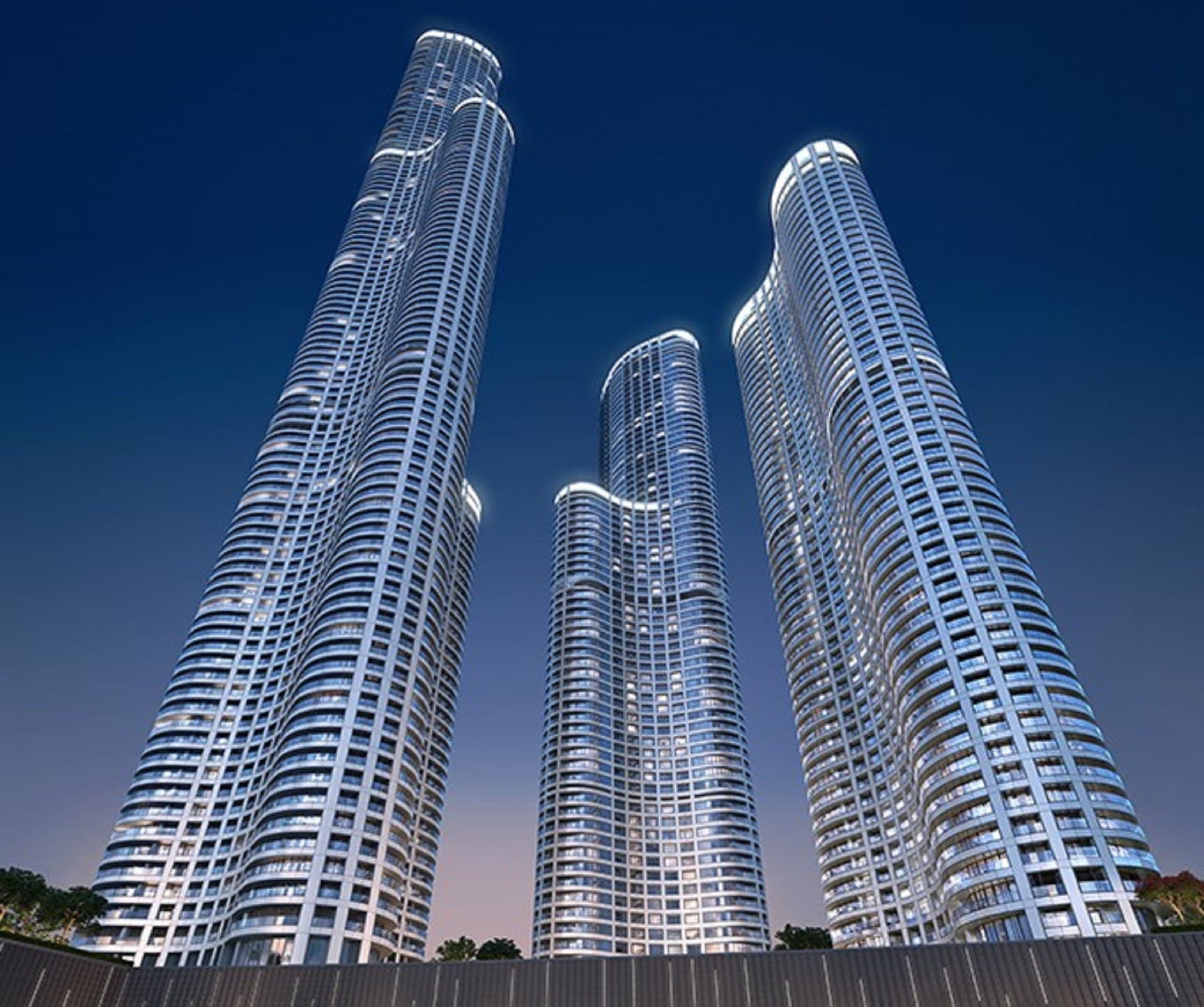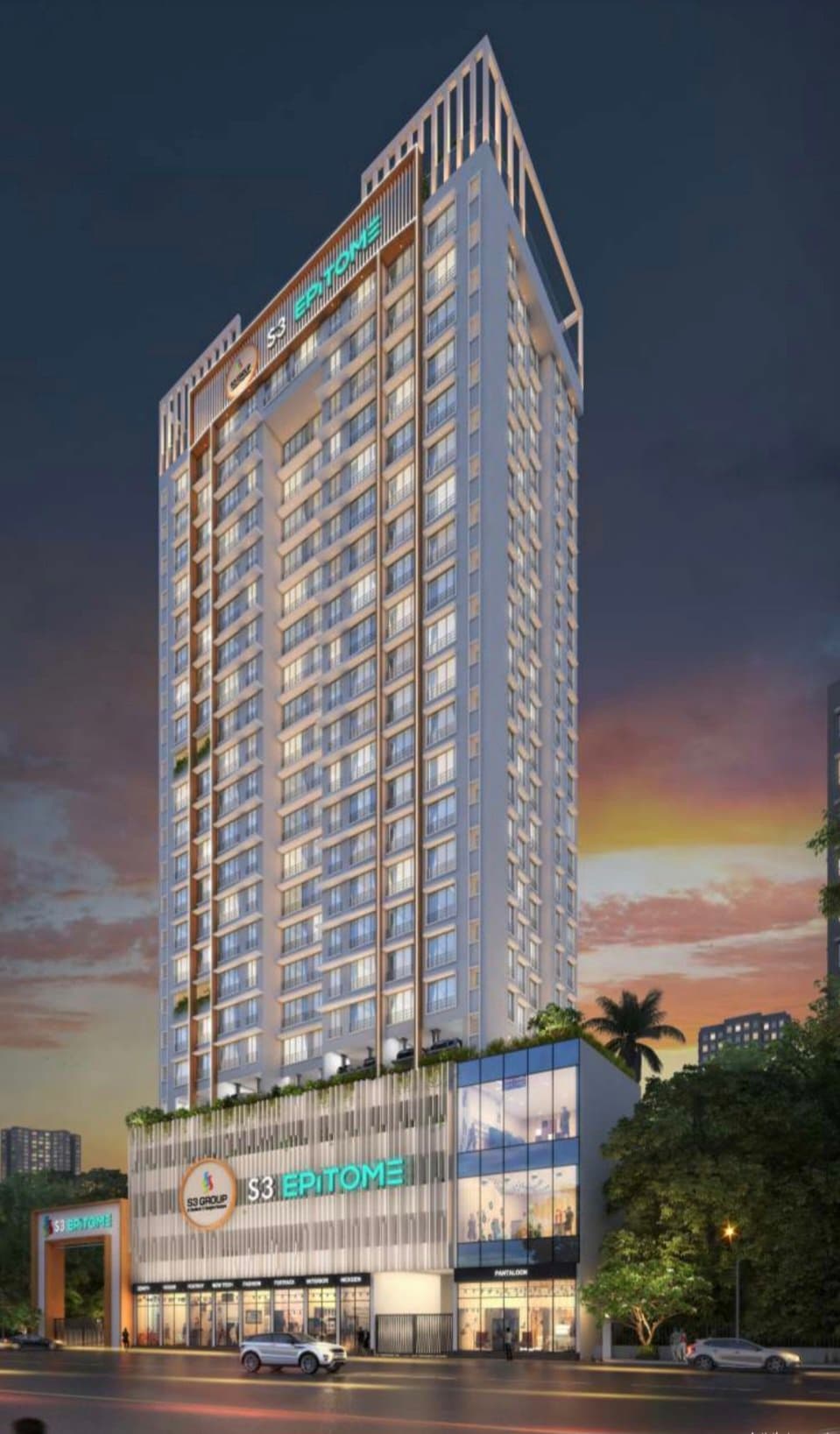
Almost every published Lower Parel buyer guide treats the locality as if it begins at Indiabulls Sky Forest and ends at Lodha World One — the marquee glass-tower cluster that dominates the mill-land redevelopment narrative. But Lower Parel's actual residential footprint is twice the size of that cluster, and a structurally different market lives in the 1990-2010 vintage stock that runs from Lower Parel railway station eastward through Curry Road and into Hindmata. A 2 BHK in this sub-cluster trades at ₹2.4-4.2 crore against the marquee tower's ₹6.5-9 crore for similar carpet — a meaningful entry-point gap most buyers never see because it sits behind the marketing of the high-FSI mill plots. Property Butler maps the sub-cluster.
The headline math
Property Butler's market data tracks 249 active Lower Parel sale listings as of May 2026 with median asking PSF of ₹45,238. Strip out the top quartile — the Indiabulls Sky Forest, Lodha World Crest, Lodha Vista, Marathon NextGen, One Avighna Park glass-tower stack — and the remaining sub-cluster median drops to ₹32,800/sqft. That is a structural ₹15,000-22,000/sqft gap between the marquee cluster and the legacy stock sitting 600-1,200 metres east of it. For a 1,100 sqft 2 BHK, the gap translates to ₹1.6-2.4 crore in absolute price.
Where exactly is the sub-cluster?
The Lower Parel marquee cluster sits on the former mill plots — Phoenix Mills, India United Mills, Apollo Mills — running roughly between Senapati Bapat Marg, NM Joshi Marg and the Tulsi Pipe Road / Dr E. Moses Road axis. The sub-cluster Property Butler decodes here sits east and south of that footprint, in three identifiable sub-pockets.
| Sub-pocket | Anchor reference | Vintage band | 2 BHK PSF range |
|---|---|---|---|
| Station-east | 600m radius around Lower Parel station east exit | 1995-2008 society redevelopment | ₹28,500-38,000/sqft |
| Curry Road corridor | Dr Ambedkar Road north + Currey Road station catchment | 2002-2014 mid-rise builder stock | ₹31,000-42,000/sqft |
| Hindmata edge | Dadar/Lower Parel boundary along Tulsi Pipe Road south | 2008-2018 cluster redevelopment | ₹35,500-48,200/sqft |
The administrative postcode for all three is 400013, which means a buyer here gets the Lower Parel address — and the corresponding bank-loan eligibility tier, school catchment perception and resale narrative — without paying the marquee-cluster premium.
The nine buildings buyers should actually know
Property Butler's sub-cluster scan surfaces nine buildings with meaningful resale liquidity, OC certificates in hand, and active asking pages. These are not the headline names that show up in glossy print campaigns; they are the buildings where a Mumbai-resident buyer with a ₹3-6 crore working budget actually transacts.
Station-east sub-pocket. Three buildings dominate this micro-market. Arihant Towers (MJ Shah developer, 1998 OC, 22 floors) carries 2 BHK and 3 BHK inventory at ₹3.0-4.6 crore on 950-1,400 sqft carpets. Sarvesh One (Sarvesh Enterprises, 2014 OC, 32 floors) is the newest entrant in this band — 2 BHK at ₹3.4-4.4 crore on 1,000-1,150 sqft, 3 BHK at ₹5.6-7.2 crore on 1,500-1,700 sqft. Times Tower (1996 OC, 18 floors) sits in pure legacy band — 2 BHK at ₹2.4-3.2 crore on 900-1,050 sqft, with the trade-off of dated lift infrastructure and minimal amenity stack.
Curry Road corridor. Three buildings carry consistent inventory. Marathon Futurex (Marathon Realty, 2018 OC, 44 floors) is borderline marquee-cluster pricing but technically Curry Road catchment — 2 BHK at ₹4.2-5.5 crore on 950-1,100 sqft. Lodha Allura (Lodha, 2014 OC, 25 floors) sits at the Curry Road / Lower Parel intersection — 3 BHK at ₹5.8-7.6 crore on 1,400-1,700 sqft, the cleanest brand entry into the sub-cluster band. Sumer Trinity (Sumer Group, 2010 OC, 28 floors) carries 2 BHK at ₹3.6-4.8 crore on 1,000-1,200 sqft.
Hindmata edge. Three buildings finish the list. Bhoomi Simana Lalbaug (Bhoomi Group, 2018 OC, 24 floors) at ₹4.0-5.2 crore for 2 BHK on 1,050-1,200 sqft. Fremont Lalbaug (2016 OC, 22 floors) at ₹3.8-5.0 crore. Peninsula Celestia Spaces Parel (Peninsula Land, 2015 OC, multi-tower) — straddles the Lower Parel / Parel boundary at ₹4.5-6.2 crore for 2 BHK depending on tower and floor. The Hindmata edge stock is the newest in the sub-cluster, with the cleanest infrastructure and best resale velocity.
Sub-cluster median 2 BHK pricing
₹3.2 — ₹4.8 Cr
vs ₹6.5-9.0 Cr for equivalent carpet in the marquee mill-land cluster
What buyers gain — and lose — moving into the sub-cluster
Sub-cluster gains
- ₹1.6-2.4 crore lower entry on 2 BHK vs marquee cluster equivalent carpet
- Lower CAM — typically ₹4.50-7/sqft vs ₹12-18/sqft in marquee high-rises
- Lower property tax base (BMC capital value lower)
- Better usable carpet % (less aggressive fungible FSI loading)
- Walking distance to Lower Parel station (1-7 min)
- Redevelopment optionality — older stock approaches structural-audit trigger
Sub-cluster trade-offs
- No marquee amenity stack — basic lift, gym, security only
- Brand premium absent — resale narrative weaker
- View bands compressed — surrounding buildings often blocking
- Older lift, plumbing infrastructure may need owner-funded upgrades
- Tower-level mix less premium — domestic helper proximity higher
- Some stock has pending society conveyance (deemed conveyance route)
Who the sub-cluster is structurally right for
Property Butler's transaction history shows three buyer profiles consistently making the sub-cluster work better than the marquee equivalent.
The first home owner-occupier with ₹3-5 crore working budget. A buyer who would otherwise stretch to ₹6+ crore in the marquee cluster on EMI math gets a comparable 2 BHK in the sub-cluster at 35-40% lower outflow. The location quality (Lower Parel postcode, 5-10 min walk to station) is the same. The amenity gap is real but for owner-occupiers who use the building primarily as a residence rather than a lifestyle product, the gap is acceptable.
The investor optimising for rental yield. Sub-cluster 2 BHKs let at ₹1.05-1.45 lakh/month furnished, against marquee 2 BHKs at ₹1.85-2.4 lakh/month. The gross yield calculus actually favours the sub-cluster: Sumer Trinity 2 BHK at ₹4.0 crore renting at ₹1.25 lakh/month delivers 3.75% gross, vs Lodha Vista 2 BHK at ₹7.5 crore renting at ₹2.1 lakh/month at 3.36%. Net of CAM differential, the sub-cluster's yield advantage widens further.
The redevelopment-optionality buyer. Sub-cluster stock vintage 1995-2008 sits within 5-12 years of the structural audit trigger. A buyer entering Arihant Towers or Times Tower in 2026 is structurally well-positioned for a redevelopment trigger event in 2028-2034 that delivers 35-65% area uplift under DCPR 33(7) self-redevelopment economics. This is a contrarian play — buyers must be willing to absorb 2-4 years of construction-window displacement when the trigger fires.
The four diligence flags Property Butler raises in the sub-cluster
Flag 1 — OC and CC dates. Some sub-cluster buildings have pending OC despite being occupied for 5-10 years. This affects resale, bank loan eligibility and society conveyance. Always verify OC date matches the date in the share certificate; gaps signal legal complications.
Flag 2 — Society conveyance status. Older sub-cluster stock often has pending society conveyance from the original developer. The deemed conveyance route under MOFA Section 11 takes 8-18 months and ₹2-6 lakh in legal cost. Buyers should confirm whether conveyance is held by the society directly or whether the original developer's name still appears on land records.
Flag 3 — Structural audit history. Buildings 25+ years old should have at least one structural audit on record. A society without a recent audit, or with an audit recommending major retrofit not yet executed, is signalling future special-levy risk to incoming owners. Property Butler typically asks for the most recent structural audit report alongside the standard share certificate and chain.
Flag 4 — Maintenance and sinking-fund health. Sub-cluster societies often run leaner sinking corpora than marquee high-rises. A 90-flat society with under ₹2.5 crore sinking is structurally underfunded for an upcoming lift modernisation or terrace waterproofing cycle. Incoming owners should expect special-levy demands of ₹3-12 lakh per flat over the medium term.
The connectivity premium the sub-cluster actually carries
The often-missed advantage: most sub-cluster buildings are 4-9 minutes walking distance from Lower Parel railway station, against the marquee cluster's 7-15 minutes. For office-going buyers commuting north to Andheri/BKC or south to Fort/Nariman Point on Western Line and Central Line connectivity, that 5-minute gap is a real morning-commute advantage. The Lower Parel BEST bus depot on N M Joshi Marg services 8 routes connecting east to Sion and Wadala, west to Worli and Bandra, south to Fort and Cuffe Parade — high-frequency network the marquee cluster also accesses but with slightly longer walks.
The Metro Line 3 (Aqua Line) Lower Parel-Acharya Atre Chowk interchange opens secondary connectivity from late 2027 — buildings within 600 metres of the metro station catchment will see asking PSF lift 8-15% on the announcement-to-operational arc. Sub-cluster buildings within this catchment include Sarvesh One, Marathon Futurex, Lodha Allura, and select Hindmata edge stock.
Frequently asked questions
Will sub-cluster prices catch up to the marquee cluster?
Not on PSF parity, no. The marquee cluster carries embedded high-FSI loading cost, brand premium and amenity overhead that sub-cluster stock does not. The structural gap is permanent. However, sub-cluster PSF appreciation is typically 1.4-1.8x faster on percentage terms in supply-constrained periods because the base is lower. From 2021 to 2026, sub-cluster median PSF moved from ₹26,500 to ₹32,800 — a 24% lift — against the marquee cluster's ₹47,500 to ₹52,050 (10% lift). That ratio is consistent with secondary-vs-primary cluster dynamics across SoBo.
Are bank loans easier or harder for sub-cluster stock?
Marginally harder for the very oldest stock (1995-2002 vintage, especially anything without clean OC). Sub-cluster buildings post-2008 OC with conveyance complete are funded by all major lenders at the same LTV ratios as marquee stock — typically 75-80% LTV on ₹3-5 crore loan size. Sub-cluster 1995-2002 vintage may face lender-specific list restrictions; buyers should pre-clear the building with their preferred lender before committing token money.
What is the realistic resale window for a sub-cluster 2 BHK?
Property Butler's sub-cluster transaction tracking shows median time-to-resale of 145-210 days for well-maintained 2 BHK stock priced within 5% of corridor benchmark. Marquee cluster 2 BHK median resale window is 95-150 days — faster, because the buyer pool is wider including NRI and out-of-Mumbai investors who recognise marquee names. Sub-cluster transacts more locally — buyers from neighbouring South-Central Mumbai who know the building personally or through extended-family network.
Should I prefer Hindmata edge over station-east?
Depends on use. Hindmata edge stock (post-2014 OC) carries cleaner infrastructure, brand-tier developer presence and better resale velocity. Station-east stock (1995-2008) carries lower entry PSF and stronger redevelopment optionality. For owner-occupiers with 8-15 year horizon, Hindmata edge is generally the cleaner pick. For investors with redevelopment-trigger thesis or rental-yield optimisation, station-east often delivers better absolute IRR.
Is the sub-cluster suitable for ultra-HNI buyers?
Generally not as primary residence. Ultra-HNI buyers (₹15+ crore working budget) acquiring SoBo property typically prioritise brand identity, amenity stack, exclusivity ratio and trophy-asset positioning — all favouring the marquee cluster. The sub-cluster makes sense for ultra-HNI as a portfolio diversifier — a yield-generating second flat for staff housing, family-member residence, or short-let investment — not as the primary trophy address. Property Butler routinely structures such acquisitions for ultra-HNI clients using the sub-cluster for portfolio depth and the marquee cluster for primary residence.
Related Reading
→ Lower Parel 2 BHK Sub ₹4 Crore Sweet Spot Decoder→ Vintage 2010-2018 OC Stock Decoder→ Lower Parel vs Bandra West Luxury Decision→ Lower Parel Resale Velocity Post-OC Liquidity→ Lower Parel Rental Yield Furnished vs Bare Shell→ Lower Parel Area GuideFind sub-cluster Lower Parel inventory under ₹5 crore
Property Butler maintains live sub-cluster shortlists across Arihant Towers, Sarvesh One, Sumer Trinity and the Hindmata edge stock — pre-vetted for OC, conveyance and structural-audit status.
Search Lower Parel Sub-Cluster Inventory