A buyer asked us last week: "A 2014-OC 3 BHK in Lower Parel is going for ₹38,000/sqft. The new launch next door is asking ₹62,000. Is the older building a steal or a trap?" Property Butler's tracked data on Lower Parel shows a median asking PSF of ₹45,333 across 260 active listings, but the actual transactions split bimodally: post-2020 OC stock trades at ₹52,000–95,000/sqft while 2010-2018 OC stock trades at ₹35,000–48,000/sqft. That ₹14,000-50,000 spread is not the market mispricing the same product. It's the market correctly pricing two different products. The question for the buyer is which side of the gap they want to be on.
The Vintage Discount — May 2026
18-32% PSF gap vs new launches
Lower Parel 2012-2017 OC stock trades around ₹38,000–₹46,000/sqft vs new launch at ₹56,000–₹68,000. Prabhadevi 2010-2018 OC at ₹48,000–₹58,000/sqft vs new at ₹68,000–₹85,000. The gap is real — but so are the embedded costs that close it.
Why the 2010-2018 vintage exists in this corridor
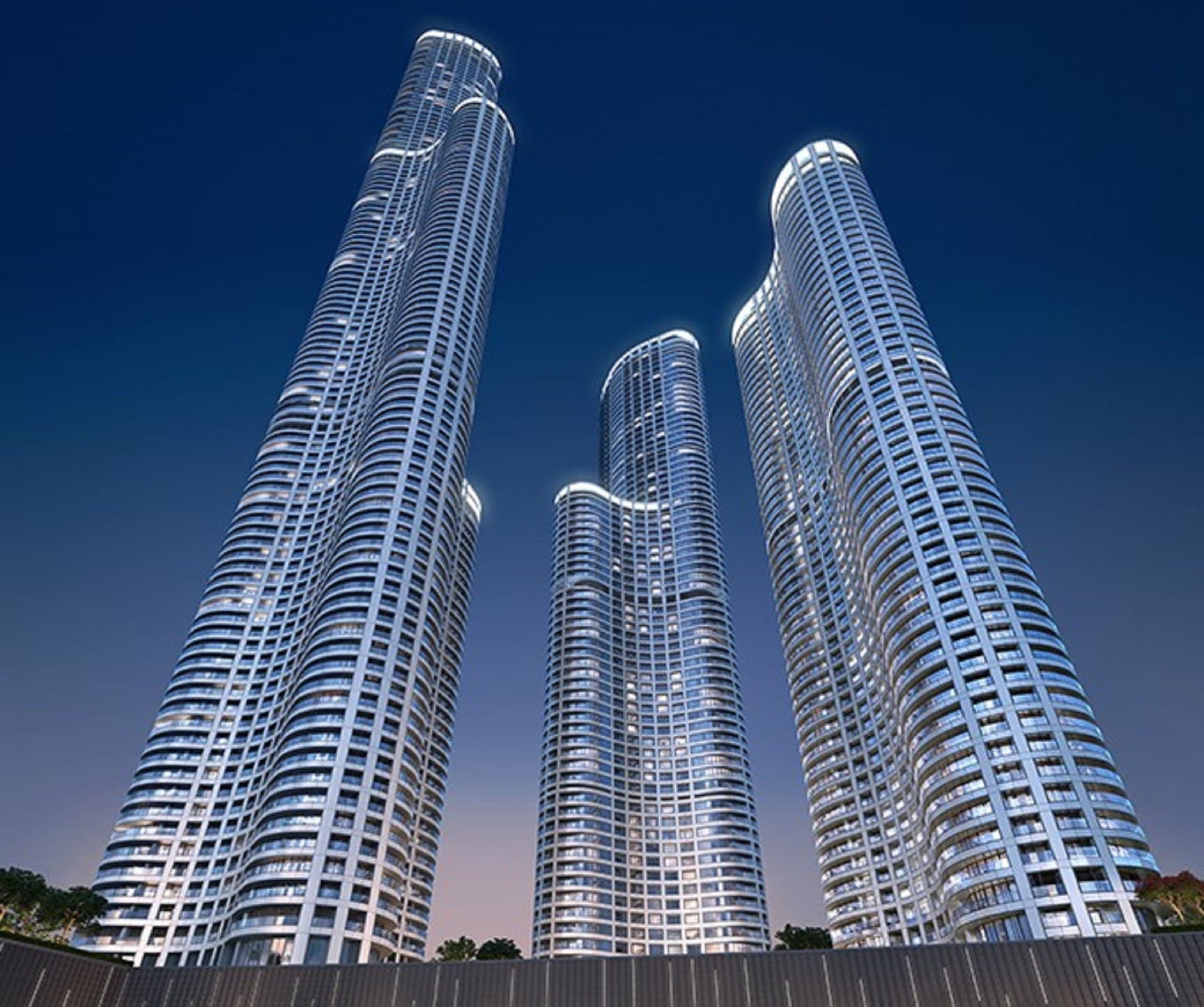
The mill-land redevelopment wave that reshaped Lower Parel and Prabhadevi began ~2007 and the first wave of OCs landed 2010-2014: One Avighna Park (2014), Indiabulls Sky Forest (2015 partial), Ashok Towers Parel (2010-12), Lodha Bellissimo, Marathon Futurex Lower Parel (2014), Sumer Trinity Towers Prabhadevi (2012), select Lodha World One floors (2017). The second wave 2015-2018 brought more refined product: Lodha Allura, Times Tower, Lodha World One full delivery, Arihant Towers Lower Parel. By 2019-2020 the new generation of towers — Rustomjee Crown, V Mansion, Kalpataru Oceana, Marathon Next-Gen Era — set a new spec bar. That spec bar is what the new launches now charge for. The vintage stock can never catch up: ceiling height, lift density, podium amenities, and the "new" aesthetic are baked into the original design.
The four-axis vintage diligence framework
Whether a vintage building is a discount or a distress comes down to four axes. Property Butler's transaction data shows that buildings scoring well on all four hold their PSF; buildings scoring poorly on two or more eventually become slow-burn liabilities — illiquid at peak ask, distress at exit.
| Axis | What good looks like | What distress looks like |
|---|---|---|
| Society health | Conveyance done, sinking fund >6 months CAM, AGM minutes show no major disputes, professional facility manager | Conveyance pending, sinking fund <3 months, ongoing developer-society litigation, 30%+ owners absconding on CAM |
| MEP infrastructure | Lifts upgraded once already (10-12 yr cycle), DG capacity ≥150% of estimated peak, RO + dual-water plumbing intact, fire NOC current | Original lifts past warranty without contract; DG underspecced; dual-piping leaks; expired fire NOC; chiller plant near end-of-life |
| Buyer profile in tower | 60%+ original owner-occupied, low investor flip share, mix of corporate + family buyers | High investor share >40%, multiple distressed listings, transient corporate-rental dominance >50% |
| Cluster / context velocity | Walking-distance new infrastructure (metro station, road widening), surrounding redevelopment buying area-PSF up | Frozen redevelopment around (no new launches in 5 years), commercial occupancy declining, area mall struggling |
The vintage-vs-new ₹/sqft trade-off — the real all-in cost
The headline ₹/sqft discount on vintage looks compelling. The all-in cost (purchase + fit-out + capex catch-up over 5 years) often closes most of the gap. Take a worked example:
| Cost component (1,500 sqft 3 BHK, 5-year horizon) | 2014 OC vintage @₹42,000/sqft | 2024 OC new launch @₹62,000/sqft |
|---|---|---|
| Property cost (carpet) | ₹6.30 Cr | ₹9.30 Cr |
| Stamp duty + registration (5.5% blended) | ₹34.6 lakh | ₹51.2 lakh |
| Interior fit-out (vintage often needs more rework) | ₹95–125 lakh | ₹65–95 lakh (semi-finished base) |
| 5-year CAM (vintage ~₹14/sqft, new ~₹22/sqft) | ₹12.6 lakh | ₹19.8 lakh |
| Society capex contribution risk (lift upgrade, DG, paint) | ₹3-15 lakh probable | ~₹0 (DLP active) |
| 5-yr expected price appreciation @ 7% CAGR | +₹2.53 Cr | +₹3.74 Cr |
| Total all-in (out-of-pocket year 1) | ~₹7.5 Cr | ~₹10.4 Cr |
| Total all-in (cumulative 5-yr) | ~₹7.7 Cr | ~₹10.6 Cr |
| Net difference | −₹2.9 Cr saved | — |
The vintage saves ₹2.9 Cr on a 5-year horizon — meaningful, but a portion of that gap closes via lower 5-year appreciation (₹1.2 Cr), higher fit-out (₹30 lakh), and society capex risk (₹3-15 lakh). Net economic advantage to a healthy vintage is ~₹1.5–2 Cr. That's still good. The trap is buying the vintage that scores poorly on the four-axis framework — there, you save the ₹2.9 Cr upfront and spend more than that on capex over 5-7 years.
The Lower Parel vintage map — what holds value
✓ LP vintage that holds value
- One Avighna Park (2014 Phase 1): Tier 1 developer, low investor share, conveyance done, well-managed society. PSF holds ₹40,000–48,000.
- Indiabulls Sky Forest (2015): Iconic structure, but heavy investor presence. Vintage units 12-25 floors trade ₹35,000–45,000 — discount is real but distress on resale liquidity.
- Marathon Futurex (2014, residential floors): Mixed-use with offices = better security and amenity utilisation. Vintage residential ₹38,000–46,000.
- Lodha World One (mid-floors 2017): Premium-stock vintage. ₹46,000–55,000. Holds well.
✗ LP vintage with capex tail-risk
- Older mill-land societies with conveyance pending — perpetual developer-society standoff, lift / DG decisions deadlocked.
- Smaller vintage towers (single-tower, <100 units) where CAM scaling is brutal — ₹25-30/sqft vs ₹14/sqft typical of larger societies.
- Towers where the original lifts (Otis / Schindler) are now out-of-service-contract; buyers walking into ₹2-4 lakh/unit special levy on first AGM.
The Prabhadevi vintage profile — slightly different math
Prabhadevi's vintage stock is more concentrated in mid-rise pre-2018 buildings (Sumer Trinity Towers, Akruti Kalaya Tower, Suraj Ave Maria, Bhoomi Simana adjoining). The discount-to-new-launch is similar (~22-30%), but the cluster context is friendlier: Prabhadevi has more genuine end-user owner-occupiers vs Lower Parel's heavier investor / corporate-leased mix. This translates to better society health on average — original committee composition tends to be more stable, conveyance gets done sooner, and capex catch-up is less of a shock.
However, Prabhadevi vintage has its own specific risk: the temple-zone corridor near Siddhivinayak has FSI / height restrictions that mean some older buildings cannot be redeveloped at the same scale even after their useful life — a 2014-OC 22-storey building, when it eventually goes for redevelopment in 2050+, may be capped at the same height (or even lower under conservation overlays), removing the typical "redevelopment uplift" buyers price in. More on the Prabhadevi redevelopment landscape here.
Property Butler's vintage diligence rule
Before signing any vintage 2010-2018 OC unit in LP/Prabhadevi: pull the last 3 AGM minutes, the last 2 audited society balance sheets, the lift AMC contract, the DG service report, and the fire NOC. If the seller's broker won't furnish all five within 5 working days, that's data — and it's telling you something. Genuine sellers of healthy buildings produce these in 24-48 hours.
The capex catch-up — what to budget over 5 years
A 12-year-old building has predictable capex coming due. Here's what Property Butler typically sees on LP/Prabhadevi vintage stock 5-year capex schedules:
| Capex item | Typical year (post-OC) | Per-unit share (1500 sqft 3 BHK) |
|---|---|---|
| External painting / weather-proofing | 10-12 yr | ₹40,000–80,000 |
| Lift modernisation (1-2 cars) | 12-15 yr | ₹80,000–₹2 lakh |
| DG overhaul / replacement | 15-18 yr | ₹50,000–₹1.5 lakh |
| Chiller plant servicing | 10-12 yr | ₹25,000–60,000 |
| Plumbing / dual-piping rework | 10-15 yr | ₹15,000–40,000 |
| Society common-area refurbishment | 12-15 yr | ₹30,000–₹1 lakh |
| 5-year aggregate (vintage ~13-yr-old) | — | ₹2.4–6 lakh |
If sinking fund is healthy (>6 months CAM), some of this gets absorbed without special levy. If sinking fund is depleted, expect a 30-80K special levy per AGM cycle. Build this into the vintage purchase decision.
Frequently Asked Questions
Will banks lend on a 2010-2018 OC building in LP/Prabhadevi?
Yes, mostly — at standard rates. Banks consider building age in their LTV: most lenders cap LTV at 80% for buildings ≤15 years old and reduce to 70% for 15-25 years. A 2014-OC building in 2026 is 12 years — well within full LTV. The bank's technical valuation may flag specific MEP issues (lift age, DG age) that affect the LTV; some private banks (HDFC, ICICI) can be picky about ≥10-yr-old societies without conveyance. Public sector banks (SBI, BOB) are more flexible.
How does the resale liquidity of vintage stock compare to new launches?
Property Butler's median LP vintage 3 BHK resale takes 6-9 months to transact at peak ask, vs 3-5 months for the same-spec new-OC unit. Pricing flexibility on vintage closes this gap — sellers who accept 3-5% below peak typically transact within 4 months. The new-OC premium reflects, in part, this liquidity advantage. Resale velocity playbook here.
Can a vintage building qualify for redevelopment uplift in the next 10 years?
Generally only buildings ≥30 years old enter realistic redevelopment conversation. A 2014-OC building reaches that threshold around 2044. Buyer expecting redevelopment-led upside in <15 years should look at older mill-land cluster buildings, not 2010-2018 vintage. Prabhadevi redevelopment pipeline here.
Is a vintage 4 BHK at ₹42,000/sqft better than a new launch 3 BHK at ₹62,000/sqft for the same total budget?
For end-user families with 2+ kids needing the extra bedroom — usually yes, if the vintage scores well on the four-axis framework. The extra usable carpet (~700-900 sqft) is worth more than the new-launch spec premium. For investor-buyer optimising for resale liquidity and rental yield — usually no, the new-OC commands rental and resale premium. Property Butler segments this rigorously by buyer profile. 3 BHK guide here.
Do insurance premiums differ for vintage vs new buildings?
Building-cover society insurance escalates roughly 8-12% per year of age past year 10. A 2014-OC building's society insurance is 30-45% higher than a 2024-OC building, contributing roughly ₹3-6/sqft to monthly CAM. Personal home content insurance is unaffected by building age. Annual outflow workbook here.
Related Reading
→ LP developer trust tier matrix — who delivered, who didn't → Society conveyance deed decoder — what to verify pre-purchase → Ready-to-move handover diligence checklist → LP & Prabhadevi 5-year price trajectory 2021-2026Looking at vintage 2010-2018 stock?
Property Butler's diligence team pulls society documents, AGM minutes, and capex schedules before you commit. Don't buy ₹42,000/sqft only to discover ₹6 lakh of capex coming due in year 2.
Browse vintage and new-OC LP & Prabhadevi inventory