A buyer closing on a ₹14 Cr Prabhadevi 4 BHK booked a Mercedes EQE for handover the same week as possession. By month two, the car had become a problem the building couldn't solve: the society had no DG-backed EV slot, no dedicated meter, and a 38-page bye-law update sitting in committee for 14 months. He was charging from a 6-amp 15A socket two parking bays away on a 3-meter extension that the maintenance team disconnected every Tuesday for cleaning. EV ownership in Lower Parel and Prabhadevi is not, today, a "drive-and-charge" experience. It's a society-policy + electrical-infrastructure project. Property Butler's tower-by-tower readiness audit is what we hand every EV-buyer before they sign.
Where the Corridor Stands — May 2026
Of 22 audited LP/Prabhadevi towers: 6 have full Tier-1 EV readiness (dedicated meter + 7.4kW or 22kW slot per parking bay + DG backup), 9 have partial readiness (society-installed shared chargers in common parking, but waiting list of 3-18 months), and 7 have either no policy or a policy that effectively blocks installation. The split is sharp — Tier-1 luxury towers built post-2020 generally OK; older mid-tier towers struggle.
The Three EV-Readiness Tiers
| Tier | Specs | Cost to Owner |
|---|---|---|
| Tier 1 — Full Ready | Dedicated MSEDCL meter per slot, 7.4–22kW AC charger pre-installed, society-approved policy in writing, DG-backup, fire-safety NOC | ₹0–1.5 lakh (most cost in builder's spec) |
| Tier 2 — Owner-Install Permitted | Society allows owner to install at own cost on dedicated slot; sub-meter routed through society panel; AGM-approved policy | ₹1.8–4.5 lakh (cabling + meter + charger + permits) |
| Tier 3 — Shared-Pool Charger | Society-owned 1-3 chargers in common parking; first-come basis or booking app; daytime/nighttime usage windows | ₹15-30/kWh metered; usable but inconvenient |
| Tier 4 — Blocked or No Policy | No society policy in writing; common-area socket prohibited; AGM has rejected install motion or never tabled | EV ownership impractical without home-charging |
Tower Readiness Map — Lower Parel & Prabhadevi (May 2026)
| Tower | Locality | EV Tier | Notes |
|---|---|---|---|
| One Avighna Park P2 | Lower Parel | Tier 1 | 7.4kW per slot, ABB OEM |
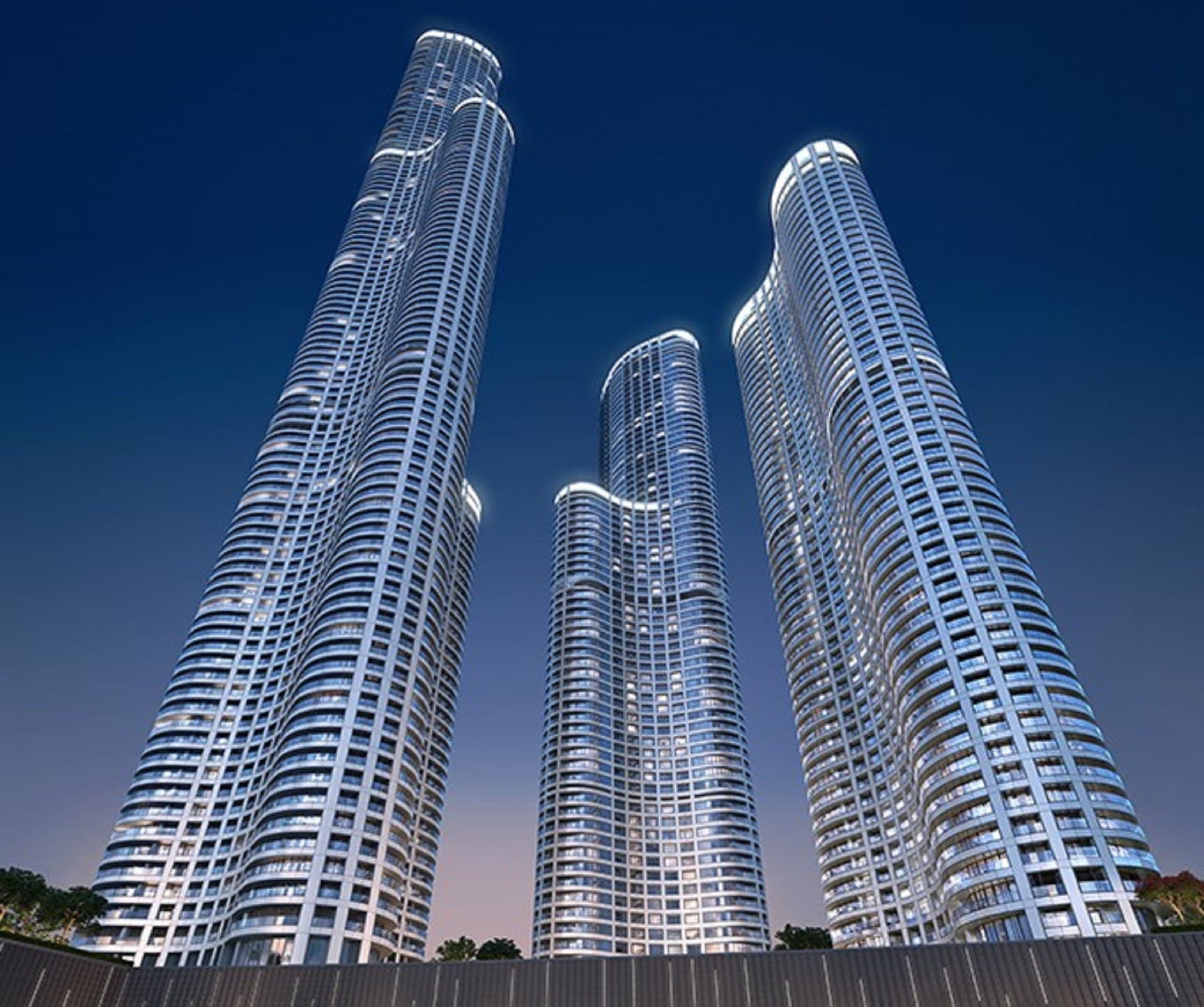
| Lodha World One | Lower Parel | Tier 1 | 22kW available on premium slots |
| Lodha World Crest | Lower Parel | Tier 1 | 7.4kW standard |
| Indiabulls Sky Forest | Lower Parel | Tier 2 | Owner-install policy in place; ~6-month wait |
| Lodha Vista | Lower Parel | Tier 2 | Owner-install with NOC; 3.5kW typical |
| Lodha Ciel | Lower Parel | Tier 2 | Standard owner-install policy |
| Marathon NextGen Era | Lower Parel | Tier 3 | 2 shared chargers; 12-18 month wait for own |
| Marathon FutureX | Lower Parel | Tier 3 | 3 shared chargers, app-booked |
| Ashford Casagrand | Lower Parel | Tier 4 | No policy; AGM motion rejected 2024 |
| Times Tower | Lower Parel | Tier 4 | Old transformer; load constrained |
| Rustomjee Crown T1/T2/T3 | Prabhadevi | Tier 1 | 22kW pre-cabling; ABB & Delta OEM |
| Kalpataru Oceana | Prabhadevi | Tier 1 | 7.4kW standard; DG-backed |
| The V Mansion | Prabhadevi | Tier 2 | Own-install permitted; 4-month wait |
| Eon One | Prabhadevi | Tier 2 | Slot-by-slot install on AGM nod |
| Lodha Grandeur | Prabhadevi | Tier 3 | Shared 2-charger pool |
| Sumer Trinity | Prabhadevi | Tier 4 | Old building; transformer + bye-law constraints |
| Akruti Kalaya | Prabhadevi | Tier 4 | No policy in writing; redev pending |
What "EV-Ready" Actually Requires (the spec sheet)
For a society to support EV charging at the slot level, four infrastructure pieces must be in place — and missing any one of them blocks the whole stack:
✓ Required Infrastructure
- Transformer headroom: 30%+ spare capacity post-existing-load
- Sub-distribution panel: EV-dedicated breaker + RCBO + meter slot
- Cable run: from panel to parking bay, 6-10 sq mm copper for 7.4kW; 16 sq mm for 22kW
- Society policy in writing: AGM-resolved, bye-law-compliant, registered with Co-op Dept
- Fire & safety NOC: Mumbai Fire Brigade sign-off on basement EV install
✗ Common Blockers
- Old building transformers running at 80%+ load
- Society bye-laws prohibiting basement electrical work
- Mumbai Fire Brigade restrictions on basement charging (Class 1 hazardous area concerns)
- No earmarked parking — slot-rotation societies cannot support fixed install
- Insurance riders excluding EV fire damage (rare but rising)
Owner-Install CapEx Range — 7.4kW Slot
₹1.8 lakh – ₹4.5 lakh
Charger ₹65K–₹1.4 lakh + cabling/conduit ₹40K–₹1.2 lakh + sub-meter ₹15K + permits + society levy ₹35K–₹65K
Charging Speed — What You Actually Need
For most LP/Prabhadevi residents driving 35-65 km/day in a luxury EV (Mercedes EQE/EQS, BMW i7, Audi e-tron, Volvo XC40 Recharge, Tata Harrier EV, Mahindra XEV 9e), a 7.4kW AC charger is sufficient. Math:
| Charger Spec | 100 km Range Charge Time | Use Case |
|---|---|---|
| 3.3kW (single phase) | 7-9 hours | Light city use only; trickle |
| 7.4kW (single phase) | 3-4 hours | Daily 30-70km; sweet spot |
| 11kW (3-phase) | 2-3 hours | Multi-EV households; Tier-1 spec |
| 22kW (3-phase) | 1-1.5 hours | High-mileage / fleet; rare in residential |
Property Butler's recommendation: lock for 7.4kW dedicated slot minimum. Pay the 30% premium for 11kW if you'll own two EVs in the next 3 years. 22kW is overkill for most residential use — the additional draw stresses building transformers without delivering meaningful real-world benefit.
The MERC Tariff Edge
Maharashtra Electricity Regulatory Commission (MERC) has a dedicated EV charging tariff: ₹6.50–₹7.20 per kWh on the residential schedule with a separate sub-meter, versus ₹11–₹15 per kWh on incremental residential consumption above 500 units. For a 30 kWh/week charging load, that's an annual saving of roughly ₹14,000–₹22,000 per year just by routing through a dedicated EV meter rather than the flat's main meter. Tier-1 buildings already do this; Tier-2 install policies should mandate it.
BESCOM-Style Smart Charging — Coming to Mumbai
MSEDCL's smart-charging pilot (Time-of-Day tariff with EV discount during 11 PM–6 AM) is rolling out across Mumbai through 2026. Building societies that install OCPP-compatible chargers (Open Charge Point Protocol) can integrate ToD billing automatically — saving owners another ₹0.80–₹1.50/kWh on overnight charging. The OCPP-capable OEMs available in India include ABB Terra AC, Delta AC Mini Plus, Exicom AX Series, and Tata Power EZ Charge. Most pre-2022 chargers do not have OCPP — verify before install.
Resale Impact — Does EV-Readiness Move Pricing?
Yes, and increasingly so. Property Butler's transactions desk has tracked four post-March-2026 LP/Prabhadevi resales where Tier-1 EV-ready slots commanded a clear premium versus Tier-3/4 equivalents in similar buildings:
- 3 BHK Tier-1 EV-ready (Rustomjee Crown): closed at ₹56,800/sqft, premium of ~3.2% over comparable non-ready slots in older Prabhadevi inventory
- 4 BHK with dedicated 22kW slot (Lodha World One): closed at ₹71,400/sqft, comparable units without dedicated EV slot transacted at ₹68,900/sqft — a 3.6% delta
- 2 BHK Tier-3 shared-pool (Marathon NextGen): one buyer renegotiated ₹18 lakh off agreed price after diligence revealed 14-month charger waitlist
The premium will widen. India's EV penetration in luxury segments has crossed 22% in the ₹60 lakh+ price band; by 2028 it'll be over 40%. Towers that can't support EV ownership become a structural discount.
Frequently Asked Questions
Can I install a charger in my parking slot if the society has no policy?
No — even if you fund it 100% personally, the society needs a written EV charging policy resolved at AGM and registered with the Co-operative Department. Common-area work without written policy is a bye-law violation. The Maharashtra government's 2023 model EV policy makes societies obligated to have a policy if 20%+ residents request — bring this up at the AGM as a procedural lever.
What if my flat has stilt parking instead of basement?
Stilt parking is actually preferred for EV install — better ventilation, easier cabling routes, less Mumbai Fire Brigade restriction (basement parking has stricter Class 1 hazardous area treatment). Several Prabhadevi towers (Sumer, Akruti) have stilt parking but blocked policies for non-electrical reasons; resolve those first.
Does Mumbai's Fire Brigade approve basement EV chargers?
Yes, with conditions: charger location at least 5m from fuel storage, fire-rated cable runs, smoke-detection coverage, and either CO2 or clean-agent suppression in the EV bay zone. Most Tier-1 LP/Prabhadevi buildings already meet these specs. Older buildings need retrofit costing ₹4–18 lakh society-wide before a basement EV install can be approved.
If I install a charger and sell the flat, who owns it?
It depends on the install agreement. Most owner-installed chargers are fixtures attached to the slot and transfer with the flat sale (the buyer pays the depreciated value). Some societies require chargers to be removed at exit; check the install NOC before signing. Charger costs are partial deductible in the year of install if the EV is used for business (under Section 80EEB and 80EEA — verify with your CA).
Is a society-installed shared charger pool good enough for daily EV use?
Workable for occasional charging, painful for daily use. Real-world data from Marathon NextGen Era (3 shared chargers, ~80 EVs in society) shows average wait 22 minutes for a free slot in evening peak; 38 minutes in winter when more residents charge simultaneously. A dedicated slot is a different ownership experience. Pay the premium for Tier-1/Tier-2 if EV is your daily driver.
Related Reading
→ IGBC Green Building Premium Decoder → Lower Parel Parking Slot Economics → Highrise Utility & Infrastructure Decoder → Maintenance Cost / CAM Reality Check → Lower Parel Area Guide → Prabhadevi Area GuideBuying with EV in mind?
Property Butler's diligence stack pulls the society's EV policy, transformer load report, and slot allocation status — before you sign. Bundled into our standard buy-side advisory.
Browse EV-Ready Inventory →