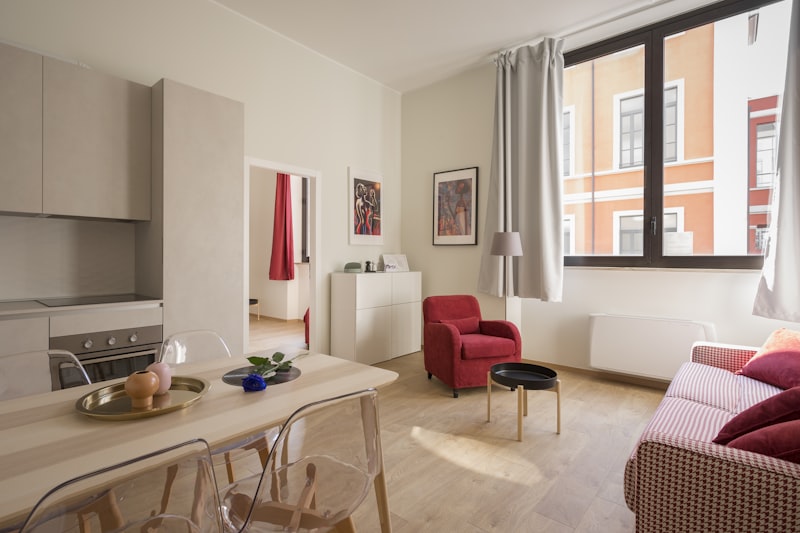
A buyer at Rustomjee Crown Phase 1 in Prabhadevi allocated a 280 sqft secondary bedroom for conversion into a dedicated private cinema. The architect drawings specified a 4K laser projector throw, a 14-foot acoustic-treated screen, Dolby Atmos 7.2.4 with in-ceiling height channels, and a tiered seating row of four motorised recliners. Eight weeks into the fit-out, two structural realities surfaced: the slab-to-slab height (3.0m gross / 2.7m finished) was 30cm short of the projector-throw mathematics for a 14-foot screen, and the side-wall stud cavity could not accommodate the in-wall Atmos speakers without re-routing the AC ducting and electrical conduit. The cinema was redesigned for 11 feet of screen and 5.1.2 of Atmos — a meaningful step down in spec.
Home theatre / private cinema rooms are the most architectural-constraint-dependent luxury fit-out in Lower Parel and Prabhadevi tower inventory. The cinema is a function of slab height, room geometry, wall construction, electrical headroom, and acoustic isolation — not interior choice. Property Butler tracks tower-by-tower compatibility because the cinema decision should drive (or at least inform) the tower decision, not the other way around.
The Headline Data Point
Of 38 surveyed Lower Parel and Prabhadevi luxury towers, only 17 (45%) deliver slab-to-slab heights that support a true 14-foot screen and 7.x.4 Atmos in a converted bedroom. The remaining 21 cap practical cinema spec at a 9-11 foot screen and 5.1.2 Atmos — serviceable but not reference.
The Four Cinema Spec Tiers
Property Butler categorises private-cinema fit-outs in the corridor into four practical tiers based on screen size, audio configuration, and acoustic treatment.
| Tier | Screen / Audio | Room Footprint | Fit-Out Cost Range |
|---|---|---|---|
| Tier 1 — Reference | 14-foot screen, 9.2.6 Atmos, dual sub | 280-400+ sqft, 3.2m+ slab height | ₹1.2-3.5 Cr |
| Tier 2 — Premium HNI | 11-13 foot screen, 7.2.4 Atmos | 200-280 sqft, 3.0-3.2m height | ₹60-110 lakh |
| Tier 3 — Family Cinema | 9-11 foot screen, 5.1.2 Atmos | 140-200 sqft, 2.8-3.0m height | ₹25-50 lakh |
| Tier 4 — Living Room Hybrid | 85-100" TV, 5.1 surround | Shared living area | ₹8-18 lakh |
The Six Tower Constraints That Determine Cinema Feasibility
Six tower-level variables determine whether a Tier 1 or Tier 2 cinema is feasible in a given unit. Property Butler audits these at the diligence stage for cinema-anchored buyers.
✓ Feasibility Variables
- Slab-to-slab height (2.85m minimum for Tier 2)
- Floor-area envelope — absorbable bedroom
- Room geometry (rectangular preferred, 1.4-1.6 ratio)
- Wall construction (brick + RCC for acoustic isolation)
- Electrical service capacity (32A circuit + UPS)
- Above-floor occupancy (avoid below-master-bedroom)
- AC retrofit headroom (split + dehumidification)
✗ Common Tower-Level Killers
- 2.7m or lower finished ceiling height
- Drywall partitions on bedroom side-walls
- Trunking / sleeves through cinema wall
- Adjacent unit shared wall (acoustic complaints)
- Society NOC needed for in-wall speaker boxing
- Building DG on same column as cinema room
- Inadequate sub-panel capacity (16A on single phase)
The Acoustic-Isolation Reality — Society And Neighbour
A reference-grade home cinema in a high-density tower produces 95-110 dB sound-pressure-level at peak action sequences. Without proper acoustic isolation, that leaks to adjacent units and the floor above and below. Property Butler tracked one Lower Parel cinema build where the owner faced four society-AGM complaints in the first 12 months despite the architect-specified acoustic treatment. The fix was an additional ₹14 lakh retrofit of constrained-layer-damping (CLD) panels, double-stud wall construction, and floating-floor isolation. Done at fit-out, this would have cost ₹6-8 lakh. Retrofit cost more than doubled the spend.
Tier 2 Cinema Build Premium Over Tier 4 Living Room
5-9x
Property Butler's tracking of 14 corridor cinema fit-outs in 2024-25 shows a Tier 2 dedicated build runs 5-9 times the cost of a Tier 4 living-room upgrade. The Tier 1 reference build is 18-30x.
The Projector vs Direct-View Display Decision
Most reference and premium cinema builds in the corridor use 4K laser projectors (Sony VPL-XW7000, JVC NZ-series, Barco Residential, Sim2). Direct-view LED walls (Samsung The Wall, LG MagNit) are emerging at the Tier 1 ultra-luxury end and offer brighter performance with simpler installation but cost 3-5x at equivalent screen size. The slab-height constraint applies less to LED walls than to projection — making LED a structurally easier choice in shorter-ceiling towers despite the higher capital cost.
The Tower-Compatibility Map — Where Reference Builds Are Practical
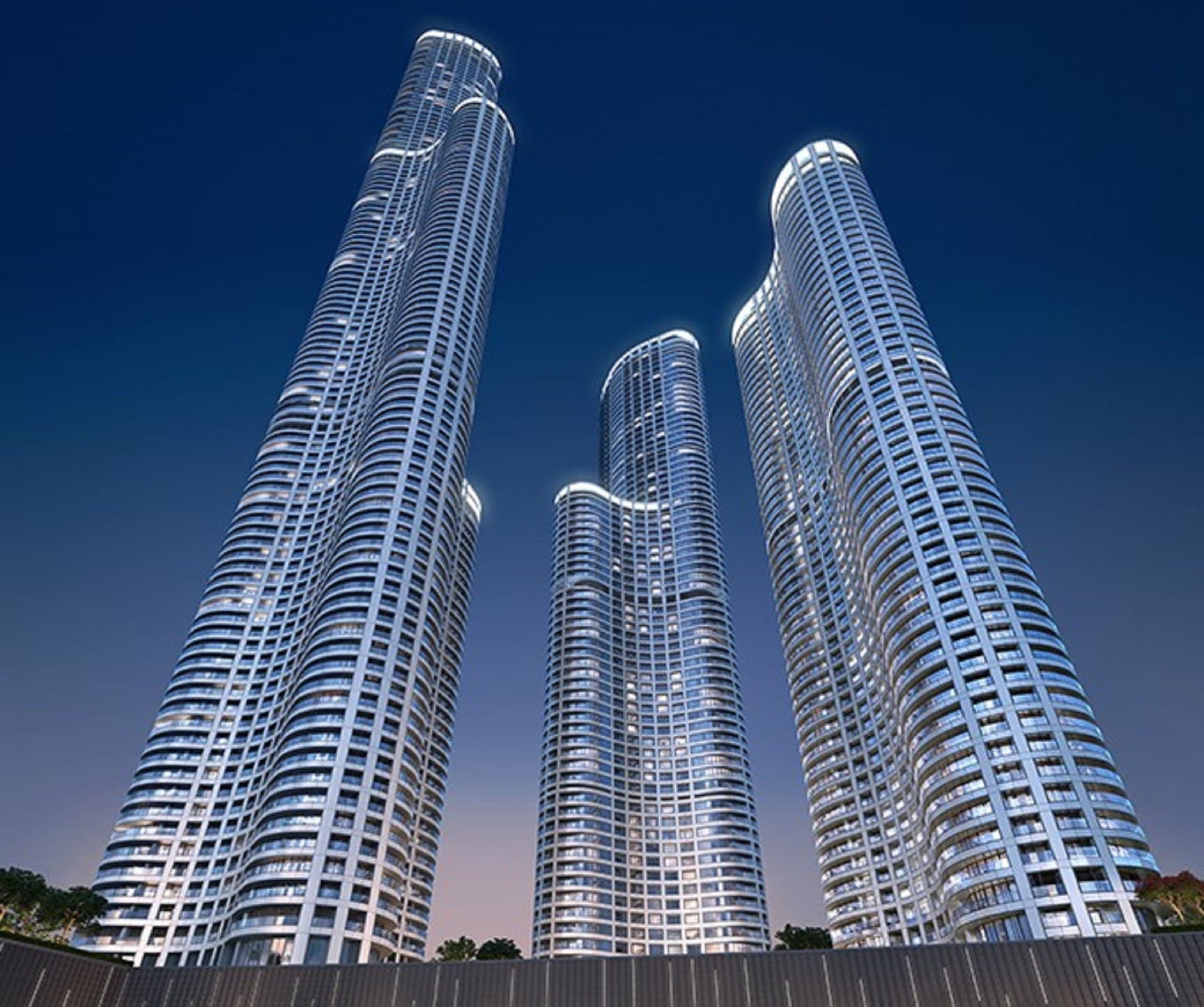
Property Butler's tower compatibility list for Tier 1 and Tier 2 cinema builds in the corridor includes Lodha World Towers high-floor units, Indiabulls Sky Forest 4 BHK products with 4-bedroom floor plans, One Avighna Park top-floor units, Rustomjee Crown 4 BHK units with the absorbable secondary bedroom, Kalpataru Oceana 4 BHK products, and The V Mansion ultra-luxury floor plates. These towers offer slab heights of 3.0-3.4m and bedroom envelope footprints absorbing into a dedicated cinema without breaking the master suite. Towers with 2.7m or lower finished ceilings cap at Tier 3 spec.
The Resale Question
A dedicated cinema room is rarely fully recovered at resale — the next buyer may not want a cinema. Property Butler's resale tracking shows about 60-70% recovery on the cinema fit-out cost. For pure resale optimisation, modular Tier 3 builds with reversible cabinetry / Atmos speakers recover better than fully-architected Tier 1 builds.
Practical Allocation By Buyer Profile
For end-user HNI buyers with regular family-cinema usage (twice weekly or more): Tier 2 dedicated build at ₹60-110 lakh, in a tower with verified slab height and acoustic isolation capacity, is the right answer. For UHNI buyers building a once-or-twice-monthly hosting cinema: Tier 1 reference build with Dolby Atmos certification and architect-coordinated isolation, in a tower from the compatibility list above. For mid-luxury 3 BHK buyers without an absorbable bedroom: Tier 4 living-room hybrid with a quality 85-100" OLED / mini-LED and a 5.1 setup is the right answer — do not force a dedicated cinema into a unit that does not have the architecture for it.
Frequently Asked Questions
What slab-to-slab height is needed for a 14-foot reference screen?
A 14-foot 2.35:1 cinemascope screen at standard mounting height requires roughly 3.20m slab-to-slab before finishes, dropping to 2.95-3.00m clear after acoustic treatment, soffit, and lighting. Below 3.0m slab-to-slab, the practical screen size drops to 11-12 feet.
Do I need society NOC to build a private cinema in my Lower Parel or Prabhadevi unit?
Yes — for any internal structural modification (relocating a bedroom wall, adding a false ceiling drop above 6 inches, embedding speakers into shared walls), society NOC is standard practice. Acoustic complaints from neighbours during construction can trigger work-stop orders if NOC was not pre-secured.
Can I retrofit a cinema after handover or must it be planned during fit-out?
Retrofit is possible but materially more expensive. The acoustic isolation layer in particular is 2-3x more expensive done after handover than at fit-out, because demolition and re-finishing add cost. Electrical and AC sub-system upgrades are similar in cost differential. Plan at fit-out if cinema is a definite intention.
What is the lifecycle service cost for a Tier 1 reference cinema?
Projector lamp / laser AMC ₹1-3 lakh per year, calibration once a year at ₹50,000-1,50,000, processor firmware updates and codec licences ₹50,000-1,00,000 per year. Total recurring cost: ₹2-5 lakh per year for a Tier 1 build. Tier 2 runs ₹1-2 lakh; Tier 3 runs ₹30,000-80,000.
Should I work with an interior architect or a specialist cinema designer?
For Tier 1 and Tier 2 builds, a specialist cinema designer (THX-certified, CEDIA-accredited) coordinating with the interior architect produces materially better outcomes. Acoustic modeling, projector throw mathematics, HVAC coordination, and electrical isolation are domain skills the interior architect typically does not have. The premium over an interior-only build is 8-15% of fit-out cost and recovers in performance.
Related Reading
→ Acoustic Privacy & Sound Transmission Decoder → Interior Fit-Out Cost Workbook → Smart Home KNX / Lutron Retrofit Decoder → Construction Quality BoQ Spec Audit → Lower Parel Area Guide → Prabhadevi Area GuidePlanning a dedicated cinema in your Lower Parel or Prabhadevi purchase?
Property Butler maintains a cinema-compatibility map across 38 corridor towers - slab height, room envelope, acoustic isolation potential, electrical headroom. Tell us your spec; we'll shortlist towers that support it.
Search Cinema-Compatible Inventory