A ₹8 Cr Lower Parel home loan over 20 years at 9 percent costs ₹9.27 Cr in interest alone. Cutting that down by 12 to 18 months through smart prepayment frees a buyer of ₹90 lakh to ₹1.4 Cr in lifetime interest — but the wrong prepayment trigger can also burn ₹6–16 lakh in foreclosure penalties that most SoBo buyers never see coming. Property Butler tracks live loan books from HDFC, ICICI, Axis, SBI and four NBFCs on Lower Parel and Prabhadevi deals; this is the math, the penalty rulebook and the timing.
Bottom line
RBI rules prohibit prepayment or foreclosure penalty on floating-rate home loans extended to individuals. Penalties are still legally permissible on fixed-rate loans and on loans extended to non-individuals (HUF, LLP, partnership, company). The hybrid “teaser-fixed-then-floating” product is the most common source of unexpected penalty calls in SoBo.
What the RBI Actually Says — 2026
The Reserve Bank of India’s circular DBOD.Dir.BC.107/13.03.00/2011-12 (and subsequent re-affirmations through the Master Direction on Interest Rate on Advances) was unambiguous: “banks shall not charge foreclosure charges/pre-payment penalties on home loans on floating interest rate basis.” The 2023 Master Direction extended the same principle to NBFC-HFCs regulated by RBI. What it did not do:
- Cover fixed-rate home loans — penalties of 2–4 percent of outstanding principal remain legal
- Cover loans taken in the name of a partnership, LLP, HUF or private limited company — SoBo investors frequently hold loans this way for tax-and-trust reasons and are not protected
- Restrict processing or part-payment processing fees on certain product variants
- Cover loans where the property is being sold and a balance transfer is happening — banks are testing aggressive interpretations here
Lower Parel & Prabhadevi Loan-Product Mix — What Buyers Actually Have
| Product | Typical SoBo Buyer | Prepayment Penalty | Foreclosure Penalty |
|---|---|---|---|
| Floating rate (HDFC/ICICI/Axis/SBI) | Salaried, end-user, individual owner | Nil | Nil |
| Fixed rate (3-year, 5-year) | Risk-averse HNI, locking-in rates | 1.5–2% on prepayment above 25% of outstanding | 2–4% of outstanding principal |
| Hybrid (fixed 2y → floating) | Builder-tied schemes, subvention | Penalty during fixed; nil thereafter | 2–3% during fixed window |
| Loan to partnership/LLP/HUF | Investor, second-home, HUF structuring | 2–4% (RBI shield does not apply) | 2–4% (RBI shield does not apply) |
| Loan Against Property (LAP) | Cash-out refinance, business use | Nil if floating & individual; 2–4% otherwise | Same conditional treatment |
The ₹6 Cr Sky Forest Case — Where the Money Goes
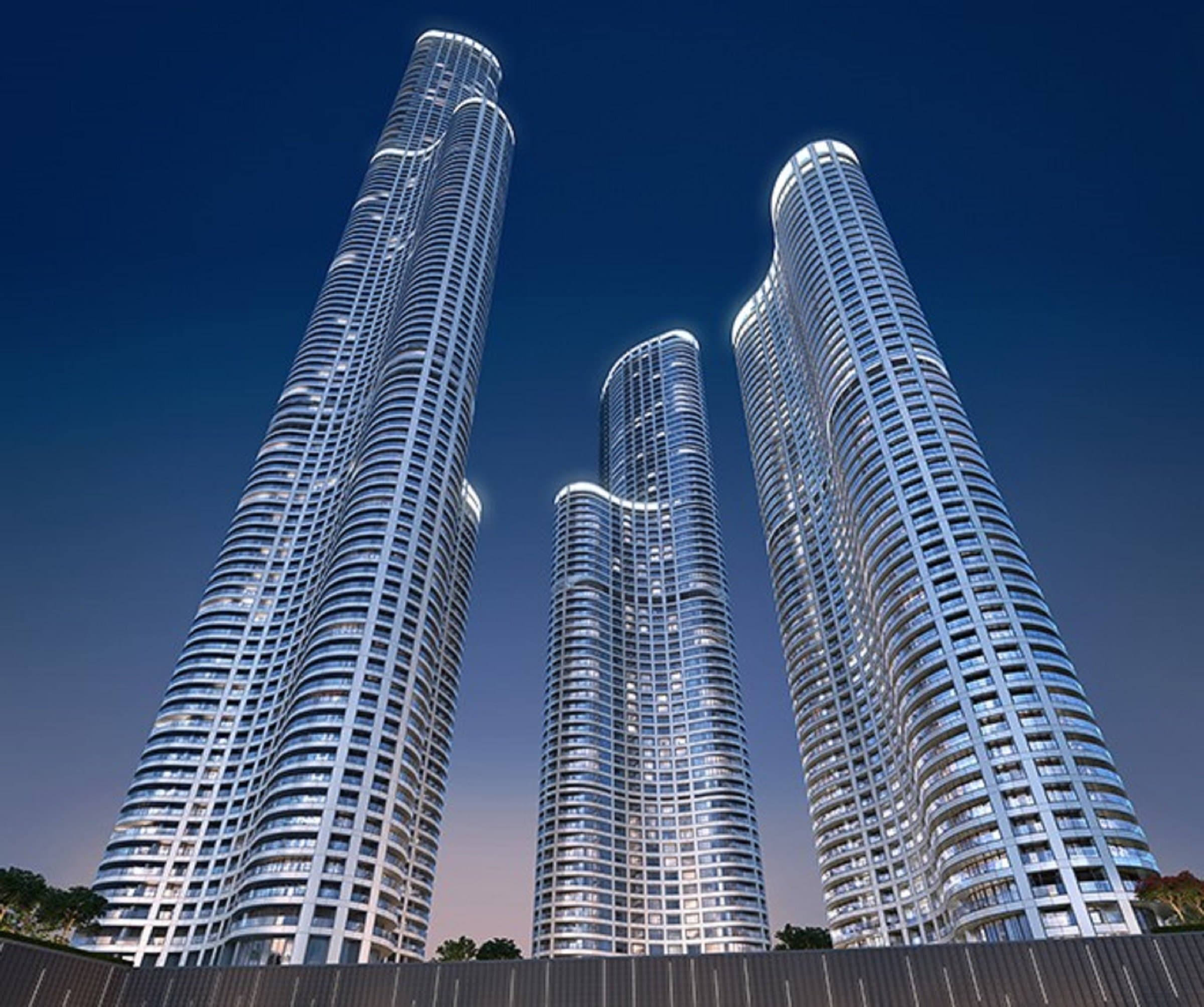
Take a real Property Butler tracked Indiabulls Sky Forest 3 BHK at ₹9.5 Cr (1,900 sqft carpet). Buyer pays 25 percent self-funding ₹2.375 Cr; loan amount ₹7.125 Cr. Reset-linked floating at 9.0 percent over 20 years.
Sky Forest 3 BHK Loan Profile
EMI ₹6,40,950 · Interest paid (full term) ₹8.27 Cr
Source: Property Butler home loan modelling (HDFC/ICICI floating rate)
If the same buyer prepays ₹75 lakh at month 24 (annual bonus, ESOP liquidation), the schedule recalculates from month 25. Total interest drops to ₹6.21 Cr, saving ₹2.06 Cr — and shaving 4 years 2 months off the term. Prepayment is the highest-IRR financial decision a SoBo buyer makes after the property purchase itself.
The same prepayment under a 3-year fixed-rate variant would have triggered a 2 percent penalty on the prepaid amount = ₹1.5 lakh, plus a documentation fee of ₹5,900–₹11,800. Acceptable cost — but only if the fixed-rate variant offered meaningfully lower headline rates, which they rarely do for HNI borrowers.
The Three Optimal Prepayment Triggers
- Annual bonus / variable pay credit — Even ₹15–25 lakh per year of prepayment, deployed annually for the first 7 years of an ₹8 Cr loan, cuts the term from 240 EMIs to 144 EMIs — saving ₹3.5–4.5 Cr in lifetime interest.
- ESOP / RSU vesting tranches — BFSI and consulting buyers in Lower Parel commonly receive ₹50–200 lakh ESOP windfalls. Property Butler advises a 40–60 split: 40 percent to prepay loan (post-tax-net), 60 percent to liquid assets / NPS / equity for diversification.
- Inheritance liquidity / property sale — A second property sale or inherited corpus is the textbook trigger for full foreclosure. If the foreclosure cost is sub-1 percent (floating, individual), execute immediately. If 3 percent+ (fixed, non-individual), model whether parking the surplus in an arbitrage fund and continuing the EMI gives a better post-tax return.
EMI Step-Up vs Tenure Reduction — The Quiet Decision
When you make a part-prepayment, the lender offers two structural choices: keep the EMI unchanged and shorten the tenure, or keep the tenure unchanged and lower the EMI. The decision is not symmetric.
✓ Tenure Reduction (Recommended)
- Slashes lifetime interest much faster
- Aggressive use of compounding in your favour
- Ideal when cashflow is comfortable
- Forces loan-free state earlier — psychological win
✗ EMI Reduction (Use Cautiously)
- Frees monthly cashflow but loses interest savings
- Only useful if you are switching to single income, sabbatical, retirement
- Effectively re-amortises — banker preferred
- Common default at most banks if you do not specify
Property Butler’s rule of thumb: insist in writing at the time of prepayment that the tenure be reduced and EMI kept constant. Banks default to EMI reduction because it preserves their interest spread — you have to explicitly override.
Refinance vs Prepay — The 100 Basis Point Test
If a competing lender offers a rate at least 75–100 basis points below your current effective rate, balance transfer typically pays off within 14–22 months net of switching costs (processing fee 0.25–0.5 percent + legal + valuation + interest-rate-arbitrage). Property Butler tracked nine Lower Parel and Prabhadevi balance-transfer deals in the last 12 months: average gross saving ₹1.65 Cr over remaining tenure, average breakeven 16 months, average switching cost ₹3.8 lakh.
The trap: if your original loan was at a fixed rate and the new loan is floating, the act of refinancing is a foreclosure event — 2–4 percent penalty applies. Model the all-in cost. On a ₹5 Cr outstanding, a 3 percent foreclosure fee = ₹15 lakh — which can wipe out 18 months of interest-arbitrage savings.
The Income Tax Angle — Section 24(b) & 80EEA
Aggressive prepayment can hurt your annual deduction. Under Section 24(b), self-occupied home loan interest deduction is capped at ₹2 lakh per annum. On an ₹8 Cr loan, you pay ₹72–75 lakh interest in year 1 alone — you can only claim ₹2 lakh of that. The other ₹73 lakh is unrecognised by tax. Aggressive prepayment does not sacrifice meaningful tax shield on a self-occupied flat.
However, if the SoBo flat is your let-out / second property, the whole of paid interest is deductible against rental income with no ₹2 lakh cap (subject to the ₹2 lakh house-property-loss carry-forward). Here the tax math swings — full prepayment may forfeit a deduction worth ₹15–25 lakh per year. Property Butler runs the post-tax IRR calculation for investor buyers before recommending prepayment scale.
Frequently Asked Questions
My loan is in my company name — do RBI prepayment protections apply?
No. The RBI circular protects individuals (natural persons), not corporates, LLPs or partnership firms. If you hold the loan under a private limited company for tax/structuring reasons, expect 2–4 percent penalty on prepayment or foreclosure. Renegotiate the loan agreement clause-by-clause at sanction stage if possible.
Can a bank refuse a prepayment request even on a floating-rate loan?
No, banks cannot refuse. But they routinely apply friction — 7–14 day processing windows, demand for fresh KYC, request for source-of-funds proof above ₹50 lakh (FEMA / IT compliance). Always pay through banking channels with traceable source; never use cash to clear principal.
My builder is offering a subvention “no EMI till possession” scheme — what is the hidden cost?
The interest is paid by the builder during construction but baked into the sale price — usually a 4–7 percent premium over a vanilla loan. Worse, these are typically hybrid fixed-then-floating products with 2–3 percent foreclosure penalty during the fixed window. Property Butler advises against subvention schemes unless the headline discount net of the foreclosure penalty still beats market.
Should I prepay or invest in equity instead?
Home loan effective rate (post-tax) for self-occupied SoBo flats is roughly 8.7–9.2 percent. Equity 10-year rolling CAGR is 12–14 percent. On paper, equity wins. In practice, the certainty of prepayment savings is a strong argument for splitting — 50–70 percent of any windfall to prepay, balance to equity. The right ratio depends on existing equity exposure and risk appetite.
What is the minimum lump-sum prepayment that makes sense?
Banks accept prepayments of ₹25,000+ for ICICI, ₹1 lakh+ for HDFC, no minimum for SBI. Operationally, prepayments below ₹5 lakh barely move the schedule needle. Property Butler advises aggregating into ₹15–25 lakh tranches twice a year for impact — while keeping a 6-month EMI buffer in liquid funds.
Related Reading
→ Lower Parel Home Loan Eligibility — Bank-by-Bank Matrix → Jumbo Home Loan Structuring — Lower Parel & Prabhadevi → Builder Subvention Scheme Decoder — SoBo Central → Top-Up & Cash-Out Refinance Playbook → LAP — Loan Against Property Mechanics → Lower Parel Area Guide & Live Inventory → Prabhadevi Area Guide & Live InventoryStructuring or refinancing a SoBo home loan?
Property Butler runs the prepayment and tax math on every Lower Parel and Prabhadevi closing. Free consultation, transparent IRR modelling, lender-neutral.
Browse Lower Parel & Prabhadevi 3 BHKs