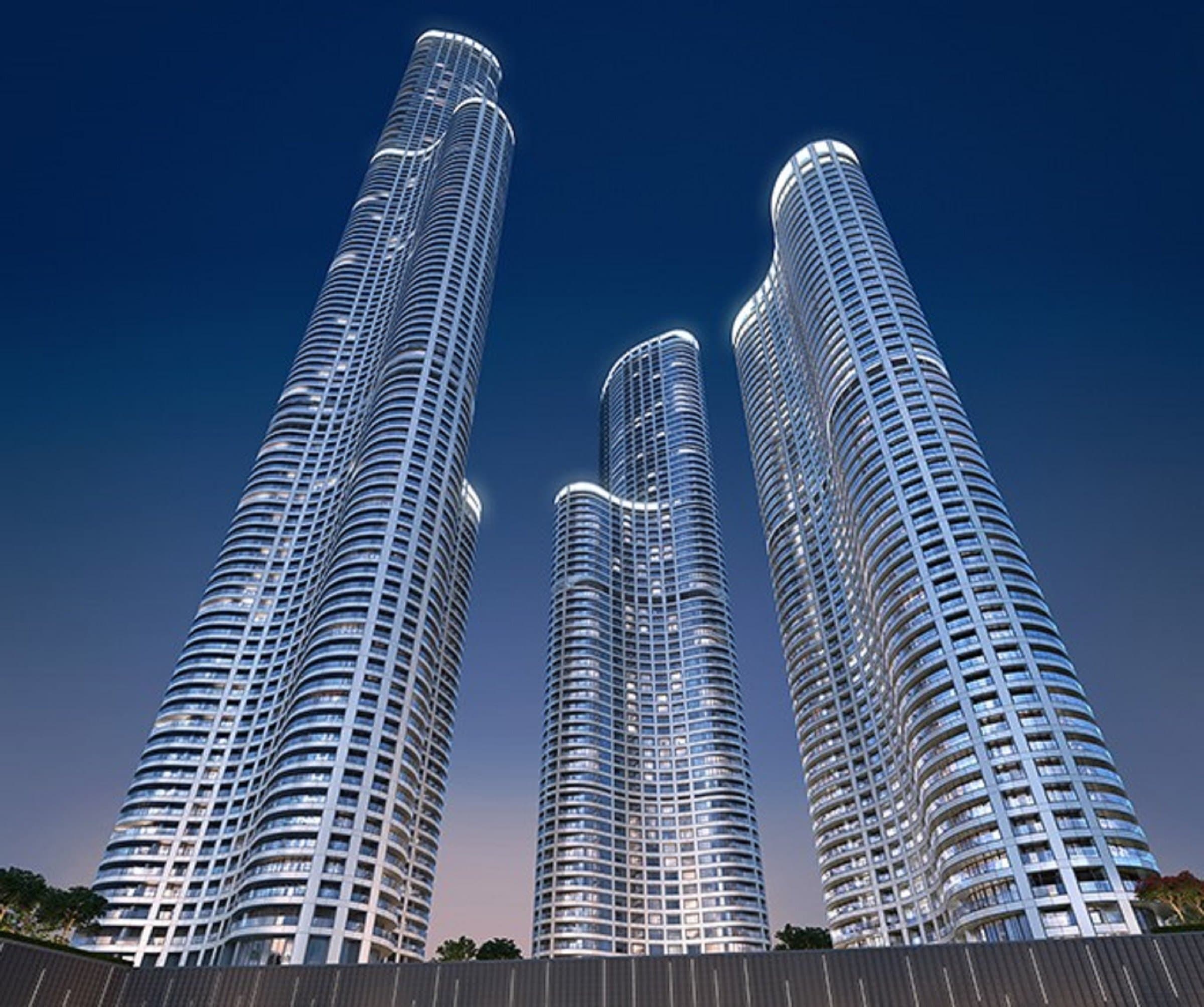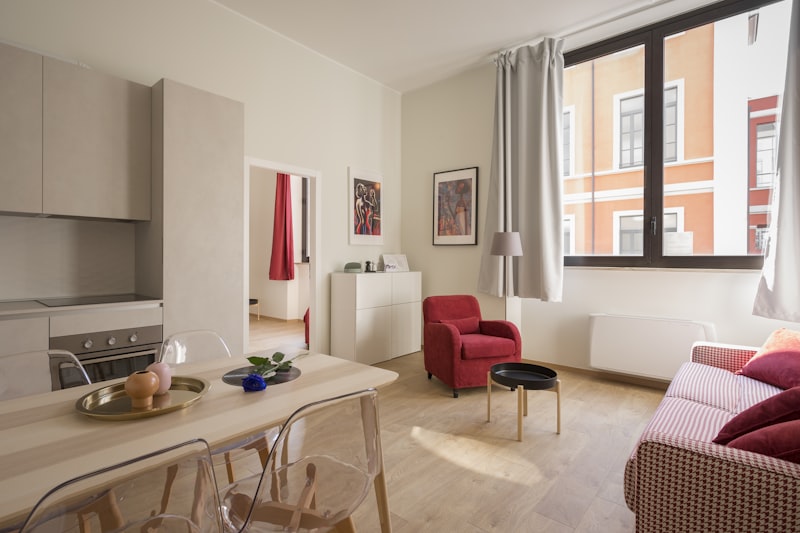
Property Butler tracked 18 completed flat amalgamations in Lower Parel and Prabhadevi during 2024-25, plus another 11 currently in process. The buyer profile is consistent: an upgrader who already owns one flat in a Tier-1 corridor tower and acquires the adjacent unit, or a new buyer who locks both units in a fresh purchase and amalgamates before move-in. Median completed cost: ₹47 lakh for the structural and finish work, separate from the underlying acquisition. Median elapsed time from second-flat registration to occupancy of the merged unit: 9.4 months. The numbers are predictable — the procedure is not, and that's where most buyers lose 4-7 months unnecessarily.
Key Insight
The single most expensive mistake Property Butler sees in corridor amalgamations is starting demolition before BMC Section 354A intimation. Of 18 completed amalgamations, 4 attracted compounding penalties of ₹6-14 lakh because the structural intervention was treated as an interior renovation rather than a regulated alteration. The five required approvals must be sequenced correctly — and most architects in the corridor will start the work before the paper trail is complete unless explicitly instructed.
What counts as an amalgamation under BMC rules
The Mumbai municipal regime distinguishes three categories of intervention. Category 1 — interior renovation (floor finishes, kitchen modular, false ceilings, non-structural wall partitions) requires no BMC approval beyond society intimation. Category 2 — non-structural alteration (relocating non-structural walls, modifying plumbing/electrical, adding loft) requires Section 354A intimation. Category 3 — structural alteration / amalgamation (removing or relocating any wall that bears load, removing portion of the slab between two flats, or merging two RERA-defined units into one) requires Section 342 or 337 approval depending on building age and OC status.
A 2-into-1 flat amalgamation almost always falls in Category 3 because the wall between two flats is typically a structural divider or because the BMC's flat-numbering system treats the units as legally distinct properties whose merger requires a fresh property identification number (PIN) and property-tax assessment. Treating it as Category 1 is the single largest source of compounding penalties in the corridor.
The five-approval sequence that works
- Structural engineer's report — a Mumbai-registered structural engineer (Maharashtra Board approved) examines the wall between the two units, the slab condition above and below, and certifies whether the wall is structural or non-structural. Cost: ₹35,000-85,000. Timeline: 2-3 weeks.
- Society NOC for amalgamation — managing committee resolution, not just permission. Must specify that the society agrees to issue a single share certificate replacing the two existing share certificates, agrees to the consolidated maintenance billing, and waives any objection to the BMC for the property-tax merger. Cost: ₹15,000-1,50,000 in transfer/processing fees depending on tower. Timeline: 4-12 weeks.
- BMC Section 342 / 337 approval — submitted via the Mumbai BMC online portal (or AAR-architect-on-record route) with the structural engineer's report and society NOC. Includes plans of the existing two units and the proposed merged unit, load-path analysis, and BMC-fee payment. Cost: ₹40,000-2,20,000 in BMC fees + architect's fees. Timeline: 8-18 weeks for approval, longer if any objection is raised.
- BMC commencement letter — issued after approval. Demolition can begin only after this letter is in hand. Demolition before this letter is the trigger for compounding penalties ranging from ₹6 lakh to ₹14 lakh in Property Butler's tracked cases.
- Post-completion: BMC occupation/use certificate update + society share certificate merger + property-tax merger to single PIN. This last step is administrative but tedious — most owners forget to merge the property-tax assessment, then face a 14-24 month tail of dual property-tax bills.
Median Amalgamation Cost — Lower Parel + Prabhadevi
₹47 Lakh
Structural + finish work, 18 tracked cases 2024-25 — separate from acquisition
Cost breakdown — where the ₹47 lakh actually goes
| Line Item | Cost Range | % of Total |
|---|---|---|
| Structural engineer + AAR architect fees | ₹2.5-5 lakh | 6-9% |
| BMC fees + compounding (if any) | ₹1.5-15 lakh | 4-25% |
| Society NOC + transfer fees | ₹0.15-1.5 lakh | 0.5-3% |
| Demolition + structural reinforcement | ₹4-9 lakh | 10-18% |
| Plumbing + electrical re-routing | ₹3-7 lakh | 8-14% |
| Final fit-out (floor, ceiling, finishes) | ₹25-40 lakh | 55-75% |
The kitchen-and-bathroom question
Every amalgamation hits the same design fork: keep both kitchens or remove one, keep all bathrooms or convert one. Property Butler's empirical observation across the 18 tracked cases: amalgamations that keep a second small kitchen (often as a prep pantry / staff kitchen) and convert one bathroom into a powder room + walk-in storage achieve 23-31% higher resale PSF than amalgamations that collapse to a single kitchen and reduce the bathroom count to match a standard 3-4 BHK.
The reason is luxury market positioning. A 3,400 sqft amalgamated 4 BHK with two kitchens, a powder room, and a separate staff entry is priced and absorbed as ultra-luxury inventory in the corridor. The same amalgamated unit collapsed to a single kitchen, single staff bathroom, and standard layout reads as a large 4 BHK and competes with stand-alone 4 BHKs in the same band. The resale gap shows up at exit.
The stamp-duty trap
Stamp duty in Maharashtra is paid on registration of the agreement. Two flats purchased separately, then amalgamated, attract two stamp-duty registrations — that's the baseline. Where buyers slip up: thinking the amalgamation itself triggers a re-registration. It does not. The amalgamation is a BMC + society administrative event, not a re-conveyance. No fresh stamp duty applies to the merger itself.
However, when the seller is the same builder and both flats are being acquired by the same buyer, some builders attempt to register a single combined agreement to capture marketing as a 'jodi flat' or 'merged unit'. This is buyer-favourable on transaction friction but may trigger BMC scrutiny on the carpet area declared versus the RERA registered carpet of each unit. Property Butler advises registering two separate agreements at standard stamp duty and handling the amalgamation post-registration through the proper BMC procedure.
Capital gains, indexation, and what gets reset
For tax purposes, two amalgamated flats remain two distinct capital assets unless and until a fresh consolidated property identification is issued by BMC and accepted in the buyer's records. This is buyer-favourable for capital-gain treatment — the acquisition date of each flat remains independent, indexation runs from each individual purchase date, and Section 54 reinvestment can be claimed against each flat separately on exit.
The window where this matters: amalgamated owners who exit and re-deploy proceeds into a third property. Treating the merged unit as a single asset can over-trigger LTCG if the second flat was acquired more recently. Property Butler's tax desk advises maintaining the dual-asset position in tax records even after physical amalgamation.
Related Reading
→ Lower Parel Jodi Flat Economics — 1+1 vs 2BHK → Sarvesh One Jodi Apartment Lower Parel Decoder → Balcony Enclosure + FSI Violation BMC Decoder → Construction Quality + BOQ Spec Audit Decoder → BMC Ward G-South + G-North Grievance DecoderFrequently Asked Questions
How long does the BMC approval take?
Section 342/337 approval for a corridor amalgamation typically takes 8-18 weeks. Property Butler-tracked median is 14 weeks. Faster approvals correlate with: clean structural engineer's report (no load-bearing concerns), corporate society with predictable NOC procedures, and architect-on-record familiar with the Mumbai BMC online submission portal. Slower approvals correlate with older buildings (pre-1995 stock), societies in conveyance dispute, or any prior unauthorised alteration on the same building.
Can I start the interior fit-out while waiting for BMC approval?
Only non-structural work — painting, polishing of existing surfaces, kitchen modular delivery (not installation if it crosses the demising wall), and similar Category 1 interventions. Any structural work — wall removal, slab modification, plumbing main re-routing, electrical riser changes — must wait for the BMC commencement letter. Property Butler has seen four owners attract ₹6-14 lakh compounding penalties from starting demolition before approval. The penalty is uncomfortable but recoverable; what's worse is the BMC inspector raising the question on the property's OC the next time any approval is sought.
Will the society always issue NOC for amalgamation?
Almost always — but rarely without conditions. Common conditions Property Butler sees in corridor towers: (1) refundable structural-safety deposit of ₹3-12 lakh held by society during construction, (2) work hours restricted to 10am-6pm weekdays only, (3) noisy work prohibited during festival weeks and exam periods, (4) all material movement via service lift with society-approved timing, (5) the owner indemnifies the society against any structural claim by adjacent units. The conditions are standard; the negotiation is on the deposit size and the noisy-work calendar.
Does amalgamation increase or decrease the resale value?
Increases — but only if executed at luxury spec. Property Butler's tracked corridor amalgamations sell at a 23-31% premium versus the implied combined PSF of the two individual flats, provided the layout retains a second kitchen (as prep pantry) and a flexible bathroom mix. Amalgamations that collapse to a standard 4 BHK layout typically sell at a 4-9% premium only. The premium comes from inventory scarcity — there are very few amalgamated ultra-luxury units in the corridor relative to demand from upgraders in the ₹15-35 Cr band.
What happens to my home loan if I amalgamate two financed flats?
The two loans remain legally separate. The lender will require a fresh structural-safety certificate from a Maharashtra-registered structural engineer post-amalgamation, confirming that the merged unit retains the loan-collateral integrity. Some lenders insist on consolidating the two loans into a single facility (which can be beneficial — slightly better rate for larger ticket size, single EMI servicing). Property Butler advises against forced consolidation unless the new combined rate is at least 25-40 bps below the weighted average of the two existing loans.
Planning a 2-into-1 amalgamation in Lower Parel or Prabhadevi?
Property Butler's procedural desk maps the five-approval sequence, BMC timeline, and society-NOC negotiation before any demolition order.
Search Adjacent-Flat Inventory