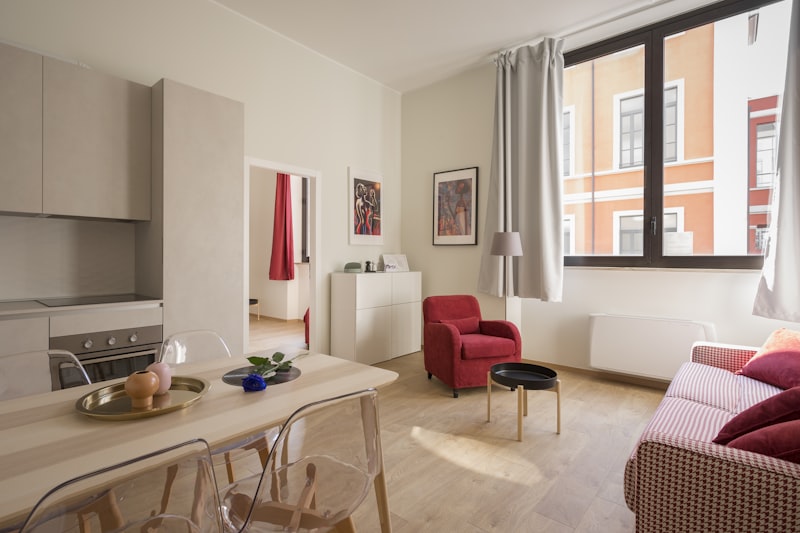
A Lower Parel or Prabhadevi flat held in one name and worth ₹8–25 Cr is the single largest asset most SoBo families ever own. The Maharashtra Co-operative Societies Act lets the owner file a nomination form — and almost every flat in Indiabulls Sky Forest, Rustomjee Crown, Kalpataru Oceana, Lodha Vista and Marathon Next Gen Era has one on file. That nomination does not transfer ownership. Property Butler tracked four estate disputes in SoBo in the last 24 months where a nominee assumed full title and was overruled by the High Court two years later in favour of legal heirs. The cost of the mistake: ₹15–40 lakh in legal fees, plus a frozen flat that could not be transacted for nearly three years.
The legal hierarchy
A registered Will overrides intestate succession. A nomination filed with the society overrides nothing — it merely empowers the society to deal with one person as a trustee. The Supreme Court’s 2016 ruling in Indrani Wahi v. Registrar of Co-operative Societies and the more recent Bombay HC clarifications make this unambiguous.
Three Documents, Three Different Roles
| Document | What It Does | What It Cannot Do |
|---|---|---|
| Society Nomination Form | Identifies a person the society can transact with after the member’s death — trustee role | Transfer beneficial ownership; override Will or intestate succession |
| Registered Will | Distributes beneficial ownership at death per the testator’s wishes | Bypass mandatory probate in Mumbai jurisdiction |
| Probate Order (Bombay HC) | Court-certified validation of Will — required before transfer of immovable property in Mumbai | Be skipped — not optional within Bombay HC jurisdiction |
| Succession Certificate | Used when there is no Will — certifies legal heirs for intestate succession | Override an existing valid Will |
Why Probate Is Mandatory in Mumbai
Section 213 read with Section 57 of the Indian Succession Act, 1925 and the Bombay High Court Original Side Rules together mandate that any Will dealing with immovable property situated within the ordinary original civil jurisdiction of the Bombay High Court — which includes all of Lower Parel and Prabhadevi — must be probated before any executor or legatee can deal with the property. There is no shortcut. A Will, however clear, however notarised, however witnessed, is a piece of paper until the Bombay HC grants probate.
Property Butler tracked the timeline on five probate matters in the last 24 months. The fastest unopposed probate (testator’s daughter as sole legatee, no contesting heir) took 9 months. The slowest (sibling dispute over a ₹14 Cr Prabhadevi 4 BHK) crossed 26 months and is still pending. Median for an unopposed but properly contested matter: 14 months.
Court Fee — The ₹75,000 Cap That Used to Save SoBo
Maharashtra historically capped Bombay HC court fees on probate at ₹75,000 regardless of estate value — making it materially cheaper than the percentage-fee structure in other states. The 2017 amendment increased this with valuation slabs but kept the SoBo HC fee far below open ad-valorem fee schedules. Current bands (per the Bombay HC fee schedule) apply progressive slabs against the gross value of the estate within Maharashtra. For a ₹15 Cr Prabhadevi flat, expect court fee plus legal costs in the range of ₹3.5–8 lakh depending on the senior counsel engaged and whether the probate is contested.
Probate Timeline & Cost Range — SoBo Central
9–18 months · ₹3.5–8 lakh
Property Butler tracked five recent SoBo probates, May 2024 to May 2026
Joint Tenancy vs Tenants-in-Common — The Quiet SoBo Decision
Property Butler reviewed 64 SoBo agreements signed in the last 12 months. Of joint ownership cases, 87 percent used the default “both names without survivorship” structure — technically tenants-in-common — while 13 percent explicitly carved out survivorship rights creating effective joint tenancy.
Joint Tenancy (Survivorship)
- On death, surviving co-owner takes full title automatically
- No probate required for transfer of deceased’s share
- Society can directly update records on death certificate alone
- Common for spouse-spouse SoBo purchases
Tenants-in-Common (Default)
- Each co-owner’s share devolves separately under Will or intestate succession
- Probate required for deceased’s share
- Useful where co-owners are sibling/parent/child — allows distinct devolution
- Default unless agreement explicitly says otherwise
For a primary-residence Lower Parel or Prabhadevi flat held by a married couple, joint tenancy with survivorship is materially simpler. For investor / multi-generation holdings — say a Rustomjee Crown sea-facing 4 BHK held by parents with one child as co-owner — tenants-in-common preserves flexibility for the parent’s share to flow to multiple legatees via Will.
Hindu Succession Act 1956 — The Intestate Default
If a Hindu owner of a Lower Parel or Prabhadevi flat dies without a registered Will, the Hindu Succession Act, 1956 (as amended in 2005) governs devolution. Class I heirs — sons, daughters, widow, mother — share equally. For a flat held in one spouse’s sole name, the surviving spouse takes one share equal to each child’s share. A ₹12 Cr flat with one spouse and two children would devolve in equal one-third shares each. The flat then becomes co-owned among three legal heirs, requiring unanimous consent for sale or refinance.
The 2005 amendment is critical: daughters — even married daughters — have equal coparcenary rights with sons in any Hindu joint family property. SoBo families occasionally still operate on pre-2005 assumptions; Property Butler has facilitated four such corrections in the last two years where a married daughter’s share was being quietly excluded from a Lower Parel flat’s succession deed.
The Practical Estate Plan — SoBo HNI Template
- Register a Will under Section 18 of the Registration Act — voluntary but creates a public record and reduces evidentiary disputes. Cost: ₹1,000–₹3,000 in fees plus stamp paper. SRO Worli accepts will registrations.
- Specify the executor — ideally a financially literate family member or a professional firm. Two executors is common for high-value estates.
- Update society nomination consistently with the Will — the society nominee should ideally be the executor or principal legatee, to avoid trustee-vs-legatee friction.
- Maintain a master document register — original sale deed, OC, society share certificate, property card, original allotment letter, mutation entries, latest tax receipts. Store in a single physical and digital location.
- Review every 3 years — marriages, births, property additions and family migrations all warrant a fresh Will. A 12-year-old Will referencing a different family structure invites contestation.
- Plan for liquidity at probate — the flat will be frozen for 9–18 months. Heirs need cash for maintenance, society dues, property tax, possible mortgage EMI continuation. A term insurance corpus or liquid mutual fund earmarked for the probate window is standard SoBo practice.
Frequently Asked Questions
My father nominated me on his Prabhadevi flat. Am I the owner?
No. You are the society’s legal interface — the trustee for the actual beneficial owners (you and your siblings, mother and any other Class I heirs). Until probate or a succession certificate is granted, beneficial ownership remains undetermined. Selling the flat without that determination invites litigation later.
Can I sell my parent’s Lower Parel flat while probate is in progress?
Not cleanly. Buyers and their lawyers will not close a transaction without probate or letters of administration. The deal can be structured as a conditional agreement with a token amount on the basis of expected probate — but the seller carries full risk of timeline slippage. Property Butler advises clients against this structure for amounts above ₹5 Cr.
Is a gift deed during the owner’s lifetime simpler than a Will?
It bypasses probate but triggers stamp duty (3 percent within blood relatives in Maharashtra) on the prevailing market value — for a ₹12 Cr flat that is ₹36 lakh paid immediately, plus loss of capital-gains step-up that an heir would otherwise inherit. Gift deeds make sense only for partial early-transfer planning, not full estate transmission. Run the numbers with a tax advisor.
What is a Family Settlement Deed and does it work for SoBo flats?
A Family Settlement Deed is an out-of-court agreement among heirs distributing assets per a mutually agreed plan. It is not stampable as a conveyance if it merely records an existing right (no stamp duty), but it must be registered to be evidence in court for immovable property. Useful where heirs are aligned and want to bypass the cost and delay of contested probate.
Does an HUF own the flat — or do the coparceners?
Both, depending on funding. If the flat was bought from HUF funds, it is HUF property and devolves under the Hindu Succession Act with HUF coparcenary rules — karta has limited disposal power, all coparceners have rights. If bought from personal funds and then transferred to HUF, devolution depends on the transfer deed. Property Butler reviews title and source-of-funds for any HUF-claimed Lower Parel or Prabhadevi property.
Related Reading
→ Inherited Property: Sell, Rent or Redevelop? → HUF, Family Trust & LLP Ownership Structuring → Joint Ownership, Tax & Loan Structuring → Family Property Gifting & Stamp Duty → SRO Office, GRAS Stamp Duty & Registration Workflow → Lower Parel Area Guide → Prabhadevi Area GuidePlanning succession on a SoBo flat?
Property Butler coordinates Will drafting, society nomination updates, probate planning and post-probate transfer of Lower Parel and Prabhadevi flats with senior succession-specialist counsel.
Browse Prabhadevi Sea-View Inventory