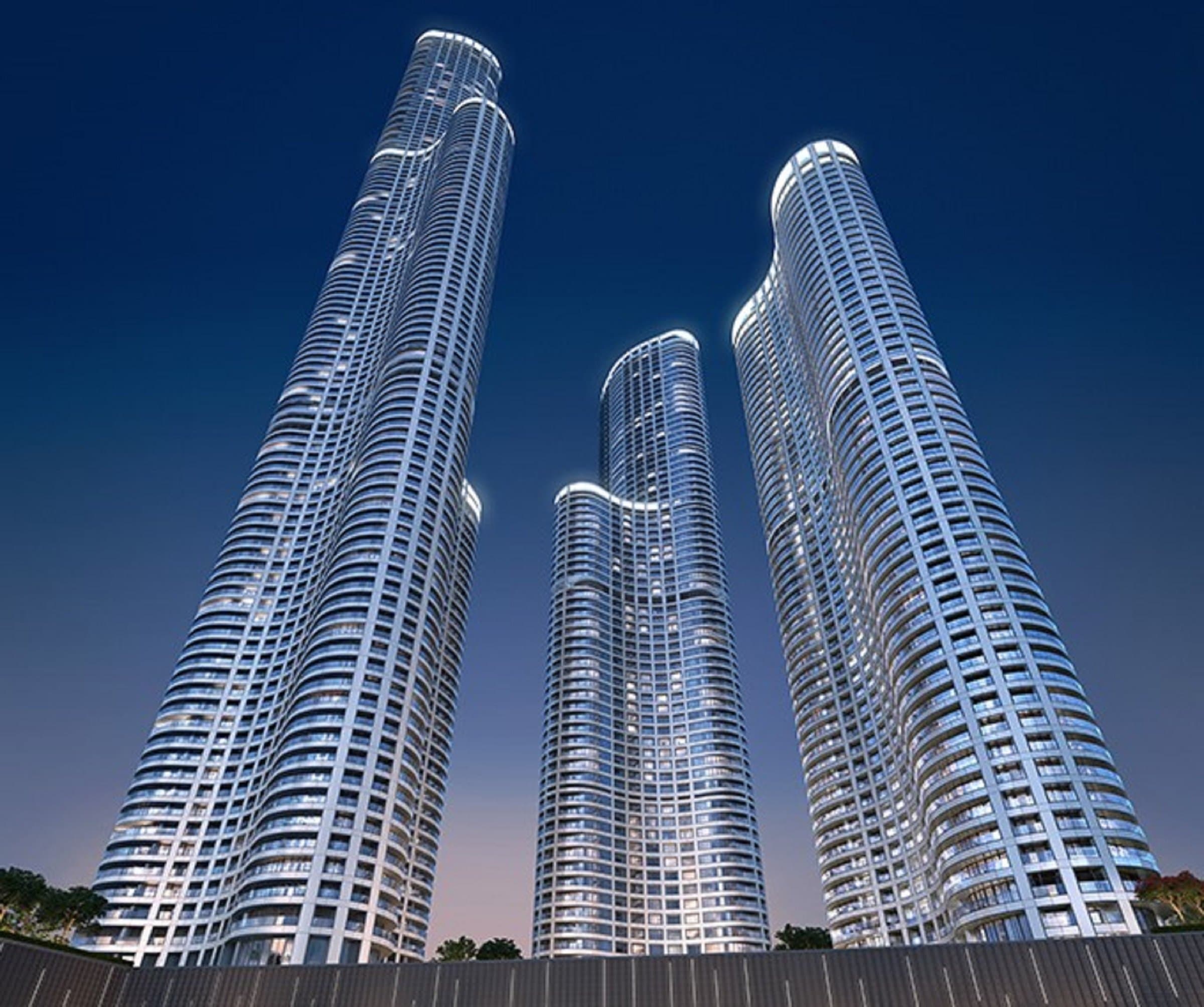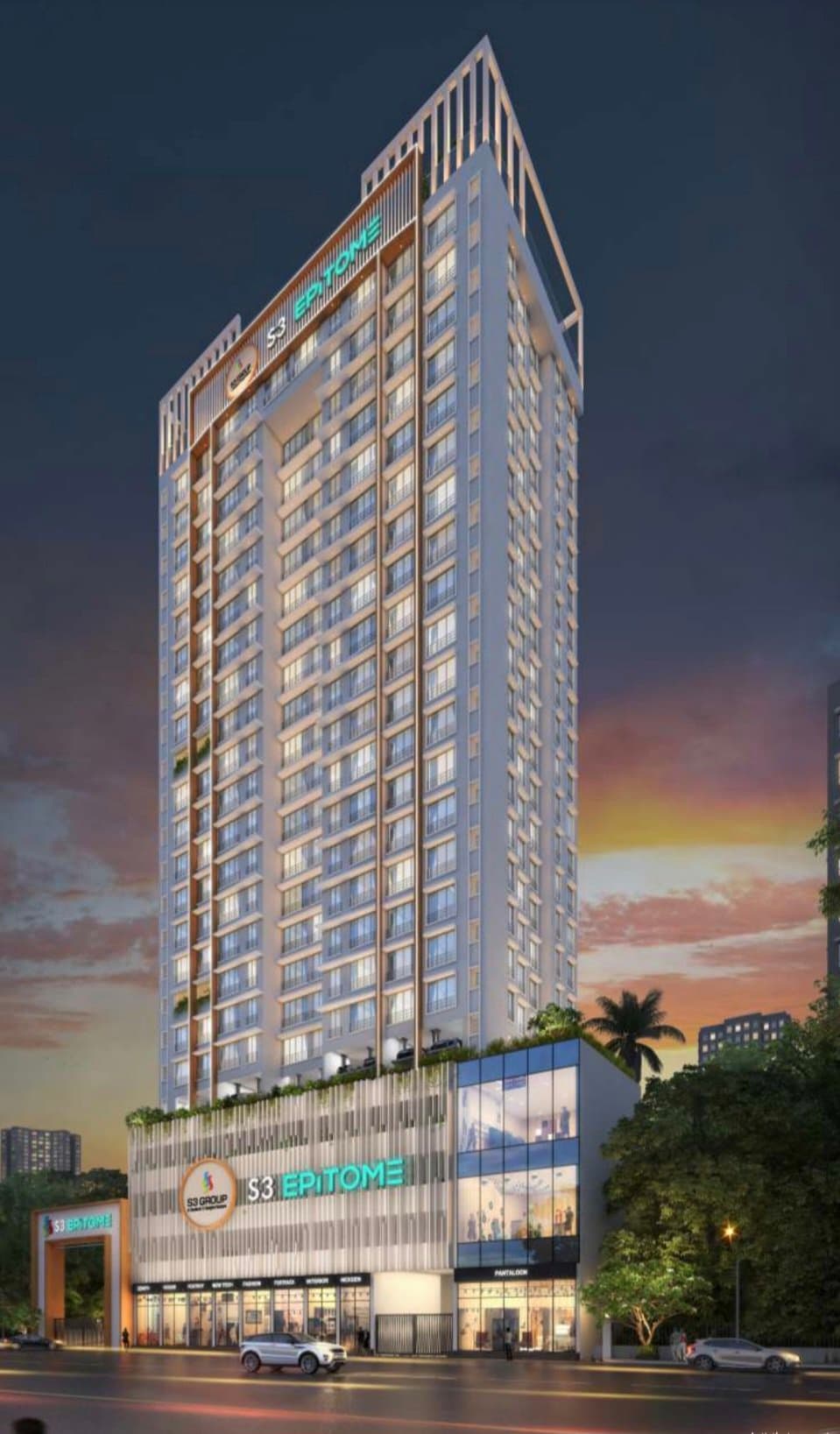
The conversation between Mumbai's affluent young parents and a ₹12-Cr Lower Parel apartment goes roughly like this: the master suite is perfect, the kitchen is Italian, the view is the city. Then the inevitable question — where do the kids go? In premium tower design, the answer used to be a small fenced patch on the amenity deck called a "kids' play zone" and a token soft-play room on the clubhouse level. That answer was sufficient for the 2010-2018 generation of luxury towers in Lower Parel and Prabhadevi. The 2024-2026 generation of children growing up in these towers — kids of 35-45 year-old founder-CEOs, BFSI partners, NRI returners, and dual-income professional couples — demand more, and developers who haven't responded are losing the family-buyer segment. Property Butler tracks the child-friendly amenity tier as a distinct pricing variable in the corridor, with measurable PSF impact on resale and a clear effect on rental velocity for the 3-4 BHK end-user segment.
This decoder is built for buyers with children under 14 — the primary demographic where this matters. Property Butler tracks 30 active Lower Parel sale listings and 65 active Prabhadevi sale listings as of May 2026; roughly 22% of those listings are bought or sold with a child-amenity discussion as the primary or secondary decision driver. The corridor's premium towers cluster into four tiers on child-amenity readiness, and the tier directly maps to family-buyer demand absorption.
Why this matters more in Lower Parel and Prabhadevi than anywhere else
The corridor concentrates a specific buyer profile: 35-45 year-old senior professionals with 1-2 children typically aged 3-12, dual-income, both parents in demanding careers, no extended-family child-care support, and limited safe street-level play space in a dense traffic corridor. The tower's amenity slab becomes a primary child environment — afternoons, weekends, supervised play, school-friend visits, birthday party space. A poorly-provisioned tower forces the family into expensive external alternatives (kids' clubs in Worli or BKC at ₹40,000-₹85,000 per quarter membership) or simply outgrows the apartment within 3-5 years. A well-provisioned tower retains the family for a 10-15 year horizon.
The four child-amenity tiers Property Butler tracks
| Tier | What's provisioned | Typical buildings | Family-buyer absorption |
|---|---|---|---|
| Tier 1: Full child-development campus | Dedicated indoor activity room, supervised daycare/montessori-on-premises, outdoor turf play, kids' pool, art studio, library nook, party room, kids' gym, music room | Rustomjee Crown cluster (Prab), Indiabulls Sky Forest cluster (LP), Lodha World Towers (LP) | Strong; ~22-28% PSF premium captured by Family Tier 1 |
| Tier 2: Core kids' suite | Indoor activity room, outdoor turf play, kids' pool (sometimes shared with adult pool), party room | Marathon Futurex (LP), Kalpataru Oceana (Prab), Lodha Allura (LP), Sumer Trinity (Prab) | Solid; family buyers transact but negotiate harder |
| Tier 3: Token kids' corner | Single soft-play room, small fenced patch on amenity deck | Mid-vintage 2018-2021 LP stock, older Prabhadevi towers | Family buyers undertake external supplement (Worli/BKC kids' clubs) |
| Tier 4: None | No dedicated provision; clubhouse gym/pool only | Boutique pre-2016 towers, certain compact-luxury 2-3 BHK projects | Family buyers usually avoid; DINK / empty-nester buyer segment instead |
The 9-element child-amenity checklist
Property Butler walks every short-listed unit's amenity slab during the pre-token visit and scores it against this checklist. A Tier 1 tower will hit 8-9 of 9; a Tier 4 tower will hit 0-2:
The 9-element child-amenity audit
- Outdoor turf play area: Minimum 600 sqft, EPDM-rubber or artificial-turf surface, fenced, shaded portion. Should accommodate 8-12 kids simultaneously.
- Indoor activity room: Climate-controlled, 400+ sqft, soft-fall flooring, age-mixed play equipment, supervision desk.
- Kids' pool: Depth 0.6-1.0 m, separate from adult pool, lifeguard during peak hours, heated for monsoon use. Some Tier 1 towers run a learn-to-swim programme on-site.
- Daycare or montessori on-premises: Licensed operator (Bachpan, Klay, Footprints, EuroKids) with a long-lease tie-up. Critical for dual-income families.
- Art / craft studio: Tables, sinks, supplies storage. Hosts after-school classes 4-6 PM weekdays.
- Kids' library / reading nook: Books, beanbags, age-grouped collection. Often shared with adult library but with a dedicated kids' wing.
- Party / birthday room: 600-900 sqft, separate from primary club lounge, bookable. Reduces the in-flat birthday-mess problem.
- Kids' gym: Age-appropriate equipment, gymnastics mats, small trampoline, parent-led play. Tier 1 only.
- Music / activity / drama room: Sound-attenuated, instruments, mirror wall. Often a multi-purpose hybrid in Tier 1 towers.
The on-premises daycare question — why it matters disproportionately
The single highest-leverage element of the child-amenity stack for the corridor's family-buyer segment is the on-premises licensed daycare or montessori. Lower Parel and Prabhadevi's commute geography means a dual-income couple often loses 70-110 minutes per parent per day to school drop-off, pick-up, and after-school care. An on-premises daycare collapses that to a 4-minute lift ride. The household productivity gain is structural — and the willingness-to-pay reflects it. Property Butler's tracked transactions over the past 18 months show that Tier 1 towers with a working on-premises daycare command a 4-7% PSF premium specifically for 3-4 BHK family-buyer segments, controlled for floor, wing, and configuration.
Five operators dominate the on-premises daycare market in the corridor: Bachpan, Klay, Footprints, EuroKids, and Kangaroo Kids. The lease is typically a 15-25 year tie-up between the developer (or the formed society) and the operator. Buyers should verify: (a) the lease tenure remaining, (b) the operator's regulatory licensing status with the Maharashtra State Council for ECCE, (c) the operator's hours of operation (Tier 1 should be 8 AM - 7 PM, with optional extended care), (d) the priority-admission policy for tower residents vs external students, (e) the per-month fees compared to external market.
School catchment overlay — the second-layer question
Tower-level amenities matter for 0-6 year-olds. School catchment matters for 6-18 year-olds. The corridor is well-served on the school front: Aditya Birla World Academy (Worli), Don Bosco (Matunga), Dhirubhai Ambani International (BKC), JBCN International (Parel), Hill Spring International (Tardeo). Property Butler's Lower Parel school catchment guide covers the school-side decision; the tower-amenity decision is the complement. A Tier 1 tower in a strong school catchment (e.g. Rustomjee Crown Prabhadevi, with Dhirubhai Ambani International, Bombay Scottish Mahim, and Aditya Birla World Academy all under 5 km) is the optimal family-buyer combination.
The teen problem — Tier 4 buildings and 11-17 year-olds
The most under-served demographic in the corridor's amenity slabs is the 11-17 age band. Pre-teens and teenagers age out of the toddler-soft-play / kids-pool stack within 2-3 years; the next step typically involves a teen lounge, a gaming-PS5 room, a music practice room, a basketball half-court, or a co-working / study lounge for the SAT-prep cohort. Almost no Lower Parel or Prabhadevi tower provisions this segment well. The result: families with teenagers either move out of the corridor (typically to Bandra West or Juhu's larger-format villa stock) or absorb the friction. Property Butler's view: this is the most under-priced bug in the corridor's premium stock, and the next 2024+ generation of launches will address it.
✓ What to look for at site visit
- Visit the kids' zone at 5 PM on a weekday — are kids actually there?
- Ask for the activity calendar — Tier 1 runs weekly classes
- Confirm daycare lease tenure and licensing
- Check kids' pool temperature in monsoon — heated?
- Verify staffing: lifeguard, supervisor, security
⚠ Red flags
- Kids' room is locked / unused on weekdays
- Daycare operator changed twice in 5 years
- Outdoor turf has visible degradation
- Society AGM minutes show kids-amenity reduction motions
- No nightly safety patrol on amenity deck
PSF impact — the family-buyer premium
Family-buyer-segment PSF differential (LP + Prabhadevi)
Tier 1 vs Tier 4: +4.4% to +7.2% PSF
Controlling for floor, view, wing, vintage, BHK. Premium widens for 3-4 BHK family-buyer transactions to 6.1-9.3% PSF.
Frequently Asked Questions
Can a society retrofit kids' amenities in a Tier 4 tower?
Partially. Indoor activity rooms, art studios, and party rooms can be carved from existing common areas with an AGM vote and a society capex. Outdoor turf requires available open space — many Tier 4 towers don't have it. On-premises daycare requires a long-lease commitment and licensing, which means a formed-society conveyance has to be in place. Property Butler's experience: societies that retrofit at the indoor-amenity level typically lift the tier from 4 to between 2 and 3; reaching Tier 1 retrofit is rare and capex-heavy (₹1.8-3.5 Cr society-level capex).
Is the on-premises daycare an additional CAM cost?
Usually no — the operator pays rent to the society and that rent offsets CAM. Some towers structure it as a notional rent (the space is provided at concessional cost to the operator) in exchange for priority admission for residents and discounted monthly fees. Buyers should verify the structure: an operator paying market rent and giving no resident benefit is the worst outcome; an operator paying notional rent and giving priority admission plus discounted fees is the best.
How does this compare to comparable Bandra West stock?
Bandra West premium stock is more variable. The boutique-villa segment (Pali Hill, Carter Road) has lower formal-amenity provision but higher street-level walkability and proximity to parks like Bandstand. The high-rise segment in BKC-adjacent Bandra East has amenity slabs comparable to LP/Prabhadevi Tier 2 or 3. The Lower Parel-Prabhadevi advantage is concentration: more towers per square kilometre with Tier 1 child amenities, easier comparison shopping for family buyers. See Lower Parel vs Bandra West luxury buyer decision for the broader comparison.
Are kids' amenities available to rented residents the same as owned residents?
Almost always yes. Society bylaws in the corridor's premium stock are uniformly written to extend amenity access to bonafide residents — owner or tenant — on the same terms. This matters for landlords renting 3-4 BHK family units, because the rental ask is partially supported by tenant-side access to the same amenity slab the owner would have used. Property Butler's Lower Parel rental yield decoder covers how amenity tier interacts with achievable rent.
If I have no kids, am I subsidising the kids' amenities through CAM?
Slightly. CAM in Tier 1 towers includes the kids' amenity operating cost — lifeguard, supervisor, equipment maintenance, turf replacement, daycare-space utilities. The incremental CAM on a Tier 1 vs Tier 4 tower is roughly ₹0.6-1.1 per sqft per month, of which the kids' segment is ₹0.2-0.4. On a 3-BHK with 1,800 sqft carpet, that's an extra ₹360-720 / month vs Tier 4. Buyers without children typically absorb it as part of the resale-premium calculus — they'll capture the same Tier 1 premium when they sell. DINK and empty-nester buyers who never plan to monetise the premium sometimes choose Tier 3-4 buildings explicitly, and Property Butler's DINK buyer playbook covers that decision in detail.
Family buyer searching Lower Parel or Prabhadevi?
Property Butler categorises every shortlisted tower on the 9-element child amenity audit before site visit. Search the corridor's 3-4 BHK family-buyer inventory.
Search family-buyer inventory