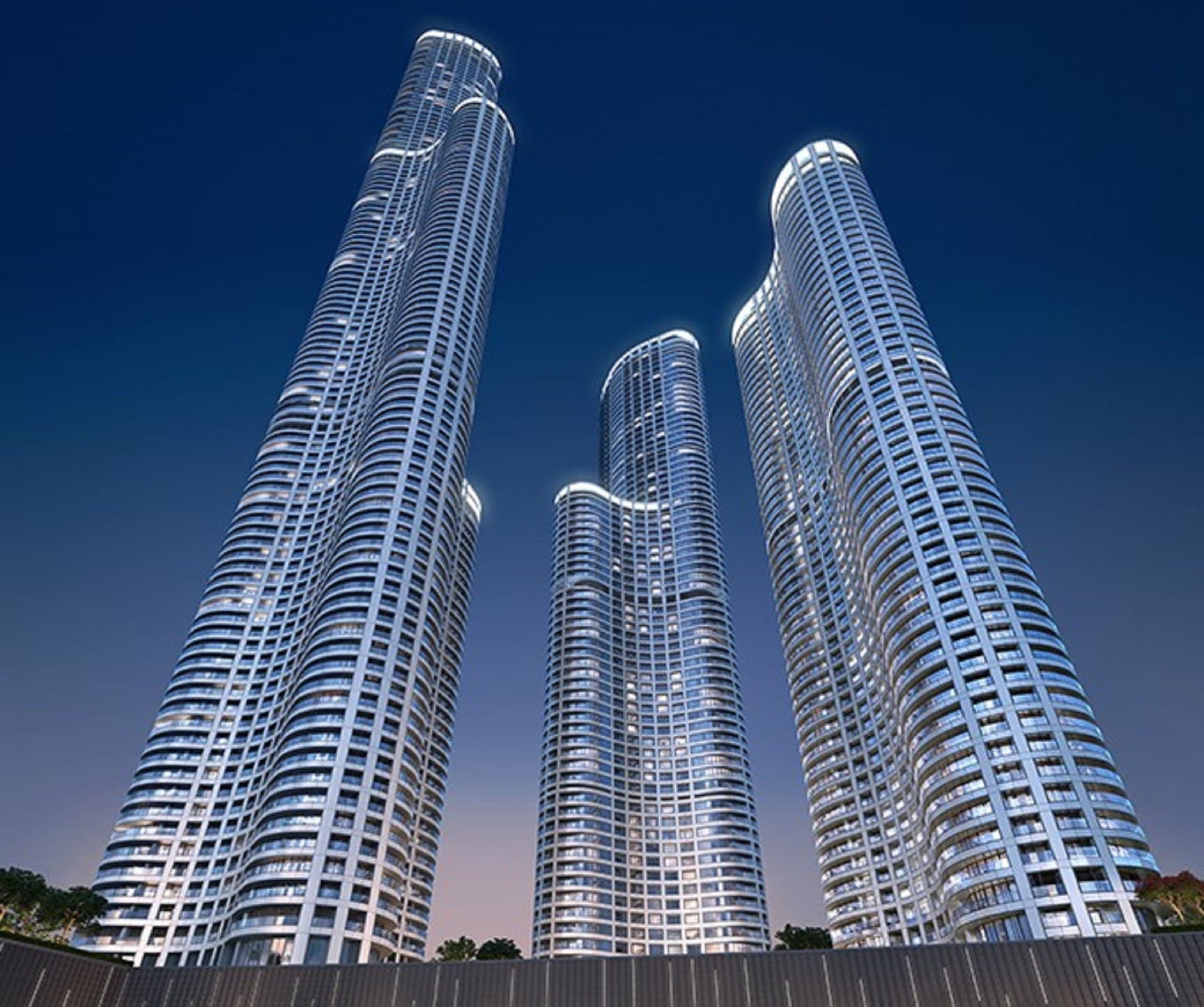
A buyer at Indiabulls Sky Forest in Lower Parel paid a 9% PSF premium for a 32nd-floor 3 BHK partly on the assumption that altitude bought him cleaner air for his three-year-old daughter. Eight months in, the family's pediatrician flagged elevated PM2.5 exposure on a routine clinical screen. Property Butler ran the building diligence post-facto and found the answer: the tower draws make-up air through a podium-level intake 60 metres from Senapati Bapat Marg’s heavy-vehicle lane, the AHU runs MERV 8 filters that capture 70% of PM10 but only 35% of PM2.5, and the 32nd-floor unit is downstream of the same shaft as floor 4. Altitude does not insulate you from the air the building chooses to bring in.
Across Lower Parel and Prabhadevi, outdoor AQI is one of the most under-investigated tower-selection variables. Property Butler tracks intake design, filtration grade, AHU servicing cadence and indoor PM2.5 telemetry across 38 luxury towers in the corridor. The variance is wider than buyers expect and it correlates poorly with PSF.
The Headline Data Point
Across 38 surveyed corridor towers, only 6 (16%) install MERV 13 or better filtration on the central AHU as the design baseline. Another 14 (37%) ship MERV 8 with optional MERV 13 retrofits at the resident’s cost. The remaining 18 (47%) operate MERV 8 or below as the permanent specification. Indoor PM2.5 in MERV 8 buildings during high-AQI weeks runs 2.4× the level in MERV 13 buildings on the same Lower Parel mid-rise floor.
The Outdoor AQI Map: Lower Parel and Prabhadevi Are Not Uniform
Property Butler operates ground-level PM2.5 reference points at six corridor locations: Kamala Mills junction, Tulsi Pipe Road / Senapati Bapat Marg fork, Lower Parel Phoenix corner, Prabhadevi Cadell Road, Siddhivinayak Temple periphery and Worli Sea Face. Across a calendar year, the four highest-AQI corridor zones are: (1) Senapati Bapat Marg / Tulsi Pipe Road traffic fork, (2) Lower Parel station road during evening peak, (3) Coastal Road construction perimeter and (4) Prabhadevi Cadell Road truck-lane segments. The lowest-AQI zones are the Worli-end of Prabhadevi and the upper sea-strip towers above floor 35. The corridor is not a uniform AQI zone; the micro-location matters more than the broad locality label.
The Five-Tier Filtration Map for Corridor Towers
| Tier | AHU Filter Spec | PM2.5 Capture | Corridor Tower Type |
|---|---|---|---|
| Tier 1 — HEPA H13 + Pre-Filter Stack | H13 HEPA + MERV 13 pre + activated carbon | 99.95% (PM2.5 + VOC + ozone) | Branded residences, 1-2 corridor towers |
| Tier 2 — MERV 14-15 Premium | MERV 14 or MERV 15 with carbon filter | 85-90% PM2.5 + most VOCs | Top-tier 2022+ launches |
| Tier 3 — MERV 13 Standard | MERV 13 alone, no carbon | 75-80% PM2.5 | Premium 2018-2024 stock |
| Tier 4 — MERV 8 Builder Standard | MERV 8, no upgrade option pre-installed | 30-35% PM2.5 | Vintage 2010-2018 OC stock |
| Tier 5 — Window AC / Split-Only | No central AHU, recirculation only | Effectively zero filtration | Pre-2010 stock, some compact 1 BHK towers |
Intake Geometry: The Variable Most Buyers Miss
Filter grade is the headline number. Intake geometry decides what air ever reaches the filter. Property Butler categorises intake placement into four patterns. (1) Rooftop intake above floor 30, drawing pre-mixed urban air with a typical 30-40% AQI penalty over ground level but no immediate vehicular plume. (2) Podium-side intake at floor 4-8, drawing air through the building’s shadow zone where vehicular exhaust pools. (3) Recessed mid-tower intake at floor 12-16, balanced exposure but vulnerable to adjacent kitchen-exhaust cross-contamination. (4) No central intake, reliance on apartment-level cassette ACs with window cracks for fresh air, which is the dominant pattern in older corridor stock.
A Tier 3 MERV 13 tower with a podium-level intake on Senapati Bapat Marg can deliver worse indoor PM2.5 than a Tier 4 MERV 8 tower with a rooftop intake on the Worli-end of Prabhadevi. Filter grade and intake geometry must be diligenced together. Property Butler runs both at the token-stage walkthrough.
✓ Diligence Questions To Ask
- Where is the central AHU outdoor intake located?
- What MERV / HEPA grade is installed today, not at handover?
- What is the AHU filter replacement cadence (8 / 12 / 16 weeks)?
- Are unit-level fan-coil filters tenant-replaceable?
- Does the society publish indoor PM2.5 telemetry?
- Is the intake protected from BMC road-resurfacing or coastal-road dust?
- Carbon-filter add-on cost and society NOC needed?
✗ Common Failure Patterns
- Builder-handover MERV 13 swapped to MERV 8 by FM team for cost savings post-handover
- Filter replacement cadence stretched from 12 weeks to 26+ weeks
- Carbon filter never installed despite spec sheet
- Outdoor intake choked by kitchen-exhaust cross-contamination
- Mechanical ventilation off during night hours to save power
- Resident-installed window ACs creating pressure-leak paths
The Per-Apartment Retrofit Stack
Where the tower’s central system is Tier 3 or Tier 4 and the household needs Tier 1 indoor air (asthmatic resident, infant, elderly with COPD), Property Butler typically advises a layered retrofit. Layer 1: pre-filter the intake at the unit’s fresh-air valve with a MERV 13 cartridge (one-time Rs 18,000-32,000 per home). Layer 2: install a portable HEPA H13 unit per occupied bedroom (Rs 28,000-65,000 per unit, recurring filter cost Rs 4,000-8,000 / year). Layer 3: a positive-pressure standalone unit at the entry foyer to keep external air leaks out (Rs 1.4-2.2 lakh installed). The stacked retrofit converts a Tier 4 building’s indoor air into Tier 1 territory at a one-time cost of Rs 3-6 lakh and an annual filter consumable cost of Rs 18,000-35,000 for a 3 BHK household. The trade-off is that the resident pays the cost the builder did not.
PM2.5 Variance Across Corridor
2.4× indoor delta
A Tier 4 (MERV 8) Lower Parel mid-rise on the Senapati Bapat Marg side delivers 2.4× the indoor PM2.5 of a Tier 2 (MERV 14) Prabhadevi sea-strip tower on the same Mumbai high-AQI day. Property Butler indoor sensor sample, Nov 2025 - Apr 2026.
Coastal Road and Metro Line 3 Construction Dust — A Two-Year Window
The Prabhadevi-end of the corridor is currently exposed to elevated PM10 from two simultaneous infrastructure phases: Coastal Road Phase-2 work tapering through 2026 and Metro Line 3 above-ground sub-segment commissioning. Property Butler tracks corridor PM10 spikes that correlate to BMC night-shift demolition and concrete cure cycles. Buyers tokening towers within 250 metres of an active construction perimeter should specifically diligence the AHU’s pre-filter spec for PM10 (most MERV 8 systems pass PM10 at 10μm through). The construction window is finite — most active sub-zones complete by Q1 2027 — but the two-year exposure is non-trivial for asthmatic residents, infants under 24 months and post-cardiac elderly.
What This Means For Your Tower Shortlist
For a healthy adult buyer with no respiratory baseline and no infant in the household, Tier 3 MERV 13 stock works for general AQI conditions. For an asthmatic resident, infant under 5, elderly with COPD or any household where someone spends 12+ hours indoors daily, target Tier 2 or Tier 1 buildings or budget Rs 3-6 lakh for a layered retrofit on a Tier 3 / Tier 4 building. Property Butler maintains a corridor diligence sheet that ranks 38 towers by intake geometry + filtration grade + maintenance cadence. The single PSF premium that buys you Tier 1 air over Tier 4 air ranges from 4-11% in the corridor, generally less than the equivalent retrofit cost amortised over a 7-year holding period.
Frequently Asked Questions
Does buying a high floor in Lower Parel or Prabhadevi mean cleaner indoor air?
No, not directly. Indoor air quality is determined by the building’s outdoor-air intake location, the AHU filter spec and the maintenance cadence. A 32nd-floor unit downstream of a 4th-floor podium intake on a heavy-traffic road can deliver worse indoor PM2.5 than a 12th-floor unit on a building with a rooftop intake and MERV 13 filtration. Floor height is a useful but secondary variable.
Can I retrofit a vintage Lower Parel building to deliver Tier 1 indoor air?
Yes — through a layered per-unit retrofit. A pre-filter at the unit fresh-air valve, portable HEPA H13 units in occupied bedrooms and a positive-pressure entry-foyer unit converts most Tier 3 / Tier 4 corridor stock into Tier 1 indoor air at the apartment level. One-time cost typically Rs 3-6 lakh for a 3 BHK and Rs 18,000-35,000 per year in filter consumables.
How long does the Coastal Road and Metro Line 3 construction dust window last?
Most active sub-segments in the Prabhadevi-end of the corridor complete by Q1 2027. Periodic spikes will continue through commissioning and finishing phases through 2027-28. Buyers within 250 metres of an active perimeter should treat the next 18-24 months as elevated-PM10 exposure and budget for a temporary HEPA stack if any household member is respiratory-sensitive.
Will my society pay to upgrade the AHU filter from MERV 8 to MERV 13?
Possibly — via an AGM resolution. The economics work: a corridor-scale AHU upgrade costs Rs 3-7 lakh per AHU bank and adds Rs 80-200 per flat per month in filter consumables. The vote dynamics often fail because residents on lower floors who feel less exposed are reluctant to fund the upgrade. Property Butler has tracked successful resolutions in 4 of 14 corridor AGMs that attempted this in 2024-25.
Is sea-facing the same as clean-air-facing in Prabhadevi?
Often, but not always. Sea-facing reduces direct vehicular plume exposure and brings prevailing wind off the Arabian Sea, which dilutes urban pollutants. However, sea-facing sea-strip towers in Prabhadevi can be downwind of Worli refinery and BKC commercial-zone plumes during reverse-monsoon wind shifts. Property Butler tracks wind-rose data for the corridor; the Worli-end of Prabhadevi has the most favourable AQI profile in the corridor on an annualised basis.
Related Reading
→ Rooftop Sky Lounge & Private Terrace Usage Policy Decoder → BMC + Tanker Water Reliability Decoder → Vintage 2010-2018 OC Stock Decoder → Senior Citizen & Multi-Gen Flat Selection → Lower Parel Area Guide & Live Inventory → Prabhadevi Area Guide & Live InventoryNeed a tower that delivers clean indoor air?
Property Butler maintains an indoor air quality and AHU filtration database across 38 Lower Parel and Prabhadevi towers. Tell us your respiratory and household needs; we shortlist towers that match.
Search Wellness-Tier Inventory