Lower Parel's transformation from Mumbai's textile heart to a luxury high-rise corridor is half-finished. The half that completed - Phoenix Mills, Kamala Mills, India United Mills - produced the polished commercial-residential cluster that drives the corridor's brand. The half that remains is the textile industry's physical residue: 14 surviving mill chimneys, the contiguous BDD chawl belt at the corridor's south-western edge, and a scattered overlay of conservation-listed industrial structures that quietly shape tower heights, FSI permissions and redevelopment economics in a specific set of 9-12 plots. Most buyers never read about it. The buyers who do read about it close better deals.
The Heritage Overlay In Numbers
Heritage Conservation Committee Grade II-A and II-B designations cover 14 standing chimneys across Lower Parel and adjacent Mahalaxmi-Prabhadevi belts. Conservation overlay typically reduces achievable FSI by 8-18% on the affected plot footprint while permitting full FSI on the unaffected balance - the net redevelopment economics turn on plot geometry and the chimney's specific protection grade.
The Three Heritage Categories That Matter For Real Estate
Lower Parel's industrial heritage breaks into three regulatory categories with very different real-estate consequences. Grade II-A structures (typically the prominent mill chimneys and the architecturally significant mill office buildings) carry the strictest protection: no demolition, mandatory facade preservation, and DCR provisions that constrain adjacent building heights and setbacks within a defined buffer. Grade II-B and Grade III structures (smaller chimneys, weaving sheds, chawl-row blocks) carry softer protections that allow adaptive reuse and partial demolition under heritage committee approvals. BMC-recorded but non-graded structures sit outside the formal heritage regime but trigger informal NOC and political-stakeholder processes that lengthen redevelopment timelines by 18-30 months.
For a buyer evaluating a residential tower next to a heritage-listed mill compound, the Grade II-A category is the one that materially shapes future-supply dynamics. A 60-storey neighbour cannot be built if the adjacent plot carries a Grade II-A chimney within the protection buffer. That structural cap on neighbouring height insulates current tower views and air corridor in a way that no contractual amenity assurance can replicate.
Which Lower Parel Plots Carry The Overlay
Property Butler's tracked heritage-overlay map identifies the meaningful pockets. The Bombay Dyeing Spring Mills compound and its surrounding Worli-Prabhadevi belt parcels carry Grade II structures that constrain tower heights on multiple adjacent plots. The India United Mills Nos. 2-3-4 compound, currently in phased redevelopment, retains Grade II chimneys that anchor the design language and impose height caps on parts of the redevelopment envelope. The Mafatlal Mills compound carries similar overlay structures.
The BDD chawl belt at Worli's edge, while not strictly inside Lower Parel administratively, sits at the corridor's south-western boundary and carries cluster-redevelopment regulations that interact with adjacent Lower Parel tower projects. The redevelopment of BDD chawls into modern housing for displaced residents plus saleable luxury stock creates a 2026-2030 supply wave with knock-on effects on Lower Parel and Prabhadevi pricing.
The Heritage-Adjacent Premium
| Tower Position | PSF Impact | View Insulation | Resale Velocity |
|---|---|---|---|
| Direct heritage-adjacent (under 100m) | +4-7% premium | High (height-capped neighbour) | 60-110 days |
| Heritage compound integrated (Kamala Mills, Phoenix) | +6-9% premium | Mixed (curated low-rise blocks) | 75-130 days |
| 100-300m from heritage parcel | Base | Moderate | 100-160 days |
| Tower on a heritage-overlay plot | -3 to -8% discount | N/A (own constraints) | 150-220 days |
The premium is real but counterintuitive: being next to a heritage-listed mill compound is worth more than being on top of one. The reason is structural - adjacent buyers get the view insulation and the brand halo without absorbing the construction-and-conservation cost penalty that the heritage-overlay plot's developer must pass through to the buyer.
The Adaptive-Reuse Brand Halo
Properties developed within preserved heritage compounds - Kamala Mills, Phoenix Marketcity precinct, India United Mills phase 1 - carry a brand halo that travels with the address. Buyers globally pay premium for industrial-heritage repurposing (the Brooklyn Industry City model, the London Battersea Power Station). Lower Parel's heritage compound integration commands a 6-9% PSF premium versus non-heritage equivalents in the same micro-cluster. The premium has grown since 2020 and shows no sign of compressing.
The compound's heritage features become resident-experience amenities: restored brickwork facades, preserved chimneys lit at night as architectural signatures, refurbished textile-machinery installations as compound art. Property Butler tracks resale narratives at the Kamala Mills-adjacent residential cluster showing buyer language emphasising the heritage compound integration as a primary purchase driver - it is sticky brand equity.
Heritage-Adjacent Premium
+6-9% PSF
For towers integrated into heritage-compound precincts vs equivalent non-heritage stock, Lower Parel and Prabhadevi corridor, 2026
The Chawl Question
The chawl heritage is more complex. Most Lower Parel chawls were built between 1880 and 1940 to house mill workers, and the surviving stock carries a mix of heritage-grade designations and SRA redevelopment status. The BDD chawl belt is the largest and most consequential - approximately 192 buildings on 92 acres at Worli's edge, currently in phased cluster redevelopment by Tier 1 developers. The redevelopment timeline runs into the 2028-2032 window, with saleable luxury stock expected to enter the market in successive phases.
For Lower Parel and Prabhadevi buyers in 2026, the BDD redevelopment is a supply-side variable that matters more than the heritage protection itself. The forward-supply impact on the Worli-Prabhadevi pricing band could meaningfully soften top-tier PSF in the 2029-2032 window. Buyers underwriting a 7+ year hold should model this supply wave into their exit assumptions.
Diligence Steps For Heritage-Overlay Plots
Resilient buys (heritage-adjacent)
- Tower 50-150m from a Grade II chimney with height cap protection
- Residential block inside a curated heritage-integrated precinct
- View corridor that crosses a heritage parcel (cannot be obstructed)
Red flags on heritage-overlay plots
- Heritage Conservation Committee NOC still pending at offer stage
- Project marketed full FSI despite plot carrying overlay structure
- No facade preservation clause in the development agreement
- Heritage litigation history within the past 7 years on the parcel
Towers In The Corridor That Score Well
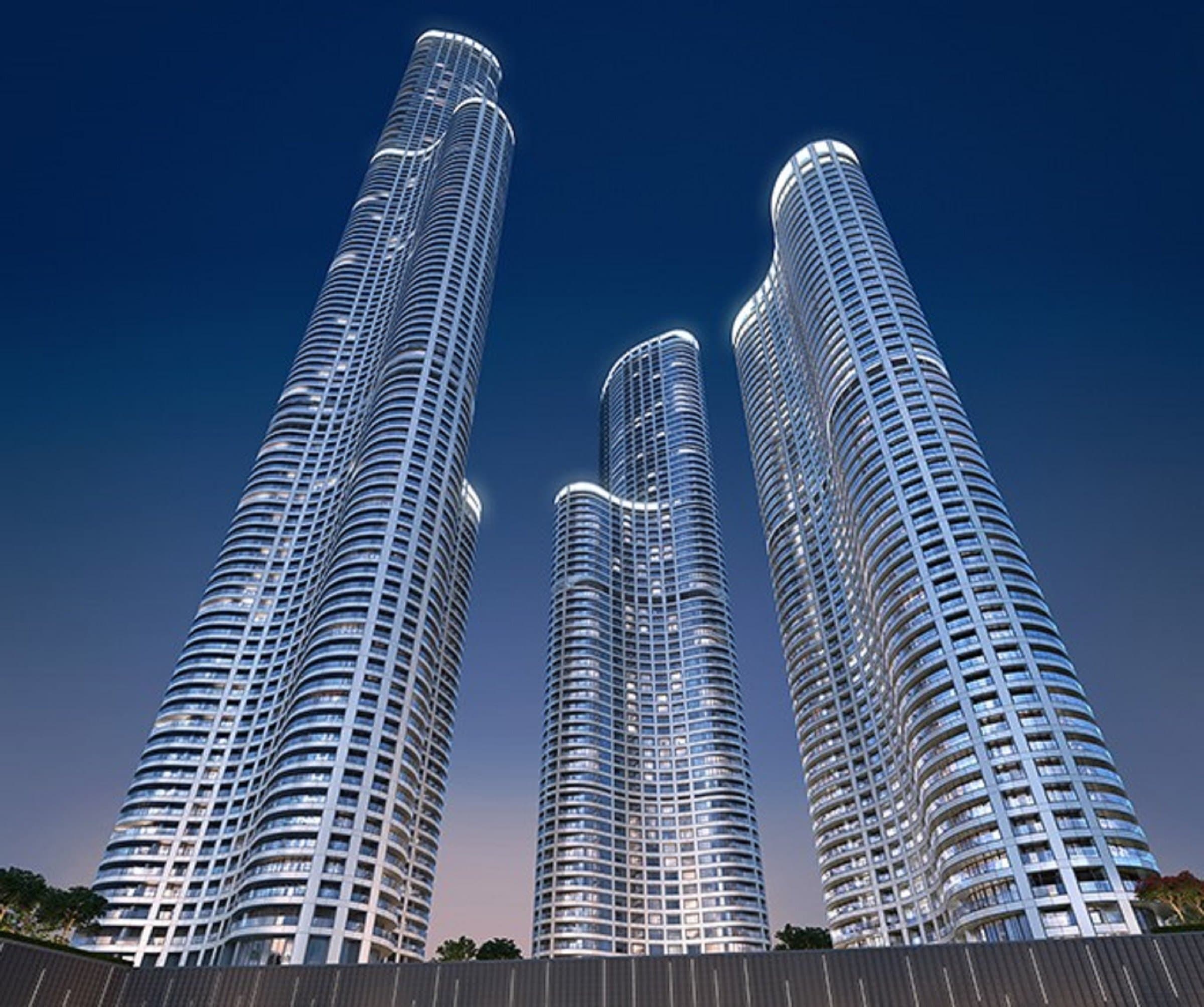
Several Tier 1 buildings in Property Butler's tracked inventory occupy heritage-adjacent positions that compound the brand-and-view advantages. One Avighna Park sits adjacent to a preserved mill compound with view-corridor protection on its western edge. Indiabulls Sky Forest's upper-floor stacks benefit from view-corridor protection across the Tulsi Pipe Road heritage cluster. Lodha World Towers sit on the Apollo Mills parcel which integrates preserved heritage features into the masterplan.
In Prabhadevi, the heritage overlay is thinner but present in the southern-edge cluster facing Worli. Rustomjee Crown's position relative to the Worli-Prabhadevi heritage and BDD-redevelopment belt warrants its own diligence layer for any buyer underwriting a long hold. Sumer Trinity Towers and Akruti Kalaya Tower sit further from the overlay and trade off heritage-adjacency for cleaner conventional-stock economics.
Frequently Asked Questions
Can a developer demolish a Grade II mill chimney for redevelopment?
No - Grade II-A and II-B designations prohibit demolition. The chimney can be incorporated into the redevelopment as an architectural feature (as Phoenix Marketcity and Kamala Mills have done) or preserved in-place with the surrounding plot developed around it. Demolition requires Heritage Conservation Committee removal from the list - which has not happened on any Lower Parel mill chimney in the past 15 years.
Does living next to a chimney lower my property value?
Marginally to no - in fact, direct heritage-adjacent positions (under 100m to a Grade II chimney) currently command a 4-7% PSF premium in Property Butler's tracked data due to view-corridor protection and brand-halo effects. The chimney itself does not lower value; the cost penalty applies to towers ON the heritage-overlay plot, not adjacent to it.
What does BDD chawl redevelopment mean for my Lower Parel purchase?
A 2028-2032 supply wave of saleable luxury stock entering the Worli-edge market. For a buyer with a 10+ year hold, the supply impact on Worli-Prabhadevi top-tier PSF in 2029-2032 should be modeled into exit assumptions. The impact is concentrated in the Rs 8-25 Cr band where the BDD-redevelopment saleable component sits. Top-tier ultra-luxury Rs 25 Cr+ is less affected.
How do I verify a heritage overlay before I buy?
Three documents: the BMC Development Plan map for the ward (Lower Parel falls in G-South, Prabhadevi in G-North) showing heritage-listed structures; the Heritage Conservation Committee's published list of graded structures with locations; the project's sanctioned plan showing how the heritage element is treated. If the developer cannot produce all three, walk.
Is the heritage-integrated precinct (Kamala Mills style) actually a premium asset class?
Yes - it has shown structural premium stickiness across the 2018-2026 cycle. Resale narratives at heritage-integrated addresses lean heavily on the compound's character; the brand halo is sticky and travels through buyer generations. The premium has grown faster than the corridor's average appreciation since 2020.
Related Reading
Lower Parel mill lands transformation story Mill land commercial to residential conversion playbook 2026-2030 forward supply pipeline roadmap TDR and FSI air rights tower height economics Lower Parel area guideBuying near heritage in Lower Parel or Prabhadevi?
Property Butler maps every heritage overlay, conservation grade and integrated precinct across the corridor. We help structure offers around the actual constraint pattern, not the brochure narrative.
Search heritage-adjacent stock