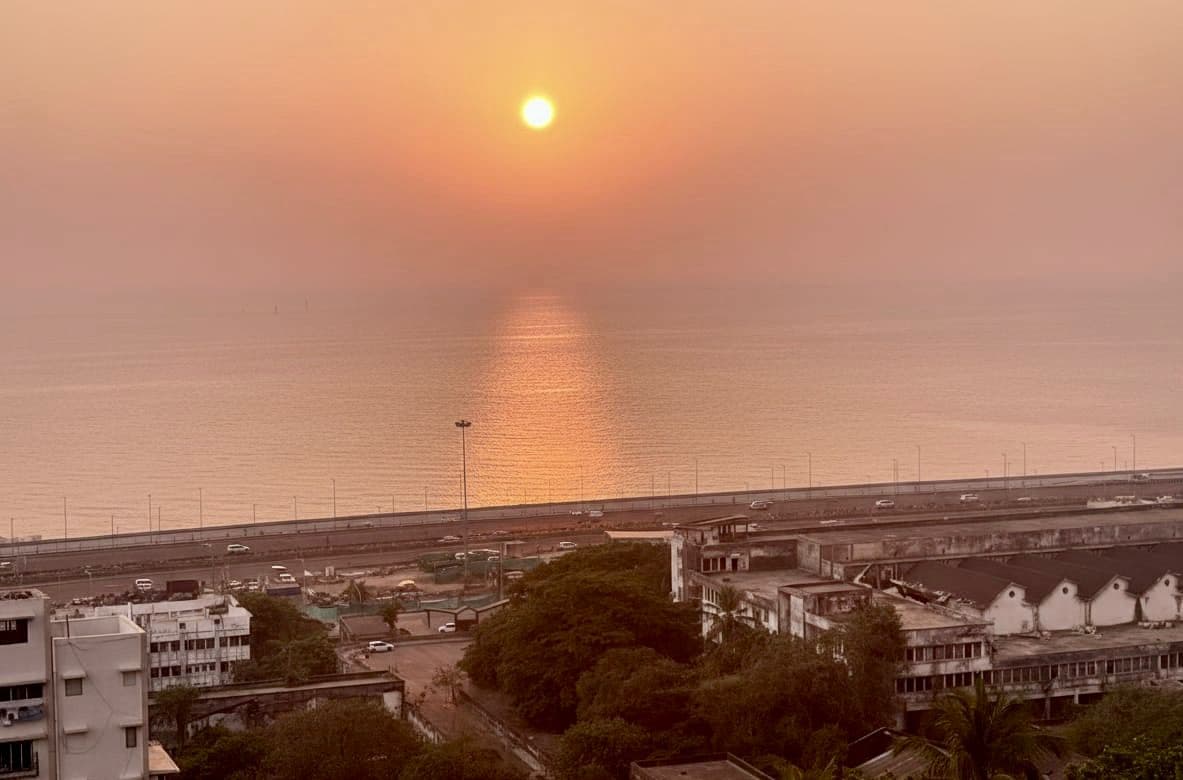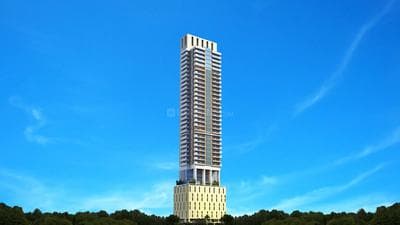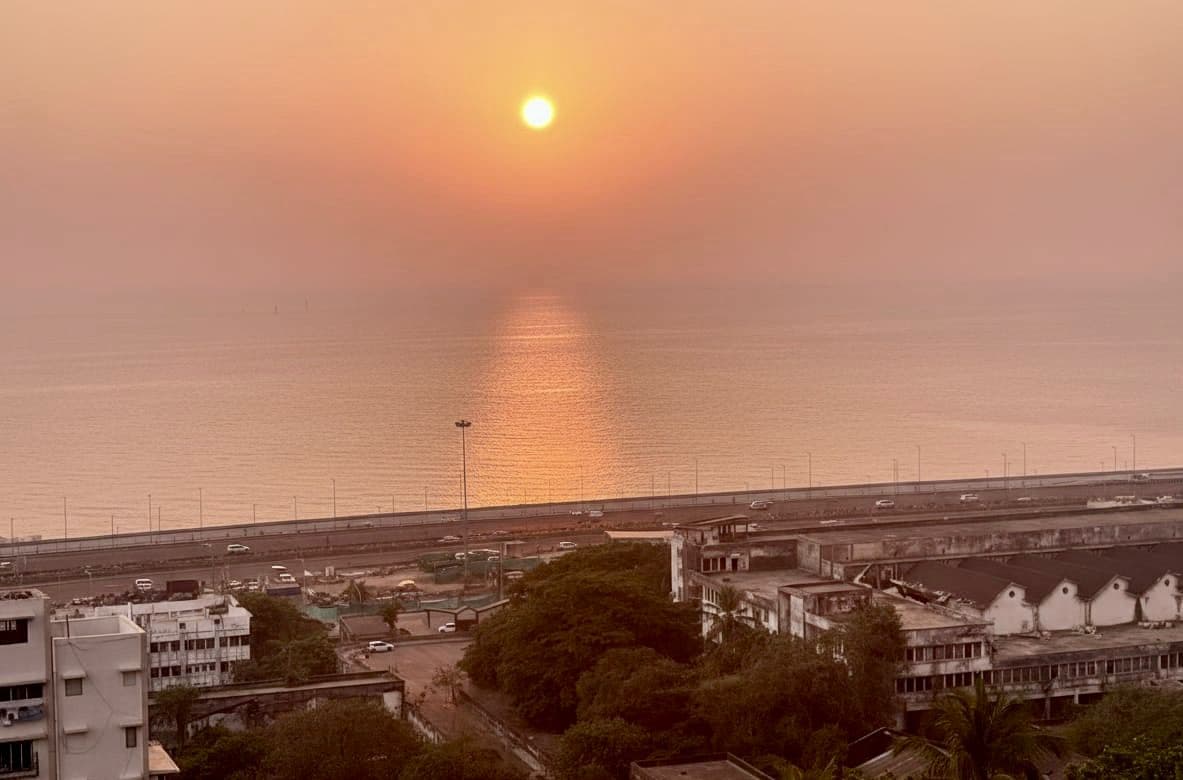
Worli's reputation is vertical. Lodha World One at 117 floors, Birla Niyaara at 80, Embassy Citadel at 60-plus. The buyer narrative is about 30th floor, 40th floor, sea-link sight-line and floor-rise PSF. Buried inside this vertical skyline sits a small, often-overlooked product category: the plinth villa, the podium-garden duplex, and the ground-floor private-outdoor unit. Property Butler counts roughly 38 such units across 11 Worli towers. Carpet floor plates run 1,800-4,200 sqft, private outdoor runs 200-1,800 sqft, and ticket sizes sit Rs 14-65 Cr. These units do not appear on most builder marketing collateral, do not show in standard floor-plate sales decks, and are sometimes priced significantly below the equivalent carpet-area mid-floor unit because the building is selling vertical to a buyer pool that does not value horizontal outdoor. For a specific buyer profile, this is one of the highest-value asymmetric opportunities in the Worli corridor.
Who this product fits
Family buyers with young children or dogs, ageing parents who cannot ride elevators reliably, owners who want garden-grade outdoor for entertaining, art collectors with sculpture display needs, owners requiring oversized vehicle access without elevator dependence. Mismatches: buyers who explicitly want sea-link sight-line, sea-face panorama, or vertical-skyline view.
What counts as a plinth villa or podium-garden unit in Worli
The product category has three sub-types that buyers conflate but should not. Each has different FSI accounting, different resale liquidity, and different price-per-sqft economics.
Plinth villa (low-rise wing of a primarily high-rise tower): A 2-3 storey low-rise block attached to or near the main tower, with direct ground access, private entrance, and a small private garden. Typical configuration: 3-5 BHK on 2 floors with a 600-1,200 sqft garden and dedicated covered parking. Worli examples: select Lodha World Towers low-rise wing, Raheja portfolio plinth units, Skyplex low-rise inventory. FSI treatment: the garden is typically outside FSI but counted in saleable area at a discount factor of 0.4-0.6, so a 1,000 sqft garden adds 400-600 sqft of saleable carpet equivalent.
Podium garden (mid-podium private-deck unit): A unit on the podium level (typically floors 3-6 of a Worli tower where the building footprint is wider than the upper tower) with direct access to a private podium-level garden or deck. The garden sits on top of the tower's amenity podium or parking podium and is structurally a green-roof slab. Typical configuration: 4-5 BHK with 400-1,800 sqft of private podium garden. Worli examples: Embassy Citadel select podium units, Birla Niyaara, Lodha Marquise select inventory. FSI treatment: the garden is FSI-exempt but priced as saleable. The premium over equivalent mid-floor inventory can range -5% (when the building underprices) to +18% (when the building markets correctly).
Ground-floor unit with private compound: Almost exclusively found in older Worli buildings (pre-2008) with adequate plot area. A direct-access ground unit with a small compound, sometimes a private gate, separate from the lobby. Configuration: 3-4 BHK with 200-800 sqft compound. Examples: select Raheja Atlantis, K Raheja Artesia, older buildings in the Worli sea-face corridor. FSI treatment: typically all freehold, but with society NOC complexity for any extension or modification.
Sub-type comparison matrix
| Sub-type | Typical sqft private outdoor | Typical carpet floor plate | Ticket band CY2026 | Per sqft saleable premium | Resale liquidity |
|---|---|---|---|---|---|
| Plinth villa | 600-1,200 sqft garden | 3,000-4,200 sqft 4-5 BHK | Rs 28-65 Cr | +8 to +22% over mid-floor | Slow - 90-180 days |
| Podium garden | 400-1,800 sqft deck | 1,800-3,500 sqft 3-5 BHK | Rs 14-45 Cr | -5 to +18% over mid-floor | Moderate - 60-120 days |
| Ground-floor compound | 200-800 sqft compound | 1,500-2,500 sqft 3-4 BHK | Rs 9-28 Cr | -8 to +5% over mid-floor | Slow - 90-160 days |
The FSI accounting trap - what the developer counts vs what you pay for
This is the single highest-stakes diligence point for plinth and podium-garden buyers. Different builders treat private outdoor differently in the saleable-area calculation, and a buyer paying full PSF for outdoor that is FSI-exempt is overpaying by definition.
Three accounting patterns exist in the Worli market. Pattern A (correct, buyer-friendly): builder declares the garden as private outdoor at a discount factor of 0.4-0.5 in the saleable-area calculation. A 1,200 sqft garden contributes 480-600 sqft to saleable. Pattern B (developer-favoured, common): builder declares the garden at 0.8-1.0 of saleable, charging near-full PSF for outdoor that has no FSI cost basis. A 1,200 sqft garden contributes 960-1,200 sqft to saleable. Pattern C (most opaque): builder packages the garden into a single saleable-area number with no disclosed split. The buyer cannot reconstruct the implicit PSF on outdoor versus indoor.
The buyer's defence: insist on a saleable-area breakdown that splits indoor carpet, balcony, deck, and private garden as separate line items, with the discount factor applied to each. If the developer refuses, calculate the implicit PSF assuming pattern A versus pattern B and price the negotiation off the more conservative read. Property Butler's benchmark for Worli plinth and podium units: a fair discount factor on garden is 0.4-0.5, and any builder asking above 0.7 is over-charging.
Fair garden discount factor
0.4 - 0.5
Anything above 0.7 is developer-favoured pricing
Maintenance and waterproofing - the structural commitment
Private outdoor at podium level is structurally a green-roof slab over occupied space. The slab must be waterproofed to spec, the buyer is responsible for maintaining that waterproofing, and a leak from the buyer's garden into the unit below is the buyer's liability. The maintenance cost of a podium garden is not trivial - Property Butler's tracked benchmark across Worli podium owners shows Rs 35,000-Rs 95,000 per year recurring (waterproofing inspection, plant maintenance, irrigation, drainage cleaning) plus a 7-12 year waterproofing-membrane replacement cycle at Rs 4-8 lakh.
Plinth villa gardens are easier because they sit on grade, not on a structural slab. Maintenance is gardening cost only, typically Rs 18,000-Rs 45,000 per year for a 1,000 sqft garden including a gardener visit twice a week.
Ground-floor compounds carry the lightest maintenance load but the heaviest security and neighbour-management overhead - direct ground access raises the security cost (CCTV, dedicated guard rotation) by Rs 25,000-Rs 60,000 per year over a high-floor unit.
Resale liquidity - the real trade-off
The discount and premium ranges in the matrix above are wide because plinth and podium units do not have the same buyer-pool depth as mid-floor inventory. A 3 BHK on the 28th floor of Lodha World One has a buyer pool of perhaps 80-140 active Worli shortlisters at any time. A plinth villa in the same building has a buyer pool of 4-12. The narrow pool drives two outcomes: (1) when the right buyer appears, the price is firm and sometimes premium, (2) when the right buyer does not appear, the unit can sit on market for 120-180 days even at fair pricing.
The exit-timing read for owners: prefer plinth and podium units when the hold horizon is 10-plus years and the lifestyle value of private outdoor outweighs the liquidity premium of vertical inventory. Avoid these units if a 3-5 year flip is the strategy.
The buyer profile that wins on this product
Right buyer profile
- Family with young children needing outdoor play
- Pet owners (large breeds especially)
- Ageing parents needing elevator-free access
- Entertainers and frequent hosts
- Art collectors with sculpture/outdoor display
- 10-plus year hold horizon
Wrong buyer profile
- Sea-link or sea-face view is non-negotiable
- 3-5 year flip horizon
- Trophy-prestige is the primary motivation
- Buyer values vertical-skyline status
- Privacy concerns about ground-level access
- Monsoon damage tolerance is low
Frequently asked questions
Are plinth villas treated as FSI inside or outside the building's overall FSI budget?
The footprint of the low-rise plinth wing counts inside the overall building FSI. The private garden does not count for FSI but is allocated as saleable area at a discount factor. The buyer should request the developer's FSI calculation sheet showing how the plinth wing contributes to the total saleable area of the project.
How does monsoon affect these units differently from high-floor inventory?
Heavily. Podium-garden units are exposed to direct monsoon water on the slab, requiring tight waterproofing maintenance. Plinth villas sit at ground level and need flood-grading from external roads, particularly on the Worli sea-face side where high tides paired with heavy rain can pool. Ground-floor compounds are the most exposed - flood-mitigation grading, sump-pumps, and waterproof masonry around the compound edge are non-negotiable. Detailed monsoon vulnerability per tower sits in our flood-vulnerability guide.
What is the typical society-fee structure for these units?
Most societies charge maintenance on the saleable area, so a unit with 1,500 sqft carpet plus a 1,200 sqft garden (counted at 600 sqft saleable) pays maintenance on 2,100 sqft. Some societies have moved to a separate garden-maintenance line item, particularly for podium gardens where the building has structural exposure. Always ask for the maintenance bill breakdown before signing.
Do these units appreciate slower or faster than mid-floor inventory?
Property Butler's tracked CY2018-CY2025 sample shows plinth and podium-garden units appreciating in line with the broader Worli market when held over 7-plus years, with materially higher dispersion in either direction. The right unit in the right building can outperform; the wrong unit in the wrong building can underperform by 6-12% PSF over the same period. Selection matters more than for vertical inventory.
Can a buyer build out the private garden with structures - pergolas, pools, kitchens?
Subject to society NOC and BMC compliance. Pergolas and outdoor kitchens are commonly approved at the society level. Pools are rare and trigger structural review on podium units. Permanent structures count against the building FSI if they enclose floor area, so most owners stay with non-FSI-counting installations - pergolas, deck flooring, planters, outdoor seating.
Related Reading
- Worli Balcony / Deck Saleable Area Pricing
- FSI / TDR / Fungible Loading Decoder
- Worli Flood / Monsoon Vulnerability Guide
- Pet-Friendly Tower Policy Guide
Find a plinth or podium-garden Worli unit with Property Butler
These units are rarely on builder collateral. Property Butler tracks the 38-unit pool across 11 Worli towers including off-market resale inventory.
Request Plinth and Podium Worli Inventory