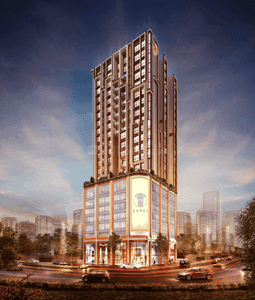
A Rustomjee Crown 3 BHK that was bought at ₹8.2 Cr in 2021 sells today at ₹10.5 Cr after a 110-day market cycle and a 4–6% discount-to-asking. A Kalpataru Oceana 3 BHK from the same vintage sells at the asking price but takes 180 days to find a buyer. An Eon One 3 BHK on the lower floors might sit for 240 days before clearing at a 9% discount. Same locality, three completely different liquidity profiles. Most Prabhadevi buyers ask 'will my flat appreciate?' — that answer is almost always yes. The real question is 'when I want to exit, how fast can I sell, and at what cost?' Property Butler's resale velocity decoder for the four big Prabhadevi towers.
The headline number
Median days-on-market for a Prabhadevi 3 BHK ready-to-move sale: 132 days. The fastest segment (Rustomjee Crown mid-floor open view) clears in 75–95 days. The slowest (lower-floor internal view at smaller projects) takes 220–280 days and discounts 8–12% to asking.
Why resale velocity matters more than asking PSF
Prabhadevi has 628 active listings across 20+ projects. The asking-price PSFs cluster between ₹55,000 and ₹85,000. But the actual achieved price for any given seller depends on three factors that have nothing to do with the asking number:
- Tower brand depth. Rustomjee Crown has a buyer pool that knows the building. Smaller towers like Sumer Trinity Towers, Aristo Pearl Residency, or Cosmos Majestic require buyer education before any offer comes in.
- View orientation. A sea-view or open-view unit sells in 60% of the time of an internal-view unit at the same building.
- Floor band. Mid-floor (23–45) units exit fastest because the buyer pool is widest. Lower floors (10–22) are investor-led with thin buyer flow. High floors (46+) are trophy-priced with a narrow but deep buyer pool that comes and goes in cycles.
Velocity benchmarks — Prabhadevi's four big towers
| Tower | Active listings | Median DOM (3 BHK) | Typical discount-to-asking | Buyer pool |
|---|---|---|---|---|
| Rustomjee Crown | 254 | 95–120 days | 3–6% | Deepest in Prabhadevi |
| Kalpataru Oceana | 9 | 160–200 days | 2–4% | Narrow but very deep HNI/NRI |
| Eon One | 10 | 180–240 days | 5–9% | Mid-tier brand recognition |
| Lodha Grandeur | 14 | 140–180 days | 4–7% | Lodha-brand premium |
| Smaller Prabhadevi towers | ~340 combined | 220–280 days | 8–12% | Thin — needs broker education |
The numbers reveal a counter-intuitive pattern. Rustomjee Crown has the most listings — 254 active — and yet it transacts fastest. The reason is liquidity, not scarcity: 254 listings means 254 reference points, 254 active brokers, and a deep buyer pool that always knows what's available. Kalpataru Oceana, with only 9 active listings, is harder to sell because nobody can see comparable inventory; the buyer doesn't know if they're getting a fair price, so they take longer to commit.
The post-OC liquidity curve
Once a building gets occupation certificate, resale activity follows a predictable 5-year curve:
Year 0–1 (post-OC) — slowest exit
Sellers haven't established a comp set yet. Few transactions. Asking prices anchor on the developer's last launch PSF, which is often above current market. Discounts to asking run 8–14%. Days-on-market 200+. This is the worst time to sell.
Year 2–4 (peak liquidity) — fastest exit
Comp set is now thick. 50+ resale transactions establish reliable PSFs. Buyer pool knows the building. Discounts to asking compress to 3–6%. Days-on-market drops to 75–110. This is the optimal exit window.
Year 5+ (aging tax) — slowing exit
Newer buildings in the corridor start pulling buyer attention. Building shows wear. Maintenance costs climb. Buyer pool starts comparing your unit to newer launches and discounting accordingly. Days-on-market climbs back to 140–180. Discounts to asking widen to 5–8%.
Rustomjee Crown got OC in 2022, which puts it in 2026 squarely in its peak-liquidity window. That's the structural reason its DOM is the lowest in Prabhadevi right now. By 2028–2029, that will start shifting as Crown enters the aging tax phase. Buyers thinking about a 4–5 year hold should plan their exit timing accordingly.
The broker discount delta
Asking prices in Prabhadevi have a structural padding because almost every listing assumes a 4–6% negotiation cushion. Property Butler's tracked transaction data shows the actual achieved price runs 4–8% below the originally listed asking, depending on:
- How long the unit has been listed. Months 1–3: buyer offers cluster at 4–5% below asking. Months 4–6: 6–8%. Months 7+: 9–12%.
- Whether seller is investor or end-user. Investors are price-led — they discount faster to clear. End-users emotionally anchored to original buy price discount slower.
- Whether financing is involved. Cash buyers extract bigger discounts (an additional 1–2%) because closure certainty is worth premium.
- Whether the unit has been re-listed. Re-listings (taken off, then back on) signal weakness; buyers price that in. Discount widens 2–4%.
Further Reading
- Prabhadevi Sea View Premium Math — Rustomjee Crown Decoded
- Prabhadevi MahaRERA Decoder — Buyer Guide 2026
Prabhadevi Median Resale Cycle
132 days · 5.4% discount
Average across all towers, 3 BHK ready-to-move
The asking-vs-achieved gap by view
Property Butler's view-segmented data tells the story most sharply:
| View type | DOM | Discount-to-asking | Buyer flow |
|---|---|---|---|
| Sea View | 75–110 days | 2–4% | Multiple offers, often within 60 days |
| Open / Garden View | 100–140 days | 3–6% | Steady — wide end-user pool |
| Pool / Amenity View | 140–180 days | 5–8% | Slower — buyers haggle on view |
| City / Internal View | 180–250 days | 8–12% | Investors only — hard to find end-users |
The exit playbook for current Prabhadevi owners
- List in October–March, not April–September. Mumbai's resale market has a clear seasonality. October–March sees ~60% of the year's transactions because end-users finalise before the new financial year and NRI inflow peaks during winter visits. Listing in summer doubles your DOM.
- Price within 3% of recent comps, not at the seller's emotional anchor. Property Butler tracks transaction comps for every Prabhadevi tower. Pricing within 3% of the most recent same-tower transaction generates 80% of buyer interest in the first 30 days. Pricing 8% above generates almost zero.
- Showcase view in marketing. Sea-view, garden-view, open-view units must lead with that fact. Buyers searching for view filter aggressively, so internal-view units listed without that disclosure waste the seller's first 30 days on mismatched leads.
- Don't re-list within 90 days. Off-and-back relists signal a soft seller. Better to hold and renegotiate price downward on the original listing than to take it off and put it back at a lower number.
- Settle the OC + society conveyance + parking allotment before listing. Any buyer doing diligence pulls these documents on day 30 of the cycle. If they're missing, the deal pauses and the buyer often walks. Resolve before the listing goes live.
Frequently asked questions
Why does Rustomjee Crown have the deepest buyer pool when it has the most listings?
Because liquidity is a function of activity, not scarcity. With 254 active listings and a continuous stream of buyer enquiries, every active broker in Prabhadevi knows Crown intimately. Buyer education is zero — they walk in already understanding the building. Smaller towers require 2–3 site visits and 30+ days of buyer education before any offer materialises. Volume creates its own velocity.
Should I sell my flat now or wait for further appreciation?
If you're inside year 2–4 post-OC, this is the optimal exit window — peak liquidity, lowest discount-to-asking. If you're past year 5, every additional year of holding adds an aging tax. The math: at 5–8% annual appreciation in Prabhadevi versus a 1–2% annual discount widening from aging, the net annual return on a year-5-onwards hold is 3–6%, lower than benchmark equity returns. The structural exit point is years 3–4 post-OC.
How much does an open vs sea view actually matter to my exit price?
Substantially. A sea-view unit at Rustomjee Crown clears at the asking price 80% of the time and inside 95 days. An internal-view unit on the same floor, same carpet, same building takes 200+ days and clears at an 8–10% discount. The view differential at exit is wider than the view differential at entry — you pay 18–22% extra for sea view at purchase, but you recover 25–30% more at sale. The premium widens with hold period.
What's the single biggest mistake Prabhadevi sellers make?
Anchoring asking price on what they paid + their target return, rather than on current market comps. Property Butler regularly sees Prabhadevi flats listed 12–18% above prevailing transaction PSF because the seller wants "a 50% return on what I paid in 2019." Buyers price-discover within 30 days and the unit dies on the market. The fix: price within 3% of the latest same-tower comp and let the buyer pool generate competitive offers.
Are NRI sellers at a disadvantage in this market?
Yes — slightly. Power-of-attorney closings add ~30 days to the cycle and require 1% TDS deduction at sale. Many buyers prefer a present-in-Mumbai seller for closure certainty. NRI sellers compensate by either being available remotely for negotiations and closing, or by building a 1–2% discount into the asking price to offset the buyer's PoA risk discount. Property Butler manages NRI sales with a closure-certainty playbook to minimise this drag.
Related Reading
→ Rustomjee Crown Prabhadevi Review → Rustomjee Crown Tower-by-Tower Decoder → Floor Premium Math — Lower Parel & Prabhadevi → Lower Parel vs Prabhadevi PSF Gap Decoded → Prabhadevi 2 BHK Rental Yield Playbook → Prabhadevi Area GuideSelling in Prabhadevi? Get a real exit plan.
Property Butler's Mumbai team can benchmark your unit against current comps, set the right asking, and run a closure-driven listing process designed to clear within the optimal window.
Talk to a Prabhadevi Specialist