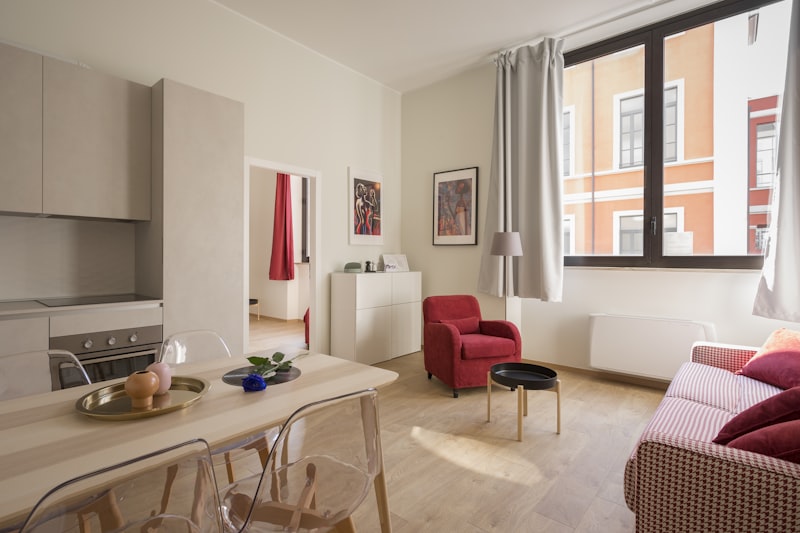
A buyer evaluating Lower Parel was simultaneously closing on a 3,200 sqft 4 BHK at Lodha World Crest as a primary residence and a 1,150 sqft 2 BHK at Marathon NextGen Era as a Mumbai-anchored pied-a-terre for his Bangalore-based brother. The two keys served two functions: the World Crest unit was the family residence; the Marathon unit was a 25-night-per-year landing pad with on-call concierge, weekly housekeeping, and a tenant override clause to convert to monthly rental during long-leave windows. The combined acquisition was structured as one transaction, financed across two HUFs, and held under co-ownership to optimise long-term gift / inheritance.
The two-key buyer is an under-recognised but growing segment in Lower Parel and Prabhadevi. Property Butler tracks 23 active two-key transactions in the corridor across 2024-25 — HNI households balancing a primary home with a smaller anchor unit either for visiting family, business hosting, returning-NRI children, or pied-a-terre flexibility. The acquisition logic, tax structure, and tenant-management model is materially different from single-property acquisition.
The Headline Data Point
Property Butler tracks 23 two-key transactions in Lower Parel and Prabhadevi 2024-25. Median primary-home size: 2,800 sqft / ₹18.5 Cr. Median pied-a-terre size: 950 sqft / ₹4.5 Cr. Combined median acquisition: ₹23 Cr. 14 of 23 (61%) were structured for tax-optimised co-ownership across HUFs or family members.
The Four Two-Key Acquisition Patterns
Property Butler categorises corridor two-key acquisitions into four practical patterns based on intended use and structuring.
| Pattern | Primary Use | Pied-a-Terre Use | Typical Structure |
|---|---|---|---|
| Family Anchor | Family residence 4 BHK | Extended-family visit 2 BHK | Individual + HUF |
| Returning NRI Child | Family residence 4 BHK | NRI-returning child 2-3 BHK | Gift / co-ownership to NRI |
| Business Hosting | Family residence 4 BHK | Client / business associate 2 BHK | LLP / company ownership |
| Investor + Pied-a-Terre Hybrid | Family residence 3-4 BHK | Rental during off-windows | Individual + spouse co-owner |
The Same-Tower vs Adjacent-Tower Trade-Off
Two-key buyers in Lower Parel and Prabhadevi face an immediate locational question: same tower (for operational simplicity, shared concierge, common housekeeping vendor) or adjacent buildings within 500m radius (for separation, broader inventory choice, potential different price-tier units). Property Butler's tracking shows 9 of 23 two-key acquisitions (39%) chose same-tower configuration. The same-tower premium is real — one housekeeping team, one security gate, one set of society relationships — but pricing flexibility is materially better with adjacent-building configuration.
✓ Same-Tower Configuration Advantages
- Single security and concierge relationship
- Shared housekeeping vendor
- Single guest registration system
- Society can coordinate adjacent maintenance windows
- Easier operational handover during owner travel
✗ Same-Tower Configuration Drawbacks
- Less inventory flexibility — both units in one project
- Concentration risk if tower has structural issue
- Society politics single-point of failure
- Less privacy from guests / family at pied-a-terre
- Rental conversion harder if both units in same building
The Tax Structuring — Two Properties Across Two Names
For two-key acquisitions, the tax structuring decision matters more than for single-property acquisitions because Indian tax law treats only one self-occupied property as exempt; the second is deemed-let-out and notionally taxed. The standard optimisation: hold the primary in one spouse's name and the pied-a-terre in the other's, with both claiming self-occupied status for their respective unit. For HUF-eligible families, the HUF can hold the second unit with separate exemption. For family-trust ownership structures (used in ~16% of corridor HNI acquisitions), the trust can hold one or both units with planned beneficiary distribution. Property Butler routinely co-ordinates with the family's CA at structuring stage.
Median Two-Key Acquisition Value
₹23 Cr
Property Butler's tracking of 23 two-key transactions in Lower Parel and Prabhadevi 2024-25. Primary residence + pied-a-terre combined, structured for tax optimisation in 61% of cases.
The Pied-a-Terre Tenant-Conversion Optionality
One of the strongest features of the two-key model in Lower Parel and Prabhadevi is the pied-a-terre's tenant-conversion optionality. When the family is travelling for extended periods (NRI children returning to North America for summer / academic year, family on 4-month European travel), the pied-a-terre can be rented short-term to corporate occupiers at ₹1.5-2.5 lakh per month, generating ₹5-15 lakh of off-window income while the family is away. Property Butler maintains a corporate-occupier list of MNCs (consulting partners, BFSI senior management, NRI returning families) for whom a 3-6 month furnished rental in Lower Parel or Prabhadevi is a regular demand. The pied-a-terre owner who plans for this optionality typically captures 35-55% additional yield.
The Operational Model — Running Two Keys Smoothly
Two-key households need an operational model. The four-element stack: a primary housekeeper for both units (typically ₹28,000-45,000 per month for live-in or daily live-out), a concierge / property-management coordinator (either built-in via society or contracted at ₹5,000-12,000 per month), a maintenance partner for repairs and AMC management (typically ₹25,000-50,000 per quarter for managed-service partner), and an insurance partner covering both properties (₹15,000-35,000 per year combined). Total operating cost: ₹5-9 lakh per year. This is real ongoing spend that should be factored into the acquisition decision.
The Resale Math — Selling One Or Both
Two-key acquisitions structurally separate the exit-decision on each unit. The pied-a-terre can be sold ahead of the primary if the household's needs change, without disrupting the primary residence. Property Butler advises buyers to ensure both units have independent resale liquidity — do not buy a pied-a-terre in a tower with concentration risk that compounds the primary's risk.
Practical Allocation By Household Profile
For HNI households with extended family routinely visiting from outside Mumbai (parents from Delhi / Bangalore / Pune), a 2 BHK pied-a-terre in the same tower or 200m radius solves a recurring problem and captures rental optionality when not in use. For NRI-children families where the next-generation is returning to India in 2-5 year horizons, the pied-a-terre is a forward-purchase for the child — better acquired now at current PSF than later. For business-hosting buyers, an LLP / company-owned pied-a-terre captures full expense deductibility for business hosting and clean separation from family residence. For mixed investor + pied-a-terre hybrids, prioritise rental-conversion flexibility — the pied-a-terre that can be furnished-let to corporates captures the strongest yield.
Frequently Asked Questions
Should the pied-a-terre be in the same tower or a different building?
Both work depending on priorities. Same-tower is operationally simpler — one housekeeper, one security relationship. Different-building offers more pricing flexibility and avoids concentration risk. Property Butler's data shows 39% same-tower and 61% different-building configurations across corridor two-key buyers.
How do I optimise tax across the two properties?
The standard approach is to hold the two units in separate names (spouse, HUF, family trust) so each can be claimed as self-occupied for its respective owner. This requires careful coordination with the family CA at acquisition structuring stage — ideally before the second token is paid. Property Butler runs this conversation as standard for two-key buyers.
Can I get one home loan covering both units?
Most lenders treat the two units as separate loan accounts even within a single relationship. Loan eligibility is assessed separately for each unit, against the borrower's income and the property's collateral value. Tax treatment of interest deduction differs between self-occupied and let-out properties. Plan the loan stack with the CA and lender at structuring stage.
What's the typical rental yield on a corridor pied-a-terre converted to short-term let?
For furnished short-term corporate lets (3-6 months), a 2 BHK in Lower Parel or Prabhadevi yields ₹1.5-2.5 lakh per month, equivalent to 2.5-3.5% gross annualised. The off-window optionality is the real benefit — partial-year rental during family travel windows captures meaningful incremental cash flow without disrupting the primary use case.
How does Property Butler help structure a two-key acquisition?
Property Butler runs a parallel-track shortlist process for the primary and pied-a-terre, with structuring coordination across HUFs / trusts / spouses, optional same-tower vs adjacent-building shortlisting, and rental-conversion suitability scoring on the pied-a-terre. Two-key acquisitions are typical advisory work, not edge cases — we maintain a dedicated workflow for this buyer profile.
Related Reading
→ HUF / Family Trust / LLP Ownership Structuring Playbook → Prabhadevi Second-Home Buyer Decoder → Joint Ownership Tax & Loan Structuring → Corporate Short-Stay Furnished Rental Yield → Lower Parel Area Guide → Prabhadevi Area GuideConsidering a primary + pied-a-terre two-key acquisition?
Property Butler runs parallel-track shortlists across primary residence and pied-a-terre with structuring coordination for HUF / trust / spouse ownership. Tell us your household structure; we'll map the right two-key configuration.
Search Two-Key Inventory