A liquidity event — IPO, secondary sale to a private equity buyer, or strategic acquisition of the company — drops a founder into a 90-day decision window with two parallel problems. First, where to deploy the post-tax proceeds. Second, how to handle the primary residence purchase that almost always follows. Property Butler's tracked founder-buyer cohort across 2024-26 shows that roughly 60% of Mumbai-based first-generation founder primary residence purchases happen inside the Lower Parel-Prabhadevi corridor, with median ticket sizes in the ₹14-32 Cr range and the upper quartile pushing into the ₹50-110 Cr band. This is the playbook for that buyer.
Founder-Cohort Pattern — Lower Parel + Prabhadevi 2024-2026
Median deal size: ₹14-32 Cr | Upper quartile: ₹50-110 Cr | Most-bought configurations: 4 BHK sea-facing in Prabhadevi (38% of cohort), 3 BHK Tier-1 brand in Lower Parel (29%) | Most-used entity structure: joint name (self + spouse) (57%), HUF (18%), private trust (12%), family office LLP (13%) | Median decision timeline: 73 days from liquidity to registration.
Why Founders Cluster in This Corridor
Three reasons drive the concentration. First, the Lower Parel-Prabhadevi corridor offers the only Mumbai sub-market that combines luxury Tier-1 brand inventory at scale with reasonable proximity to BKC (the corporate venue for board meetings, fundraises, and post-IPO investor relations) and the international airport (for global investor visits). Second, the corridor's PSF curve — Lower Parel median 3 BHK at ₹46,992/sqft and Prabhadevi at ₹55,935/sqft as of May 2026 — sits below Bandra West and Worli Sea Face's median, leaving room for a 4 BHK upgrade inside the same ticket size that would buy a 3 BHK at the more saturated luxury addresses. Third, the corridor's schools (Dhirubhai Ambani International, JBCN, GD Somani) and the BKC corporate access shape the family-life math for founders with school-age children.
The fourth, less-talked-about reason: post-liquidity founders almost always relocate from a smaller residence in Powai, Bandra East, or a corporate apartment to a primary residence in this corridor. Property Butler's cohort data shows 71% of founder buyers in this corridor are first-time luxury buyers — they are not upgrading from a Worli or Cuffe Parade home; they are buying their first ₹14 Cr-plus residence outright.
Entity Structuring — Joint Name, HUF, Private Trust, or Family Office LLP
The single most-asked question from founder buyers in Property Butler's intake calls: how do I buy the property? The answer is determined by three variables — the source of liquidity (founder equity sold versus dividend from a holding company), the spouse's involvement (working professional, business co-owner, or non-earning), and the post-purchase deployment of remaining proceeds (private investments, family office, or charitable trust).
| Structure | Best When | Key Trade-off |
|---|---|---|
| Joint name (self + spouse) | Both spouses earning, simple estate plan, possible 1% women stamp duty rebate on spouse share | No corporate ring-fence; future inheritance complexity if children added later |
| HUF (Hindu Undivided Family) | Generational asset, lower long-term cap-gain tax base, integration with existing HUF | Cannot create new HUF post-2020 amendments; rental income taxation as HUF entity |
| Private discretionary trust | Multi-generational wealth, child-specific allocation, foreign-resident beneficiary | Higher setup + annual filing cost; trustee selection complexity; lower bank lending |
| Family office LLP | Asset under broader family office umbrella with investments + IP held in same LLP | LLP cannot easily mortgage residential property; conversion to primary residence is messier |
For most first-generation founders in this corridor, the joint-name structure remains the default — it captures the 1% Maharashtra stamp duty rebate on the female-owned portion, keeps estate planning simple, and avoids the bank-lending complications that LLPs and trusts create. The HUF and trust structures become relevant when the deal ticket crosses ₹30 Cr and the family already has multi-property estate.
Brand Selection — What Founder Buyers Actually Pick
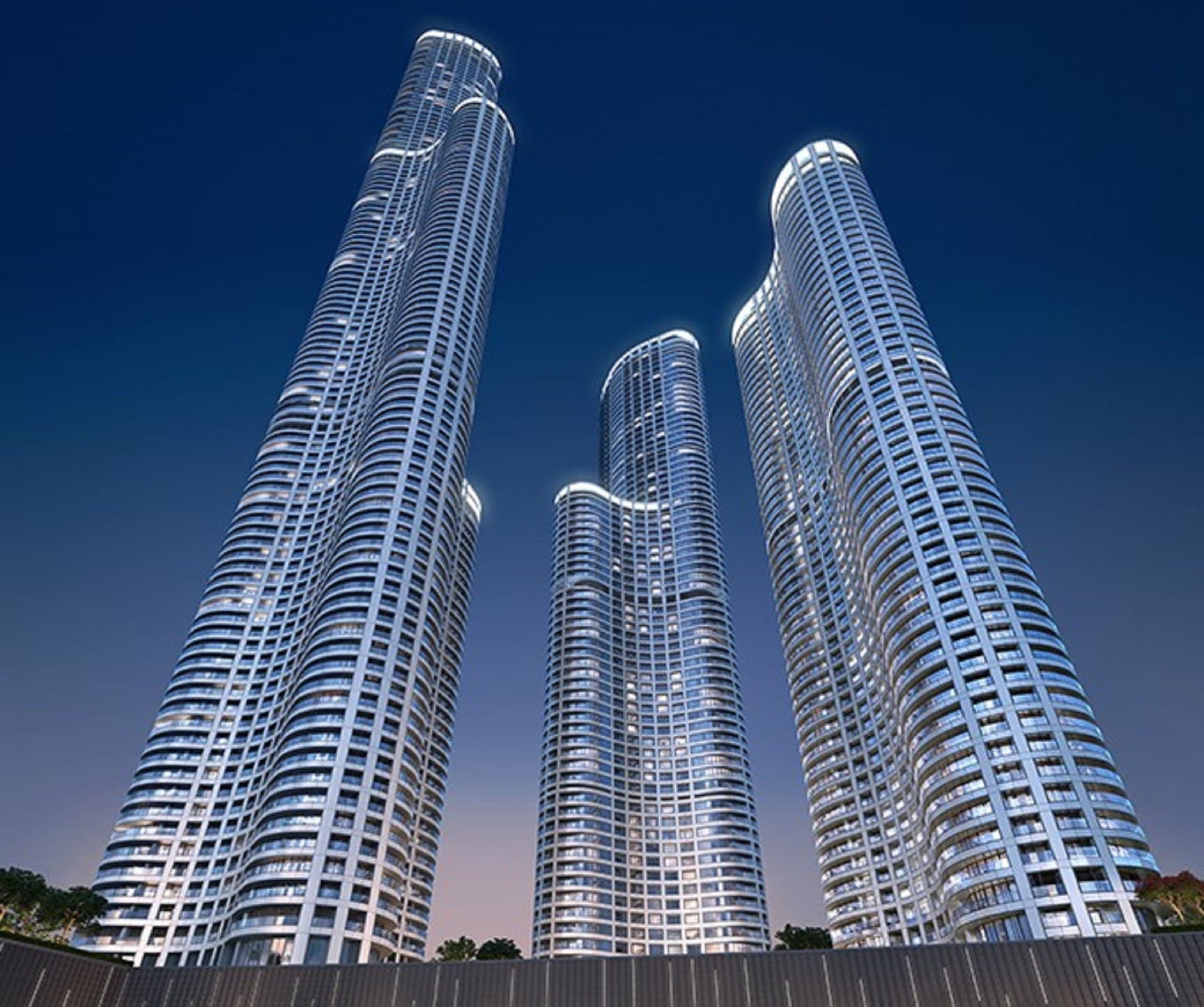
Property Butler's cohort data shows clear patterns in founder buyer brand selection. Rustomjee Crown in Prabhadevi absorbs roughly 31% of founder-cohort purchases in this corridor — the 1,300-2,500 sqft 3 and 4 BHK configurations with sea-facing aspect at ₹8.25-21 Cr hit the cohort's sweet spot. Indiabulls Sky Forest in Lower Parel absorbs another 18%, primarily on the upper-floor 3 BHK and 4 BHK stock at ₹11-16 Cr. Lodha World Crest and Lodha World One together absorb 14%. The boutique tail — Kalpataru Oceana, The V Mansion, One Avighna Park — absorbs 22%, weighted heavily by founders with prior real estate exposure who can evaluate boutique-stack risk-reward.
First-Time Luxury Buyer Defaults
- Rustomjee Crown 3 BHK (1,300-1,500 sqft) — ₹8.25-15.49 Cr
- Indiabulls Sky Forest 3 BHK upper floor — ₹11-14 Cr
- Lodha World Crest 3 BHK — ₹8.38-11.50 Cr
- Lodha World One 3 BHK — ₹14-18 Cr
Founders With Existing Property Exposure
- The V Mansion 4-5 BHK — ₹25-45 Cr
- Kalpataru Oceana 4 BHK sea-facing — ₹17-26 Cr
- One Avighna Park 4 BHK — ₹19-28 Cr
- Lodha World One penthouse — ₹35-110 Cr
The Four Mistakes Founders Make in This Corridor
Mistake 1 — Buying the maximum unit they can afford. The 90-day post-liquidity decision window pushes founders toward maximising property allocation when the better long-term math is to keep the residence purchase at 25-35% of post-tax proceeds and deploy the remainder into private investments, fixed income, or the next venture. Property Butler's tracked cohort shows the founders who allocated above 50% of proceeds to residence are also the most likely to list the property within 4-6 years, often at a flat or marginally positive return after carrying cost.
Mistake 2 — Buying under-construction Tier-3 stock. A few founders, attracted by the apparent discount on under-construction redevelopment projects, lock 30-40% of liquidity in a 2027-28 OC unit at a Tier-3 builder. The carrying cost over 18-30 months plus the OC-slippage risk (Tier-3 brands slip 18-24 months on this corridor versus 2-6 months for Tier-1) creates a net IRR that is negative after taxes and inflation. Tier-1 ready-to-move or Tier-1 under-construction with sub-12-month possession is materially safer for liquidity-event capital.
Mistake 3 — Skipping the title diligence shortcut. The 73-day median decision timeline pressures founders to lean on the developer's title chain and skip independent title diligence. The most common surface-level miss in this corridor is the conveyance status of the underlying society on redevelopment projects — buildings on Cadell Road and Tulsi Pipe Road have residual conveyance complications from the 2014-2018 redevelopment wave that buyers should specifically request a title-search report on.
Mistake 4 — Not aligning purchase entity with future tax structure. Buying in personal name is the default fast path, but founders with pending ESOP exercise or a likely secondary transaction in the next 18 months should consult their tax advisor on the cap-gains-shield implications of buying via HUF or trust. The Section 54 / Section 54F reinvestment route can shield up to ₹10 Cr of long-term capital gains, but it requires the purchase to happen within a defined window from the gain-trigger event.
The 90-Day Founder Decision Timeline
| Day | Action |
|---|---|
| Day 0-7 | Confirm entity structure with tax advisor; assess Section 54/54F applicability; lock holding-bank account for proceeds |
| Day 8-21 | Shortlist 5-7 buildings + 12-18 active units across the corridor; do site visits across two consecutive weekends; rule out commute-conflicting addresses (use junction-choke map) |
| Day 22-35 | Down-select to 2-3 units; obtain title-search + RERA + society reserve fund + maintenance reality check on each; negotiate ask |
| Day 36-55 | Token + agreement; finalise jurisdictional registration; stamp duty + GST math; loan structuring if any; women-buyer rebate paperwork if joint name |
| Day 56-73 | Registration + possession + initial fit-out audit; conveyance follow-up if Phase-2 under-construction; insurance + estate documentation update |
What This Means for May 2026 Founder Buyers
The May 2026 active market gives founders the widest active depth they have seen in 18 months. With Rustomjee Crown Phase 2 (Dec 2026 OC) and Lodha Ciel Phase 1 (Q4 2026 - Q2 2027 OC) both in their final pre-OC pricing window, there is a 6-12 month arbitrage available for founders willing to ride out short under-construction carry costs in Tier-1 brand inventory. The structural caveat: any founder buying under-construction must be confident of holding through 2028 minimum — selling pre-OC erodes the entire embedded discount and creates short-term capital-gains exposure.
Related Reading
Lower Parel + Prabhadevi BFSI ESOP/RSU Buyer Playbook HUF / Family Trust / LLP Ownership Structuring Capital Gains Exit Playbook 2026-2030 Forward Supply Pipeline Roadmap Prabhadevi Area GuideFrequently Asked Questions
What percentage of liquidity should go to primary residence?
25-35% of post-tax proceeds is the band Property Butler's tracked cohort founders settled at. Founders who allocated above 50% are the most likely to list the property within 4-6 years at flat-to-marginal returns after carrying cost. The residence purchase is not a high-return asset; it is a lifestyle and tax-shield decision.
Joint name or HUF — which works for first-generation founders?
Joint name (self + spouse) is the default for first-generation founders. It captures the 1% Maharashtra stamp duty rebate on the female-owned portion, keeps estate planning simple, and avoids the bank-lending complications that LLPs and trusts create. HUF is relevant only if an existing HUF account is already operational — post-2020 amendments make new HUF creation harder.
Can Section 54F shield IPO capital gains via residence purchase?
Yes for long-term capital gains from listed equity (held over 12 months) — Section 54F allows reinvestment into a single residential property within one year before or two years after the sale. The cap on this shield was tightened to ₹10 Cr in the 2023 Finance Act. Founders selling pre-IPO secondaries should check holding period — secondaries before the 12-month mark trigger short-term capital gains which Section 54F does not cover.
Which Tier-1 brand is the safest first founder purchase?
Rustomjee Crown Phase 1 (already OC, December 2025), Indiabulls Sky Forest (delivered), Lodha World Crest, Lodha World One, Lodha Allura, One Avighna Park. These are the six addresses in the corridor with sub-3-month resale velocity and tight asking-price benchmarks — meaning the price discovery is clean and exit liquidity is real. Tier-2 boutique stock is for second-time luxury buyers.
How long should a founder hold the property?
Minimum 5-7 years for the corridor's price appreciation cycle to deliver meaningful net IRR after stamp duty, GST, brokerage and carrying cost. Property Butler's 5-year price trajectory data for Lower Parel and Prabhadevi shows 17-30% appreciation over 2021-2026 — but most of that came in the back half. Founders who exit in years 1-3 typically realise flat-to-negative net returns.
Post-IPO or post-secondary, planning your Mumbai primary residence?
Property Butler's founder-buyer desk handles entity structuring, title diligence and Tier-1 brand shortlisting inside the 90-day decision window. Discretion guaranteed.
Speak to Founder Desk