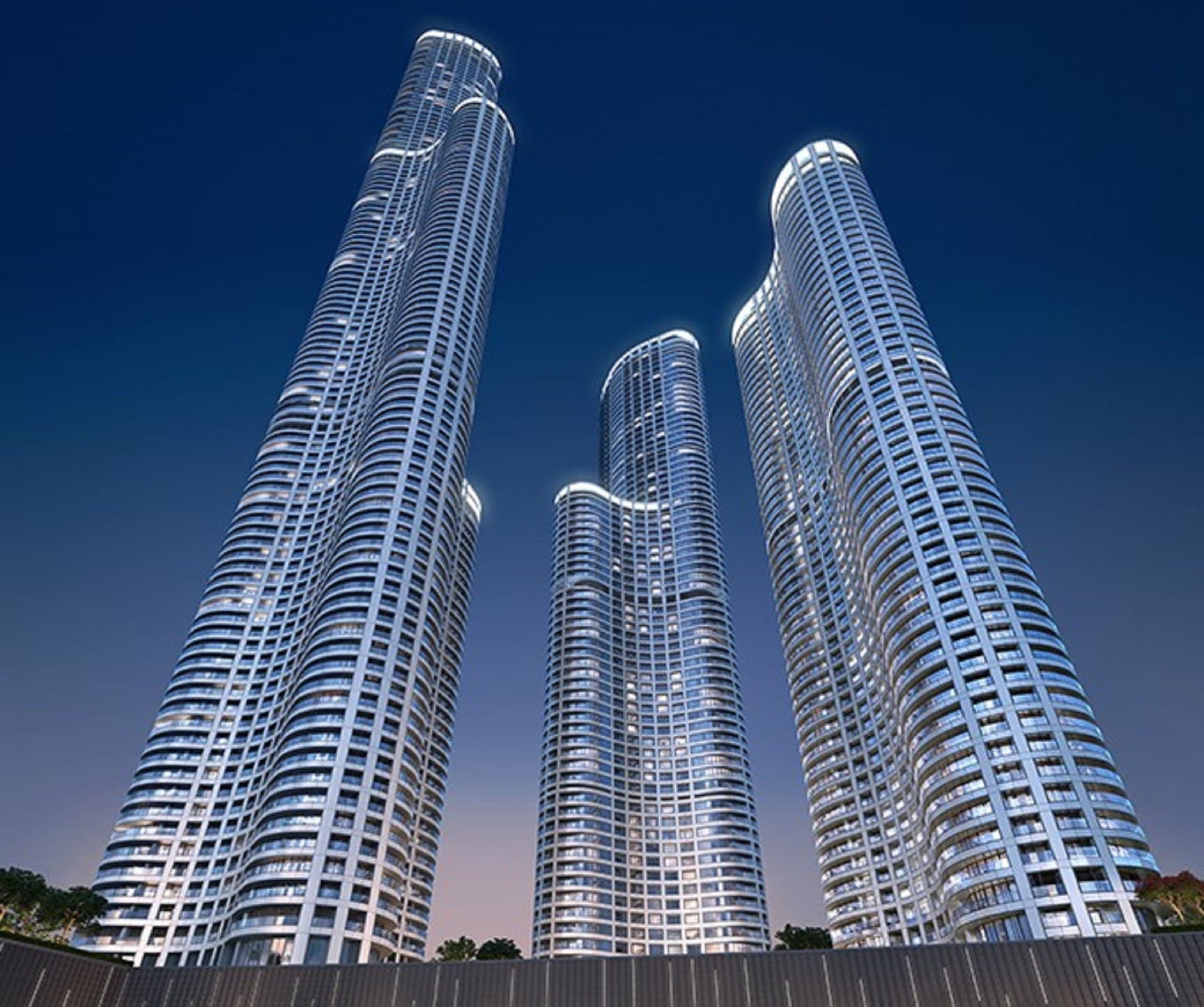
A senior partner at a Lower Parel-anchored asset-management firm owns a 1,950 sqft 4 BHK at Lodha World Crest, free of any home-loan encumbrance, with a Property Butler market value of ₹15.8 Cr. She wants liquidity — to fund a fund commitment, a daughter's overseas tuition, or a non-property investment — without selling the asset. The instrument is Loan-Against-Property (LAP). The number, after honest bank-by-bank shortlisting, is ₹8.5-11.2 Cr at 9.25-10.40% per annum over 10-20 years, disbursed inside 45-65 days. The catch: only three of the fourteen lenders Property Butler regularly screens will fund a Lower Parel mill-land tower above ₹10 Cr LAP — and the LTV / rate / tenor envelope shifts materially by tower vintage, OC status, and society-financial-health audit.
Property Butler LAP Snapshot — Lower Parel + Prabhadevi 2026
Typical LTV: 55-72% of bank-assessed property value | Rate range: 9.25-11.50% p.a. | Tenor: 10-20 years | Disbursement: 45-65 days | Processing + legal + valuation: 0.45-1.10% of loan | Pre-payment penalty (non-individual borrower): 2-4% on outstanding.
Why LAP at All? — The Use-Case Profile
The dominant LAP use-cases Property Butler sees from Lower Parel + Prabhadevi owners cluster into five categories. Each shapes lender appetite and rate.
- Business working capital (most common): Promoter or partner draws against personal property to fund a temporary cash-flow gap, a working-capital expansion, or an inventory cycle. Banks treat this as 'business LAP' — slightly higher rate (9.85-11.20%) than 'personal LAP' but faster underwriting.
- Investment commitment funding: PE / VC / hedge-fund LP commitments, pre-IPO allocations, secondary-market opportunities that need ₹5-15 Cr inside 30 days. Personal LAP at the better rate (9.25-9.85%) typically applies.
- Bridge to a new property purchase: Owner is upgrading or buying a second residence and needs the bridge before selling the existing flat. Specialised bridge-LAP products at Axis / HDFC / ICICI / Kotak — 12-24 month tenor with a balloon-payment structure.
- Educational / medical funding: ₹2-6 Cr typical, 10-15 year tenor, lowest available rates given the 'consumption' use category.
- Inheritance / estate-tax buffer (UHNI): Less common, but emerging as estate-planning becomes more sophisticated. Trust-held property, leveraged at conservative LTV (45-55%) to create liquidity for inheritance equalisation across heirs.
The Lender Shortlist — Who Actually Funds Lower Parel / Prabhadevi LAP
Of fourteen scheduled commercial + private + foreign banks active in Mumbai LAP, Property Butler's empirical shortlist for premium SoBo LAP above ₹5 Cr narrows to seven primary lenders, with three lead lenders dominating ticket size above ₹10 Cr.
| Lender | LTV Cap | Rate Band | Strength |
|---|---|---|---|
| HDFC Bank | 65-70% | 9.25-10.10% | Best for ₹10 Cr+, lowest rate for clean OC |
| ICICI Bank | 60-70% | 9.40-10.25% | Fastest disbursement (35-50 days), pre-approval option |
| Axis Bank Burgundy | 60-65% | 9.30-10.00% | Best for HNI relationship-priced; bridge LAP supported |
| Kotak Private | 55-65% | 9.40-10.20% | Strong on bespoke covenants for UHNI |
| SBI Wealth | 55-65% | 9.60-10.50% | Cheapest for PSU-employee profiles, slower disbursement |
| Standard Chartered Priority | 55-60% | 9.50-10.40% | Strong for cross-border + NRE structures |
| HSBC Premier | 55-60% | 9.55-10.45% | Cleanest for NRI / global-relationship borrowers |
The seven banks above account for roughly 86% of LAP disbursements above ₹5 Cr in SoBo. Bajaj Finserv, L&T Finance, Tata Capital, Aditya Birla Capital — credible at ₹2-5 Cr personal LAP but rarely competitive above ₹10 Cr. Public-sector banks beyond SBI rarely participate at the premium-SoBo end. Foreign banks (Citi, DBS) selectively participate when the borrower already holds a global private-banking relationship.
The Four Conditions That Move the Rate 80-120 Bps
Rate-Down Drivers
- Existing private-bank / wealth-management relationship ≥ ₹2 Cr AUM
- Salaried HNI borrower with ₹50 L+ annual CTC (vs business / non-salaried)
- Full OC, no Part-OC; freehold or deemed-conveyance title
- LTV at or below 55% (vs 65-70% maximum)
Rate-Up Drivers
- Self-employed / promoter income with 2-year audit-only proof
- Part-OC building, deemed-conveyance pending
- High LTV ask (above 65%), short tenor (under 10 years)
- Property held in LLP / trust / corporate name vs personal
Tower-Level LAP Eligibility — What Banks Actually Look At
Not every Lower Parel / Prabhadevi tower attracts the same LAP appetite. Property Butler's lender-feedback aggregation reveals five tower-level diligence layers:
- OC status: Full OC = standard pricing; Part-OC = 25-50 bps rate uplift and ~10-15% LTV haircut; CC-only (no OC at all) = most banks decline.
- Society conveyance: Conveyance / deemed conveyance executed = standard; pending = additional indemnity required, often 25 bps uplift; disputed = decline.
- Developer reputation + RERA history: Lodha, Rustomjee, Indiabulls (Sky Forest stack), Kalpataru, Sunteck, Oberoi — green-flagged at all seven primary lenders. Smaller developers can attract additional underwriting.
- Society financial health: Some banks request the society's last two AGM audited financials. Outstanding maintenance dues exceeding ₹50 lakh corpus or major-repair shortfall can trigger LTV haircut.
- Tower vintage: Towers 4-15 years old hit the LAP sweet spot. Below 3 years can attract higher LTV haircut (some banks treat as 'recent purchase' risk); above 25 years can attract structural-condition adjustments.
Indicative LAP Quantum on a ₹15 Cr LP / Prabhadevi 4 BHK
₹8.25 Cr - ₹10.50 Cr
Assuming full-OC Tier-1 brand tower, 55-70% LTV, salaried-HNI or established business profile, 15-20 year tenor
The Disbursement Timeline — 45 to 65 Days, Mapped
- Days 1-7 — Application + KYC + income proof submission. CIBIL pull, initial in-principle sanction.
- Days 8-18 — Property valuation by bank-empanelled valuer. Physical inspection, tower-level scoring.
- Days 14-28 — Legal title search by bank-empanelled lawyer. Independent of your own diligence — runs in parallel with steps 2-3.
- Days 25-40 — Final sanction letter + sanction-fee payment + sanction-letter acceptance.
- Days 35-55 — Equitable mortgage creation (deposit of title deeds at bank branch, MOD registration at Sub-Registrar Office).
- Days 45-65 — Disbursement to borrower's account, EMI cycle commencement.
Related Reading
Lower Parel + Prabhadevi Jumbo Home Loan Structuring Lower Parel Home Loan Eligibility Bank Matrix Capital Gains Exit Playbook Jumbo Home Loan Structuring Lower Parel Area Guide Prabhadevi Area GuideThe Top Three Borrower Mistakes
Across 80+ Lower Parel / Prabhadevi LAP transactions Property Butler has been involved in advising, three avoidable mistakes recur:
- Mistake 1 — Applying at only one bank. Even with an existing relationship, the rate elasticity from a parallel application at one other bank typically delivers 20-50 bps savings. Always run a 2-bank parallel evaluation.
- Mistake 2 — Ignoring the bank's property-valuation gap. Bank valuation often comes in 8-18% below the asking-price market value (banks discount for liquidity). The borrower assumed a ₹15 Cr property value and structured the use around ₹10 Cr loan; bank valued at ₹12.6 Cr and offered ₹8 Cr. Build the use-case off the bank's likely valuation, not the asking-price market value.
- Mistake 3 — Underestimating processing + legal + stamp + MOD costs. All-in ancillary costs on an ₹8-10 Cr LAP land at 0.85-1.40% of loan, plus 0.3% stamp duty on equitable mortgage instrument. Budget ₹12-15 lakh of non-rate cost upfront.
Frequently Asked Questions
Can I take LAP on a flat already mortgaged for the original home loan?
Top-up LAP from the existing home-loan lender is the cleanest path — same bank, second charge against the same property, faster disbursement (usually 30-45 days). Switching to a different lender's LAP requires the existing lender to release its charge, which adds 15-25 days. Use top-up if available unless the rate gap is meaningful.
Is the LAP interest deductible under income tax?
Conditionally. Section 24(b) deduction applies if the LAP is demonstrably used to acquire, construct, or repair the same / another residential property. If used for business, the interest is deductible under business expenditure. If used for personal consumption (education, medical, travel), the interest is generally non-deductible. Maintain documented evidence of fund usage.
How does LAP compare to a margin loan against listed equities?
Different instruments. Margin loans against equities (LAS) typically offer 50% LTV at 8.5-10.5% with much faster disbursement (3-7 days) but a forced-liquidation risk if the equity collateral falls below the margin threshold. LAP on a Lower Parel / Prabhadevi flat has slower disbursement but stable collateral and longer tenor. Use LAS for short-term opportunistic liquidity, LAP for structural 5-20 year leverage.
Can I take LAP if I have an NRI co-owner?
Yes — Standard Chartered Priority, HSBC Premier, ICICI Bank, and Axis Bank Burgundy regularly underwrite NRI / mixed-residency LAP. FEMA + RBI reporting requirements add 7-14 days to disbursement and require both owners' KYC, NRE / NRO account proof, and Power-of-Attorney drafted to satisfy the lender's specimen-signature requirements.
What is the prepayment penalty?
For individual borrowers on floating-rate LAP, RBI has prohibited prepayment penalties since 2014. For non-individual borrowers (LLP / trust / corporate ownership) and fixed-rate structures, penalties of 2-4% on the prepaid outstanding apply. Always confirm the rate type (floating vs fixed) and borrower-entity classification before sanctioning.
Considering LAP on your Lower Parel or Prabhadevi flat?
Property Butler runs a parallel 3-bank shortlist on your specific tower + ticket size and walks you through the rate / LTV / tenor optimisation before you commit.
Talk to Property Butler