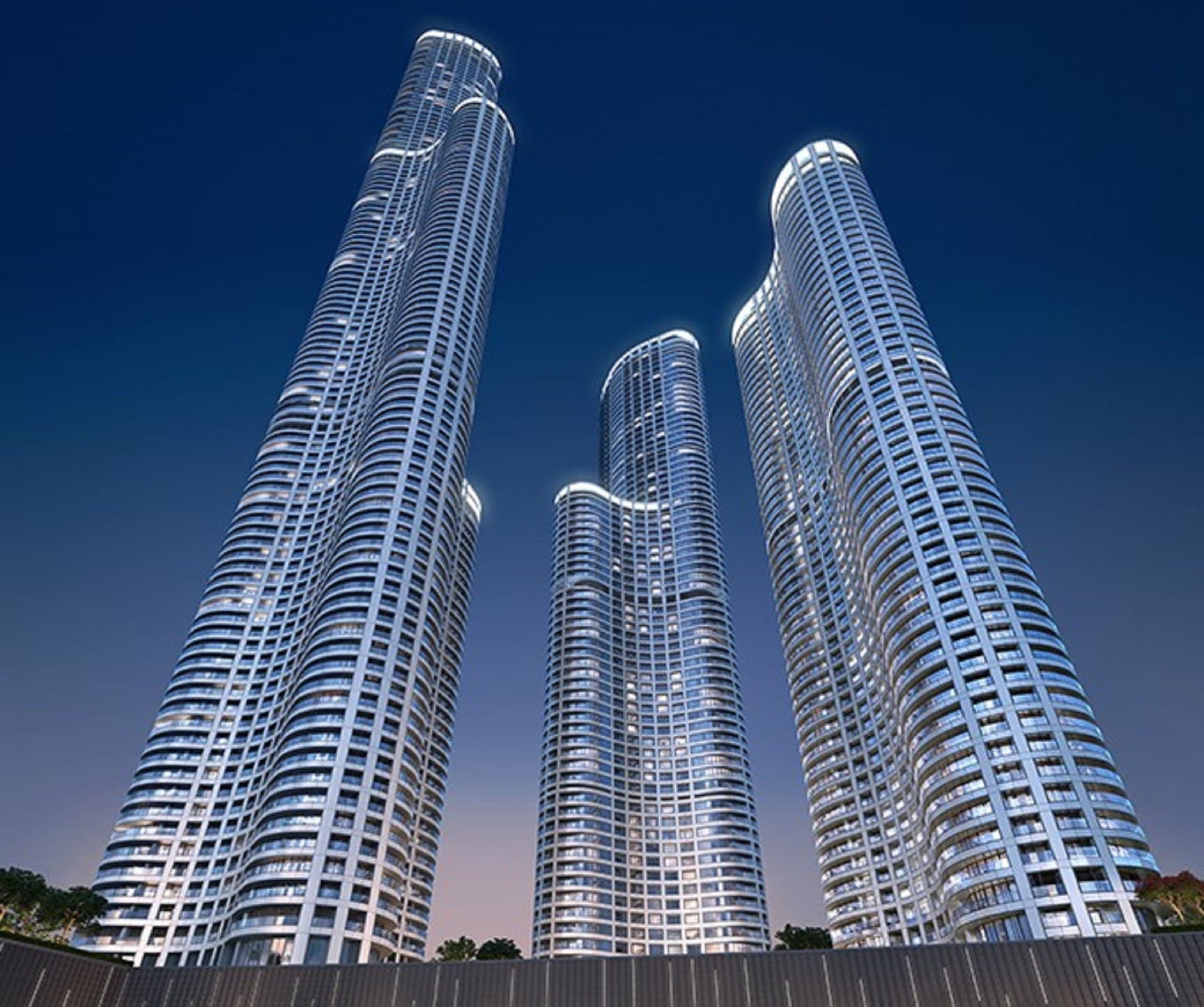
A 38-year-old VP at a global investment bank earns ₹95 lakh fixed and ₹2.4 Cr in annual variable + RSU vesting. Her bank tells her she's eligible for a ₹4.6 Cr home loan based on the ₹95 lakh fixed component. She wants a ₹13 Cr 4 BHK at Rustomjee Crown Prabhadevi. The number doesn't work — until you restructure how the bank reads her income. Property Butler's tracked data on the LP/Prabhadevi corridor: 62% of buyers in the ₹10-25 Cr ticket band work in BFSI, over 70% have a bonus-to-fixed ratio above 1:1, and the right structuring unlocks 1.6-2.4× the loan they'd otherwise get.
The BFSI Buyer Math — May 2026
1.6-2.4× loan eligibility uplift
When variable + RSU vesting income is correctly documented and the right HNI/NRI bank is engaged. On a ₹10-15 Cr LP/Prabhadevi 3-4 BHK, this is the difference between "cannot afford" and "closing in 8 weeks".
The four BFSI income components — and how each is treated
The senior banker / fund-management / consulting buyer typically has four distinct income streams. Each gets read differently by lenders, and most buyers misunderstand which counts and how:
| Income type | Mass-market bank treatment | HNI / wealth bank treatment | Documentation required |
|---|---|---|---|
| Fixed CTC | 100% | 100% | Salary slip, Form 16 |
| Cash bonus / annual variable | 40-60% averaged over 2 years | 75-90% averaged over 3 years | 3 yrs Form 16 + bonus letters |
| Vested RSUs (already in DEMAT) | 0% | 25-35% of mark-to-market value | DEMAT statement, vesting schedule |
| Unvested RSUs / ESOPs | 0% | 10-15% of NPV (subject to vesting cliff) | Award letters, vesting schedule, employment continuity |
Worked example — VP at a global bank
Fixed: ₹95 L. Annual cash bonus (3-yr avg): ₹1.4 Cr. Vested RSUs in DEMAT (mark-to-market): ₹2.8 Cr. Unvested RSUs (NPV after vesting cliff): ₹1.6 Cr. Mass-market bank reads income as ₹95L + 50% × ₹1.4Cr = ₹1.65 Cr → loan eligibility ~₹6.5 Cr. HNI bank reads ₹95L + 80% × ₹1.4Cr + 30% × ₹2.8Cr + 12% × ₹1.6Cr = ₹3.1 Cr → loan eligibility ~₹12.4 Cr. Same person, same employer, same payslip — 1.9× difference in loan ceiling.
The HNI/wealth banks that actually do BFSI buyer underwriting
The structural unlock for senior BFSI buyers is moving from mass-market mortgage desks to private banking / wealth banking divisions. The lenders who have proper variable-pay underwriting models for LP/Prabhadevi tickets:
| Bank / division | Loan ceiling | Variable pay treatment | Ideal buyer |
|---|---|---|---|
| HDFC Bank — Smartfit / Wealth | ₹10-25 Cr | 75% of 3-yr avg bonus | Indian PE / domestic bank VP |
| ICICI Wealth — Loans Against Property + Home | ₹5-50 Cr (combined) | 80% bonus + LAP against vested RSUs | Senior BFSI with significant vested equity |
| Kotak Privy | ₹15-30 Cr | 85% bonus, 30% vested RSU | Equity research / banking buyers ₹3-6 Cr fixed |
| Axis Burgundy Private | ₹10-40 Cr | 80% bonus, 25% vested RSU | Tech/banking buyers seeking embedded LAP |
| Standard Chartered Priority | ₹10-30 Cr | 85% bonus, 35% USD-denominated RSU | Senior banker at global bank with USD-RSU stack |
| DBS Treasures | ₹15-50 Cr | 90% bonus, 40% RSU (cross-currency adjusted) | NRI / RNOR returnees with offshore vesting |
For tickets above ₹15 Cr, the conversation should start with two of these in parallel — a domestic HNI desk and a foreign-bank private desk — because the cross-bid optimises rate (typically 8.4-8.7% in 2026 vs 8.9-9.3% mass market). Property Butler structures this as an introduction package to the relationship manager, not a cold application — which moves the underwriting timeline from 6 weeks to 2-3 weeks.
The vesting cliff — your biggest hidden constraint
Most BFSI buyers don't realise that their RSU/ESOP vesting schedule is already implicitly priced into the loan structure. Banks lend on the assumption that the buyer keeps their job through the loan tenure. RSU vesting cliffs (typically 25% per year over 4 years from grant) tie the buyer to the employer — a positive signal for banks. But two failure modes show up:
- Voluntary exit during vesting: Quitting before a vesting tranche forfeits unvested equity. If you signed a ₹13 Cr loan against ₹3 Cr of unvested RSUs and quit at year 2, you've now lost ~₹1.5 Cr of expected income that the bank had built into your DSCR. Ratings reset, EMI burden spikes from comfortable to stretched.
- Involuntary severance (layoff): Most BFSI severance packages include partial RSU acceleration (12-24 months) and 6-9 months pay. Your bank does NOT factor this into stress testing. If you're laid off mid-vesting, your loan service capability drops materially. Property Butler's recommendation: maintain 18-24 months EMI as liquid buffer in the form of FDs or treasury bills (yielding 7-7.5% — i.e., ~negative carry of 1.5% vs the home loan rate, but cheap insurance).
The bonus-cycle EMI structure — make annual lumpsums work for you
BFSI bonuses pay in March-April (Indian fiscal) or January-February (global firms calendar year). Standard EMIs are monthly and fixed. The mismatch creates either (a) under-utilisation (bonus sits in low-yield FD/savings until pre-payment cycles), or (b) over-leverage (taking too large an EMI to match peak income, then sweating monthly through bonus-light periods).
Property Butler's recommended structure for bonus-funded buyers:
✓ Optimal structure
- Monthly EMI sized to 35-45% of fixed CTC (not blended income)
- Annual lump-sum prepayment from 50-70% of net bonus (post-tax)
- SBI MaxGain or HDFC Smartfit for liquid sweep-in (excess cash auto-offsets EMI)
- Floating rate with 6-monthly reset (avoid fixed at peak rates)
- Hold 18-24 months EMI as severance/illness buffer
✗ Mistakes BFSI buyers make
- EMI sized to blended income — vulnerable to bonus shortfall years
- Locking fixed-rate at 9.5%+ (Mumbai retail floating typically 30-50bps cheaper)
- Pre-paying entire bonus into loan — wipes liquidity for life events
- Holding RSUs in vested form rather than diversifying — single-employer concentration risk
- Not coordinating tax timing — RSU sale + property purchase in same FY = capital gains shock
The Mumbai BFSI buyer profile in LP and Prabhadevi
Property Butler's proximity advantage matters here: Lower Parel is the financial heart of the BKC alternative, with ~3 km commute to Worli Sea Face / BKC. Prabhadevi sits midway between Lower Parel and Bandra — best of both worlds for the banker who works at BKC and visits Lower Parel for client meetings. The buyer cohort splits along these lines:
- Lower Parel buyer: Typically late-30s to early-40s, banking / consulting / global capability centre senior, dual-income household, 1-2 kids, ticket size ₹8-15 Cr. Buyer values walking-distance corporate offices and Phoenix Palladium social infrastructure.
- Prabhadevi buyer: Slightly older (early-40s to mid-50s), often C-suite at banks / fund houses, single-income or dominant-earner household, family of 4-5, ticket size ₹12-25 Cr. Buyer values sea-view, Siddhivinayak proximity, lower density.
Both cohorts share the same income pattern (heavy variable, RSU stack), but their bank choices and loan structures differ. The Lower Parel buyer at 38-42 typically goes HDFC/ICICI/Axis with mass-affluent treatment. The Prabhadevi C-suite buyer at 48+ typically goes Kotak Privy / Standard Chartered / DBS with full HNI underwriting. More on the LP vs Prabhadevi buyer differentiation here.
The C-suite IPO/exit liquidity event playbook
Some BFSI buyers are not salaried — they're partners at PE/HF, founding teams of fintech firms approaching IPO, or wealth-creation senior-execs at companies undergoing acquisition. For this cohort, property purchase is timed around the liquidity event. Two structuring patterns:
- Pre-event purchase with bridge: Buy ₹15-25 Cr property pre-IPO using ₹4-6 Cr down + ₹10-15 Cr bridge LAP secured against vested ESOP. Rate: 9.5-10.5%. Tenure: 18-24 months. Plan to convert to standard home loan post-IPO when LTV becomes computable. Risk: IPO delay or down-round forces refinance at higher rates.
- Post-event cash purchase: Wait for IPO unlock + lockup expiry (typically 6 months), sell tranche 1 of ESOP, buy outright. Tax leakage: 20% LTCG on equity sold, but 100% deduction available under Section 54F if invested in residential property within prescribed window. Net: outright purchase + zero loan + tax neutrality. Cleanest path for buyers with significant illiquid equity stake.
Section 54F — the BFSI buyer's tax superpower
Long-term capital gains on the sale of any non-residential capital asset (equity shares, MFs, RSU) become tax-free if the entire net consideration is reinvested in one residential property within 1 year (before sale) to 2 years (after sale, ready property) or 3 years (under-construction). Cap is ₹10 Cr per individual (proposal in latest budget). For a banker selling ₹6 Cr of vested RSU to fund an LP/Prabhadevi 3 BHK purchase, this can save ~₹70-90 lakh of tax. Property Butler routinely sequences vesting + sale + purchase to optimise this. Capital gains exit playbook here.
Frequently Asked Questions
My RSUs are in foreign equity (US parent). Will Indian banks still consider them?
HNI desks at Standard Chartered, DBS, Citibank, and HSBC routinely consider USD-denominated RSU. They typically apply a 15-20% currency haircut and a longer averaging period (3 years instead of 2) to account for FX volatility. ICICI Wealth and Kotak Privy are catching up but apply heavier haircuts (~30%). Domestic banks (HDFC, Axis Burgundy) take 25-35% haircut. For maximum eligibility, foreign-equity RSU holders should engage Standard Chartered or DBS first.
Can I use an LAP against vested RSU/ESOP for the down payment?
Yes — this is one of the biggest underused tools for BFSI buyers. ICICI Wealth, Kotak Privy, and Axis Burgundy offer LAP against vested DEMAT-held equity at LTVs of 50-65%, rates 9.5-10.5% (slightly higher than home loan but the equity continues to appreciate while pledged). On ₹6 Cr vested RSU you can borrow ₹3-3.9 Cr for the down-payment without selling — preserving upside. Important: pledge introduces volatility-margin-call risk if equity drops >25%, so either avoid in volatile markets or maintain 30% buffer cushion.
I'm switching jobs in 6 months. Should I close on the property now or wait?
Close now if possible, before the job switch. Banks underwrite based on existing employer's documentation. Post-switch, you'll need 6-12 months of new payslips at the new employer before the next bank-application; switching also means losing accumulated RSU vesting at the old employer. The bank does not need to know about the planned switch — your obligation is to provide accurate current employer information at signing. Property Butler's view: time the property purchase to close 30-90 days before the switch, not after.
If I work at an Indian bank that's getting acquired, how does that affect my loan?
Acquisition events typically include retention bonuses, ESOP/RSU acceleration, and severance protections — all positive for your DSCR profile. Pre-deal close, banks may flag "employment continuity uncertainty" and apply a 5-10% income haircut. Post-close, the new employer's reputation reweights your underwriting — Indian-buyer-of-Indian-bank typically improves; Indian-employee-of-foreign-acquirer typically improves further (perceived as upgrade). Time the purchase 60-90 days post-deal-close for cleanest underwriting if possible.
What's the typical income-to-property-value ratio for BFSI buyers in this corridor?
Property Butler's tracked LP/Prabhadevi BFSI buyer cohort shows a median ratio of 4.5-6× annual blended income to property value. A buyer earning ₹2.5 Cr annual blended typically pencils for a ₹11-15 Cr property. Going higher (8-10×) is feasible but stretches DSCR uncomfortably and concentrates net worth — most senior BFSI portfolios should not exceed 50-60% in residential real estate even after property purchase. Bank-by-bank loan structuring here.
Related Reading
→ LP & Prabhadevi jumbo home loan structuring matrix → LP home loan eligibility — bank matrix → Capital gains exit playbook (Section 54F deep dive) → LP corporate short-stay furnished rental yield (alt-strategy if you can't occupy yet)BFSI buyer in the ₹10-25 Cr LP/Prabhadevi range?
Property Butler's HNI buyer team coordinates the right bank, the right ownership structure, the right bonus-cycle EMI plan, and the right capital-gains sequencing — all before you sign anything.
Browse LP & Prabhadevi premium inventory