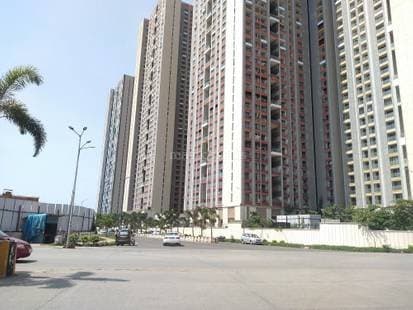
Every year, a cohort of senior corporate executives — VPs and Directors at global banks and consultancies — lands in Mumbai on 2-to-3-year postings. Their HRA package is generous: Rs 4–8 Lakh per month. Their instinct, often advised by their employer's relocation desk, is to rent. But a small number ask a sharper question: should I buy instead? Cuffe Parade is the locality where this question is most acute — because the economics are closest to making buying viable, and the mistakes are most expensive if you get the analysis wrong. This is the guide that gives you the honest answer.
Cuffe Parade Expat Market — Key Numbers (May 2026)
Furnished 3BHK rent: Rs 5–8 Lakh/month. Unfurnished 3BHK rent: Rs 4–6 Lakh/month. 3BHK purchase price: Rs 14–18 Crore. 2BHK purchase price: Rs 9–12 Crore. PSF range: Rs 58,000–74,000. EMI on Rs 12 Crore loan (80% LTV, 8.75%, 20yr): Rs 10.6 Lakh/month. Coastal Road to BKC: 22–28 minutes. CIDCO leasehold discount vs freehold: 15–20%.
The Standard Expat Situation — Why Almost Everyone Should Rent
The mathematics for a typical 2–3 year Mumbai posting are clear: buying the accommodation you live in is almost never the right answer. Here is why.
A 3BHK in Cuffe Parade at Rs 15 Crore requires Rs 3 Crore down (20% LTV) plus Rs 90–95 Lakh in stamp duty and registration — total upfront capital of approximately Rs 3.9–4 Crore. The EMI on the Rs 12 Crore loan at 8.75% over 20 years is Rs 10.6 Lakh per month. Compare this to renting the same 3BHK furnished at Rs 6 Lakh/month from a landlord who has already paid for the furnishings and home automation. The rent-vs-buy cash flow difference — Rs 10.6 Lakh EMI versus Rs 6 Lakh rent — is Rs 4.6 Lakh/month in favour of renting, before accounting for the Rs 4 Crore opportunity cost locked in upfront capital.
Additionally: a property bought and sold within 2–3 years in India incurs Short Term Capital Gains tax at the individual's slab rate (30% for most expat-bracket earners), plus stamp duty on both the purchase and sale, plus brokerage on both ends. The minimum round-trip cost of a 2–3 year hold is 10–14% of the property value in transaction costs alone. Property would need to appreciate 12–16% just to break even. While Cuffe Parade is supply-constrained, that kind of short-cycle appreciation is not guaranteed.
Verdict for your accommodation decision: rent, always, for a 2–3 year posting. The structures that work best are 3-year leases with a 6-month break clause at month 18 — giving you the security of a fixed rent through the posting duration and the flexibility to exit if the posting is extended or shortened.
The Buildings That Expat Tenants Actually Live In
Cuffe Parade has approximately 35 residential buildings. The expat rental market is concentrated in 6–8 of them. Understanding which buildings attract the corporate HRA profile matters — a building's tenant mix shapes security standards, building management quality, and common area maintenance that affect daily life.
| Building | Configuration | Unfurnished Rent | Why Expats Choose It |
|---|---|---|---|
| Maker Towers F | 3BHK 1,800–2,100 sqft | Rs 3.5–4.8 Lakh/month | Iconic sea view, 24/7 security desk, recognised address for client entertainment |
| World Cove | 3BHK 2,100–2,600 sqft | Rs 4.5–6 Lakh/month | Newer construction, club amenities, larger units, sea view from most floors |
| Jolly Maker Chambers | 2BHK–3BHK 1,200–1,800 sqft | Rs 2.5–3.5 Lakh/month | Value option within Maker complex; good building management; lower lease entry |
| Maker Towers A–E | 3BHK–4BHK 1,500–2,400 sqft | Rs 3–4.5 Lakh/month | Larger layouts, garden-facing for families with children, Maker complex security |
For expat families with school-age children, Cuffe Parade's proximity to Colaba places it within reasonable driving distance of Cathedral and John Connon School (12–15 minutes), Walsingham House School (8 minutes), and the American School of Bombay in BKC (now 25–28 minutes via the Coastal Road). The Coastal Road has effectively pulled Cuffe Parade into viable school-run range for American School families for the first time.
The CIDCO Leasehold Question — When Buying Becomes Interesting
Several Cuffe Parade buildings — particularly some of the older Maker Towers towers — are on CIDCO leasehold land rather than freehold. This creates a structural buying opportunity that Property Butler has been tracking carefully.
CIDCO leasehold properties in Cuffe Parade typically trade at a 15–20% discount to equivalent freehold properties. On a Rs 15 Crore freehold 3BHK, the equivalent leasehold unit prices at Rs 12–12.75 Crore. The discount exists because: bank financing is more complex (many lenders require CIDCO's no-objection certificate before sanctioning a loan on leasehold property, adding 4–8 weeks); and the lease renewal process involves a corpus payment to CIDCO that can run Rs 15–25 Lakh per unit depending on the lease term.
For a cash buyer — or for a buyer with access to a FEMA-compliant NRI structure — the leasehold discount represents a 15–20% entry advantage in a market that has appreciated at 8–10% CAGR over the past decade. The lease renewal risk is manageable and priced; the CIDCO approval process for most Maker Towers buildings is well-established. Property Butler's advisory team has navigated this process for multiple clients and can provide building-specific guidance on which towers have active CIDCO lease renewal cycles.
The Investment Buy: 2BHK as a Rental Asset While You Rent Your Own Accommodation
The scenario that actually works for some expats is not buying the unit you live in — it is buying a smaller unit as an investment asset while renting your own accommodation through HRA.
Consider this structure: an expat on a 3-year Mumbai posting with Rs 6 Lakh/month HRA rents a furnished 3BHK at Rs 5.5 Lakh/month. Simultaneously, the same executive purchases a 2BHK in Cuffe Parade at Rs 10 Crore as an investment — putting Rs 2 Crore down (20%), financing Rs 8 Crore at 8.75% over 20 years (EMI: Rs 7.1 Lakh/month), and leasing it immediately to another expat tenant at Rs 3.5–4.5 Lakh/month. The net cash outflow on the investment property is Rs 2.6–3.6 Lakh/month. Over 3 years at a 9% CAGR, the property appreciates approximately 27–30%, generating Rs 2.7–3 Crore in capital gain. After LTCG tax (20% indexed), the post-tax return on Rs 2 Crore invested represents a substantial return — in many scenarios approaching a near-doubling of the down payment in 3 years.
This structure works only if: the executive's HRA is structured to legitimately cover the rent outflow; the investment property is acquired through a FEMA-compliant route; and the tenant for the investment property is secured before or immediately after purchase to minimise vacancy. Property Butler manages the full lifecycle — purchase advisory, tenant placement, lease management, and exit.
FEMA Implications for Foreign National Expats
A critical distinction that often gets elided in broker conversations: the rules for Indian citizens returning to Mumbai are different from the rules for foreign nationals assigned to Mumbai.
- Indian citizen on overseas posting returning to Mumbai: No FEMA restriction on property purchase. Can buy freely using Indian income, NRO funds, or repatriated foreign earnings. Standard home loan rules apply.
- NRI (Indian citizen resident abroad) on a Mumbai assignment: Can purchase residential property in India. Cannot purchase agricultural land or farmhouses. Can finance through NRE/NRO accounts or take a home loan from an Indian bank's NRI desk. FEMA repatriation rules limit proceeds above USD 1 million/year — RBI permission required for amounts above this threshold.
- Foreign national (non-Indian citizenship) on Mumbai posting: Cannot purchase immovable property in India under FEMA without RBI approval (which is rarely granted for residential property). The exception: joint purchase with a spouse who is an Indian citizen. Foreign nationals should rent and structure any India real estate exposure through a resident Indian spouse or Indian corporate entity.
CIDCO Approval Delays — The Timeline Risk Buyers Underestimate
For leasehold properties in Cuffe Parade, the purchase timeline is materially longer than a standard freehold transaction. A standard freehold resale closes in 45–60 days from offer to registration. A CIDCO leasehold resale involving a bank loan can take 90–120 days because: the seller must obtain a CIDCO no-objection certificate (15–25 working days); the bank's legal team reviews the CIDCO lease deed and renewal status (10–15 working days); and CIDCO's stamp duty calculation on the lease assignment adds one additional registration step. Cash buyers reduce the timeline to 60–75 days. For an expat on a compressed relocation timeline, budget accordingly — do not finalise a short-term rental assuming you can close a purchase in 6 weeks.
The Expat Decision Matrix — Cuffe Parade 2026
Posting under 3 years: Rent your accommodation. Always.
Posting 4+ years: Model the buy case with Property Butler's advisory team.
HRA paid to you (not company-direct): Model the 2BHK investment buy structure.
Foreign national citizenship: Cannot buy without RBI approval. Rent only.
CIDCO leasehold units: 15–20% entry discount — valid target for cash buyers or well-capitalised NRIs.
Frequently Asked Questions
What is the realistic all-in monthly cost to rent a furnished 3BHK in Cuffe Parade in 2026?
A fully furnished 3BHK in Cuffe Parade — covering rent, utility deposits, internet, and building maintenance levy — runs Rs 5.8–8.5 Lakh/month all-in depending on building and furnishing quality. The rent component is Rs 5–7.5 Lakh for a furnished unit. Add Rs 15,000–30,000/month for electricity (air conditioning in Mumbai summers is significant), Rs 5,000–8,000 for internet and cable, and Rs 8,000–15,000 for building maintenance levy. Total monthly outflow for a fully operational furnished 3BHK: Rs 6–8.5 Lakh depending on lifestyle and building.
Can my employer pay rent directly to the landlord in Cuffe Parade?
Yes — many landlords in Cuffe Parade who rent to expat corporates actively prefer the direct-to-company lease structure, because it reduces payment risk and enables the company to deduct TDS on the lease directly. The landlord must be a resident individual or Indian company. Most Maker Towers and World Cove landlords have prior experience with direct corporate leases and can provide required documents (PAN, bank account, society NOC) promptly. Property Butler structures these leases routinely for corporate clients.
Is World Cove or Maker Towers F better for a 3-year expat lease?
World Cove is the better choice for expat families prioritising space, newer construction, and club amenities (gym, pool, children's play area). Units are larger at 2,100–2,600 sqft versus 1,800–2,100 sqft in Maker F, and offer slightly better value per sqft. Maker Towers F commands a premium for the Marine Drive address and the building's 50-year institutional recognition — important for executives who entertain clients at home. Both are genuinely excellent buildings. The decision depends on whether you weight living space or address recognition more heavily.
What tax benefit does an expat get from renting through HRA versus buying?
For an Indian citizen employed by an Indian entity, HRA exemption under Section 10(13A) allows a significant portion of the HRA received to be tax-free — the lowest of: actual HRA received, 50% of basic salary (Mumbai metro), or actual rent paid minus 10% of basic salary. On a Rs 6 Lakh/month HRA with a Rs 4 Lakh/month basic, the monthly exemption can be Rs 3.5–5.5 Lakh. This makes the rent route more tax-efficient than buying at this income level. If you buy, you lose the HRA exemption and gain home loan interest deduction under Section 24(b) — capped at Rs 2 Lakh/year for a self-occupied property, which is minor relative to the HRA benefit lost.
How do I repatriate sale proceeds from a Cuffe Parade property if I leave India after 3 years?
FEMA permits repatriation of up to USD 1 million per financial year from the sale of residential property held for the standard LTCG period. Amounts above USD 1 million/year require an RBI application with bank certificate and Form 15CA/CB from a Chartered Accountant. LTCG tax (20% with indexation) applies and must be deducted at source by the buyer at 20% of the sale consideration. Proceeds must be credited to an NRO account first, then transferred to NRE or remitted abroad. Property Butler's advisory team connects clients with CA firms who handle NRI property disposal compliance routinely.
Related Reading
Cuffe Parade Complete Living Guide 2026 — What It Is Actually Like to Live HereCuffe Parade CIDCO Leasehold — The Complete Buyer's Guide for 2026Cuffe Parade Rental Market for Expats — What Tenants Pay and What Landlords EarnNariman Point for Corporate Expats — How It Compares to Cuffe ParadeExplore All Cuffe Parade Properties on Property ButlerSearch 3BHK Apartments in Cuffe ParadeOn a Mumbai posting? Let us structure the right approach.
Property Butler advises expat executives on both rental and investment decisions in Cuffe Parade and across South Mumbai. We handle the full process — from lease negotiation to investment purchase to exit.
Search Cuffe Parade Properties