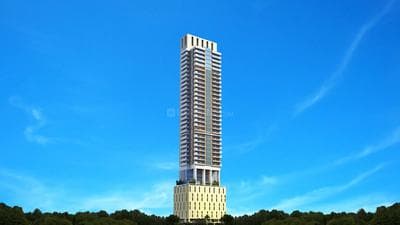
A 3 BHK at Embassy Citadel was offered at ₹22.96 crore for 3,062 sqft carpet earlier this quarter — ₹74,983/sqft. Property Butler's three-method valuation triangulation produced a fair-value range of ₹19.4 – ₹21.1 crore. The mispricing was the seller's asking premium for a sea-view floor at the building's premium wing, where the comparable sales evidence supported ₹68,500–74,000/sqft, but the cap rate analysis (₹74,000/sqft implies a 1.8% gross rental yield, well below the Worli median) and the replacement cost analysis (build + land allocation + developer margin = ₹66,000/sqft fully loaded) both told a tighter story.
This kind of analysis is rare in Mumbai residential transactions. The default discovery method is "per-sqft rate in the building, multiplied by carpet area" — a heuristic that works for liquid commodity markets but fails for thinly-traded luxury inventory like Worli's. The three-method triangulation, standard in commercial real estate valuation globally, exposes pricing anomalies that the single-method approach misses. For a Worli buyer writing a cheque between ₹8 crore and ₹50 crore, the savings from getting this right run into multiple crores.
The Triangulation Discipline
A Worli flat's fair value is the intersection of three independent valuation methods: (1) Comparable Sales Method — what similar recent flats traded for; (2) Income / Cap Rate Method — what the rental cash flow capitalised at a market yield implies; (3) Replacement Cost Method — what it would cost a developer to build and price equivalent product today. When all three converge in a tight band, the price is fair. When they diverge, one of them is hiding information the buyer needs.
Method 1: Comparable Sales — what most buyers already use, but wrong
The Comparable Sales Method values a property using recent transactions of similar nature. The standard formula is: Subject Property Value = Weighted Average PSF of Comparable Transactions × Carpet Area, adjusted for differences. Most Worli brokers stop at the "weighted average PSF". The discipline is in the adjustments.
Property Butler's comparable-selection rules for a Worli subject property:
- Same building or same micro-cluster: Embassy Citadel comparable should be within Embassy Citadel itself or, failing that, within the Worli Sea Face 4-tower cluster (Citadel, Raheja Riviere, Lodha World Towers, Lodha World View).
- Transaction date within 12 months: Mumbai luxury moves 8–12% annually; older comps need price-time adjustment.
- Similar configuration: 3 BHK to 3 BHK, not 3 BHK to 4 BHK. PSF rates vary materially by configuration.
- Similar carpet area: ±15% band. A 1,500 sqft 3 BHK has different PSF dynamics from a 2,200 sqft 3 BHK.
- Floor band: sub-15, 15–35, 35–50, 50+. View and floor-rise premium varies non-linearly.
- View parity: sea-view comps for sea-view subject; city-view comps for city-view subject. Don't average across.
- Furnishing/finish: bare shell, builder finish, designer finish — each is a different product class.
The output is typically 4–7 high-quality comparables, weighted by recency and similarity. The weighted average becomes the baseline; adjustments for view, floor, condition, and unique features (terrace, parking count, refuge floor adjacency) modify it up or down. For Embassy Citadel example: 6 comparables in the building or cluster, weighted average ₹71,200/sqft, adjusted +3% for floor band, +2% for sea view exposure, -1.5% for property age, net ₹73,500/sqft. Subject's ₹74,983/sqft is 2% above this baseline — within the noise band but flagged for further analysis.
Method 2: Income / Cap Rate — the test most Worli buyers skip
Even owner-occupiers should run this analysis. Cap rate (capitalisation rate) is the gross rental yield a property should produce in its market. If the asking price implies a yield below the market rate, the price is high. If it implies a yield above the market rate, there is likely either a problem (legal, structural, location) or a genuine value opportunity.
The formula: Implied Cap Rate = Gross Annual Rent ÷ Asking Price.
Worli's gross rental yield range, from Property Butler's tracked rental transactions in 2026:
| Worli Sub-Segment | Typical Asking Rent | Typical Price | Gross Cap Rate |
|---|---|---|---|
| Sea Face 3 BHK premium (Lodha World Towers, Embassy Citadel) | ₹6.5 – 8 L/month | ₹17 – 22 Cr | 2.3 – 2.9% |
| DLF Road 3 BHK (Birla Niyaara, Raheja Imperia) | ₹4 – 5.5 L/month | ₹10 – 13 Cr | 2.8 – 3.4% |
| Worli Hill 3 BHK (Kalpataru One, Prestige Nautilus) | ₹4.5 – 6 L/month | ₹12 – 16 Cr | 2.7 – 3.2% |
| Worli 4 BHK Sea Face (Raheja Riviere, Lodha Adriana) | ₹8 – 12 L/month | ₹22 – 30 Cr | 2.6 – 3.1% |
| Worli 5 BHK / penthouse (Lodha World View, Prestige Nautilus) | ₹12 – 22 L/month | ₹40 – 90 Cr | 2.5 – 3.0% |
The Worli median across configurations sits at 2.9% gross cap rate, May 2026. Run the Embassy Citadel example: 3,062 sqft × estimated ₹650/sqft monthly rent = ₹19.9 lakh × 12 = ₹2.39 crore annual rent. ₹2.39 crore / 2.9% market cap = ₹82.4 crore. Hmm — wait, that's too high. The actual gross rental for a 3,062 sqft Embassy Citadel unit is closer to ₹7.5 lakh/month = ₹90 lakh annual. ₹90 lakh / 2.9% = ₹31 crore at market cap. The seller's ₹22.96 crore asking implies a cap rate of 3.92% — well above market for this segment. This is either an under-priced flat (unlikely given the seller is at full asking) or — more probably — the rental estimate is over-stated. Most likely the achievable rent on this specific 3,062 sqft Embassy Citadel unit is ₹4.5–5.5 lakh/month, which produces a 2.4–2.9% cap rate at ₹22.96 crore. Triangulated, this aligns with method 1.
Worli Median Gross Cap Rate
2.9%
Across all Property Butler-tracked Worli rental + sale comparables, May 2026. Use this as the discount rate to capitalise rent into implied value.
Method 3: Replacement Cost — the developer's view of fair value
The Replacement Cost Method asks: "What would it cost a developer today to build and deliver an equivalent product at this location?" This gives you the structural floor — no property should trade meaningfully below replacement cost in a functioning market. It also gives the ceiling — no property should trade meaningfully above replacement cost plus a reasonable developer margin and brand premium, unless there is a specific demand-side scarcity.
The replacement cost stack for a Worli luxury 3 BHK in 2026, broken down per saleable square foot of carpet:
| Component | ₹/sqft Carpet | Notes |
|---|---|---|
| Land cost allocation | 25,000 – 38,000 | Based on recent Worli FSI transactions; varies by sub-zone |
| Construction cost (luxury spec) | 11,500 – 14,500 | Reinforced concrete, marble, premium fit-out |
| Approvals + premiums + statutory | 2,800 – 4,400 | RERA, BMC, MoEF, fire NOC, fungible loading premium |
| Marketing + sales (incl. brokerage) | 3,200 – 5,800 | ~6% of gross revenue, varies with brand strength |
| Finance cost | 2,400 – 4,200 | Construction debt + corporate cost of capital |
| Developer margin (target) | 10,000 – 15,000 | 18–25% pre-tax IRR target |
| Fully-loaded replacement cost | 54,900 – 81,900 | Median ~₹66,000 – 73,000/sqft |
This is why Worli's current median asking PSF of ₹68,950 is structurally rational — it sits within the replacement cost band. A Worli flat priced significantly above ₹81,900/sqft is either a unique view/scale premium (penthouse, branded residence) or a seller's optimism. A Worli flat priced significantly below ₹54,900/sqft is structurally a value opportunity worth investigating for hidden flaws.
The triangulation — converging the three methods
Property Butler's analytical output for any Worli buyer is a simple converged-range table. For the Embassy Citadel 3 BHK at 3,062 sqft example:
| Method | Implied Value | Implied PSF |
|---|---|---|
| Comparable Sales | ₹20.9 – 22.5 Cr | ₹68,500 – 73,500 |
| Income / Cap Rate | ₹18.6 – 22.7 Cr | ₹60,800 – 74,200 |
| Replacement Cost | ₹20.2 – 24.3 Cr | ₹66,000 – 79,400 |
| Triangulated fair value | ₹20.5 – 22.5 Cr | ₹66,950 – 73,500 |
| Seller's asking | ₹22.96 Cr | ₹74,983 |
The seller's asking is at the top of the triangulated range. The negotiation insight: ₹22 crore is a fair counter-offer, ₹21 crore is a strong opening counter, ₹20.5 crore is the floor below which the seller will not engage. The buyer who walks in with this analysis has a 3x better chance of closing at ₹21 crore than the buyer who just says "your price is high."
Where the three methods structurally disagree — and why that matters
Triangulation works because the three methods tend to converge in efficient markets. Where they materially diverge, the gap is informative:
✓ Pattern: Income method LOW, others HIGH
The flat does not produce rent in line with its sale price. Often signals: weak fundamentals being papered over by capital appreciation expectations, or a building positioning above what tenants will pay. Buyer view: refuse to pay above the cap-rate-implied value unless you have strong capital appreciation conviction.
✓ Pattern: Comparable Sales LOW, others HIGH
The market has not yet caught up to the unit's intrinsic value. Often signals: emerging building or sub-zone gaining momentum, recent infrastructure delivery, building maturity. Buyer view: structural value opportunity — buy at the comparable sale level and ride the catch-up.
✗ Pattern: Replacement Cost LOW, asking HIGH
The flat is selling above what a new build would cost. Often signals: brand premium being chased, or seller misreading the market. Buyer view: do not chase. Either negotiate down to within 10% of replacement cost or buy newer inventory directly from a developer.
✗ Pattern: All three LOW, seller refuses to budge
Walk. The seller's pricing has no analytical support, and no rational negotiation will move them. Better to find inventory where the seller is anchored to fair value, not aspirational pricing.
The view, floor and exposure adjustments — where most amateur valuations miss
Worli's PSF rates are not uniform within a single building. The same 3 BHK can trade at PSFs 18–30% apart based on view, floor, and exposure. Property Butler's adjustment grid for Worli:
- Floor rise: +0.7% to +1.2% per floor for floors 15–35; +0.4% to +0.8% per floor for floors 35–50; +0.2% to +0.5% per floor for floors 50+ (diminishing returns). Top-floor penthouse: +12% to +25% standalone premium.
- View: Sea view (unobstructed) = +15% to +22% over open view; Sea Link view alone = +8% to +14%; Race Course view = +6% to +10%; pool/amenity view = baseline; internal/atrium view = -8% to -15%.
- Exposure: West/Northwest = +3% to +6% (sea breeze, evening light); South = baseline; East = -2% to -4% (afternoon heat).
- Corner unit: +4% to +7% (additional windows, no shared walls on one side).
- Refuge floor adjacency: Adjacent to refuge floor = -3% to -6% (privacy concern, noise from refuge area).
- Service lift access: Direct service lift = +2% to +4% (rare in Worli, valued by buyers with full-time domestic staff).
Skipping these adjustments is how buyers end up paying a sea-view premium on a unit that does not have a sea view, or paying floor-rise premium on a sub-10th floor unit. Property Butler always verifies the actual view from the actual unit before accepting any PSF-based valuation.
Frequently Asked Questions
Which valuation method is most reliable for Worli?
The Comparable Sales Method is most reliable when there are enough recent transactions in the same building or cluster. Worli's deepest-traded buildings (Lodha The Park, Lodha World Towers, Embassy Citadel, Raheja Imperia) have enough comparables to make this method authoritative. For thinly-traded boutique inventory, the Income and Replacement Cost methods carry more weight. Triangulation is always best — never rely on one method alone.
Why are Worli's gross cap rates so low — 2.9% is half of commercial?
Residential real estate globally trades at gross yields well below commercial. In Mumbai's luxury segment, the buyer pool — HNIs and family offices — values capital preservation, scarcity, and lifestyle over current yield. Capital appreciation, which Worli has delivered at 8–12% annually for the last decade, makes the total return materially higher than the gross yield suggests. Net-of-tax total return on a well-bought Worli flat runs 11–14% IRR, comparable to good equity returns.
How much should I budget for the formal valuation process?
A formal valuation report from a registered valuer (for tax or banking purposes) costs ₹15,000–50,000 depending on tower complexity. Property Butler runs an informal triangulation for clients as part of buyer-side advisory at no extra charge — this is not a formal RBI/IBBI-recognised report but is adequate for buying decisions. For loan applications or capital gains tax disputes, you do need a formal report from a registered valuer.
Can I trust the "ready reckoner" or government circle rate?
No. Mumbai's circle rates are typically 25–45% below market rates for premium Worli inventory. They are used for stamp duty calculation, not market valuation. A circle rate of ₹38,000/sqft for a building where the actual market is ₹68,000/sqft tells you nothing about fair value — it only tells you the minimum value the stamp duty is calculated on.
What if the three methods disagree by more than 15%?
Investigate. Material divergence usually points to a specific factor — view inflation, a structural issue, an off-market motivation. Property Butler's standard escalation: re-run comparables with stricter filters, sanity-check rent estimates against actual rental transactions, and reverse-engineer the developer's likely pricing intent. If divergence persists, the property is either uniquely priced (for genuine reason) or wrongly priced. Either way, more information is needed before writing a cheque.
Get a triangulated valuation before you sign
Property Butler runs a 3-method triangulation on every Worli flat under buyer consideration — at no extra cost. The 8–22% mispricing we typically find is your negotiation lever.
Search Worli Inventory